In this episode Dr.’s Van Kleeck continue their treatment of the nature and scope of the version debate and particularly the terms used in that debate. Regarding the definition of terms, renowned logician, Peter Kreeft, observes,
“Definition is crucial to logic. For a definition tells us what a thing is; and if we do not know what a thing is, by the first act of the mind, we cannot know what to predicate of it in the second act of the mind, and thus we have no premises for our reasoning (the third act of the mind).”
Peter Kreeft, Socratic Logic, (South Bend, IN: St. Augustin Press, 2008), 123.
Those following Standard Sacred Text have noted that our defense is modeled after the Apostle Paul’s instruction to the church in Corinth in 1 Cor. 2 with special reference to verse 14. There are essentially only two methods of argumentation not only for the Biblical text but for all things considered – the Spiritual, or that governed by the Spirit in and by the word and the natural, without the Spirit, man functioning in his fallen, natural state. There is no middle or common ground between the two methods. The present textual debate enigma is that those who would make a personal claim to be Spiritual have succumbed to natural arguments for their flavor of the defense of the Faith once delivered unto the saints.
Since my first venture into the KJV debate in the 80’s certain patterns have emerged coming from MVOists. It is important to note that every objection is limited by the capacity of the opponent to formulate one, but among these variables, one factor remains consistent. For the KJB position the Scripture’s self-authentication confirms the object (Scripture’s authority) predicated by the subject (the KJB advocate). To make the case for the KJB nothing needs to be borrowed from a contrary position to find common ground, because the KJB position is self-contained. Other issues are discussed but not out of necessity. Allowing the Word and Spirit to speak for themselves is consistent with Paul’s admonition in 1 Cor. 2.
This however is not the case for objectors. Because the objection confirms only the object (or argument) predicated by the subject (the objector) it is impossible that the objection remotely relates to the self-contained KJB position unless the objector borrows some common ground between the objection and that which is objected against, or, for the sake of discussion, the KJB defender allows an exchange for some didactic purpose. Standing apart from the Word and Spirit this line of argumentation falls under the paradigm of natural. Because there is no common ground between the Spiritual and natural, the natural argument must borrow elements of the Spiritual argument to enter the sphere of a Biblical discussion. The natural perspective possesses no Spiritual elements.
The critical biblical polemic is like showing up on a baseball field with a football and trying to make the case for the fallacy of homeruns while pressing the point for field goals. To be relevant, with football in hand, some element of baseball is borrowed, such as both football and baseball use balls, to make the natural premise credible. The single point of contact may be similar, but the games are entirely different. This borrowing, no matter how minimal, argues against or at least marginalizes the credibility of the initial objection. The objector must borrow from a self-contained apologetic system he is attempting to prove invalid by utilizing the system he is trying to prove invalid.
But one might protest, how can you claim that it is impossible that the number of paperback books critical of the KJB only remotely relate or do not relate at all to Standard Sacred Text apologia for the KJB? A cursory review of the literature will quickly show a pedantic, redundant, evidential similarity of such consistency that the whole can be lumped into one genre reminiscent of the Byzantine “text type.” There are not a host of arguments critical of the KJB; rather, there is one evidential conglomerate published ad infinitum critical of the KJB with such consistency as to be predictable and with such frequency as to be worn out. The monolithic objection only confirms the object (or argument) predicated by the subject, which in this case is plural subjects. Our answer to claims of success to the overthrow of the KJB is simply, “Of course you end up with that answer if that is where you start” because the scientific method confirms the object predicated by the subject. If you make the rules, you can win the game, as if forgetting God has already given his Rule to which all lesser rules must yield. Any capacity of the critic to relate to the self-contained apologetic system of the self-authenticating text must borrow elements from the system being disparaged. The protest is thus answered.
For instance, manuscript evidence is vitally important to an evidential defense of the quantified canonical collating process but is secondary or tertiary to the self-contained argument of Scripture’s own self-authentication. We greatly appreciate the work but the argument for evidence will only confirm the object predicated by the subject and within these self-imposed limits is merely sectarian and provincial, secondary, and tertiary to Scripture’s claims for itself. Furthermore, there is no common ground between the relativity of the proposed evidence and the absolute certainty of God’s word. The evidence only becomes valid as it aligns itself with the self-authenticating Word. If the critic is to locate common ground, something about the certainty of God’s word must be borrowed to create a bridge to the evidence, because certainty does not exist in the critical world.
This “something” is highly problematic to the critic. Consider the following example, “I do not believe the minority reading can be self-attesting.” In this statement we identify a splendid example of an evidentialist borrowing from the KJB apologetic by using the term “self-attesting” thereby establishing a bridge between the two positions. The relative use of percentages and numbers common to evidential arguments are foreign to the terms the Bible uses for itself, but in this statement the relative use of numbers is tied with the pre-critical argument for Scripture’s self-attestation, which by definition means, it does not need numbers or percentages to validate its Authority. Though the statement was not developed, are we to assume then, that a majority reading is self-attesting? Once self-attestation is integral to the argument, the full weight of Protestant Orthodox theology comes to bear on the evidence, but this is not what the evidentialist asks for. Indeed, if it were, they would cease being an evidentialist altogether. And if not inferring the majority reading is self-attesting why say it at all?
How then should one proceed considering this bridge? The idea of a “bridge” begs the question “A bridge to what?” or “Common ground to what purpose?” As noted above, the bridge is necessary for the critic to have a perceived impact upon the self-contained nature of a KJB defense but does not seem intended to provide the common ground of congruence or agreement as noted in continuing discussion. After all, the critic is standing on a baseball field with a football saying, “Listen to me. I have a ball!” The bridge is therefore only conceptual, a device to borrow apologetic credibility for an evidential system incapable of achieving its goal of determining what is and is not Scripture.
The solution is a change in logical sequence of the critic’s debate. For the critic, the change does not require a change in the strength of the evidence, only a subjugation of the evidence to the self-attesting Word. This change of sequencing accepts the self-contained argument for the self-attesting Word as primary while providing credible secondary evidential support for the self-attesting word. And this change in sequence is not an insurmountable dilemma, having already identified the value of borrowed pre-critical categories, no matter how slight, for objections against the pre-critical apologetic.
Because the scientific method confirms the object predicated by the subject, the scientific method by any definition is incapable of relating to the word of God just as the natural man considers the things of the Spirit foolishness. If you want to call the critical text, the majority text, the XYZ text the word of God, as the word of God, the next line in the discussion must be, the text is the self-attesting, self-authenticating, self-interpreting canonical collation of the preserved apograph. After borrowing these words from the Standard Sacred Text defense of the TR/KJB there would indeed be common ground for additional discussion. But until then, the critic with his football must retire to the bleachers, or head over to the football field, while those who have come to enjoy America’s pastime, cruise over in their Chevy Corvette, enjoy a hotdog at the concessions stand and in the warm summer breeze hear the words, “Batter up!” Blessings!
This marks our 300th post here at StandardSacredText.com and the beginning of several new initiatives in the StandardSacredText.com trajectory for the future.
The material presented thus far has come at a significant pace and with that pace the inevitability that some crucial details have been overlooked. As such, we have decided to change gears a bit by presenting our material on a more personal level.
To that end, we are announcing several additions to our current methodology:
1.) Lord willing, by the end of June we hope to have published a A Theological Grounding for a Standard Sacred Text. After which time…
2.) We are going to return to our podcast in order to finish up our presentation of the Standard Sacred Text position there. As part of the podcast we would like to answer any questions you may have regarding clarification of the position discussed and its constituent points. In order to better interface with your questions you can email them to standardsacredtext@gmail.com.
3.) This Fall, we will be offering a free-to-attend 15 week LIVE online seminar. While we are still putting together the finer points of this offering we currently intend the seminar to be on Monday nights for 15 consecutive weeks. The content of the seminar will be divided into three sections: 1.) 5 weeks on a philosophical grounding for a standard sacred text, 2.) 5 weeks on an exegetical grounding for a standard sacred text, 3.) 5 weeks on a theological grounding for a standard sacred text. Each Monday night will include two 50 minute lectures.
Come for some of it or come for all of it. It will be like a college class. You will receive a class syllabus and a PDF copy of each our three books as part of your attendance. Also, for all those homeschool parents out there, if you would like to have your child receive Bible/theology or elective credit we can make a written assignment available in addition to the lectures.
As part of the seminar there will be an opportunity to interact with us LIVE in and after class on specific topics or questions relating to the Standard Sacred Text position. Look for more details and sign-up opportunities as Fall 2022 approaches.
All are welcome to attend.
4.) Both Dr.’s Van Kleeck live in Virginia, one in the north of the state and one in the south. If you find yourself in VA and you would like to meet for coffee some place and talk these things over, we would love to meet with you, talk theology, and fellowship over a piece of pie and a cup of coffee. If you would like us to come your way then I’m sure we could make that happen as well.
We are really excited for the year ahead and for what the Lord has in store for StandardSacredText.com. Thank you all for stopping by StandardSacredText.com and for your comments and interactions.
Continuing our examination of Expressive Individualism and its particular manifestation in the Multiple Version Only Movement, we pick up again with Pastor Ben Wright’s post that we discussed yesterday. Pastor Wright observes,
“As Jonathan Leeman puts it in One Assembly, there are unintended consequences to our churches’ expressions both of our members’ individual preferences and our pastoral preferences. He writes, ‘The devices of the marketplace aren’t exactly conducive to encouraging people to eat in another guy’s restaurant. You’ll never see a McDonald’s commercial celebrating their common cause with Burger King in solving the problem of hunger’ (113). We’ve unintentionally undermined our partnerships with our sister churches and with the mission Jesus entrusted to us.”
We are in agreement with Pastor Wright on this point, and to drive the point home with greater clarity regarding the problem that is Multiple Version Only-ism [MVO] let us co-op Wright’s words above and make a few minor changes.
“There are unintended consequences to our churches’ expressions both of our members’ individual preferences of the version they read and our pastoral preferences regarding the version he reads. The devices of the marketplace aren’t exactly conducive to encouraging people to read another guy’s version. You’ll never see an ESV advertisement celebrating their common cause with the Message in solving the problem of biblical illiteracy.’ We’ve unintentionally undermined our partnerships with our sister churches and with the mission Jesus entrusted to uswhen we prefer Multiple Versions Only.”
We see again, as we saw yesterday, that the formula is the same. All that needed to be changed was the variable. Where in the original quote the variable in question was “preferences in worship” and in the modified quote I have changed the variable to “preferences in choosing versions of the Bible.” In sum, the MVO movement boldly calls for the proliferation of versions and accepts such a proliferation as a device of the markets. As a result, ESV publishers don’t encourage people to read the KJV or the NIV. ESV publishers encourage people to read ESV’s. Then the believing community is encouraged to embrace as many Bibles as they like and all based on their given preferences.
On the point of preference Wright concludes his article this way,
“The cancer is the tendency in your people – and yourself – to think we need our church to express what we prefer, what makes us comfortable. When our comfort undermines our mission, it’s an idol. Kill that idol. But save the body.”
We could not more heartily agree. At StandardSacredText.com we argue that the Rule, the Holy Scripture, “chooses” you by the power of the Spirit speaking through those words to the people of God who accept those words, not by preference, but by faith to be the word of God to the English-speaking Church. In like manner we have also argued in the same vein as the quote above, the comforts and preferences of the MVO position have undermined the mission of the Church [see yesterday’s post] and as such are idols to be killed in order to preserve the body of Christ.
Because Christ is immutable and eternal, he is “able to save us to the uttermost” — “uttrermost,” παντελές –made up of two words “all” and “end” or “perfection”– Christ is able to save “completely to the end,” to the uttermost. Vine: the neuter of the adjective panteles, “complete, perfect,” used with eis to (“unto the”), is translated “to the uttermost” in Hebrews 7:25, where the meaning may be “finally.” Thayers: παντελής, παντελές (πᾶς and τέλος), all-complete, perfect (Aeschylus, Sophocles, Plato, Diodorus, Plutarch, others; 3Macc. 7:16); εἰς τό παντελές (properly, unto completeness (Winers Grammar, § 51, 1 c.)) completely, perfectly, utterly: Luke 13:11; Hebrews 7:25 (Philo leg. ad Gaium 21; Josephus, Antiquities 1, 18, 5; 3, 11, 3 and 12, 1; 6, 2, 3; 7, 13, 3; Aelian v. h. 7, 2; n. a. 17, 27).
This Sunday morning as we consider the vicarious, redeeming work of Christ for us, ask yourself a question. If Christ has the power to save a lost sinner “to the uttermost” is he not also able to preserve His word from which saving faith comes (Rom. 10:17) with the same power? The answer is of course, yes, he has the power to save the lost “to the uttermost” and preserve his word. Blessings!
[This excerpt is taken from A Primer for the Public Preaching of the Song of Songs (Manassas, VA: Outskirts Press, 2015), 12-13, 43-47.]
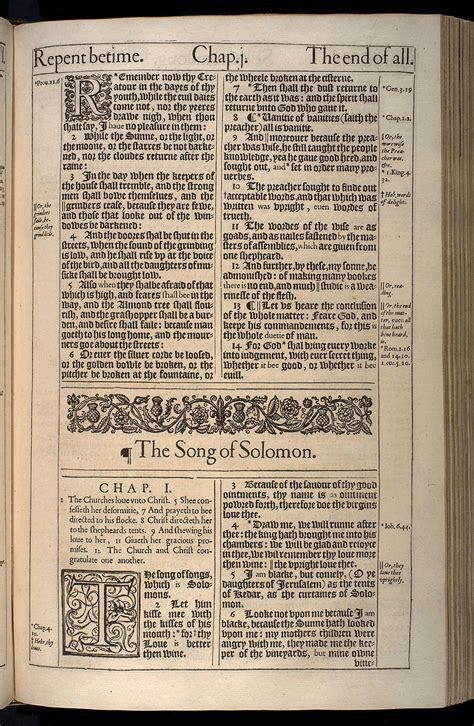
The Song was in circulation within both the religious and popular contexts of Israeli life. Pope writes, “In the Hebrew Bible the Song of Songs is placed among the Writings, ketubim, following Job as Five Scrolls (Song of Songs, Ruth, Lamentations, Ecclesiastes, Esther). This order corresponds to the sequence of their use in the liturgy, the Song of Songs being read on the eighth day of Passover.” Pope, Song of Songs, 18. Pope also notes on p. 18 that Rabbi Aquiba, who regarded the Song as the “veritable Holy of Holies,” uttered the following anathema upon those who considered the Song a mundane ditty, saying, “He who trills his voice in chanting the Song of Songs in the banquet house and treats it at a sort of song (zemir) has no part in the world to come.” Although Rabbi Aquiba understood the Song allegorically, clearly other Israelis took it otherwise. Alter states, “References in rabbinic texts suggest that at least by the Roman period the poems were often sung at weddings, and, whoever composed them, there was surely something popular about these lyric celebrations of the flowering world, the beauties of the female and male bodies, and the delights of lovemaking.” Robert Alter, The Art of Biblical Poetry (New York: Basic Books, Inc., Publishers, 1985), 186.
A great Jewish savant began his commentary on the Song of Songs with these words, “Know, my brother, that you will find great differences in interpretation of the Song of Songs. In truth they differ because the Song of Songs resembles locks to which the keys have been lost.”[1] With 1,440 glosses on the Song of Song compiled by Patristic and Medieval scholars by 1110,[2]the Church Fathers’ allegorical reading of the Song[3]confirm the assessment, “No other book of the Bible (except perhaps Revelation) suffers under so many radically different interpretations of the Song of Songs.”[4]Lecturing on the Song of Songs in November 1530, Martin Luther expressed his dissatisfaction with the three primary interpretive methodologies of his predecessors, lamenting,
For we shall never agree with those who think it [the Song of Songs] is a love story about the daughter of Pharaoh beloved by Solomon. Nor does it satisfy us to expound it as the union of God and the synagogue, or like the [Alexandrian] tropologists, of the faithful soul. For what fruit can be gathered from these opinions?[5]
The interpretive, historic dissonance in the ecclesiastical tradition persists with no sign of an exegetically based, codified interpretation.[6]Redford succinctly states the contrasts, “The allegorist gives the reins to his fancy and ends in absurdities; the literalist shuts himself up in his naturalism and forfeits the blessings of the Spirit.”[7]
The history of the Song’s interpretation, with minor exception, is entirely allegorical, the Song’s message referring to Jehovah and Israel or Christ and the Church. The one noted exception to this interpretive convention among medieval theologians was Theodore of Mopsuestia (350-428 who also denied the inspired character of the book. Considering the Song as a referring only to human love and non-canonical, Theodore was anathematized by the Second Council of Constantinople in 533.[8]
The substantive question was whether the Song is an allegory and based on its genre received by the Church as canonical. Was the allegorical interpretation of the Song the basis for its acceptance as canonical, or was the divine authority of the Song accepted and subsequently determined by Jewish and Christian scholars to be interpreted allegorically?
John Barton’s short essay, “The Canonicity of the Song of Songs”[9] makes a compelling argument for the Song’s canonicity apart from any interpretive qualification. Barton’s research finds that in the history of the Song’s interpretation scholars make a decuit ergo factum argument rather than a factual one, that the “celebration of physical love” is the primary reason for disputing the Song’s canonicity.[10]Barton also explains that the allegorical interpretation of the Church Fathers and medieval scholastics was “precisely practiced on books that had a high status” and that again there is no evidence that the Song was identified as canonical and secured as Scripture based on its allegorical reading.[11]In other words, the Song’s canonical authority was recognized prior to the formulation of Jewish and Christian interpretive philosophy. The Song was interpreted allegorically because it was already accepted as canonical. Barton’s findings are consistent with the medieval convention of a four-fold method of interpreting the Scriptures (literal, tropological, allegorical, and anagogical)[12]employed of the scholastics of the Middle Ages. This hermeneutical convention was challenged and rejected by the post-Reformation dogmaticians who emphasized a singular meaning for each text.[13]
Barton’s research concludes that the “allegorical reading was a consequence, not a cause of canonicity.”[14] As canonical, the Song was read allegorically and in the Song’s history of interpreted was rendered in a manner considered fitting the Holy Scripture.[15]
[2]The Glossa Ordinaria on the Song of Songs, translated by Mary Dove (Kalamazoo, MI: Western Michigan University, 2004), xxi. “Anselm of Laon (perhaps with his brother Ralph) is the compiler of the glossed Song of Songs, but we can only confidently ascribe to his authorship about a sixth of the 1,440 glosses. These are the glosses that are shared with surviving reportationes, ‘written reports’ of lectures on the Song of Songs which Anselm gave at Laon ca 1100-10.” Also see J. Robert Wright, ed., Proverbs, Ecclesiastes, Song of Solomon, Ancient Christian Commentary on Scripture, Old Testament (Downers Grove: InterVarsity Press, 2005), 9:286-368; Mark W. Elliot, The Song of Songs and Christology in the Early Church 381-451 (Tubigen: Mohr Siebeck, 2000), 15-50.
[3]For a succinct history of the Song’s interpretation until 1690 see Richard Littledale, A Commentary on the Song of Songs, (New York: Pott and Emery, 1869), xxxii-xl. Also see John Barton, “The Canonicity of the Song of Songs,” Perspectives on the Song of Songs (Perspektiven der Hoheliedauslegung), ed. Anselm C. Hagedorn (New York: Walter de Gruyter, 2005), 2.
[4]Garrett, Proverbs, Ecclesiastes, Song of Songs, 352.
[5]Martin Luther, Luther’s Works, American Edition (St. Louis and Philadelphia: Concordia and Fortress, 1955), 15:194-195. “Although difficult to trace exactly, it is highly suggestive to think that the ‘new pathway’ of Luther for the sixteenth century has historical roots in particular late medieval Christian scholarship (circa 1300) and in latter medieval ‘rabbinic’ exegesis.” Endel Kallas, “Martin Luther as Expositor of the Song of Songs,” Lutheran Quarterly, 2 (1988): 323-41.
[6]Longman, Song of Songs, 54-55. “The question of the structure of the Song is a difficult one, as is demonstrated by the plethora of hypotheses found in the secondary literature. No two scholars agree in detail, though there is what might be called schools of thought on the subject. While we feel confident in the general conclusions reached regarding the structure of the Song, we have no illusions that the following is the final word.” Alter, The Art of Biblical Poetry, 185: “We have no way of knowing the precise circumstances under which or for which the Song of Songs was composed.”
[7]H.D.M. Spence, Joseph S. Excell, eds. Song of Songs, vol. 22, The Pulpit Commentary(London and New York: Funk and Wagnalls Co., nd), xxiv.
[8]Ibid., 38-39. Longman also cites John Calvin and Sebastian Castellio as two who accepted the congruity of marital love and divine love in the canon; also see Roland Murphy, “Canticle of Canticles,” The Jerome Biblical Commentary (Englewood Cliffs, NJ: Prentice-Hall, Inc., 1968), 506.
[9]Barton, “The Canonicity of the Song of Songs,” 1-7.
[12]See Andrew Willet, Hexapla in Leviticum, that is, a sixfold commentary upon the third book of Moses, called Leviticus (London: Printed by Aug. Matthewes, 1631), 120. “The tropological, which is applied to moral things, allegorical, to spiritual things, and anagogical, to heavenly things, as Jerusalem signifieth the soul of man; allegorically, the church militant; and anagogically, the church triumphant in heaven.”
[13]Ibid. In his commentary on Leviticus, Andrew Willet (1562-1621) agrees that the content of Scripture deals with historical matters and mysteries but those elements in themselves do not prove diverging senses in interpretation. He succinctly addressed the crux of the matter by explaining, “There is a difference between the literal, or historical sense, and the application, or accommodation of it. That is the proper sense of the scripture, which is perpetual and general; it is therefore dangerous for men, of their own brain, to pick out every place mystical senses. It belongeth only to the Spirit whereby the scriptures were written, to frame allegories and mysteries.” Of particular significance Willet makes clear that there is a literal or historical sense to the words of scripture. Citing 2 Timothy 3:16, Willet states that there are four profitable uses of inspired Scripture: to teach, to improve, to correct, and to instruct in righteousness. And thus, he says, “To devise and frame allegories and mysterie (wherein the Spirit intended them not) is none of them.”
[14]Barton, “The Canonicity of the Song of Songs,” 3.
[15]For useful discussions on the canonicity of the Song, see William Frederic Bade, “The Canonization of the Old Testament,” The Biblical World 37, (Mar., 1911): 151-162; David Kraemer, “The Formation of Rabbinic Canon,” Journal of Biblical Literature 110, (Winter, 1991): 613-630; Solomon Zeitlin, “An Historical Study of the Canonization of the Hebrew Scriptures,” Proceedings of the American Academy for Jewish Research, (1931-1932): 3:121-158; Albert C. Sundberg, Jr., “The Old Testament of the Early Church (A Study in Canon),” HTR 51, (Oct., 1958): 205-226.
Henry VIII, in 1530, demanded that Tyndale be brought to England and punished for sedition for publishing the Bible in English. In 1535, while in Antwerp, Belgium, Tyndale was the writing his final revision of the Bible that would form the foundation for later translations. During that time Romanist Henry Phillips, also an Englishman and Oxford graduate, under false pretenses, befriended Tyndale. After gaining Tyndale’s confidence, while walking down a winding street, Phillips signaled soldiers who arrested Tyndale. Shortly thereafter, Tyndale was executed for the crime of printing Bibles in English and rejecting Roman Catholic dogma. This is the early history of what would become the King James Bible.
Of Phillips it is said, “He spent the next few years of his life fleeing from King Henry’s agents…By 1542 he passes from history as a prisoner under threat of losing his eyes or his life. Disowned by his family, by his country and by almost every prince on the continent and even those with whom he collaborated in his terrible crime, he died – Fox conjectures, “consumed at last with lice.’” Brina H. Edwards, “Tyndale’s Betrayal and Death,” Christian History 6 (1988), 12-15.
In this article written by Ben Wright, pastor of Cedar Point Baptist Church in Cedar Park, TX explains what the attractional church methodology [i.e., do whatever it takes to make Church appealing] is,
” We’re offering the experience of worship that you’re looking for.”
Let’s make a minor adjustment to the above to see if attractional church methodology as a form of Expressive Individualism is in the same neighborhood as Multiple Versions Onlyism being a form of Expressive Individualism. The text-critic in conjunction with the publisher says,
“We’re offering the version(s) of the Bible you are looking for.”
The formula is identical. All we’ve changed is the variable “experience of worship” with “version of the Bible.” And the result is the same as well. Where with the former variable we have to deal with church-hopping; in the latter variable we have to deal with Bible-hopping.
American Church’s have become attractional because Expressive Individualism is the air we now breathe. Quoting from Trueman’s The Rise and Triumph of the Modern Self,
“It [Expressive Individualism] is the very essence of the culture of which we are all a part. To put it bluntly: we are all expressive individuals now.”
Trueman, Rise and Triumph, 25.
Trueman goes on to observe after noting that we can choose which church to go to among several Christian denominations; we can also choose the kind of worship we like
“as well as a host of other subjective variables – where we feel comfortable, welcomed, supported. We can choose our churches as we choose our house or car. We may not have infinite choice and may still be subject to some material restrictions, but the likelihood is that we have more than one church option with which we choose to identify.”
Trueman, Rise and Triumph, 385.
Again the formula is the same and all that has changed is the variable. The MVO crowd do choose their preferred version of the Bible like they do their house or car. Most MVO adherents advocate for choosing the version(s) which with which you feel most comfortable, welcomed, and supported [i.e. the one that makes sense to you, the one that uses language you are used to, the one that says it the way you like]. Indeed, we do not have infinite choices of versions of the Bible but “the likelihood is that we have more than one [version] option with which we choose to identify.” Sound familiar?
The funny part [in a strange and sad kind of way] is that most pastors around the country would warn against church-hopping but wholeheartedly advocate for Bible-hopping. The tragic comedy of the whole thing is that there are indeed many pastors so why not be MPO – Multiple Pastors Only? There are multiple Bible preaching churches, so why not advocate for MCO – Multiple Churches Only? These are the natural outworking of Multiple Version Onlyism.
If it is within my purview to choose multiple Rules at the same time and in the same way then it is within my purview to choose multiple pastors at the same time and in the same way. And if it is in my purview to choose multiple Rules and multiple pastors at the same time and in the same way then it is in my purview to choose multiple churches at the same time in the same way.
Translation: I believe several Bibles are the word of God at the same time and in the same way and I believe the pastor at the Presbyterian church and the Baptist Church and the Lutheran Church are all equally my pastors at the same time and in the same way. Furthermore, I believe that I am a member in good standing in the local Presbyterian church and the local Baptist church and the local Lutheran church. As such I expect each of these churches to minister to my several needs. That is, I expect each pastor to visit me in the hospital. I expect three funerals done by each of my pastors when a loved one passes away. I mean, if they are all sufficiently reliable pastors and sufficiently reliable versions of Christianity then why not have 10 pastors in 5 denominations and be shepherded by and a member of each respectively?
Come on, pastors! Who’s with me!?
I jest.
The point is pastors, if you are going to allow Bible-hopping/Rule-hopping then don’t be surprised when your people go Pastor-hopping which either looks like comparing your messages with other pastor’s messages only to find that you are not as good at preaching like the other guy is. That of course can turn into people leaving your church for the better pastor or it can turn into the people asking you, the pastor, to leave so they can get a pastor that make sense to them or a pastor that better meets their preferences of delivery or wording. Sound familiar? If you can choose a Bible based on your preferences of syntax, delivery, and wording you can certainly choose a pastor based on those same preferences. And as we are encouraged to do, when your preferences change you may change which Bible you’d like to read and while you’re at it, get yourself a new church and pastor based on those same preferences.
Some of you all were so short sighted that you thought people could prefer a Bible but not their pastor. Well ladies and gentlemen that time has come, and now churches and pastors are objects of “what makes sense to people” and “what they prefer.”
Be not deceived. God is not mocked. For whatsoever a seminary/church/pastor sows that shall he also reap.
In closing, turn with me in your non-existent hymn books to 357, Bringing in the Sheaves…
When lecturing on the superiority of the King James Bible at a Midwest Bible College, I was invited to the home of one of the Theology Professors. Our conversation was casual but lead around to questions on the subjectivity of the mind, the proper analysis of Scripture, and finally the certainty of saving faith. As we worked through the content, the professor, without solicitation, and based on our discussion said that he could only be 99% sure he was saved. I gave no reply, but that event has remained with me. Here is someone well versed in the Scripture, indeed and teacher of Theology, but when reflecting epistemologically on what he knew could only speak of his personal, saving faith in relative terms. But one might reply, the difference between the certainty of salvation and this minimal degree of doubt is only 1%. One might even press the point to say that for practical purposes 99% and 100% are equal. However, any chemical engineer knows that a 1% difference is the foundation of total loss and ruin, so apart from theological issues the marginalizing of the difference is unwise. But because saving faith, the conduit to the finished work of Christ on Calvary, is a gift of God (Eph. 2:8-9), not originating in the heart or mind of man, but in the Word of God (Romans 10:17) through the regenerating work of the Spirit (John 3:6-7), saving faith gives the saint 100% certainty of its efficacy (1 John 5:13). The Professor’s conundrum was not an expression of degrees of faith but of his unwillingness simply to take God at His word. The simplicity of the Gospel in his mind had been swallowed by the chasm of critical issues. Being 99% sure you’re saved is not being saved. Christ saves to “the uttermost that come unto God by him, seeing he ever liveth to make intercession for them.” (Heb. 7:25)
Here at Standard Sacred Text, we believe that everyone should take God at his word, whether we understand it all or not. We do not know how the subconscious works, how regeneration works. We do not know how election and the free choice of man work together. But these things and others should not prevent the redeemed soul from rightly believing they are true because God said it in his Word. If God said it, and our evidence does not agree with what He has said, then we are misinterpreting the evidence. With the Apostle Paul all should say, “let God be true, but every man a liar” (Rom. 3:4).
Andrew Willet wrote that if Scripture were not self-interpreting everyone would have to carry “the Pope around in his pocket” for reference before a clear rendering of the text could be made. Anyone pretending to know the mind of God better than himself would also gladly take on the responsibility of being the new “Pope in the pocket,” establishing a new “rule” or “canon” of interpretation for the Church, to replace the authority of the self-interpreting Canon or Rule of Scripture as taught by the Holy Spirit. As you read Wilson’s work a stark contrast is evident between the high regard for Scripture in his day and the subordinate role of Scripture today.
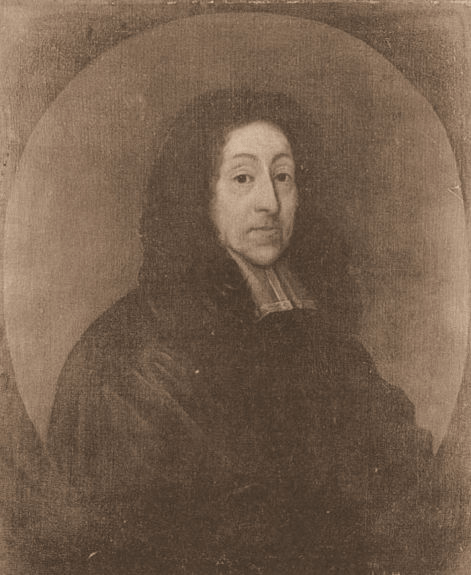
The following is a quote of Cambridge fellow John Wilson (1588–1667), writings that “the Scripture is the only Authentic Record of the Mind and Will of God, “
“For it is certain and undoubted Voice of God himself; and what that speaks, He speaks. And who so fit to interpret the meaning of the words as himself? Ejus est Interpretarm cujus est condere, is an approved Rule in Civil Law; “He that made the Law, is fittest to interpret it.” And in the present case the reason is evident; God best knows his own mind; and he hath nowhere so plainly and fully revealed his mind as in Scripture. Certainly, there can be none so sure and infallible Interpreter of these sacred Records, as the Holy Spirit that edited them; and he Interprets them, not by suggesting to us anything for their understanding which is not there already, by but speaking to us more clearly from some part of Scripture what is delivered most darkly to others. Can any man, or sort of men in the world, pretend to know the mind of God better than himself? or give us better assurance what his mind is, than the Word which himself hath appointed to be written for this very purpose? Whatsoever sense may be put upon any Scripture-assertion, and by whomsoever framed, it cannot challenge our undoubted reception, unless we can discern the Voice of God in it.”
John Wilson, The Scriptures Genuine Interpreter Asserted: or a Discourse Concerning the Right Interpretation of Scripture (In the Savoy: Printed by T. N. for R. Boulter, at the Turks Head in Cornbil, over against the Royal Exchange, 1678), 215-216.