I John 4:3: Is it “Deny” or “Confess”?

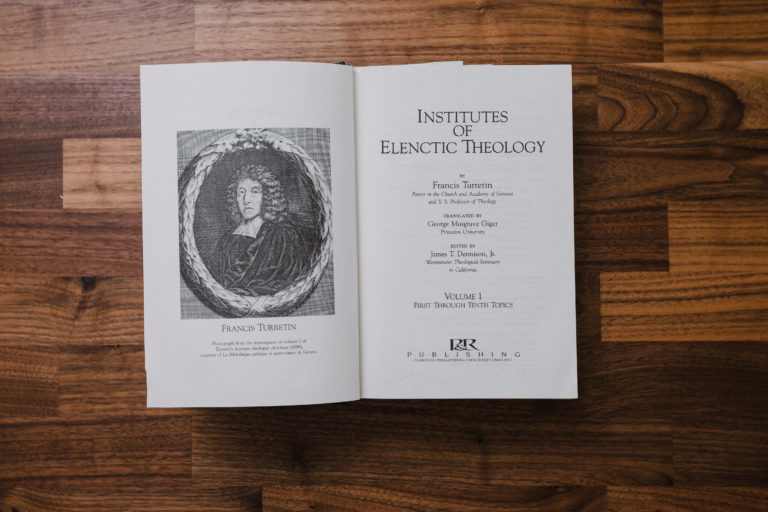
As we continue our survey of contemporary “meaningful textual variants” known and answered hundreds of years, we turn now to 1 John 4:3. Turretin observes that the text can be read, “Every spirit that confesseth not that Jesus Christ is come in the flesh” or as the Latin translates it, “every spirit that denies Jesus.” The editors of the CT observe at least two major variants in 1 John 4:3. The first revolves around whether “does not confess” or “denies” is original and the second is whether “is come in the flesh” is original or should be left out. Omanson observes of the first,

“The external support for the reading in the text [does not confess] is overwhelming. The variant λύει (looses) in some ancient versions and Church Fathers probably arose in the second century as a result of disputes in the church about the person of Jesus.”

Roger Omanson, A Textual Guide to the Greek New Testament, 509.

Regarding whether or not “is come in the flesh” is original, Omanson writes,

“Good manuscripts of both the Alexandrian and Western text-types support the reading in the text [the Jesus]. The various longer readings, such as Ἰησοῦν Χριστὸν (Jesus Christ) and τὸν Ἰησοῦν ἐν σαρκὶ ἐληλυθότα (Jesus in the flesh has come), are expansions made to agree with statements in the previous verse.”

Roger Omanson, A Textual Guide to the Greek New Testament, 510.

As such it is the opinion of the editors of the CT that “confesses not” is original, but “is come in the flesh” is not original and therefore should be excluded from the text. Omanson admits that there are longer readings in the manuscript tradition regarding the latter variant but holds that shorter is better and therefore what he sees as an expansion is most likely not original. But as we have seen in prior examples, longer readings or what Omanson calls here, “expansions,” were not seen as marks against a reading being original at the time of the Post-Reformation dogmaticians.

Turretin observes of this textual variant,

“It is true that all the Greek copies differ from the Latin on 1 Jn. 4:3…Yet it does not follow that the sources are corrupt because the Greek reading is both more majestic and far stronger against the Nestorians and Eutychians.”

Francis Turretin, Institutes of Elenctic Theology, vol. 1 Second Topic, Q. 10, Sec. XXIV.

Not first that Turretin’s argument is theological in nature by invoking the criteria of majesty to make his point. It is common in Early and Post-Reformation protestant theology to claim “the majesty of the matter” as one of the internal evidences of the inspiration of the Scripture. Here Turretin uses “majesty” as a means to defend the longer reading [Jesus is come in the flesh].

Second, note that Turretin’s reason for defending the longer reading is polemical or apologetic, if you like. Turretin’s argument at this point is in part based on a theological defense of Christian orthodoxy against the Nestorians and the Eutychians. The former diminished the union of Christ’s two nature while the latter diminished the human nature of Christ in light of His divine nature. Turretin sees “is come in the flesh” as a theological polemic against those who would seek to diminish the hypostatic union or to diminish the humanity of the God-Man.

Third, note what Turretin calls the Greek apographa – the sources. By phrasing it this way Turretin is not making an appeal to the originals to make his case for inspired Scripture. He is appealing to the copies, indeed a canonical apographa, which he calls the sources. And based on those sources he goes on to make claims against Rome’s Vulgate and heresies like Nestorianism and Eutychianism. If Rome believed their Vulgate to be the word of God, and they did, it would not due for Turretin to say something like, “Well, the actual Bible is either in the text or apparatus or in manuscripts we haven’t found yet” or “I know you think your Bible is the word of God, but you should come to our side because our Bible is a sufficiently reliable form of God’s word.”

Back to the point, Turretin’s argument here for the longer reading of 1 John 4:3 does contain the use of evidence […all the Greek copies differ from the Latin], but the bulk and emphasis of his argument rests upon theological considerations. This is all we are calling for here at StandardSacredText.com. Make your arguments primarily from an exegetical and theological grounding and then support that exegetical and theological grounding with the available evidence.

Finally, as we have now seen for the third time, Pre-Critical textual criticism varies greatly from Post-Critical textual criticism or what we call modern evangelical textual criticism. It varies in method at two points at least: 1.) Theology is primary in the interpretation of competing variants and 2.) The shortest, hardest, and oldest reading is not a paradigm held by the Pre-Enlightenment scholarship. Pre-Enlightenment textual scholarship is theologically based, starts at a different place [i.e., with the Church’s Bible which was the TR at that time], and uses a different methodology, than Post-Enlightenment textual scholarship. It is no wonder then that modern textual scholars come out with different interpretations of the evidence and different products from their Reformation era forbearers.

What About Children and the Illiterate Who Cannot Read the Scripture?

One of the promises of Isaiah 59:21 is that the word will be the mouth of the covenant keeper. The four-fold reference to the words, in thy mouth, speaks of perpetual accessibility for edification, evangelism, meditation and conversation. But what about the illiterate adult or the young child who cannot read. Of what value is the Scripture to them?

Turretin points out that the universality of this promise to every individual believer or church at every point throughout history is not the emphasis. Dealing with individuals who cannot read, such as young children, and thus could not have the word in their own mouths of their own accord, Turretin writes, “Although the Scriptures formally [the writing] are of no personal use to those who cannot read (analphabetous), yet materially [the doctrine] they serve for their instruction and edification much as the doctrines preached in the church are drawn from this source.” Turretin, Institutes, 59.

This succinct statement demonstrates the effectiveness of the doctrinae substantia through verbal communication. That as the voice of a man or woman communicates the word of God, in the spoken word of God the hearer hears the viva Vox Dei, the living voice of God. At the entry for viva vox and viva Vox Dei Richard Muller writes,

“This term was applied to the Word of God spoken directly to Israel before the Mosaic inscription of the law to the Word of God spoken directly to the prophets. In addition, because of the Reformers’ emphasis upon the power and efficacy of Scripture, the term was used by the Reformers and the Protestant orthodox to indicate the reading aloud of vernacular Scriptures during worship. Reformation and post-Reformation interpretation of Scripture, for all its emphasis upon a strict grammatical reading of the text, holds in common with the earlier exegesis a sense of the direct address of the text to the present-day church. The preacher is not one who applies an old word to new situations, but rather he is a servant and an instrument of the living Word, the viva Vox Dei, for its effective operation in the world.” Muller, Dictionary, 328

The speaker of the written Scripture, according to Muller’s research, “is a servant and an instrument of the living Word, the viva Vox Dei, for its effective operation in the world.” A dependent audience for this effective operation is those who cannot read. Considering that in cities like Baltimore, MD, 77% of high school graduates read on an elementary level or not at all, the importance of the spoken Word is heightened. The Bible Version debate is essentially less relevant to the child and the illiterate, their soul’s future depending on the clear articulation of the viva Vox Dei to them by parents and servants of the Lord.

Are there any critical text proponents that argue that their preferred novel version is the viva Vox Dei? If it is not the living word of God they are sharing, what hope do they give to those who cannot read?

The Unanswered Dean John William Burgon (1813-1888) on the Last Twelve Verses of the Gospel of Mark, part 2.

Dean John William Burgon was a contemporary of Brooke Foss Westcott and Fenton John Anthony Hort and the formulation of The New Testament in the Original Greek published in 1881. This volume was followed by the Introduction to the New Testament in the Original Greek (New York: Harper and Brothers, 1882) which describes the scientific method used in its creation to the end that the false claim that it was the “Original Greek” would replace the Received Text. Burgon took up the challenge of this novel Greek contender and exposed the fallacies underlying its construction. An unparalleled expert in the writings of the Early Church Fathers, Burgon’s research exposed the erroneous suppositions of the novel text with erudite comprehensiveness. His arguments to this day remain unanswered. We pick up his discussion on page 326.

“Now in the face of facts like these, [see part 1 of this series], and in the absence of any Evidence whatever to prove that S. Mark’s Gospel was imperfect from the first, –I submit that an hypothesis so violent and improbable, as well as so wholly uncalled for, is simply undeserving of serious attention, For,

1st. It is plain from internal considerations that the improbability of the hypothesis is excessive; “the contents of these Verses being such as to preclude the supposition that they were the work of a post-Apostolic period. The very difficulties which they present afford the strongest presumption of their genuineness.” No fabricator of a supplement to S. Mark’s Gospel would have ventured on introducing so many minute seeming discrepancies: and certainly “his contemporaries would not have accepted and transmitted such an addition,” if he had. It is also been shown at great length that the Internal Evidence for the genuineness of the Verses is overwhelmingly strong.[1] But,

2nd. Even external Evidence is not wanting. It has been acutely pointed out long since, that the absence of a vast assemblage of various Readings in this place, is, in itself, a convincing argument that we have here to do with no spurious appendage to the Gospel. Were this a deservedly suspect passage, it must have shared the fate of all other deservedly (or undeservedly) suspect passages. It never could have come to pass that the various Readings which were these Twelve Verses exhibit would be considerably fewer than those which attach to the last twelve verses of any of the other three Gospels.

3rd. And then surely, if the original Gospel of S. Mark had been such an incomplete work as is feigned, the fact would have been notorious from the first and must needs have become the subject of general comment.[2] It may be regarded as certain that so extraordinary a circumstance would have been largely remarked upon by the Ancients, and that evidence of the fact would have survived in a hundred quarters. It is, I repeat, simply incredible that Tradition would remain quite silent on such a subject, if the facts had been such as are imagined. Either Papists, or else John the Presbyter, –Justin Martyr, or Hegesippus, or one of the “Seniores apud Irenaeum,” –Clemens Alexandrinus, or Tertullian, or Hippolytus, –if not Origen, yet at least Eusebius, –if not Eusebius, yet certainly Jerome, —some early Writer, I say, must certainly have recorded the tradition of S. Mark’s Gospel, as it came from the hands of its inspired author, was an incomplete or unfinished work. The silence of the Ancients, joined with the improbability of the conjecture, — (that silence so profound this improbability so gross!) – is enough, I submit, in the entire absence of the Evidence on the other side, to establish the very contradictory of the alternative which recent Critics are so strenuous in recommending to our acceptance.

4th. But on the contrary. We have direct yet convincing testimony that the oldest copies of all did contain the Verses in question: while so far are any of the Writers just now enumerated from the recording that these verses were absent from the early copies, that five out of those ten Fathers actually quote, no less refer to the verse in question in a way which shows that in their day they were the recognized termination of S. Mark’s Gospel.”[3]

During my undergraduate work I argued for the superiority of the TR/KJV position based on Burgon’s research. My professor, also aware of the witness to TR readings by the Early Church Fathers, knew the academic assertion that the TR was only based on newer manuscripts was a prevarication, which lead him to say, “The King James, Received Text position is the only logically defensible tradition, but don’t get the idea I’m in your camp.”

John W. Burgon, The Last Twelve Verses of the Gospel According to S. Mark (Erlanger, KY: Faith and Facts Press, nd, 1871), 326-328


            [1] See Chapter 9.

                [2] Speaking of the abrupt termination of the second Gospel at ver. 8, Dr. Tregelles asks, –“Would this have been transmitted as a fact by good witnesses, if there had not been real grounds for regarding it to be true?” (Printed Text, 257.) Certainly not, we answer. But where are the “good witnesses” of the transmitted fact?” There is not so much as one.

            [3] See Chapter 3.

What Do You Mean by “Earlier Readings”?

It has often puzzled me why an appeal to reading as “earlier” somehow trumped most claims to different but “later” readings. Consider the following quote from Wasserman and Gurry’s book, A New Approach to Textual Criticism: An Introduction to the Coherence-Based Genealogical Method,

“Reading a, on the other hand, is not attested until the ninth century in majuscules such as 018, 020, and 025, all of which are Byzantine.”

Wasserman and Gurry, A New Approach, 72.

What does the phrase “is not attested until the ninth century” mean? Perhaps I am the odd one out on this one but such a phrase as unadorned as it is seems to indicate that reading “a does not appear on the historical scene until the ninth century. The fact is that the “not attested until” is conditioned by the current manuscript evidence. As such, “is not attested until the ninth century” should be followed by, “as far as we know” or “according to the limited number of manuscripts we currently have”. Reading “a” very well may have appeared before the ninth century, but we don’t have those manuscripts. I intend on discussing this point later on in this post.

“Is not attested until the ninth century” means considering the current manuscript evidence we do not have a manuscript which attests to reading “a” until the ninth century which is not the same as “Reading ‘a‘ did not appear in history until the ninth century.” The former definition is relative to other manuscripts we have at present and our understanding of them while the latter is ontological, temporally defined. The former is a matter of interpretation and the latter is a matter of whether or not reading “a” came into being at that time [i.e., the ninth century].

At the rise of the CBGM we are finding out that later manuscripts like Byzantine minuscules actually contain very early readings. In other words, many of our youngest manuscripts [ontological, temporally defined] contain many of our oldest readings [relative to other readings we have in hand]. If this seems odd to you, consider the following quote from Wasserman and Gurry:

“With the advent othe CBGM, however, the editors of the ECM (and NA28/UBS5) have reevaluated the external evidence and concluded that the Byzantine manuscripts may indeed preserve very early readings, even ones that have disappeared from other streams of the textual transmission.’

Wasserman and Gurry, A New Approach, 72.

The editors of the ECM (Major Critical Edition) have now come to the conclusion that our youngest manuscripts may preserve very early readings, even very early readings which have vanished from certain streams of textual transmission. Given this last observation, ninth century manuscripts can have readings which appear no where in that manuscripts transmission stream but are nevertheless very early readings. That is to say, it is eminently possible that there are readings in young manuscripts which have no transmission history but are still very old. And the reason we don’t know these manuscripts is because the manuscript sample [i.e., 5,600+]does not contain them.

As a result, the modern text critic is treating the measure of what is later and what is earlier based only on the manuscript evidence we currently have as if that is complete enough to account for the form of this or that manuscript. We know now that young manuscripts have very old readings in them yet we have no manuscript stream to show how the reading came from the old manuscript and was finally copied hundreds of years later in the young manuscript. The CBGM is teaching us that there are potentially huge gaps between manuscripts which we do not have, but historically existed. And seeing we do not know what those manuscripts recorded, we can only guess on their form.

As such, the text-critic has a huge question to answer from a purely historical perspective, that is, without employing his Christian precommitments. That question is, how do you know that the manuscript stream which intervenes between the very old manuscript that has the very old reading and the very young manuscript which still retains the very old reading is not meaningfully different and more consistent with the original? If some manuscript/reading in that missing transmission stream is indeed meaningfully different and more consistent with the original and we do not have that/those document(s)/reading(s) then we do not have the Bible in that reading. And if that reading is in the Gospels, then perhaps we are indeed misquoting Jesus.

But this idea of young manuscripts containing very old readings is not a passing observation. Consider these quotes from Wasserman and Gurry,

“In this, they [the ECM editors] concluded that the much later Byzantine manuscripts have preserved the earliest reading, an application of the principle that early readings can be preserved in late manuscripts.”

Wasserman and Gurry, A New Approach, 73.

“… late manuscripts may not preserve merely early readings; sometimes they may preserve the earliest readings.”

Wasserman and Gurry, A New Approach, 79-80.

“But the ECM now following the reading translated by the KJV and found in most later Greek witnesses, which says instead that ‘they gave their lots…and the lot fell on Matthias…Still this variation serves as a good illustration, not least because it is a case where the ECM editors once again show their willingness to follow Byzantine manuscripts against the earlier and most important witnesses such as 01 [Sinaitaicus], 02, 03 [Vaticanus], 04, and 05C1.”

Wasserman and Gurry, A New Approach, 81.

“As Wachtel puts it in his commentary, early texts ‘are not necessarily preserved in early manuscripts.'”

Wasserman and Gurry, A New Approach, 86.

The point is that there are many old readings in many new manuscripts regardless if there is an extant manuscript stream or not. The manuscript is late in history but its content/readings are early relative to the manuscript/readings we currently possess, and that without a known transmission stream.

In sum, we here at StandardSacredText.com can account for the preservation of old readings in new manuscripts from a theological perspective. We don’t need the evidence of a manuscript stream to support our conclusions. The modern evangelical text critic on the other hand must admit that there are an unknown host of manuscripts between the old manuscript with the old reading and the new manuscript with the old reading. We know those manuscripts existed as part of the transmission stream. How many? We don’t know. Whether they still exist and can be found? We don’t know. What they said? We don’t know. Whether they have readings that are original which we do not have? Again, we don’t know. How many unknown manuscripts containing how many unknown original readings in lost transmission stream X are we missing? The text-critic does not know nor can they know until they find said manuscripts and readings.

The text-critic does not know.

Abram Kuyper’s Principles of Sacred Theology (1898) and the Rebellion Against God

Turning to the work of statesman and theologian Abram Kuyper (1837-1920), we read of the attack of the historical critical method upon Scripture, the formal principium. Note the continuity of Kuyper’s argument with that of the Apostle Paul in 1 Corinthians 2:14-15. In erudite form, Kuyper laments,

It is unfortunate, however that in the olden time so little attention was paid to the formal principium [Holy Scripture]. For now it seemed altogether as though the still darkened understanding was to investigate Scripture as its object, in an entirely similar way to that in which this same understanding threw itself on plant and animal as its object. At first this compelled the understanding to adapt and accommodate itself to the authority of the Holy Scripture, which then maintained a high position. But, in the long run, roles were to be exchanged, and the neglect of the formal principium was to bring about a revision of the Scripture in the sense of our darkened understanding, as has now actually taken place. For if faith was considered under Soteriology, and connection with faith the ‘illumination,’ what help was this, as long as theology itself was abandoned to the rational subject, in which rational subject, from the hour of his creation, no proper and separate principium of knowing God has been allowed to assert itself? Abram Kuyper, Principles of Sacred Theology (Grand Rapids: Eerdmans, 1954, 1898), 347-348

Written in 1898, the “revision of Scripture” that “has now actually taken place” is unspecified. A fair assumption is that Kuyper is referring to the Westcott and Hort Greek New Testament published in 1881 that preceded Nestle’s 1st edition Greek New Testament published in 1899. Kuyper strikes at the transcendentless crux of the historical critical method. At first studying Scripture like every other discipline, with a “darkened understanding” accommodated itself to Scripture. But in time, the authority of Scripture, the formal principium was exchanged for a “revision of the Scripture in the sense of our darkened understanding” [or natural understanding]. Kuyper asks what good is this development as long as the study of God is abandoned to men, men who from their creation have rebelled against God, and in this rebellion are incapable of knowing God — “as long as theology itself was abandoned to the rational subject, in which rational subject, from the hour of his creation, no proper and separate principium of knowing God has been allowed to assert itself.” It is a process where those governed by the “darkened understanding” of the natural man who considers the things of the Spirit foolishness, regard the Scripture as his object to be investigated like animals and plants. Welcome to the world of the historical critical method now embraced by many that should know better.

So We Got To Talk About Andy Stanley

Whether you run in popular evangelical circles or not your most likely have heard of Andy Stanley, son of Charles Stanley. Andy Stanley has over the years made some notable and provocative statements about the Bible. On June 13, 2014 Stanley tweeted,

“Why we must teach the next generation the FOUNDATION of our faith is an EVENT not a BOOK:”

He followed this tweet up with an article from Buzzfeed written by a person who was steeped in Christianity when he was young but has since then abandoned the faith.

Then of course there is the famous, “We must unhitch the Old Testament from our faith” statement on April 30, 2018.

Last Sunday, March 6, 2022, Andy Stanley continued this particular theme when he preached or gave a religious talk [I think “preached” is a bit generous, but he certainly did proclaim the following],

“The Christian faith doesn’t rise and fall on the accuracy of 66 ancient documents. It rises and falls on the identity of a single individual: Jesus of Nazareth.”

The bulk of Stanley’s talk revolves around an evidential approach to the reliability of the Gospel account. If the Gospel accounts are historically reliable then the existence, coming, and actions of Christ are also reliable. That is reasonable to a point, and a fine one in a very narrow sense but the cost of making this statement was too high.

First, let us make some observations about Stanley’s point and then make some broader observations regarding the Scriptures in general. Note that Stanley employs the Bible without employing what the Bible is. The Bible is the inspired infallible revealed word of Almighty God, but Stanley would have us treat the Bible like a mere historical witness to potentially miraculous things. That said, he can’t get away from the Bible in his attempt to make a case for the divinity of Jesus form the Gospels. So to simultaneously say that our Christian faith doesn’t rise and fall on the accuracy of 66 ancient documents only to turn around and make a plea for the accuracy of ancient documents seems a bit silly, counter intuitive, and self-defeating. But hey, he’s got a big church and a bunch of Twitter followers so…checkmate. On this point Stanley sidelines reason for the moment in order to make his point.

Note that by considering the Bible a mere historical witness the concept that faith comes by hearing and hearing by the word of God translates into faith comes by hearing and hearing by reliable historical witnesses. In short, Stanley is preaching is a church on a Sunday and he still will not put forth his Christian precommitments as primary and necessary to the preaching of the Christian Gospel. If you don’t need to think and speak in Christian terms to preaching the Christian Gospel then maybe it is not necessary that you be a Christian at all [See the President of Harvard Chaplains, an atheist, as an example]. The striking thing is that Stanley is on home turf playing for the home crowd but he is theologically hedging as if he is in enemy territory and in danger of being ratted out as a spy only to finally be hanged. On this point Stanley sidelines his Christian precommitments for the moment in order to make his point.

Later, in this same talk, Stanley shows us a chalkboard diagram which starts with an event [the resurrection] that leads to a movement [Christianity] and that movement is recorded [in the Gospels] and then 300 years later we get the Bible. Therefore, the account is not a Bible story, he says, but Bible is a result of the Jesus event. Stanley is probably unaware of the fact that this kind of talk, juxtaposing event, revelation, and history is just a watered down version of Barthian Crisis Theology.

Karl Barth argued in the name of a kind of Neo-Orthodoxy that Scripture was mere historical record, then at some point in time you may read that record and God in the person of Christ, who is absolutely free, will decide to encounter you [event] through the record and in that moment the record becomes the inspired word of God to you. After your crisis encounter with Christ, if you go to share your experience with your wife or friend, then your experience is now record and not inspired word of God. One more thing. Just so we are clear, most of the Bible was already written [i.e., the Old Testament] hundreds of years before “The Event”. So of course you would say such things like the account of Jesus is not a Bible story because you have already unhitched the OT from your faith. On this point Stanley is about as much a Crisis Theologian as you can get in order to make his point.

It seems to me that Stanley really didn’t think his way through this very much. There is no doubt that a true Christian understands that Christ is the ontological foundation of Christianity. Indeed, Christ is the center of the center. We can get no more foundational than Christ the Chief Cornerstone. That said, there is no way we can come to know Christ and to know Him by faith except through the word of God, through Scripture. In this sense, the Scriptures are the epistemological foundation and these two foundations, ontological and epistemological, are not mutually exclusive. They can occupy the same intellectual ground without conflict. As such, both Word of God [Christ] and the word of God [Scripture] can serve as foundations. The being and office of Christ is dependent upon Him but our knowledge of Christ’s being and office is dependent upon Scripture. Indeed, our knowledge of Christ is dependent upon the reliability and accuracy of 66 ancient documents. On this point what Stanley doesn’t know has come back to hurt him so that he could make his point.

I can’t help but make the correlation between Stanley’s failure in this instance to be overtly Christian in a Christian church among Christians and that of Christian professors’ failure to be overtly Christian in Christian institutions among Christian students when dealing with textual criticism. Both Stanley and the college professor are at home playing for the home team. Both are unashamedly stingy with their Christian precommitments when engaging in their respective enterprises. Both are overtly evidential in their methodology. Both aim to treat the Bible as a mere historical witness. Both have little problem speaking of ancient peoples as scientifically illiterate and superstitious because they didn’t understand modern science the deliverances of which have given us abortion on demand, sex transition therapy, 5600+ manuscripts, the fact/value divide, an “embracement of riches,” and more efficient and impersonal ways of killing people which includes the most efficient and impersonal of them all – nuclear weapons. Both Stanley and the CT/MVO advocate are on the popular end of the socio-cultural scale spectrum in ecclesiastical circles, and both seem to make strident efforts to impress their god-hating interlocutors with their balance, neutrality, and even-handed approach to the Gospels and what they teach.

Lastly, can we really blame Andy Stanley for speaking as he does? In preparing for this post I read several posts and blogs about how Stanley needs to step down or how bad his words look for Christianity and for the Gospel in particular. Why? All he is doing is preaching in a fashion consistent with text-critical methodology. What? You didn’t think modern text-critical methodology wouldn’t make it into the pulpits of the West when its marks are all over the Bible resting on that pulpit?

Stanley and the CT/MVO advocate assume a neutral position, remove the miraculous from the equation [at least initially], make a series of historically based arguments, then based on this seemingly neutral grounding compel others to come to your side which you call orthodox Christianity. Then when they do come to your side you backtrack for years trying to explain to God’s people that what really matters is that the Bible is inspired and infallible. But because you started the discussion from “neutral ground” you need to make up reasons why errors or additions or omissions don’t really affect the doctrine that you say really matters. Then people like Bart Ehrman call your bluff and leave the faith. In short, Andy Stanley’s treatment of the Bible is perfectly in line with the current evangelical way of treating manuscripts, from which we get the Bible. So give the man some space. He is an honest product of the CT/MVO process and methodology. Or in other words,

“Hear me and rejoice. You have had the privilege of being saved by the great Text-Critical Enterprise. You may think this is suffering, no. It is salvation. The universal scale tips toward balance because of your sacrifice. Smile. For even in death, you have become children of Reasoned Eclecticism.

Ebony Maw (Probably), Infinity (Textual) Wars, 2018.

A Seminarian’s Reason for Loving the Trinitarian Bible Society’s Received Text

The first reason to love the TBS TR is because it is blue and not red. Probably no one else on campus will have a blue Greek text which opens countless opportunities to begin a didactic, polemic, or apologetic dialogue. Most seminarians don’t know that there is an alternative to the UBS Greek text, so the presence of an alternative is very interesting, almost exciting. “So, what’s the difference?” your colleagues ask. “Well,” opening the text, “here’s Acts 8:37, here’s 1 John 5:7, and here is the long reading of Mark.” That information usually was immediately too much for UBS centered grad students to swallow resulting in confusion and consternation. This text represents something bigger than itself, and they were not sure they wanted to pursue that path. Indeed, while I had sympathetic friends, adopting the TR appeared to be too great a professional liability.

The second reason to love the TBS TR is because it provides another platform for learning. Two Greek texts are on your desk while you do your work. Though the lecture may be one-sided the material gleaned is not. With the TBS TR the student will make his/her learning more robust and satisfying. I found that the more theologically “liberal” the institution the more flexible the professors were with opposing views which is good for someone carrying a TBS TR.

The third reason for a seminarian to love the TBS TR is because in monolithic academic environments whether denominational or philosophical, another Greek text is a sort of theological rebellion against institutionalized, linguistic big brother that permeates Academia. The blue TBS TR says “No, the textual issue isn’t monolithic and there is an historic alternative to the novel red UBS text.”

The fourth reason to love the TBS TR is because you can purchase a TR with a beautiful, soft, leather cover. This may not mean much but presentation communicates what you think of your Bible. The UBS Greek text has a manmade, plastic cover, that chips and breaks especially when it is cold. The UBS text’s construction communicates disposable or recyclable, which it is with the publishing of each new edition. The leather-bound TBS TR is something that can be passed down through generations indicative of the enduring worth of is content.

Just a few of the benefits of holding to the KJV/TR position. Blessings!

Luke vs. Matthew and the End of the Lord’s Prayer

As it was in the time of Turretin so it is in our time that we discuss whether the ending or doxology of the Lord’s prayer is original. Pointing out again, these debates are not new. It is not like the originality of the Lord’s prayer was something modern scholars fortuitously stumbled upon in their work. Rather such questions and argumentation were leveled by the Roman Catholic Church centuries before in an attempt to besmirch the certainty and authority of the Greek and Hebrew apographa thus making room for the certainty and authority of the Latin Vulgate. The questions are the same, but the source of the questions has changed. Where before it was Roman Catholics pressing these questions against Protestants now it is Protestants pressing these questions against Protestants.

Looking now to Turretin, he writes of the ending of the Lord’s Prayer or what he calls the doxology,

“Although the doxology (doxologia) which appears at the end of the Lord’s Prayer (Mat. 6:13), is not found in Lk. 11, nor in the various copies, it does not follow that the passage is corrupt.”

Francis Turretin, Institutes of Elenctic Theology, Second Topic, Question 10, Sec. XXII.

Note that Turretin affirms the existence of the doxology in Matthew and then in acknowledging that truth goes on to defend why Luke does not have it. I admit that the major thrust of today’s debate over the end of the Lord’s Prayer revolves around whether it belongs in Matthew. Still, as we work through Turretin’s argument we will see how he would have us deal with Matthew’s account.

Omanson says of the Matthew’s account,

“Early and important manuscripts of the Alexandrian, Western, and other types of text, as well as commentaries on the Lord’s Prayer by early Church Fathers, end the Lord’s Prayer with word πονηροῦ in v. 13. Copyists added several different endings in order to adapt the Prayer for use in worship in the early church.”

Roger Omanson, A Textual Guide to the Greek New Testament, 8.

We will get to Omanson’s claim in a minute, but back to Turretin’s treatment of the Lord’s Prayer in Luke, Turretin makes two arguments for the different endings of the Lord’s prayer – the one in Matthew and the one in Luke. The first argument takes the form of

“…because our Lord may have twice proposed the same form of prayer: first in the private instruction of his disciples without it and then to a promiscuous crowd where he added it.”

Turretin, Institutes, Second Topic, Question 10, Sec. XXII.

Turretin’s second argument take the form of the following,

“Nor is it unusual for one evangelist to omit what another has mentioned, since they did not think it necessary to record absolutely everything; as for instance Mt. 6:33 has ‘seek the kingdom of God and his righteousness,’ but Lk 12:31 simply ‘seek the kingdom of God.’

Turretin, Institutes, Second Topic, Question 10, Sec. XXII.

Now you might not think these arguments to be sufficient to your liking. Ok, so be it. The point is that Turretin was aware of the objection to the doxology of the Lord’s Prayer. Furthermore, Turretin makes a cogent and reasonable accounting for the difference and for the doxology in general. In short, you may not like his reasons, but his reasons are sufficiently reasonable and account for the phenomena of Scripture. But what about the doxology as it appears in Matthew? What does Turretin have to say about that in light of its absence from Luke? In concluding his remarks on this passage in Luke when compared to Matthew, Turretin writes,

“We must not therefore erase, but supply from Matthew what Luke has omitted, since both were inspired (theopneustos), especially as the full form exists in all the Greek copies of Matthew, according to Erasmus and Beza.”

Turretin, Institutes, Second Topic, Question 10, Sec. XXII.

This is a beautiful example of the kind of text-critical methodology we advocate for here at StandardSacredText.com. Turretin objects to the claim that we should remove the doxology from Matthew because it is not in Luke for two reason: First, Turretin clearly shows his Christian precommitments in his decision about the doxology by admitting and proclaiming that both Matthew and Luke were inspired. Second, after grounding himself in a theological assertion he then goes on to employ evidence that according to Erasmus and Beza all the Greek copies have the doxology in Matthew. Note here that Turretin does not weigh manuscripts but rather counts them when using the term “all”.

In this brief example we see that the debates over such readings like the doxology of the Lord’s Prayer are old and have been answered for hundreds of years. We also see Turretin’s commitment to a clear confession of his Christian theological precommitments in making a judgment about a reading. We then see that within the matrix of theological precommitments, Turretin employs evidence as support and not as primary to buttress his case. And finally, we observe that in this case, pre-critical “textual criticism” thought that the number of manuscripts bore considerable weight in the decision-making process.

To my CT/MVO brothers, it is probably best to stop with the charade that Pre-Critical and Post-Critical textual criticism are cut from the same cloth and further it is best that we agree that so many of these objections were answered 100 years before the United States of America became a nation. That said, it very well may be our responsibility to answer these questions again for a new generation of Scripture skeptics. Still, it wouldn’t be so bad if the Scripture skeptics were enemies of the Gospel, but instead the skeptics are our brothers in Christ.

The Irrelevance of Counting Manuscripts (MSS)

After reading Dean John William Burgon’s unanswered defense of the long ending of Mark and reflecting to the genius of his argument, several of his observations lingered with me this morning that apply to the transmission of all MSS to a greater or lesser degree.

First, because the process is unquantifiable not knowing what the autograph looks like, the counting of MSS gives no illumination to resolve the lost autographa dilemma. If the exemplar or “initial” text, was mutilated and copied many times the number of mutilated witnesses would outweigh the single, correct, unmutilated copy. To say there are more MSS is to say nothing relevant in the collation of preserved inspired words. (This is also true for the Majority Text, as if the majority reading somehow bridges the gap between the “initial” text and the autographs.) The one exception could be the original reading, but the scholar cannot know for sure. Under these circumstances, all the quantifying textual critical genealogical rules are incorrect. If the oldest was mutilated, it is the shortest, the source of all other mutilated MSS, and in its mutilation harder to read. So the majority text and critical text meet all the criteria for the modern genealogical method but has not delivered the true reading of the passage though it has passed the standard of the critic.

The two essential elements missing in this scenario are the witness of the Holy Spirit through the Church and the linguistic acumen of scholars in their personal recognition of the churchly text, the written Word. Since the 1st century, God has not left his people without the Word. If you want to find the Word, find God’s people and vice versa. The scholar’s work is futile if the Spirit does not bear witness through his linguistic labor to the Church. The Church is not engaged in the scholarly work or comparison and collation, but the Church is the body through which the Spirit receives or rejects the scholar’s work. The interaction between the Church, Spirit, and Word is unquantifiable but effective in identifying the preserved word of God. This makes the witness of the Spirit through Church to the reading of text the final arbitrator of the scholars’ labor.

So, along comes a mutilated MS that omits large portions of Scripture, like the long ending of Mark. It is already suspect because the Church has never seen a document that reads as it does when compared to the text they have already received. The Church, in response, recognizes the attempt to quantify the unquantifiable by the interloping novel methodology and rejects the novel text as unsustainable thus keeping the theological precommitments of the Church in place and continuing to hold to the King James Version as the Standard Sacred Text for English-speaking people.

The Unanswered Dean John William Burgon (1813-1888) on the Last Twelve Verses of the Gospel of Mark

        The following is a brief excerpt of Dean Burgon’s 400 page defense of the authenticity of the long ending of the Gospel of Mark. This section is near the end of his erudite apologetic. 

It being freely admitted that, in the beginning of the 4th century, there must have existed Copies of the Gospels in which the last chapter of S. Mark extended no further than ver. 8, the Question arises, — How is this phenomenon to be accounted for? The problem is not only highly interesting and strictly legitimate, but it is even inevitable. In the immediately preceding chapter, I have endeavored to solve it, and I believe in a wholly unsuspected way.

But the most recent Editors of the text of the New Testament, declining to entertain as much as the possibility that certain copies of the second Gospel had experienced mutilation in very early times in respect of these Twelve concluding Verses, have chosen to occupy themselves rather with conjectures as to how it may have happened that S. Mark’s Gospel was without a conclusion from the very first. Persuaded that no more probable account is given to the phenomenon that that the Evangelist himself put forth a Gospel which (some unexplained reason) terminated abruptly at the words efobounto gar (chap. 16:8), –they have unhappily seen fit to illustrate the liveliness of this conviction of theirs, by presenting the world with his Gospel mutilated in this particular way. Practically, therefore, the question has been reduced to the following single issue:– Whether of the two suppositions which follow is more reasonable:

First, –That the Gospel according to S. Mark, as it left the hands of the inspired Author, was in this imperfect or unfinished state: ending abruptly at (what we call now) the 8th verse of the last chapter:–of which solemn circumstance, at the end of eighteen centuries, Cod. B and Cod. Aleph are the alone surviving Manuscript witneses? Or,

Secondly, –That certain copies of S. Mark’s Gospel, having suffered mutilation in respect to their Twelve concluding Verses in the post-Apostolic age, Cod. B and Cod. Aleph are the only examples of MSS. so mutilated which are known to exist at the present day?

  1. Editors who adopt the former hypothesis, are observed (a) to sever the Verses in question from their content:[1] (b) in introduce after ver. 8, the subscription “KATA MAPKON”[2] — (c) to shut up verse 9-20 within brackets.[3] Regarding them as “no integral part of the Gospels,”[4] – “as an authentic anonymous addition to what Mark himself wrote down,”[5]—  a ”remarkable Fragment,” placed as a completion of the Gospel in very early times”;[6] —  they consider themselves at liberty to go on to suggest that “the Evangelist may have been interrupted in his work:” at any rate, that “something may have occurred, (as a result of the death of S. Peter), to cause him to leave it unfinished.”[7] But “the most probable supposition “ (we are assured) “is that the last leaf of the original Gospel was torn away.[8]

            We listened with astonishment, contenting ourselves with modestly suggesting that surely it will be time to conjecture why S. Marks’ Gospel was left by its Divinely inspired Author in an unfinished state, when the fact has been established that it was probably so left. In the meantime, we request to be furnished with some evidence of that fact.

            But not a particle of Evidence is forthcoming. It is not even pretended any such evidence exists. Instead, we are magisterially informed by “the first Biblical Critic in Europe,” – (I desire to speak of him with gratitude and respect, but S. Mark’s Gospel is a great deal more precious to me that Dr. Tischendorf’s reputation), –that “a healthy piety reclaims against the endeavors of those who are for palming off as Mark’s what the Evangelist is so plainly shown [where?] to have known nothing at all about.[9] In the meanwhile, it is assumed to be a more reasonable supposition, — (a) That S. Mark published an imperfect Gospel; and that the Twelve Verses with which his Gospel concludes were the fabrication of a subsequent age; than, –(b) That some ancient Scribe having with design or by accident left out these Twelve concluding Verses, copies of the second Gospel so mutilated became multiplies, and in the beginning of the 4th century existed in considerable numbers.

            And yet it is notorious that very soon after the Apostolic age, liberties precisely of this kind were freely taken with the text of the New Testament. Origen (A.D. 185-254) complains of the licentious tampering with the Scriptures which prevailed in his day. “men add to them,” (he says) “or leave out, –as seems good to themselves.”[10] Dionysius of Corinth, yet earlier, (A.D. 168-176) remarks that it was no wonder his own writings were added to and taken from, seeing that men presumed to deprave the Word of God in the same manner.[11] Irenaeus, his contemporary, (living within seventy years of S. John’s death), complains of a corrupted Text.[12] We are able to go back yet half a century, and the depravations of Holy Writ become avowed and flagrant.[13] A competent authority has declared it “no less true to fact than paradoxical in sound, that the worst corruptions of the New Testament has been ever subjected originated within a hundred years after it was composed.”[14] Above all, it is demonstratable that Cod. B. and Cod. Aleph abound in unwarranted omissions very like the present,[15] omissions which only do not provoke the same amount of attention because they are of less moment. One such extraordinary depravation of the Text, in which they also stand alone among MSS and to which their patrons are observed to appeal with triumphant complacency, has already been made the subject of distinct investigation. I am much mistaken if it has not yet been shown in my 7yj chapter, that the omission of the words en Efesw from Ephesians 1:1, is just as unauthorized, — quite as serious blemish,–as the suppression of S. Mark 16:9-20.

John W. Burgon, The Last Twelve Verses of the Gospel According to S. Mark (Erlanger, KY: Faith and Facts Press, nd, 1871), 323-326


            [1] Tischendorf, Tregelles, Alford

            [2] Tregelles, Alford

            [3] Alford

            [4] “Haec non Marco scrita esse argumentis probatur idoneis.” [“These things are not written by Mark, is proven by appropriate argument”]– See the rest of Tischendorf’s verdict, supra, p. 10; and opposite, p. 245.

            [5] Tregelles, Account of the Printed Text, 259.

            [6] Alford, New Testament, vol. 1, Prolegomena, [p. 38] and p. 437.

            .[7] So Norton, Tregelles, and others.

            [8] This suggestion, which was originally Griesbach’s, is found in Alford’s New Testament, vol. 1. 433 (ed. 1868). –See above , p. 12. The italics are not mine.

            [9] Vide supra, 10.

            [10] Opp. Vol 3, 671.

            [11] Eusebius, Ecclesiastical History, 4, 23. Consider Rev. 22:18, 19.

            [12] Note the remarkable adjuration of Irenaeus, Opp. 1, 821, preserved by Eusebius, lib. v. 20, — See Scrivener’s Introduction, 383-384. Consider the attestations at the end of the account of Polycarp’s martyrdom, P.P. App. 2, 614-616.

            [13] Allusion is made to the Gnostics Basilides and Valentinus, especially to the work of Marcion.

            [14] Scrivener, Introduction, 381-391.

            [15] See Chapter 6.