The State of the Bible Version Issue in 1979 and its Current Irrelevance Drawn from The King James Version Debate: A Plea for Realism by D.A. Carson.

This book is written within a radically historic framework while claiming adherence to an orthodox doctrine of Scripture. For 128 pages no reference is made to the role of the Holy Spirit/Covenant keeper/Scripture dynamic (Isa. 59:21, etc.) or to the exegesis of passages historically cited in favor of providential preservation. For the purposes of this post and those that follow the theological schizophrenia that can simultaneously hold to the Scripture as the Word of God while uncertainly and fluidly containing the words of men is not the principal point. Rather, Carson’s argument will be shown to be irrelevant based on developments in the discipline of textual criticism. Since 1979 many textual perspectives have arisen making much of Carson’s argument meaningless.
On page 10 Carson means to present a “popular rebuttal” for those who have been “influenced by the writings of the Trinitarian Bible Society and parallel groups.” His “conservative” credentials is signing on the Articles of Faith of Northwestern Baptist Theological Seminary hopefully helping him not to being “dismissed out of hand as a modernist.” This ploy, is of course, ludicrous. Part of his “bibliology” is the book. All this means is that you can sign the Articles of Faith and still be a modernist/secularist when dealing with Scripture. His self-consciousness of his orthodox standing seems disingenuous and self-serving. In the 1979 who would his contemporary interlocular be? No, Carson is making a case that he hopes would have broad popular influence. Furthermore, Carson’s reference to the TBS as a disseminator of “misinformation” separated him from the Churchly tradition and secured his place in the Academy as a true critically thinking scholar who would not allow his theological precommitments to cloud his evaluation of the evidence.
Carson limits the pre-critical advocate within a post-critical, historical frame that he undoubtedly felt at ease to answer dealing with manuscript evidence and the literary qualities of the King James Version. Not only was this framing unscholarly, not rebutting the historical/theological defense of a standard sacred text, but by this omission acting as if the manuscript evidence argument is the only argument historically utilized by the theologians of the Church.
In 1979 and since, Carson’s argument has enjoyed information dominance in the Academy which has in turn monolithically impacted the Church for many decades. But because Carson represents a position that bifurcates the Scripture from theological precommitments, Carson can claim to be theologically orthodoxy while treating the Scriptures like a any naturalist would. As if the self-appointed arbitrator of peacemaking Carson’s hubristic plea for realism is really a plea to ignore Leigh, Whitaker, Turretin, and Owen, et al, consider the Scripture a book like any other subject to the ravages of time, and accept a critical system that now accepts the impossibility of discovering the autographs and has settled for the initial text. Carson is not pleading for realism, if he were, he would have said that the notion of discovering the autographs was impossible, that there are huge gaps in manuscript genealogies, that the importance of the Byzantine text type was underestimated, and that the importance of modern textual criticism to the Church has been wildly exaggerated. He would have admitted, even if we discovered the autographs we wouldn’t know we had them.
Furthermore, the antiquated argument presented by Carson, considering the topic was the deficiencies of the standard sacred text of the Church for 500 years, mandates a recognition on Carson’s part and for those who utilized his booklet, that the core of his evidentialist argument was based on faulty data as described in Myths and Mistakes in Textual Criticism edited by Elijah Hixson and Peter J. Gurry. For what was once considered “scholarly” endorsers of Carson’s booklet should now plea for forgiveness for ruined personal relationships, churches that were split, college students that were taught error, and for the overall spiritual decline in the Church due to the misplaced zeal and bad information Carson utilized in his polemic against the King James Version and his notion of transcendentless, historic, realism. Carson and his ilk attacked the princpium cognesendi, causing great personal and ecclesiastical harm and pain, and then trudge forward having no accountability for the relational and ecclesiastical damage done.
This series is not a rejection of the Scripture as a providentially preserved historical document. What we are saying is that Scripture, as the Word of God, is not solely a historical document, and as such, possesses the quality of autopistos or self-authentication, unlike any other solely historic document. (This argument is not being made here. See our blog posts and printed volumes for an expanded explanation.) We are also saying that in a theological or philosophical system when the natural and spiritual are equal parts, in short order the natural will uproot the spiritual leaving only the empirical, and historical.
Election Sermons: The Long History of Politics and Preaching
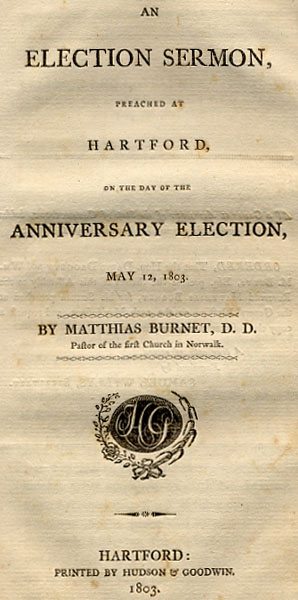
As some of you may be aware, there is a long history of sermons offered on election day. It seems like it was almost a tradition to preach on the role of government and the responsibility of the Christian citizen to vote in accordance with the dictates of Scripture. There are thousands of such sermons. This website gives you a just a taste. As you will see, some of these sermons date back to the mid-1600’s.
Below I have included one of those sermons. It was preached by William Hubbard and has the following title:
The happiness of a people in the wisdome of their rulers directing and in the obedience of their brethren attending unto what Israel ought to do: recommended in a sermon before the Honourable Governour and Council, and the respected Deputies of Mattachusets colony in New-England.
Preached at Boston, May 3rd, 1676, being the day of election there.
Below I have included an excerpt from this sermons, pages 12-13. The sermon is primarily drawn from 1 Chronicles 12:32,
“And of the children of Issachar, which were men that had understanding of the times, to know what Israel ought to do; the heads of them were two hundred; and all their brethren were at their commandment.”
I chose this section, in keeping with the theme of this blog, for a phrase which appears in the fourth paragraph which I have put in bold and underlined. When you arrive at that section note how Hubbard speaks of the Scriptures. Hubbard maintains that in order for rulers to rightly govern they must govern according to “the received rule of Scripture Language and Phrase.” He speaks of Scripture as the “received rule”, being God’s rule, reed, and standard and from this grounding can call one and all to their civic duty. The language of “received rule” looks a lot like Received Text and Authorized Version doesn’t it? Furthermore, Scripture is not merely a received rule as a whole, but also in its parts. Indeed, it is the received rule of “Scripture Language and Phrase.” Put simply, and not squeezing the passage for more than it can give, Hubbard here regards the whole of Scripture, its parts [i.e., language], and its organization of those parts [i.e., phrases] to be the received rule.
Still, it stands to reason that if God’s rule is in flux [as it is in 21st century America], then so should the rule of men be in flux. Certainly men are apt to fluctuate in their ruling temper and decisions, but if God’s rule is in flux then men ought to follow God’s lead and do the same. So next time you find yourself unsatisfied with the everchanging political winds around you remember that there is no longer a received rule of Scripture Language and Phrase and so there is no longer a received rule of Civic Language and Phrase. In such a religio-political context the Inflation Reduction Act makes perfect sense; does it not?
So in light of the elections this week I offer you this excerpt of William Hubbard’s 1676 election sermon.
______________________
In a curious piece of Architecture, that which first offers it self to the view of the beholder, is the beauty of the structure, the proportion that one piece bears to another, wherein the skill of the Architect most shews it self. But that which is most Admirable in sensitive and rational beings, is that inward principle, seated in some one part, able to guid the whole, and influence all the rest of the parts, with an apt and regular motion, for their mutual good and safety. The wisdome of the Creatour was more seen in the breath of life, breathed into the Nostrils of Adam, whereby he became a living soul, then in the feature and beauty of the goodly frame of his body, formed out of the dust, as the Poet speaks, Os homini sublime dedit— The Architect of that curious piece hath placed the Head in the fore-front, and highest sphear, where are lodged all the senses, as in a Watch-Tower, ready to be improved upon all occasions, for the safety and preservation of the whole. There are placed those that look out at the windows, to foresee evil and danger approaching, accordingly to alarm all the other inferiour powers, to take the signal and stand upon their guard for defence of the whole.
There also is the seat of the Daughters of musick, ready to give audience to all reports and messages that come from abroad: if any thing should occurre or happen nearer home, or further off, imparting either fear or evil, or hope of good; Their work is immediately to dispatch messages through the whole province of nature, to summon all the other Members together, to come in and yield their assistance to prevent the mischief feared, or prepare for the reception of the good promised, or pretended, as the nature of the case may require. Thus are all orders wont to be dispatched and issued from the Cinque ports of the senses in, and about the head, for the benefit and advantage of the whole body. Very fitly therefore in the body politick are the rulers by way of allusion called Heads. And in case of inability to discharge those functions, such societies may not undeservedly be compared to the Palmists Idols, that have eyes but see not, and have ears but hear not.
Suppose the hands be never so strong for action, or the feet never so swift for motion, yet if there be not discretion in the head to discerne, or judgement to determine what is meet to be done for the obviating of evil and danger, or procuring of good, it will be impossible to save such a body from ruine and destruction. If the Mast be never so well strengthened, and the Tackline never so well bound together, yet if there wants a skilful Pilot to Steer and Guide, especially in a rough and tempestuous Sea, the lame will soon take the prey, as it hapned a little before this time, in the Reign of Saul, when the Philistines had so often harressed that Country, and placed their Garisons in the very heart of the Land, and not long after, when in the days of Rehoboam, who had shields enough, some of Gold, with other weapons of War, many thousand stalls of Horses, with Horsemen proportionable to manage them, yet for want of wisdome and understanding in the head of that rich and populous Kingdome, how soon is it become a prey to the first assaylant, as afterwards also in the dayes of Joash; when there was but a small company of the Syrians that came against him, a great Host was delivered into their hand, and all through that ill conduct of the Head of that Kingdome.
But by the way, here we are to mark, according to the sence of the words already given; under the wisdome of conduct, or understanding of the times, to know what Israel ought to do, is necessarily comprehended piety before God, as well as prudence amongst men, according to the received rule of Scripture Language and Phrase, where as Divines use to say, verba sensus denotant affectum cordis: therefore understanding to know Israels duty, requires a great deal of divine skill and spiritual wisdome attained by Faith in Gods promises, diligent reading of the precepts of his Law, fervent and frequent prayer for divine assistance, by which means David became wiser then his Teachers, yea, was accounted wise as the Angel of God to discerne good and bad, and to know all things that were in the earth. It was by a special Law required of God that the King in Israel should have a copy of the divine Law, written out (by his own hand, say some of the Rabbines) and kept by him, that he might read therein all the dayes of his life, Deut. 17 19.20. that from thence he might receive direction how to govern his Kingdome, so that according to the excellent patern before us in the Text, it is requisite that the Heads and leaders of Israel, should be versed in Divine, as well as in humane Law.
Therefore we find, that when Solomon, after he was advanced to be the chief Head and Leader of Israel, when he had his Option granted him of God, could not ask any thing so well pleasing to God, and so needful to himself, as wisdome, or an understanding heart to judge the Israel of God, and to discerne between good and bad. As herein had David his Father before him approved himself, as a meet Shepheard over the flock of God, in feeding of them according to the integrity of his heart, and guiding them by the skilfulness of his hands, Psal. 78. ult. That is he guided them by his counsel, and preserved them by his power, in which two branches is contained the sum of a Rulers office. And though in many cases the rule is very plain and easie, and he that runs, as is said, may read what Israel ought to do; yet things may be oft times so circumstanced in Israel, that it is no easie matter to know what Israel ought to do: many times the right way lieth in a very narrow; the Channel may run between two dangerous precipices on either side, so that a man who hath not great understanding, Incidit in syllam volens vitare charybdin. A Ruler may oft times run into one or more evils, and it may be great ones too, that intended only to avoid some lesser one, yea sometimes he that resolves to keep the middle of the Channel, yet for want of insight and experience, not making allowance for emergent cases & difficulties, not easie to be foreseen, may by the setting of the Current be shipwracked on the opposite Shoar.
__________________________
Blessings.
We Shall Need the Lord Jesus…

These are the final words of Which Bible? edited by David Otis Fuller. They are a stirring and potent reminder of our longing and dependence upon the word of our Lord Jesus. I hope they can be a blessing to you as they were to me.
We shall need the Lord Jesus in the hour of death, we shall need Him in the morning of the resurrection. We should recognize our need of Him now. We partake of Him, not through some ceremony, wherein a mysterious life takes hold of us. When we receive by faith the written Word of God, the good pleasure of the Lord is upon us, and we partake of Him. Through this Word we receive the power of God, the same Word by which He upholds all things, by which He swings the mighty worlds and suns through the deeps of the stellar universe. This Word is able to save us and to keep us forever. This Word shall conduct us to our Father’s throne one high. ‘The grass withereth, the flower fadeth: but the word of our God shall stand forever.’
The starry firmament on high,
And all the glories of the sky,
Yet shine not to thy praise, O Lord,
So brightly as they written Word.
The hopes that holy Word supplies,
Its truths divine and precepts wise,
In each a heavenly beam I see,
And every beam conducts to Thee.
Almighty Lord, the sun shall fail,
The moon her borrowed glory veil,
And deepest reverence hush on high
The joyful chorus of the sky.
But fixed for everlasting years,
Unmoved amid the wreck of spheres,
Thy Word shall shine in cloudless day,
When heaven and earth have passed away.
Defending the Bible and the Accusation of Vicious Circularity

In this episode Dr. Van Kleeck Jr. discusses the ideas of infinite regress, first principles, vicious circularity, and why we can and should start with the Spirit/Word/Faith paradigm when making distinctively Christian arguments in defense of Scripture.
Properly Basic Christian Belief and Mormon Burning in the Bosom

Below is a Q&A interaction that Dr. William Lane Craig had with a questioner. You can find the original source here which first appeared on March 26, 2016. I share this question and answer to again show that there is yet another way to separate the so called “burning in the bosom” of Mormonism from that of the Spirit of God speaking through the word of God to the people of God who then accept those words of God by faith.
Again, given the following observations and my post from yesterday there certainly are robust distinctly Christian ways to address the errors of Mormonism without resorting to merely historical text-critical lines of reasoning.
_____________________________
QUESTION: Another example would be the warrant for Christianity’s truth that comes from the inner witness of the Holy Spirit. To assume that the experience of the Holy Spirit’s witness to the truth of Christianity is mere emotions is question-begging. If God does exist, He is certainly capable of communicating His truth to you in an interior way as well as through external evidences. Again, certain Christian beliefs are, I’m convinced, known to be true in a properly basic way, grounded in the inner witness borne to us by God Himself. Interestingly, beliefs based on testimony–like my belief that your name is Grant–is a properly basic belief which I am rational to hold unless and until a defeater for that belief comes along. Similarly, many Christian beliefs are beliefs warranted to us by testimony–God’s own testimony. Don’t be too quick to dismiss it, lest you fail to hear the voice of God speaking to you.”
Okay then. We have two properly basic beliefs:
(1) The testimony of others
(2) Inner witness
We know that at least one of these must be false, because the testimony of others report inner witnesses that, if accepted prima facie, would entail logical contradiction, the ur-example being the Mormon “burning in one’s bosom” that Joseph Smith was a prophet in contrast with most everybody’s inner witness that Mormonism is a pile of hooey.
Your way of resolving the contradiction is by denying (1). You think the Mormons are deceiving themselves and that you really do have the true inner witness. But this means that some properly basic beliefs are really more properly basic than others.
So that raises the following question: is the hierarchy of properly basic beliefs itself a properly basic belief?
– Tomislav
ANSWER: I don’t think you’ve properly understood the notion of properly basic beliefs, Tomislav. You mustn’t equate being properly basic with being indefeasible. Memory beliefs (e.g., “I left the car keys in the dresser”) and perceptual beliefs (e.g., “I see a cat in the backyard”) are, like beliefs grounded in testimony, properly basic but are defeasible, that is to say, they can be mistaken. The fact that my properly basic beliefs may sometimes be false does nothing to remove their proper basicality (that is, I am rational and exhibit no cognitive defect in holding such experientially grounded beliefs non-inferentially). If I become aware of some defeater of one of my properly basic beliefs, then I must give it up (or find a defeater of the defeater).
So the fact that some testimony is false doesn’t imply that testimonial beliefs are not properly basic beliefs. It only implies that such beliefs are defeasible and are sometimes defeated. I think that the Mormon’s “burning in the bosom” is an example of a false belief which many Mormons hold in a basic way.
By contrast I think that the witness of the Holy Spirit is veridical. Does this imply that “some properly basic beliefs are really more properly basic than others?” No, though adherents of so-called Reformed epistemology would affirm that properly basic beliefs do differ in their degree (the tenacity with which they are held) and depth of ingression (centrality to one’s system of beliefs). For example, my belief that “I have a head” has a greater degree of belief for me than “I left my keys in the dresser,” though both are for me properly basic. What I think you should say is that some properly basic beliefs enjoy greater warrant than others. That is not itself a properly basic belief but is just a matter of what we discover from experience.
The difference between my belief and the Mormon’s belief may just lie in the fact that, for whatever reason, the Mormon belief faces defeaters that my belief does not (e.g., DNA evidence that native Americans are not Semitic). It may be that while I have defeaters of the potential defeaters brought against my belief, the Mormon lacks such defeater-defeaters.
I suspect that what troubles you, Tomislav, is my claim that the witness of the Holy Spirit may be an intrinsic defeater-defeater, that is to say, a belief which is so powerfully warranted that it overwhelms the potential defeaters brought against it. While this claim is not essential to Reformed epistemology, it seems to me to be wholly plausible. Why couldn’t an omnipotent God so powerfully warrant belief in Himself that the believer regardless of his situation remains warranted in holding to his properly basic belief in God? What’s the problem supposed to be?
– William Lane Craig
____________________________
In like manner I would add, Why couldn’t an omnipotent God so powerfully warrant belief in His word that the believer regardless of his situation remains warranted in holding to his properly basic belief in God’s word? What’s the problem supposed to be?
Mormonism and the Spirit/Word/Faith Paradigm
I have been asked on several occasions how I would deal with the Mormon claim of the “burning in the bosom” and its similarity or identicality with the Spirit/Word/Faith paradigm propounded here and other places in defense of the inspiration and authority of the Christian Scriptures.
The short answer is that I would not abandon the clear teaching of Scripture because Mormons have co-opted Christian language and I certainly would not resort to saying that we have 99% of the NT based on oldest and best evidence only to turn around and try to make the same or more dire case for the Book of Mormon.
Instead, I would do what A. A. Howsepian did in his 1995 journal article entitled, Are Mormons Theists? The argument here is philosophical and theological in nature and strikes at the very heart of Mormonism by offering several well-reasoned defeaters which undercut the Mormon’s belief in a god. If their god is not properly a god or the God, then comparisons between “burning in the bosom” and the Spirit/Word/Faith paradigm are wholly unwarranted – the former being a merely subjective feeling precipitated by an “exalted” finite being among other “exalted” finite beings and the latter is the sui generis Triune God in the person of the Holy Spirit speaking to His people through His words.
Howsepian first observes that if the Mormon Elohim is God then he was once a finite being and has become an infinite being [via exaltation] which is not possible. Finite things cannot become infinite simply because at some point said being begins to possess omni-like powers. But assuming this were the case, the finitude of Elohim is not erased by his infinitude at some later point. Elohim had a beginning and still has a beginning and as such cannot not be infinite in being as to time, knowledge, or experience. Still, Howsepian observes that it is possible that what Mormons mean to say is, “Elohim, having once been an (unexalted) man, used to be a finite being of a certain stature. But as a result of his obedience to the laws and ordinances of his God(s), Elohim was elevated to a more exalted station of finitude” [362]. Either way, Elohim remains finite.
What is more, Howsepian points out that in some way or fashion the Mormon gods or Godhead continue to grow in their respective powers. Now there is debate about the nature of this growth but it is growth nonetheless. Howsepian observes, “At any rate, however one chooses to understand the manner in which Mormon Gods eternally progress, it is clear that within the bounds of traditional Mormon metaphysics, neither the Heavenly Father, nor the Heavenly Mother, nor Jesus the Son, nor the Holy Ghost are (individually) ‘greatest possible beings’. For it is metaphysically possible, for example, both for Elohim to have been greater (i.e. more progressed) than he presently is and for there to exist beings greater than Elohim; in fact, according to traditional Mormon theology, there actually are such beings, the Father God and Grandfather God of Elohim, for example. For, according to the doctrine of eternal progression (however one chooses to understood it), Elohim’s Heavenly Father has progressed to a degree of glory greater than the Son whom he organized.” [363]
As such the Elohim of this world is not the greatest being when compared to Elohim’s Father and Grandfather. Elohim is then a finite creature that is more powerful than the creatures over which he rules on planet earth. The Mormon Elohim is not the first God or the only God or the most powerful God. Rather for Mormons, the God of this world is on some continuum between the relative power of the god before him and the relative power of the humans that walk this planet. But this is not to say that the Mormons are ignorant of the unique Omni-God of Christianity. They fact is, as Howsepian observes, the Mormons are very aware of such a construal but they reject it. Howsepian writes,
“It is of importance to point out at this juncture, that the Mormon Church does not merely not believe in the existence of any genuine Gods, but that it in fact teaches that the Anselmian theistic alternatives as found, for example, in traditional Christianity, have been carefully considered and explicitly rejected. In light of this explicit rejection of theistic religion in conjunction with the lack of Mormon ontological resources necessary for constituting even one genuine God, I provisionally conclude that Mormons are not polytheists (or even doxapolytheists) as is widely believed, but that they are in fact atheists” [364-365].
Since Mormons reject the existence of a singular and unique Omni-God perhaps it is best and more gracious to understand Elohim as merely the perfect one of his kind rather than ultimately or absolutely perfect as with the Omni-God of Anselm. Let’s say this “perfect one of its kind” appears to be equivalent to the Omni-God of Anselm to the normal human mind. First, Mormons can conceive of a greater god than Elohim because they can conceive of the god that “exalted” Elohim [i.e., Elohim’s Father]. In this sense Elohim cannot be the perfect one of its kind. First, because he is created and second, because he is created by a greater god. What is more, Elohim could be greater than he is were he created earlier in the generation of gods. So Elohim could be greater than he currently is, but alas he is not.
Howsepian goes on, “Perhaps there is some manner of adequately construing deity which has escaped us and which can comfortably accommodate the so-called Gods of traditional Mormonism. But, frankly, I see no alternate way in which this would be possible. One would not, after all, be warranted in claiming that whatever possessed some (but not all) of the properties of deity and was worshipped by a faith community must, in virtue of these properties and practices alone, be a genuine God” [367]. Indeed, what it appears we are dealing with in Mormonism is something akin and that by degree to Emperor worship like that in Ancient Rome or Imperial Japan minus the stateism.
Howsepian concludes thusly, “There is, as I see it, an ineliminable arbitrariness to what counts as something’s being considered to be a God within a Mormon ontological framework. In Anselmian monotheism, there is no such arbitrariness involved in virtue of the fact that the Anselmian God is both sui generis and unsurpassably great. But in Mormonism, each member of a class of beings is considered to be divine none of which is either sui generis or unsurpassably great. The question then arises : What reason is there to think that only beings in that class are genuine deities which deserve our worship? None that I can see. One might further ask, as I have in this essay : What reason is there to think that any beings in that class are genuine deities? Again, as I have argued above, none that I can see.”
Therefore it is fair to conclude that Mormons neither believe in nor serve a deity properly so called. Rather they serve deified creatures which posses the powers of deity [whatever those may be] and as such serve no God or gods at all. Ultimately then, as Howsepian points out “Mormonism is actually a sophisticated form of atheism.” And if atheism, then there is no comparison to be made between “burning in the bosom” and the Spirit of God speaking through the words of God to the people of God.
Dr. Gene Kim and the KJV.
Here we have interesting video where Dr. Gene Kim offers a brief argument answering the argument that anyone can say any Bible is the inspired preserved word of God. I have a few comments but first let’s watch the video.
1.) All evidence has holes in it or potential defeaters which are employed by opposite sides of an issue. For the Young-Earther starlight stands to prove God created the world with age while the Old-Earther says that starlight stands to prove the universe is very old. Some argue the number of manuscript readings is most important while others argue that the age of the manuscript is more important. This is most pronounced in a court case where the prosecution emphasizes some evidence while diminishing other evidence only for the defense to do their own emphasizing and diminishment.
2.) The teaching of the Bible about the Bible is indeed the most potent reason why a Christian comes to believe the Bible they hold in their hand is the perfect word of God. It is important to note here though that this belief is one that can only come through the Spirit of God speaking through the words of God to the people of God who then accept said belief by faith.
3.) Near the end of the video Dr. Kim makes the observation that all intellectuals exercise faith. Here I believe there is a fair bit of equivocation. That is, Dr. Kim is using the same word [i.e., faith] but the meanings are very different. Now it is very possible that Dr. Kim is not equivocating at all, but simply did not have the time to make delineations or as operating under the assumption that nuance was unnecessary. Either way, let’s take a moment to separate Christian faith from common human belief.
First, Christian faith is a gift from God which is not possessed by all. Only those to whom God gives faith via the act of regeneration can exercise divinely ordained faith. As such, it cannot be that all intellectuals exercise faith of the Christian sort unless it is first argued that all intellectuals are Christians which seems quite false.
Second, it is true that in large systems the probability that one person knows all the pertinent intersecting elements, properties, systems, contingencies etc is very low. As such there is almost always a measure of belief or “faith” in that person’s understanding of that large system. Thusly construed, God given faith is a unique gift of God while epistemic belief is a common feature of human noetic structures.
Overall I thought Dr. Kim’s observations were good and that he hung the greater weight of his argument on the right hooks and he did so in a handful of minutes. Thanks for the presentation.
Happy Reformation Day
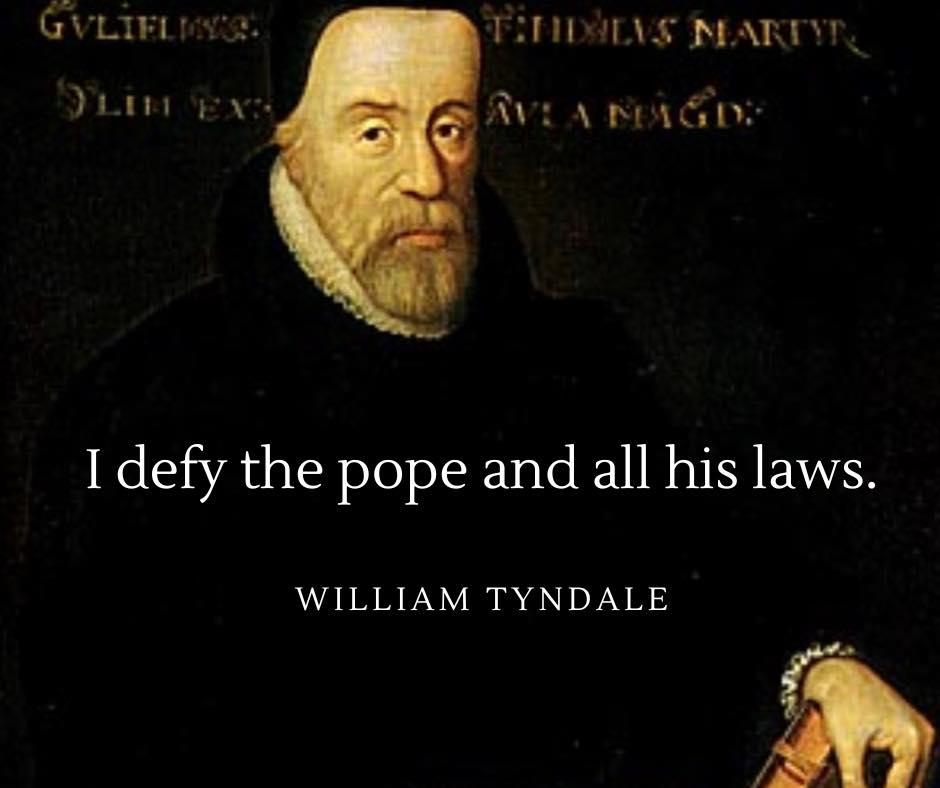
“I defy modern textual criticism and all its laws.”
HAPPY REFORMATION DAY
One Major Difference Between Pre-Critical and Post-Critical Textual Criticism
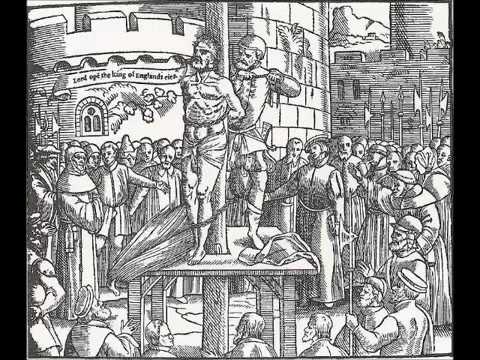
We take “critical” in “pre-critical” and “post-critical” to mean, Enlightenment. Taken as such we understand there to be a difference, indeed a significant difference, in the way textual criticism was carried out before the Enlightenment and after the Enlightenment. One main difference between the two is embodied in this quote from Kurt Aland.
“We can appreciate better the struggle for freedom from the dominance of the Textus Receptus when we remember that in this period it was regarded even to the last detail the inspired and infallible word of God himself.”
Kurt Aland, The Text of the New Testament, 11.
Our specific attention falls to the statement, “the struggle for freedom from the dominance of the Textus Receptus.” This could be put another way, “the struggle for freedom from the dominance of the current Protestant Bible in Greek.”
Prior to the Enlightenment one is hard pressed to find the Protestant orthodox seeking to be freed from the Greek NT of their day. In fact, you will find quite the reverse. But by the mid-1800’s such freedom becomes part and parcel of the post-Enlightenment text-critical enterprise.
In order to shed light on this potent and catastrophic shift in text-critical emphasis and aim, Bryan Ross of Grace Life Bible Church has recently interacted with the writing of Westcott and Hort touching on their disposition toward the TR.
So next time someone tries to convince you that the textual criticism before the Enlightenment is the same or almost the same as the textual criticism after the Enlightenment remind them that the former did their work with the assumption that the Church had God’s words and the latter regarded the Church’s Bible as vile and villainous and as such something to be freed from which is a sentiment that carries on into the modern day as evidenced in the words of Kurt Aland.

