The Prophet Jeremiah and the Status of the Original

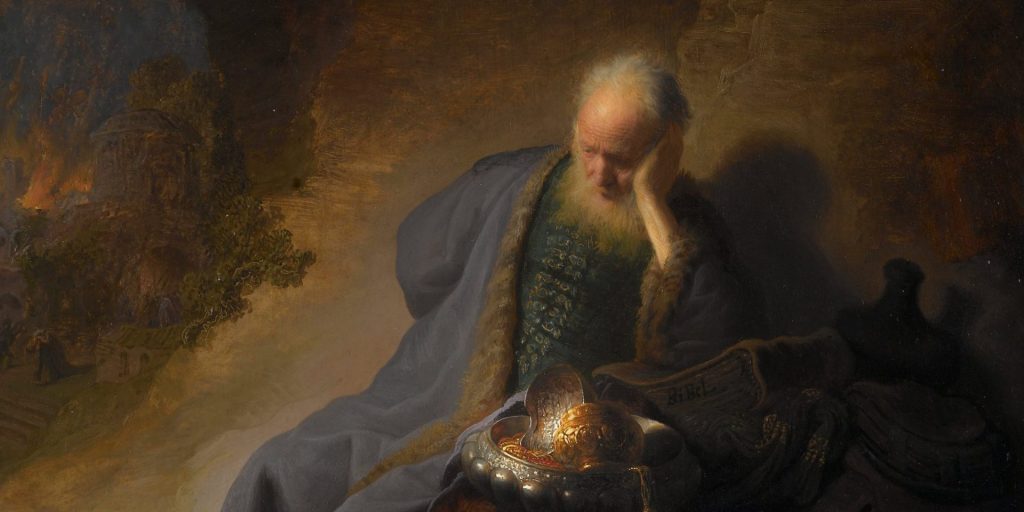
In this series we have looked at the themes of inspiration, transmission, and textual criticism from Jeremiah 36. If you remember, Jeremiah is told to write the words of God in a scroll which will pronounce divine judgment upon Jehoiakim, king of Judah. The text tells us that Jeremiah did not write these words himself, rather his servant and scribe Baruch did the honors. We then say that once the text was read in the ear of the king that the text was cut into pieces and cast into a nearby fire.

Subsequently God commands that Jeremiah write the same words again. The Bible says,

“Take thee again another roll, and write in it all the former words that were in the first roll, which Jehoiakim the king of Judah had burned.”

Jeremiah 36:28

First, God commands Jeremiah to write all the words that were written in the scroll that is now destroyed, reduced to ashes in the fire. Has anyone accidently deleted an email or Facebook post your were working on? But it was so good so you tried to duplicate it. How did it go? Do you think you wrote every word in the order in which you first wrote them? Here Jeremiah by inspiration does exactly that. He wrote “all the former words that were in the first roll.” So now we have two originals. One that was burnt in the fire and this new one.

Second, Baruch was again the one to write the text. The Scripture reads,

“Then took Jeremiah another roll, and gave it to Baruch the scribe, the son of Neriah; who wrote therein from the mouth of Jeremiah.”

Jeremiah 36:32

So not only did Jeremiah not forget one single word, but Baruch once again wrote with perfect affinity to Jeremiah’s dictation. Does anyone think that Jeremiah violated Baruch’s will by dictating to him the words of God? It is difficult to say that Jeremiah did anything of the sort. What kept Baruch from committing an error in two different texts? Was Baruch also inspired along with Jeremiah? If not was Baruch providentially preserved from committing a single error in both the first original and then the second original?

Third, which is the original? Jeremiah first wrote a text that was destroyed and then another text was made with all the words from the first but with additions. The Scripture reads Baruch wrote all the words of Jeremiah,

“and there were added besides unto them many like words.”

Jeremiah 36:32

Suppose someone made a perfect copy of the first scroll before it was burnt up in the winter house of Jehoiakim and affirm that Jeremiah has now written a second text. So which of the two manuscripts is the oldest? The burnt up one. Which one of the two manuscripts is shortest? The burnt up one. Which one is the original? The newer longer one and not the oldest and shortest one. We’ve known this story for thousands of years and yet many Christians are convinced that oldest, shortest, and hardest is the best reading. Here the Bible tells us that is not the case. In fact, oldest, shortest, and hardest is not regarded a criteria at all here in Jeremiah. The only criteria is that the words brought to the king are the words of the LORD by the prophet Jeremiah and the truth regarding those words can only be known by reading the actual words of God by faith and through the power of the Holy Spirit.

The Object of Faith

It’s late and I’m tired but the show must go on so today/tonight’s post is going to be brief. What is faith aimed at in the Christian life? For the Protestant scholastics there were two categories: First, Christ and then the Scriptures. Muller writes regarding the object of faith,

“obiectum fidei: object of faith;

distinguished by the scholastics into two categories: the obiectum formalis fidei, or formal object of faith, which is Scripture; and the obiectum materialis fidei, or material object of faith which is Christ, or more precisely, the whole revelation of God as it is fulfilled and given in Christ.

Richard Muller, Dictionary of Latin and Greek Theological Terms: Drawn Principally From Protestant Scholasticism, Term: obiectum fidei.

In short, Christ is what we believe in [material] and the Scriptures are the means by which we believe in Christ and His work [formal]. This interrelation between the formal and material necessitates the existence of a text capable of such a task i.e., to be the means whereby the Christian believes in Christ and His work. An admittedly corrupted Scripture is not explicitly capable of said task, while an admittedly pure text is.

From what source does the divine authority of the Scriptures become known to us? (Part 5)

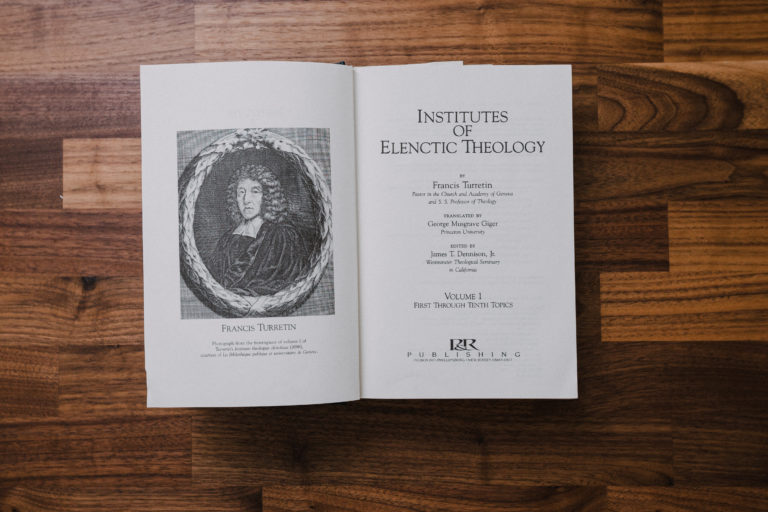
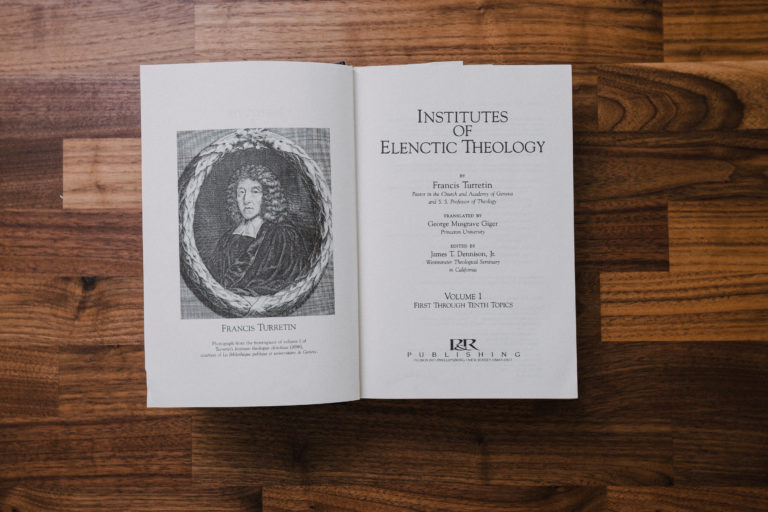
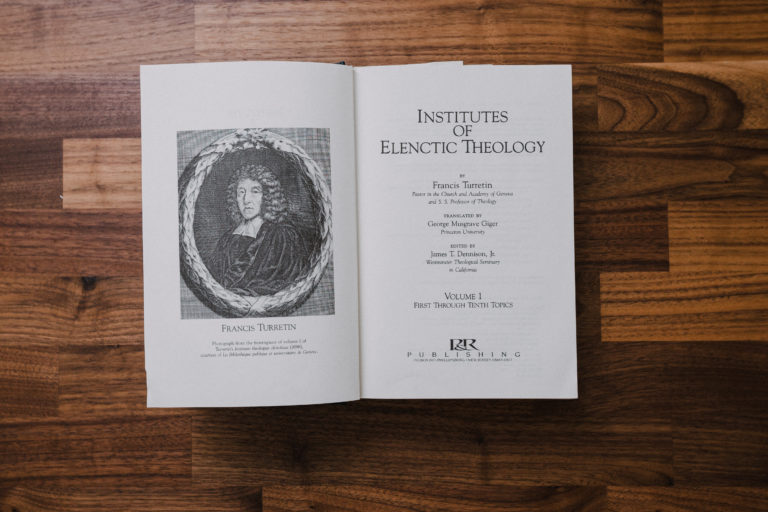
Hopefully you have been following our treatment of the above question to this point. After laying a significant amount of groundwork Turretin now turns to a treatment of the canon of Scripture. If you have not already detected a polemic against the Roman Catholic assertion of ecclesiastical authority you certainly begin to see it here. For today’s post we are going to focus on Section XX. Turretin writes,

“It us one thing to discern and to declare the canon of Scripture; quite another to establish the canon itself and to make it authentic. The church cannot do the latter, but it does only the former.”

Francis Turretin, Institutes of Elenctic Theology vol. 1, Second Topic, Q. 6, Sec XX.

For Turretin and for us here at StandardSacredText.com it is not the bare institution of the church or the “will of the people” which canonize this book of Scripture and not that book of the Apocrypha. It is the Holy Spirit, the Author of Scripture, who canonizes His words. The church merely recognizes those words and promulgates them throughout the nations. Just as Columbus did not standardize North America, he simply discovered it and just as mathematics is not standardized by the human mind it is only discovered so also the Christian Scriptures are none canonized/standardized by church authorities or the bare will of the people or a handful of Church Fathers or the Easter Letter. It is the Holy Spirit who canonized/standardized His words. And only by faith does the believing community recognize them to be God’s words in whatever language they appear.

Turretin goes on to give an example,

“As the goldsmith who separates the dross from the gold…distinguishes indeed the pure from the adulterated, but does not make it pure, so the church by its test distinguishes indeed canonical books from those which are not and from apocryphal, but does not make them such.”

Francis Turretin, Institutes of Elenctic Theology vol. 1, Second Topic, Q. 6, Sec XX.

Again the same goes for modern biblical textual criticism. In fact, textual criticism is not even in view here. Did textual criticism happen during the Reformation? Yes. Was Turretin aware of the textual criticism happening at his time? Yes. Yet here said discipline is not even mentioned let alone in the door for consideration. All that is in view is the church and the Holy Spirit. The former recognizes and the latter canonizes. There is no third party and certainly no parachurch party. Neither the church nor textual criticism can make God’s word pure. It is already pure. All that the church needs to do is to recognize what is God’s words and what is not and they do this primarily by the leading of the Spirit through faith. Only after that is evidence employed to support the already strongly held belief of the Christian community.

Finally, Turretin concludes this section with the following words,

“Nor can the judgment of the church give authority to the books which they do not possess of themselves; rather she declares the already existing authority by arguments drawn from the books themselves.”

Francis Turretin, Institutes of Elenctic Theology vol. 1, Second Topic, Q. 6, Sec XX.

|Indeed, the Scriptures are authentic and have authority long before some scholar declares this or that reading is authentic. What is more, the arguments for a books authenticity and divinity are drawn from the books themselves. The Bible teaches us what is the Bible and what is not. Just as tasting a strawberry tells us that we are tasting a strawberry so also when a Spirit filled believing Christian by faith reads God’s words the very reading of God’s words tells that saint that he/she is reading God’s words. And when they are not reading God’s words then they know that they are not, just like when you are not eating a strawberry but something else [e.g., an orange] you know that you are not eating a strawberry simply by eating something else.

Blaise Pascal and Theological Persuasion

Welcome to the Brickyard. This is a place to find quotes for use in your own research. The bricks are free but the building is up to you. The following quotes are from Blaise Pascal’s Scientific Treatises on Geometrical Demonstration. Let’s begin.

“I am not speaking here of divine truths, which I am far from bringing under the art of persuasion, for they are infinitely above nature. God alone can put them into the soul.”

Blaise Pascal, Scientific Treatises on Geometrical Demonstration, Sec 2, Par. 3.

“I know He has willed they [divine truths] should enter into the mind from the heart and not into the heart from the mind, that He might humble that proud power of reason, which claims the right to be judge over the things chosen by the will.”

Blaise Pascal, Scientific Treatises on Geometrical Demonstration, Sec 2, Par. 3.

“Whence it comes about that, whereas in speaking of human things we say they must be known before they can be loved…the saints on the contrary say in speaking of divine things that they must be loved in order to be known, and that we enter into truth only through charity.”

Blaise Pascal, Scientific Treatises on Geometrical Demonstration, Sec 2, Par. 3.

We can only speak of divine things when we love them and the One who gave them. Only when we love divine things (i.e., the words of God] can we come to know them. After God first loves us, we love God then we love Scripture. We don’t study the evidence first then come to respect our academic conclusions about the Scripture and then come to love God. Here at StandardSacredText.com we put Pascal’s words in a theological framework and say that the Spirit of God speaks through the words of God to the people of God and they receive those words by faith. We don’t start with the textual evidence. We start with the experience of the Bible’s authoritative teaching about itself and then believe what it says about itself by the word and Spirit through faith.

From what source does the divine authority of the Scriptures become known to us? (Part 4)

As you can tell by now Turretin’s treatment of the question, “By what means do we come to know the authority and divinity of Scripture” is quite an extensive treatment, but the show must go on. So, continuing this argument we now turn to section XVIII of Turretin’s treatment of the above question. Addressing again the topic of Scriptural self-attestation and self-authentication, Turretin writes,

“It is not always necessary that a thing should be proved by something else. For there are some things which are self-evident according to the philosophers (as the highest category of things, and ultimate differences and first principles) which are not susceptible to demonstration, but are evident by their own light and are taken for granted as certain and indubitable.”

Francis Turretin, Institutes of Elenctic Theology vol. 1, Second Topic, Q. VI, Sec. XVIII

Note here that Turretin makes his argument from the perspective of natural revelation. He points out that even the philosophers hold to first principles, explanatory ultimates, or axiomatic ultimates. That is, it is not a distinctly Christian belief to hold to such principles any more than it is distinctly Christian to believe in God but apart from Christ and the Trinity.

Note further that such principles are not susceptible to demonstration for if they were then that things which brought about the demonstration would itself be the first principle. Such demonstration includes empirical and evidential demonstration. Our senses and evidence can support our belief in Scripture but they cannot demonstrate that the Scripture is Scripture. If our senses and evidence were capable of such demonstration then the Scripture would be founded on man’s senses and historical artifacts and not on God and His testimony. It seems many Christians do not have an issue with this founding. We here at StandardSacredText.com do along with the standard pre-critical orthodox.

Turretin goes on with particularly strong words for those who question the nature of first principles and that of Scripture as a first principle. He writes,

“If perchance anyone denies them [first principles], he is not to be met with arguments, but should be committed to the custody of his kinsmen (as a madman); or to be visited with punishment.”

Turretin, Elenctic, Second Topic, Q. VI, Sec. XVIII

In another place, Turretin writes of those who besmirch the inspiration of the Church’s Bible,

“If any deny the inspiration of the Scriptures, it is not because the object in itself is not known or understandable, but because they are destitute of a well-disposed faculty. To them the gospel is hid because Satan has blinded their eyes (2 Cor. 4:4); as some deny God (who is most capable of being known) because they are fools, or do not see the sun because they are blind.”

Turretin, Elenctic, Second Topic, Q. VI, Sec. XIX

After addressing the fool, the blind, and the madman for questioning in his mind so obvious a truth, Turretin rhetorically asserts,

“Therefore since the Bible is the first principle and the primary and infallible truth, is it strange to say that it can be proved by itself?”

Turretin, Elenctic, Second Topic, Q. VI, Sec. XVIII

Afterwhich he concludes,

“The Bible can prove itself either one part or another when all parts are not equally called into doubt…or the whole proving the whole, not by direct argument or testimony…but made artfully (artificiali) and ratiocinative (because in it are discovered divine marks which are not found in the writings of men).”

Turretin, Elenctic, Second Topic, Q. VI, Sec. XVIII

In sum, Scripture can prove Scripture if a part is in question but not another part. This would be the case when the Jews accept the OT but not the NT. Because the OT and the NT are the word of God the OT can be used to prove the authority and divinity of the NT. But what if the whole is questioned? Turretin argues and we here at StandardSacredText.com concur, that it is the divine marks found in Scripture [i.e., inspiration and the testimony of the Holy Spirit] and not direct argument of testimony that wins the day. So when the whole of Scripture is under the text critical scalpel depending on the prevailing text critical winds of the day, the answer to knowing what is Scripture and what is not rests in the testimony of God’s Spirit through God’s word to God’s people by faith because the Scripture proves itself to be divine and authoritative being the first principle of theological knowledge.

Weekly Question – How are we to move forward in the translation of Scripture in America?

If we want to get the American Church back on track with a standard sacred text for English-speaking people we would need to do a few of things.

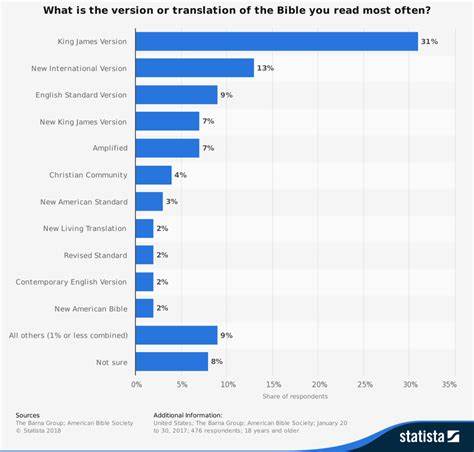
1.) We need to recognize that everyone apparently wants a standard text. We here at StandardSacredText.com certainly do. It also seems the New American Standard folks want one as to the English Standard folks and the Christian Standard folks and the Legacy Standard folks and on and on. According to the most recent data the King James Version is by far and away the Bible most read by Bible readers. Seeing this is the case and the fact that the KJV has served the church for over 400 years, it seems from both a faith-based and evidence-based perspective that the KJV is were we need to start.

2.) Scholarship and the work of the academy is important in the fields of textual work, archeology, and original language work and there surrogates. That said, the academy needs to be repositioned with regard to its sway and authority in the church. The academy and the scholar are the humble servant of the person in the pew and the church at large. As such the scholar’s opinion on this or that passage should be no more authoritative than the plumbers or nurses or business owners. In the end the church does not wish to hear the voice of the scholar. We wish to hear the voice of the Spirit in the word of God by faith.

3.) Building off of #3, while it is true that the church must grow in sanctification and therefore may be pruned or corrected from time to time, it is of the utmost importance that the academy and scholar come to the church with the greatest of gravity if they come to “correct” the text. They are not merely editing a classic like that of Dante or the Illiad. They are making the claim that a word or a set of words held by the Church to be God’s words are in fact not God’s words. If the academy and scholar are right, the church is better for it. If they are wrong then they have committed a grievous sin by questioning God’s word, causing brothers to stumble, and sowing discord among the brethren. As such they must repent of that/those sin(s) and turn from it/them with true godly sorrow.

4.) If the academy and scholar are right and an amendment must be made to the text, it is not the academy and scholar that determine the rightness of their conclusions. It is the church, the pastor and the person in the pew that make that conclusion. The academy and the scholar are the lawyers and the church is the judge and jury led by faith through the the Holy Spirit. Unfortunately the academy and scholar have overstepped their bounds in the last 150 years in this regard and have opened Pandora’s Box and like Pandora cannot put their evil and mischief back in the box. Now the church, the people in the pew, are worse off because of it.

5.) Seeing we can’t rewind time and undo the ramifications of the Scholar’s Box, what are we to do? For the KJV crowd, be encouraged, hold the line, and maintain your post. For those who are unsure, the Scripture teaches that we have one Lord, one faith, one baptism, one God, and one Father, why not have one Bible and be one with 400 years of saints in holding to the Bible they held to? For those who believe in your Bible on a merely evidential basis, consider the fact that the KJV remained the standard sacred text of the believing community for over 400 years even though the church was well aware of many textual variants and the scholarship of the Roman Catholic church which questioned the Protestant Scripture at every turn. For those in the same camp who also don’t have a seminary education in New Testament Greek, consider the fact that you trust these Greek scholars in a very similar way Pre-Reformation saints who did not know Latin had to trust the Roman Catholic Priest and/or the Pope regarding what the Bible “really” says. For those who hold to a version other than than the KJV because you believe that a different version is the exclusive word of God for the English-speaking church, let us pray for each other and have vigorous discussions together as the Holy Spirit guides us into all truth.

6.) The Scripture can no longer be the copywritten possession of a corporation. The Scriptures belong to the believing community. Seeing that the Scriptures are the possession of the church, no company, no publisher should have the moral right to discontinue the printing of the Scriptures nor should they have the power to without eternal ramifications. The publishers in the business of printing Bibles are merely servants of the church called to do their duty for Christ’s Kingdom. If they will not then they are no better than the oppressors in Roman Catholic church trying to stamp out Tyndale’s New Testament.

7.) Most importantly, the church needs to read the Bible every day and study the Bible often. Biblical illiteracy in the American church is astonishing, bewildering, staggering, appalling. The Scripture is your lamp. It is your light. It is the source of faith. It is the sword of the Spirit to defend and fight against all that would seek to harm you, your family, your church, and your country. Read it. Know it. Love it. Teach it to your children.

The Prophet Jeremiah and Textual Criticism

Today we return to our short series on Bibliology and the prophet Jeremiah. Taking a look again at chapter 36 we find at least four relevant themes: 1.) inspiration, 2.) transmission, 3.) textual criticism, and 4.) the status of the original. Today we will look at the theme of textual criticism. The Scripture reads in Jeremiah 36:22-23,

“Now the king [Jehoiakim] sat in the winterhouse in the ninth month: and there was a fire on the hearth burning before him. And it came to pass, that when Jehudi had read three or four leaves, he cut it with the penknife, and cast it into the fire that was on the hearth, until all the roll was consumed in the fire that was on the hearth.”

Jeremiah 36:22-23

Why? Why did Jehudi cut Jeremiah’s original text with a penknife and cast it into the fire? We don’t really know. We assume and quite safely so that something was contained therein which displeased his sensibilities or those of the king. Maybe his academic sensibilities, no? What is more, it was not the reason for scarring the text that is abhorant, but rather it is the cutting itself. Jeremiah goes on to read in the next verse,

“Yet they were not afraid, nor rent their garments, neither the king, nor any of his servants that heard all these words.”

Jeremiah 36:24

Jeremiah recounts to us that the most powerful, most educated were not afraid at the destruction of the text. But why should the be afraid? Was it for scholastic reasons, academic reasons? Something like, my goodness that’s poor scholarship to treat Jeremiah’s words that way? No. The issue is that God’s words were cut to bits and cast into the fire because they were now recorded on a piece of ancient paper. Fear and lamentation should have come from seeing the wanton destruction of God’s revelation. But perhaps Jeremiah’s text was not seen as God’s word. Perhaps it was seen as an opinion of a religious political pundit. Think Al Sharpton. In sum, the business of adding or taking away from the document called the word of God is a moral business primarily and not a sterile academic one. Indeed though, there were some who took objection to cutting and burning the Scripture.

Nevertheless Elnathan and Delaiah and Gemariah had made intercession to the king that he would not burn the roll: but he would not her them.”

Jeremiah 37:25

Why would these men make such a plea? Again, we don’t know. What we do know is that they did not rend their garments and express a pious fear for the destruction of God’s word. There are other reasons to keep the ancient documents of Scripture around that have little to do with the fact that they are God’s words to mankind like they are old. But let’s be clear, those reasons are secondary to the real reason for the presence of Scripture in the life of the church and scholar. Those reasons are: for doctrine, for reproof, for correction, and for instruction in righteousness. All of which Jeremiah was doing in his writing and all of which was dissected and burnt up by the educated and powerful.

If you are a Christian and you believe for evidential or scholastic reasons that you must take a penknife to the Bible are you prepared to experience a holy fear and lamentation if you transgress in the way described above? If not, know that you may be more like Jehudi and Jehoiakim than you think and that the trying times of Jeremiah may be more upon us than you think.

Scripture as Touchstone

“lapis lydius: Lydian stone, touchstone, standard, or benchmark;

originally a hard black flint used by the ancients to test the purity of gold and silver according to the streaks left on the stone when rubbed by the metals, by extension a standard and invariable test of quality. Scripture is thus frequently referred to as lapis lydius.”

Richard Muller, Dictionary of Latin and Greek Theological Terms: Drawn Principally from Protestant Scholasticism, Term: lapis lydius.

Scripture is the touchstone, the standard, the black flint upon which all theological teaching is tested and found genuine or wanting. Scripture is also the touchstone of Scripture being a first principle. Only God’s words can properly verify God’s words so also Scripture, being God’s words, can only be properly verified by Scripture itself through the living testimony of the Spirit of God.

As the Scriptures teach in I Cor. 2:11, “For what man knoweth the things of a man, save the spirit of man which is in him? even so the things of God knoweth no man, but the Spirit of God.” In other words, not only is Scripture the touchstone of all theological claims like Jesus was born of the virgin Mary and I John 5:7 is not Scripture, but Scripture is also its own touchstone and therefore able to answer whether 1 John 5:7 is actually Scripture.

From what source does the divine authority of the Scriptures become known to us? (Part 3)

Continuing our Bibliology Primer and specifically Turretin’s treatment of how a Christian comes to know the authority and divinity of Scripture we now turn to the self-attesting and self-authenticating character of Scripture. Turretin writes,

“That the Scripture makes itself known to us is proved: (1) by the nature of Scripture itself.”

Turretin, Institutes of Elenctic Theology, Second Topic, Q. VI, Sec. 11.

And how is it that Scripture makes itself known itself? Turretin gives a familiar example from his time. Again, he writes,

“For as a law does not derive its authority from the subordinate judges who interpret it or from the heralds who promulgate it, but from its author alone.”

Turretin, Institutes, Second Topic, Q. VI, Sec. 11.

In other words, the Scriptures make themselves known by themselves because God’s words can only be known by God’s words. There is no authority or grounding prior to or more potent than God’s words. Therefore only God’s words can prove God’s words to be God’s words.

Turretin takes this point a step or two further by identifying the Scriptures as a first principle.

“(2) By nature of the highest genera and of first principles; for those things are known by themselves and are not susceptible to proof which cannot be demonstrated by any other, otherwise the thing would go on into infinity.”

Turretin, Institutes, Second Topic, Q. VI, Sec. 11.

If there were a more basic, more grounding authoritative principle than God’s words, call it X, then where did that more basic, more grounding authoritative principle derive its basicality, grounding, and authority? And if such a thing did exist, call it Y, then where did Y get its properties of more basic, more grounding, and more authority? Let’s say such a thing did exist and let’s call it Z. Where did Z get said properties? As you can see the list goes on and on into infinity.

This is what is known as an infinite regression of contingent particulars. Such a thing does not and cannot exist because it is infinitely contingent and is therefore infinitely potential and potential things have not yet come into existence, and in this case, infinitely so. Thus there must be a first grounding that is most basic and most authoritative and that grounding is God’s words. Nothing is more basic, more authoritative, and more grounding than God’s words. Therefore God’s words, the Scriptures, are a first principle. Thus Turretin concludes,

“Thus Scripture, which is the first principle in the supernatural order, is known by itself and has not need of arguments derived from without to prove and make itself known to us.”

Turretin, Institutes, Second Topic, Q. VI, Sec. 11.

And…

“If God has stamped such marks upon all first principles that they can be known at once by all men, we cannot doubt that he has placed them upon this sacred first principle (in the highest degree necessary to our salvation).”

Turretin, Institutes, Second Topic, Q. VI, Sec. 11.

Turretin’s third proof as to how Scripture is proved by itself is as follows:

“By comparison, as objects of the sense presented to faculties well disposed are immediately distinguished and known without any other external argument, on account of a secret adaptation and propensity of the faculty to the object.”

Turretin, Institutes, Second Topic, Q. VI, Sec. 11.

For example?

“Light is immediately most certainly known to us by its own brightness; food by its particular sweetness; an odor by its particular fragrance without any additional testimony.”

Turretin, Institutes, Second Topic, Q. VI, Sec. 11.

In like manner…

“the Scripture, which is set for to us in respect to the new man and spiritual sense, now under the symbol of a clear light (Ps. 119:105), then of the most sweetest food (Ps. 19:10; Is. 55:1-2; Heb. 5:14) and again of the sweetest smelling savor (Cant. 1:3), may easily be distinguished of itself by the sense of the new man as soon as it is presented to them and makes itself known by its own light, sweetness and fragrance.”

Turretin, Institutes, Second Topic, Q. VI, Sec. 11.

This idea of self-attesting and self-authenticating will be developed further as we continue our way through our Primer and particularly through this sixth question. But for now, suffice it to sum up in the following way. The Scripture’s attestation to iteslf is shown in three ways: (1) God as author of God’s words is the only fit witness to God’s words because they are His words, (2) Scripture is the most basic and most authoritative grounding principle and is therefore in the genera of first principle. As such, it cannot be proven by something more more basic or more authoritative than itself, and (3) the Scripture is known in a basic sort of way. Just as we know we taste baklava at the moment we taste baklava or smell our wife’s perfume at the moment we smell her perfume, so also we known the “light, sweetness, and fragrance” of God’s words when we by faith see, taste, and smell the words of God.

We do not however know our wife’s perfume by snatching 5,700+ molecules from the air, testing them, comparing them, seeing which are older, pass it through the coherence based fragrance method coupled with the “art” of fragrance criticism and finally conclude that the fragrance we are smelling is probably either our wife’s perfume or in the air apparatus.