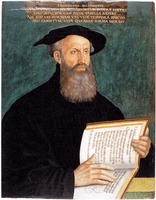
Benedict Pictet (1696) on the Duty of Reading the Scriptures

From all that has been said, we may abundantly infer the duty of reading the scriptures. This obligation arises from the positive command of God, directed to all and each of mankind – “These words, which I command thee this day, shall be in thy heart; and thou shalt teach them diligently unto thy children, and shalt talk of them when thou sittest in thine house, and when thou walkest in the way, and when thou liest down, and when thou risest up, “ etc. (Deut. vi. 7-9; xxx. 11-14); “Blessed is the man whose delight is in the law of the Lord, and in the law doth he meditate day and night,” (Psalm i. 1, 2); “Let the word pf Christ dwell in you richly in all wisdom, whereinto ye do well that ye take heed, “ (Col. iii. 16; 2 Peter ii. 19); “Search the scriptures.” (John v. 39). The end also for which the scriptures was given obligers us to read it, namely, the salvation of all men, which it could not effect, unless it were perused. All the encomiums bestowed on the scripture, are so many arguments for the reading of it. It is the will or testament of a Father, therefore it must be read by the children; it is the epistle of the Creator to the creature, therefore to be perused by the latter; it is the food of our souls, to nourish which it must therefore be read; to which we may add, the constant practice of the Jewish and Christian church. All the fathers exhort to this duty, and among the rest Chrysostom, who, preaching to the people, declares, I always exhort, and will not cease to exhort you, not only to give ear to what is aid in this place, also to apply yourselves at home to the constant reading of the divine scriptures. And he reproves those who allege various excuses for their neglect of this duty, such as various occupations, and the care of their families; and who dared to assert that this duty belonged not to them, but to the monks and hermits. We are well aware, indeed, that many abuse the reading of the scriptures; but if any one should make this a reason for neglecting the duty, he would be like a man, who, because of the frequent abuse of meat and drink, should choose to perish for hunger and want.

[Pictet comments, “All the encomiums [high praise] bestowed on the scripture, are so many arguments for the reading of it.” What are the encomiums Pictet refers to? That scripture is the will and testament of the Father, epistle of the Creator, and food for our souls. At Standard Sacred Text we make much for the Christocentricity of the Scripture, and here we see the same emphasis made by Pictet with his reference to “will and testament.” This of course refers to the familiar words of Hebrews 9:15-17 and the New Covenant sealed with by the vicarious, bloody death of Jesus Christ. 162 years earlier, William Tyndale makes a similar comparison in the prologue of his 1534 English NT: “Here thou hast (most dear reader) the new testament or covenant made with us of God in Christ’s blood.” [Note that for Pictet “easier to read” and multiple versional readings do not rise to the level of high praise.] It is indeed high praise to speak of the scripture in terms of the finished work of Christ on the cross. Such commendations edify the church, evangelize the lost, and fortify the soul of the saint. Furthermore, these accolades do not tend to division and perplexity but to unity and comfort around the Savior. When the scriptures are given high praise, the arguments will again be heard for the importance of its reading.]

Benedict Pictet, Christian Theology, translated from the Latin by Frederick Reyroux (London: R. B. Seely and Sons, 1696 [1834]), 58-59.

Benedict Pictet (1696) on Scripture as the Only Rule of Faith and Practice, part 2

From what has been said, we may easily ascertain who is the true and supreme Judge of controversies, viz. God who speaks in Scripture. For he only can be a supreme judge in religious matters, who never errs, nor can err, in his decisions, who is influenced neither by partiality, nor by passion, and from whom there is no appeal. But all these qualifications belong not to man; God alone can claim them, for he is truth itself, is no respecter of persons, and acknowledges no superior. To this judge the prophet and apostles always appeal, as we have already shown; and if there had been any other, the scripture would have mentioned him somewhere, since there was nothing of which the faithful had greater need to be reminded; whereas scripture is perfectly silent about it, as every reader may observe. But here we may remark that God, speaking in the scripture, is called a Judge, because he hath taught in his Word such things, as, being properly understood and applied, will finally settle all controversies of faith.

[Pictet in this section makes an important observation for the believer. If there had been another judge other than scripture to which the believer is to appeal, the scripture “would have mentioned him somewhere.” Take for instance a hypothetical and spurious verse, “The time will come when they will no longer have sound doctrine; therefore, in the fulness of time, text critical scholars will arise to set the scripture and people aright.” Of course, the fact that there is no such verse has not prevented the Evangelical church, with an air of misguided piety, to treat the text critical scholar as if the verse existed and was sanctioned by God. And because God speaking in scripture is no longer the Judge that “will finally settle all controversies of faith” ambivalent textual scholars have successfully left Christian theology frayed and controversies unresolved.]

The scripture, therefore, is the fountain and rule of divine law, by which all controversies of faith both can and ought to be clearly determined, as in the commonwealth all decisions and judgments are found in the law; and even the Turks, in all controversies make a final appeal to the Koran; and this is clearly perceived by the fathers of the church. This Optatus speaks: Ye say, It is lawful; we say, It is not lawful; between your lawful and our unlawful, the minds of the people are divided and perplexed. Let no one believe you, let no one believe us; the arbiter must be sought from heaven; no decision on this matter can be found on earth: but why do we knock on the door of heaven, since here below we have the gospel testament? And Augustine says: We are brethren; why do we strive? Out Father did not die without a will; he made a will, then died, and rose again. So long shall we strive about the inheritance, until the will be brought forward. And when the will is brought forth, all are silent, that it may be opened. The Judge listens attentively, the advocates are silent; silence is proclaimed in the court, all the people are attentive, the words of the deceased testator may be read. He lies unconscious in the tomb; but his words have power; so Christ sits in heaven, and his testament is called into question. Open it then, let us read; we are brethren, why do we strive?

[Pictet reminds us of the currently unresolvable conundrum the church has placed itself by the acceptance of Multiple Version Onlyism. Because no “fountain and rule of divine law, by which all controversies of faith both can and ought to be clearly determined,” exists, indeed, “the minds of the people are divided and perplexed.” When considering that the body being divided and perplexed is the bride of Christ, those for whom Christ died, to create such difficulty for the saints is not a peripheral matter. Resolving this division and perplexity should be of the highest priority but MVO by its pluralistic nature is wholly incapable of finding a resolution. This also begs the question regarding opponents to a standard sacred text. Other than from their own sectarian argument, from what grounds other than “I say so” or “He says so” can they produce something that relates to “a fountain and rule of divine law” first for themselves and then deliver that individualized perspective with such force as to impose such an autonomous rule in a convincing way upon others? MVO advocates are also divided and perplexed, maintain this perspective as ecclesiastically normative, and would have everyone experience the same enigma.]

Benedict Pictet, Christian Theology, translated from the Latin by Frederick Reyroux (London: R. B. Seely and Sons, 1696 [1834]), 55-56.

Gotcha Questions in the Age of Google

Last night I watched a LIVE debate between Nick Sayers, a King James Version proponent, and C.J. Cox who, as best as I can tell, is mostly a King James advocate but has reservations. You can find the debate here.

A large portion of the debate centered around an assertion made by Cox that there are minor errors in the Authorized Version which, in his mind, eliminates the KJV as the only legitimate English Version in his view. That said, Sayers handily dealt with each instance of minor error raised by Cox and the objections amounted largely to nothing.

The thing that struck me though was the fact that Cox’s objections are old and stale, and with one simple Google search anyone looking for a reasonable answer as to why the KJV rendering is a good rendering could easily find such a reason. This is not to pick on Cox. Such is the standard practice of the opposition. Still, I do see the point.

Because we hold such a strict stance on the verbal plenary inspiration of Scripture and preservation of the substantia doctrinae [i.e., meaning] in the receptor language i.e., English, we hold a kind of deductive position. If our opponents can show even one place in the KJV where the substanita doctrinae is not upheld, then the KJV is not inspired in substantia doctrinae as we claim it is.

But again, if our opponents wanted a reasonable answer all they would have to do is do a Google search and with a slight bit of effort would come upon said answer. Why they don’t Google their own gotcha questions makes the question, at a minimum, insincere, mercenary, and even contrived.

As a result, StandardSacredText.com has partnered with Will Kinney of Brand Plucked to make answers to these gotcha questions more accessible to both sides of the discussion. In the days to come we will be making some of his work available to our readership for two reasons:
1.) To show that gotcha questions like, “Why did the KJV translators translate pasca as Easter?” or “Why did the KJV translators translate the text ‘robbers of churches’ instead of “robbers of temples” in Acts 19:37?” have already been answered.
2.) To show that those answers are easily accessible.

Finally, let me say a word on what accounts as a reasonable answer. A reasonable answer is one that evinces sufficient explanatory force and scope. The more explanatory force and scope the more reasonable the answer. So when you read an answer you must ask, does it account for all or most of the relevant material [i.e., explanatory scope] and does it do so in a consistent and cohesive way [i.e., explanatory force].

Considering our opponents more often than not begin with different epistemological presuppositions than we here at StandardSacredText.com do, no doubt our opponents will demur with us on the points of force and scope, but if they take our presuppositions into account I think they will find our answers to possess considerable explanatory force and scope, and robustly so.

The question now is, whose epistemological presuppositions are most consistent with Scriptural exegesis and historic orthodox theology?

***Paging Mark Ward*** Archaic Words Appear in the KJV AND in the Most Popular Modern Versions

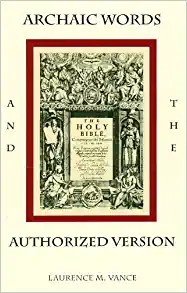
This last Father’s Day my wife bought me Laurence Vance’s Archaic Words and the Authorized Version printed in 2011. Vance’s argument is simply, the Authorized Version/ King James Version is no more archaic than every day magazine articles and popular modern versions of the Bible.

To demonstrate this case, Vance offers an evaluation of hundreds of “archaic” words found in the Authorized Version. In each evaluation he observes how many times an archaic word appears in the Authorized Version and then goes on to observe how many times the same or similar word appears in a sample of modern versions (i.e., NKJV, NIV, NRSV, and NASB). Finally, he ends each entry with a direct quote from a modern magazine or news article showing that the word in question is currently used.

If you follow our blog, you know that we find the particular work of Mark Ward to be largely without merit because of its elementary observations and one-sided scholarship. Seeing that Ward wrote his book Authorized: The Use and Misuse of the King James Bible about a decade after Vance’s work I searched Authorized to see if Ward interacted with Vance at all given the fact that the topic of their books intersect at multiple places. Unfortunately for Ward, Authorized does not even footnote Vance’s work let alone interact with it. It’s like the more you look at Ward’s book the more unbelievable it becomes. Kind of like this video:

After 400 pages of proving his point, Vance offers an epilogue which I will now quote at length.

Does the AV contain archaic words? Certainly. But perhaps a better question would be: Do contemporary publications like Time, U.S. News and World Report, the Chicago Tribune, Forbes, and the New Republic contain archaic words? As we have seen throughout the body of this work, they unquestionably do. Also without dispute is the striking revelation that modern, up-to-date Bible versions like the NRSV, NASB, NIV, and NKJV likewise contain archaic words. We have seen these facts demonstrated in a number of ways:

  1. An archaic word in the AV is corrected and then the same word is inserted elsewhere.
  2. An archaic word in the AV is retained exactly as it appears in the AV.
  3. An archaic word in the AV is retained but in a different form.
  4. An archaic word in the AV is corrected and a different form of the word is inserted elsewhere.
  5. A simple word in the AV is replaced by a form of an archaic word.
  6. A simple word in the AV is replaced by a more difficult word or phrase.
  7. The base or root form of a word in the AV is unnecessarily lengthened.
  8. An archaic word in the AV is replaced by an even more difficult word.
  9. A somewhat difficult word in the AV is replaced by a more arduous word.

So the fact that the AV contains archaic words is just that, a fact that should be accepted. For just as no one revises Shakespeare or Milton, but instead learns the vocabulary necessary to understand those particular works; and just as a certain vocabulary is necessary to understand science, medicine, engineering, or computers; and just as no one ever cancels their subscription or writes a letter to the editor of a contemporary publication to complain that it uses archaic words; and just as no one ever complains about archaic words surfacing in modern Bible versions; so to read and understand the Bible one must be familiar with the vocabulary of the AV instead of dragging it down to one’s own level by revising it. Does the AV contain archaic words? Certainly. Should we therefore replace it with something else? Certainly not.

Laurence M. Vance, Archaic Words and the Authorized Version (Pensacola, FL: Vance Publications, 2011), 431-432.

Benedict Pictet (1696) on Scripture as the Only Rule of Faith and Practice, part 1

“Reason is as it were the eye of the mind,

but scripture is the standard,

by which it measures the objects proposed.”

[Please note that Pictet, writing in the 17th century addresses the same controversies the church deals with today only from the perspective of the superiority of Scripture over reason where the modern Evangel church has adopted the opposite.]

Thus far we have proved that that the scriptures of the Old and New Testament are divinely inspired, and that they fully and clearly contain all things needful to salvation. Hence we easily infer that they are the true and only rule of faith and practice. Now a rule must be perfect in all its parts; not admitting either of addition or diminution. Such we have already proved the scripture to be. A rule also must be certain and unchangeable: but such is the scripture being the truth of the unchangeable God, “that cannot lie.” Human opinions are of such a nature as to be continually subject to changes: but it is not so withy eh doctrine of salvation, which has always been the same. The scripture, as a rule, directs our faith and conduct in such a manner, that the very least deviation from it renders us guilty of error. We cannot doubt of the scripture being a rule, if we consider that the prophets, our Savior, and the apostles, always appeal to it. “to the law and t the testimony,” says Isaiah (viii. 20). “It is written,” said Christ, when contending with Satan, (Matt. xxii). The apostles did the same in their endeavors to convert the Jews: nay, so perfect a rule did they consider the scripture, that they sometimes draw an argument from silence. “To which of the angels said he at any time, Thou art my Son?” (Heb. 1 5) and the Bereans are commended for examining the doctrine of the apostles by this rule (Acts xvii. 11). We may add that the scripture itself calls itself a rule, (Gal. vi. 16), “As many as walk according to this rule, peace be on them,” etc.

Not only the scripture of the New, but also of the Old Testament, is the rule of faith and practice, although we are no longer under the old dispensation, which has been evidently abolished. “For whatever things,” says St. Paul, (Rom. xv. 4) “have been written afore, were written for our learning, that we, through patience and comfort of the scripture, might have hope.” Both testaments contain substantially the same doctrine; they propose the same objects of faith, and enjoin the same precepts; they are both the foundation of the church, which is to “built upon the apostles and prophets,” (Eph. xi [ii]. 20) and peter shows that they “do well” who “take heed to the word of prophecy.” (1 Peter i. 19) The scripture then is the only rule, not can there be any other. Reason is no such rule, for it is blind, and understandeth not the things of God; (1 Cor. ii 14, 15) it is liable to error, and is often deceived; the mysteries of faith are beyond its sphere; the natural man cannot comprehend them. Reason is as it were the eye of the mind, but scripture is the standard, by which it measures the objects proposed. Reason is the instrument which the believer uses in examining the objects of faith by the scripture, as by the infallible rule of truth, but it is not the rule itself of these objects of faith. Yet this does not prevent us from acknowledging that reason ahs many uses. It is of service in vindicating the truth, against those who would deny revelations altogether, or against those who, admitting revelation, endeavor to corrupt it with false interpretations; in illustrating the mysteries of religion by collecting together all that can be gleaned from the book of nature, from polite literature, from historical records, from philosophical and philological science; in drawing conclusions, and determining the truth of them; in comparing the text with the context, versions with the originals, the decisions of ecclesiastical teachers with the scripture, and in distinguishing falsehood from truth, and what is legitimate from what is spurious.

In fact, reason and faith, though of a different nature, are not opposed to each other. Hence we maintain that we must not admit anything, even in religious matters, which is contrary to right reason. For although there is much darkness in the human mind, yet no one can deny that there remain some sparks of natural light, and that the mind has in it these principles of undoubted truth, which faith often makes use of for the confirmation of its own doctrines; but what we maintain is, that reason cannot and ought not to bring forth any mysteries, as it were, out of its own storehouse; for this is the prerogative of scripture only. Also, that reason is not to be heard when complaining of its incapacity to comprehend many things that relate to what is infinite; and to reject a mystery [e.g., the means of Scripture’s providential preservation] because it is incomprehensible to reason, is to offend against reason itself. Neither is reason to be listened to whenever, under the cover of holding the mysteries of the faith, it aims at setting up its own errors (e.g., defenders of Evangelical MVOism]. On the very same grounds we cannot call philosophy any rule of faith, although we again concede that there is of no little use, provided it assume not itself the power of dictating in articles of faith. True philosophy indeed serves very much both to convince men and to prepare their minds; and there is a wonderful harmony between sound philosophy and divinity; for truth is not contrary to truth, not light to light; only we must not imagine that the former is the rule by which the sense of scripture must be tried and examined.

The same observations may be applied to the testimony of the church, to the fathers, and to the decrees of councils; these form no rule of faith – 1. Because these testimonies, being merely human, are liable to error. Augustine, writing to Jerome, makes these just remarks: The books of the scriptures, which are now called canonical, and the only books to which I have learned to pay such respect and reverence, as most firmly to believe that no one of their authors committed any error in writing; whereas other books I peruse in such a manner, that, however they may be distinguished for holy instructions, I do not think anything to be true, merely because they have so considered it, but only as far as they have been able to convince me of the truth, either by reasonable argument, or by appeal to the canonical writers. Nor do I think, my brother, that your opinion on this subject is different; indeed I am persuaded that you would not have your own books read in the same way as those of the prophets and apostles, whose writings, because they are free from all error, it were impious to call in question.—2. Because these testimonies are not only liable to error, but have erred in many things; nay, often contradict themselves and each other. –3. Because the writings of the fathers have been in many ways corrupted, and it is very difficult to know what were their opinions on various subjects. It is therefore indisputable, that the holy scriptures are the only rule of faith and practice.

Benedict Pictet, Christian Theology, translated from the Latin by Frederick Reyroux (London: R. B. Seely and Sons, 1696 [1834]), 52-55.

Benedict Pictet (1655-1724): Four Arguments for the Self-authenticating Authority of Scripture

Having proved the divinity and inspiration of the scripture, we next consider its authority. Now this is nothing else but the dignity and right of the sacred books, whereby they claim our faith in whatever they hold forth as necessary to be believed, and our obedience in whatever they prescribe to be done, or to be left undone. For having been proved to be of God, and not of men, or of the devil, the necessary consequence is, that they have supreme authority over us. For who would deny that to be authoritative which is divine?[1] Now the scripture derives its authority from God only, who is the author of it. If then I am asked on what ground I believe the scripture to be divine, I an only reply, “Because of the marks and characters which I hold in it, and by which it proves itself to be of God, and not because of any other testimony.” As if anyone should ask me why I believe the sun to be bright? Or sugar sweet? Or the rose fragrant? I should reply, “Because I see the sun’s rays, I taste the sweetness of sugar, and I smell the fragrance of the rose.” We must reason concerning the scripture, which is the first principle of faith, in the same way as concerning the principles of other sciences, which do not derive their authority from any source, but ate known of themselves, and prove their own truth. The same may be said of God’s word, which is the law and edict of our heavenly Sovereign, as is said of human laws, which do not derive their authority from subjects on whom they are imposed, or from those who have charge of announcing them to the people, but only from the sovereign, who enacted them. But, least anyone should say that the scripture does indeed possess authority itself, as proceeding from God, but does not obtain that authority in relation to us, except through the testimony of the church, we shall prove that the Scripture does not derive its authority from the church,[2] by the following arguments:

First, if this be the case, diviner authority will be subject to human, and we shall believe God merely on the testimony of man; but this would be absurd; therefore it is absurd to say that the testimony of the church gives authority to Scripture. Now we know that the testimony of the church is but the testimony of men, for it consists of mere men, who are not divinely inspired.

Secondly, if the authority of Scripture be suspended on the testimony of the church, then it will be only a human faith, by which we believe the divinity of scripture.; the latter idea is absurd, therefore the former is absurd also. Now the testimony of the church can produce only human faith, because that only is divine faith which rests upon divine authority, whereas the authority of the church is merely human, unless it can be proved to be under the infallible guidance of the Holy Spirit, which cannot be proved of any church since the times of the apostles, who alone, together with the prophets, were exempt from error. And to believe only with a human faith that the scripture is divine is absurd, because then there would be nothing certain in religion, and nothing on which the mind could securely depend without doubt.

Thirdly, if the judgment of the church does not already suppose the divine authority of scripture, then the authority of the latter will not depend on the former. Now the church is persuaded by the divinity of Scripture, either with or without grounds. The latter idea is absurd even to think of; if then the former is correct, there could be no other grounds than the marks of divinity which appear in the scriptures, and which thereby gain them authority with the church; thus the authority of scripture is at once recognized to be prior and superior to the judgment of the church.

Fourthly, if the authority of the church depends on scripture itself, then it is absurd to make the authority of the latter depend upon the former. Now it is clear that no other church can be acknowledged as the true church, but what is “built upon the foundation of the prophets and apostles,” Eph. xi. 20) i.e., upon the scripture. Nor can it be ascertained that any church is a true church, except first of all it be proved, that the divine and true which the church holds to be such, since it is the belief of the truth to which the church owes its existence as a church. Now, we cannot know whether that be true which the church receives as true, except by weighing it in the balances of the scripture. Moreover it will be evident, that the authority of the church is subject to authority of scripture, if we consider that the authority of the apostles themselves was by them subjected to that of scripture, and surely the authority of the church in any age cannot be greater than that of apostles. But that these holy men did subject their authority to that of God’s word, is clear from the words of Peter, declaring that the “word of prophecy’ (that is the scripture of the Old Testament) is surer than the testimony of the apostles, who were “eyewitnesses of his majesty,” and heard the voice from heaven. (2 Peter ii.16-20). And also the words of Paul, “though we, or an angel from heaven, preach any other gospel unto you than that which we have preached unto you, let him be accursed.” (Gal. ii. 8).

To all this we may add, there is no church which has such clear evidences of its own authority, as the scripture has of its own divinity, and common sense teaches us that no authority of any councils, or of any men, can be equal to that of God speaking in his word, or be put in competition with the writings of Moses, of the prophets, and the apostles. From all these arguments it is plain, that the authority of the sacred books is not to be suspended on the testimony of the church…..

Let us follow those, says Augustine, who first invite us to believe what we are not yet able to understand, in order that, having been enabled by faith itself, we may come to understand what we believe, when it is no longer men, but God himself who inwardly illuminates and strengthens our minds.

Benedict Pictet, Christian Theology, translated from the Latin by Frederick Reyroux (London: R. B. Seely and Sons, 1696 [1834]), 35-38, 40

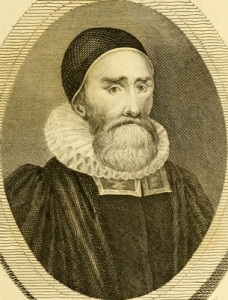
Benedict Pictet (1655-1724): “Reformed minister, theologian, and hymn writer, Pictet is best known for his vigorous defense of orthodox Calvinism in an age of theological transition. Born in Geneva, he was educated at the university, where he became professor of theology (1686). There he was a restraining influence on his colleagues, including his cousin, Jean–Alphonse Turrettini, who wanted to abrogate the Helvetic Consensus Formula and institute other theological changes in the early years of the Enlightenment. A man of irenic spirit, Pictet authored two major theological works, published many books and pamphlets, wrote texts for numerous popular hymns, organized assistance for Huguenot refugees following the Revocation of the Edict of Nantes (1685), and promoted evangelism in France.” https://www.biblia.work/dictionaries/pictetbenedict-1655-1724/


[1] This rhetorical question remains for the current MVO/CT advocate to answer.

[2] The writer here attacks the opinion of Papists, who maintain that the authority of the scripture over us depends on the testimony of the church. For our purposes, please substitute the focus on external criteria of “post-critical scholarship” for “church.”

The King and His Laws

I was reminded yesterday in Church of this truth. Any king can write his laws upon stone and parchment, but only the King of Kings can write His laws on the hearts and minds of men.

“But this shall be the covenant that I will make with the house of Israel; After those days, saith the LORD, I will put my law in their inward parts, and write it in their hearts; and will be their God, and they shall be my people.”

Jeremiah 31:33

and

“For this is the covenant I will make with the house of Israel after those days, declares the Lord. I will put My laws in their minds and inscribe them on their hearts. And I will be their God, and they will be My people.”

Hebrews 8:10

and

“This is the covenant that I will make with them after those days, saith the Lord, I will put my laws into their hearts, and in their minds will I write them;”

Hebrews 10:16

What is more, God writes only His laws and His words upon the hearts and minds of men. God does not stoop to write the words of mere men upon the hearts of other men. Only God’s words are worthy and only God can do the writing.

He does this by the very hearing of the inspired infallible word of God and by the impelling power of the Holy Spirit who resides with and within each Christian.

Textual scholarship, for all of its work and research, is unable to account for this historical phenomenon, and so it doesn’t. But it is this very inability which makes modern textual scholarship unable to determine which words are the New Testament.

Textual scholarship’s inability to determine which words are eligible to be written on the hearts of men demonstrates that textual scholarship is equally unable to determine which words written on parchment are God’s words.

Put simply, if you can’t know which words God would have written on the hearts of men then you cannot know which words God had written on the original of the Old and New Testaments. It is also true, that if you can’t know which words of God are the words God originally gave, then you cannot know which words God would have written on the hearts of men.

How then do we know which words God originally gave? Well, they must be the words which God would have written on the hearts of men. And who knows the words which God would have written on the hearts of men? The Scripture is plain, just as the spirit of a man knows the things of a man so the Spirit of God knows the things of God (1 Cor. 2:11). So, only the Holy Spirit knows which words God would have written on the hearts of men. And where does the Spirit of God reside? The body of Christ, the Church.

Our Artless and Banal Textual Scholarship

“It is impossible to read Shakespeare – the best of Shakespeare, not the four or five weakest plays – and not (1) recognize his genius, and (2) enjoy the plays. Not by trying to read one in a night, but rather reading it in a week, following the footnotes the first time or two, catching up with the language, then reading for pleasure. Similarly, it is impossible not to enjoy Mr. Bach if you start slowly and are willing to devote a little effort at first.”

Phil G. Goulding, Classical Music: The 50 Greatest Composers and Their 1,000 Greatest Works (New York: Fawcett Books, 1992), 108.

You will not find the modern textual scholar making such claims and admonitions as to read something beautiful, something momentous, and to read it multiple times. You will not find them advocating for “catching up with the language the first time or two” in your study of Scripture or to “start slowly” and “devote a little effort at first” in your Bible reading. For Bach and Shakespeare, yes; for the Bible, no.

Instead we are treated to junk suppositions like “That’s hard to read” and “Those are archaic words.” If we are to learn Shakespeare and to understand his genius, and we should, we are going to have to read it in the words he wrote. If we are going to enjoy Bach and understand his genius we are going to have to start slowly and devote a little effort.

But instead of observing the genius of the these and like writers and composers we don’t study them at all. Not in public school and not in most private schools. And once out of school very few actually take it upon themselves to read and study these great works which formed the Western mind.

And now we are fighting to keep I Am Jazz and Sam the Transformer out of public schools because these messages are diametrically opposed to the survival of any society and culture. What happened? Which came first, whining about how difficult it is to read the King James Version or stupidly asserting that reading Shakespeare and the like have no use and are therefore obsolete?

Use?! This is the very thing that Karl Barth, as wrong as he was on so many things, warned the Church about. The Bible is no mere tool given to people to shape and reshape like Michael Jackson’s nose in order to give ecclesiastical credence to evil. The Bible is not a mere object of inquiry. Oh the Bible does have a use and that use is in the same way obedient subjects have a use for an almighty sovereign.

Disposable music, disposable literature, disposable technology, disposable theology, and disposable Bibles are the order of the day. Instantly the rage one day and by next year we need something new. If you don’t have the newest iPhone then you are behind the times, and if you don’t have the latest Nestle/Aland Greek NT you get charged with the same lapse.

We don’t have a use for real works of genius which yield longevity like the King James Bible or Shakespeare or Bach because we as Americans, starting in the academy, have become artless, banal, and misshapen down to our very souls. And we are proud of it, to boot.

Video: Dr. Riddle and the Principles for Handling Differences Between TR Editions (Part 4)

In this video Dr. Riddle presents the reality that God did not merely preserve the TR, but rather God has preserved His words, the Bible, in all ages and that the printed TR is a manifestation of that divine preserving work.