Is the Angel at the Pool of Bethesda Scriptural?

Do you remember the story in John 5:3-4 of the angel who moves the waters at the pool of Bethesda and the first to enter would be healed of their infirmity? This story appears in the KJV and many modern translations remove it.

Here again we draw on the work of Will Kinney to show that a thorough and reasonable answer can easily be found to support the inclusion of the story and also diminish the strength of the position which demands the story be taken out.

Perhaps one of the more interesting observations made by Kinney is the fact that NIV publishers excluded the story in the English NIV, included the whole story in the Spanish NIV, and only included verse 4 in the NIV published Spanish speakers of Spain. Sometimes you can only shake your head.

The following is a portion of an article written by Will Kinney all of which can be found here.

_______________________________________________________________________________

Likewise, and not surprisingly, James White also criticizes these verses as found in the King James Bible. In his book, The King James Only Controversy, Mr. White says on page 156: “This verse provides a classic example of how a marginal note explaining something in the text can end up as part of the text somewhere down the line. John’s reference to the pool of Bethesda and the sick lying about it would be confusing to some. A marginal note explaining the traditional belief of the Jews regarding the angel stirring the waters COULD HAVE easily been accidentally inserted into the text by a later copyist, thinking that it was actually a part of the text that had been accidentally left out and placed in the margin.”

Well, it’s nice of Mr. White to give us his conjectures and personal theories, but we may well turn the tables on his view and suggest that some few scribes may have had a problem with what the verses clearly say and simply removed them.

Not only are the verses found in the Majority of all Greek texts, including at least 22 uncial copies, but, as Dean Burgon and Jack Moormon note, so also in the Old Latin copies of a, aur, b, c, e, ff2, g1, j, r1, Latin Vulgate, the Vulgate Clementine, the Syriac Peshitta, Harclean, Palestinian, some Coptic Boharic copies, the Armenian and the Ethiopian ancient versions.

Jack Moorman significantly points out that by omitting the last part of verse three and all of verse four, we then have no explanation as to why all those people were gathered at the pool, and verse 7 makes no sense at all. Verse seven states: “The impotent man answered him, Sir, I have no man, when the water is troubled, to put me into the pool: but while I am coming, another steppeth down before me.”

Both Burgon and Moorman also confirm that the verses in question are quoted by many early church Fathers including Tertullian 200 A.D; Tatian 175 A.D., Gregory of Nazianzus 390 A.D.; Ambrose, Chrysostom 390 A.D. and Didymus 379 A.D, Ammonius, Hilary, Ephraem the Syrian, Nilus, Jerome, Cyril of Alexandria, Augustine, and Theodorus Studita. (See Burgon, The Traditional Text, Volume 1 pages 82-84).

Many early church writers testified to the legitimacy of these verses -“And there was in Jerusalem a place prepared for bathing, which was called in Hebrew the House of Mercy, having five porches. And there were laid in them much people of the sick, and blind, and lame, and paralysed, WAITING FOR THE MOVING OF THE WATER. AND THE ANGEL FROM TIME TO TIME WENT DOWN INTO THE PLACE OF BATHING, AND MOVED THE WATER; AND THE FIRST THAT WENT DOWN AFTER THE MOVING OF THE WATER, EVERY PAIN THAT HE HAD WAS HEALED.” Tatian (140 AD), Diatessaron

Tertullian (160-221 A.D.) in one sermon On Baptism makes it clear that the passage was in the early manuscript that he was using for he says, “If it seems a novelty for an angel to be present in waters, an example of what was to come to pass has forerun. An angel, by his intervention, was want to stir the pool at Bethsaida. They who were complaining of ill-health used to watch for him; for whoever had been the first to descend into them, after his washing ceased to complain.” (On Baptism I: 1:5)
http://www.tertullian.org/articles/evans_bapt/evans_bapt_text_trans.htm


“Therefore it is said: AN ANGEL OF THE LORD WENT DOWN ACCORDING TO THE SEASON INTO THE POOL, AND THE WATER WAS TROUBLED; AND HE WHO FIRST AFTER THE TROUBLING OF THE WATER WENT DOWN INTO THE POOL WAS HEALED OF WHATSOEVER DISEASE HE WAS HOLDEN.” Ambrose (339 – 397 AD), On The Mysteries, Chapter 4

“And all benediction has its origin from His operation, AS WAS SIGNIFIED IN THE MOVING OF THE WATER AT BETHESDA.” Ambrose (339 – 397 AD), On The Holy Spirit, 1.7

“You read, too, in the Gospel that THE ANGEL DESCENDED AT THE APPOINTED TIME INTO THE POOL AND TROUBLED THE WATER, AND HE WHO FIRST WENT DOWN INTO THE POOL WAS MADE WHOLE.” Ambrose (339 – 397 AD), On The Holy Spirit, 1.7

“Now there is at Jerusalem a sheep pool, called in the Hebrew tongue Bethesda, having five porches. In these lay a great multitude of impotent folk, of halt, blind, withered, WAITING FOR THE MOVING OF THE WATER.” Chrysostom (347 – 407), John, Homily 36

“Around this pool lay a great multitude of impotent folk, of blind, halt, withered, WAITING FOR THE MOVING OF THE WATER; but then infirmity was a hindrance to him who desired to be healed, now each hath power to approach, FOR NOW IT IS NOT AN ANGEL THAT TROUBLETH, IT IS THE LORD OF ANGELS WHO WORKETH ALL.” Chrysostom (347 – 407), John, Homily 36

“WHEN THE ANGEL GAVE THE SIGN BY THE MOVING OF THE WATER. FOR THUS WAS THAT POOL SANCTIFIED, FOR THAT THE ANGEL CAME DOWN AND MOVED THE WATER.” Augustine (354 – 430 AD), Sermon 75

“And when did the sick man descend into the pool? WHEN THE ANGEL GAVE THE SIGN BY THE MOVING OF THE WATER.” Augustine (354 – 430 AD), Sermon 75

“Bethesda, the pool in Judea, could not cure the limbs of those who suffered from bodily weakness WITHOUT THE ADVENT OF AN ANGEL.” Jerome (347 – 420 AD), Against the Luciferians

“And in the same way in the case of the man who had been lying for thirty-eight years near the edge of the pool, AND HOPING FOR A CURE FROM THE MOVING OF THE WATER.” John Cassian (365-433 AD), Conferences 13.16

In his book, The Revision Revised, Dean John William Burgon adamantly defends the authenticity of these verses. He says on page 283 regarding the troubling of the pool of Bethesda that this passage “is not even allowed a bracketed place in Dr. Hort’s Text. How the accomplished Critic would have set about persuading the Ante-Nicene Fathers that they were in error for holding it to be genuine Scripture, is hard to imagine.”

The so called “oldest and best” manuscripts, upon which many modern versions rely, omit not only these verses in John 5, but anywhere from 11 to 45 entire verses from the New Testament. They frequently don’t even agree among themselves. Instead of the traditional reading of BETHESDA, Vaticanus reads Bethsaida, D has Belzetha, while Sinaiticus has Bethzatha.

Before going on with what some other scholars of equal or greater learning than those behind the modern version bibles have said regarding John 5:3-4, I would like at this time to mention the long list of Bibles that continue to include all the words found in John 5:3-4.

The Anglo Saxon Gospels 990 A.D.

The oldest Bible translation online that I was able to find is the Anglo Saxon Gospels, of 990 A.D. There is also a copy of the Saxon Gospels from 1175 A.D.  Both copies contain all the words in both verses 3 and 4.  It is almost impossible to read, but you can clearly see that this very old pre-English translation contained all the words found in

John 5:3-4 This is what it looks like – “John 5:3 on þam porticum læg mycel menygeo ge-adlugra blindra. & healtra ænð forscruncenra & ge-anbidedon þæs wæteres steriunge.  John 5:4 “Drihtnes engel com to hys time on þonne mere. & þæt wæter wæs astyred. and se þe raðest com on þonne mere æfter þas wæteres steriunge wærd ge-hæld fram swa hwilcere utrumnysse  swa he on wæs.”  

Bible translations that include the two verses in full are Wycliffe 1395, Tyndale 1525, Coverdale 1535, the Great Bible 1540, Matthew’s Bible of 1549, the Bishops’ Bible 1568, the Geneva Bible 1560-1599, the Beza N.T. 1599, Mace N.T. 1729,  Wesley’s New Testament 1755, Worsley Version 1770, Haweis N.T. 1795, the Thomson Bible 1808, The Revised Translation 1815, the Living Oracles 1835, Pickering N.T. 1840, Morgan N.T. 1848, the Boothroyd Bbile 1853, The Revised English Bible 1877, Darby 1890, Youngs 1898, J. B. Phillips translation 1962, New Life Version 1969, Living Bible 1971, The New Berkeley Version in Modern English 1969, the NKJV 1982, Amplified Bible 1987, KJV 21st Century 1994, Third Millennium Bible 1998, The New Testament 1999 by Jonathan Mitchell, Green’s Modern KJV 2000, Tomson N.T. 2002, The Resurrection Life N.T. 2005, the Concordant Version 2006, the Holman Standard Bible 2009,  the Jubilee Bible 2010, the Orthodox Jewish Bible of 2011 and The Legacy New Testament 2021.

Other English Bibles that contain all these words are The Word of Yah 1993, Interlinear Greek N.T. 1997 (Larry Pierce), Lawrie Translation 1998, The Koster Scriptures 1998, God’s First Truth 1999, Last Days Bible 1999, The World English Bible 2000, the Sacred Scriptures Family of Yah 2001, The Evidence Bible 2003, the Pickering N.T. 2005, the Faithful New Testament 2009, Bond Slave Version 2009, English Majority Text Version 2009 (Paul Esposito), Hebraic Transliteration Scripture 2010, Holy Scriptures VW Edition 2010, The New European Version 2010, the Online Interlinear 2010 (André de Mol), Biblos Interlinear Bible 2011, The Aramaic N.T. 2011, Far Above All Translation 2011, The Work of God’s Children Illustrated Bible 2011, Orthodox Jewish Bible 2011, Interlinear Hebrew-Greek Scriptures 2012 (Mebust), Modern English Bible 2012, the Natural Israelite Bible 2012, the International Standard Version 2014, Hebrew Names Version 2014, The Modern Literal New Testament 2014, the Modern English Version 2014, the International Children’s Bible 2015 and The New Matthew’s Bible 2016.

Now there are several new bible versions recently put out that are based primarily on the Westcott-Hort revised Greek texts which generally omit some 3000 words form the New Testament, and yet they have included all these words in their versions.  

These include the Living Bible 1971, the Amplified bible 1987, New Century Version 2005, the Holman Standard of 2009, the 2014 International Standard Version, the Expanded Bible 2011 and The Voice of 2012. All these versions have gone back to including all the words in these two verses. The new versionists are nothing but consistently inconsistent.

Foreign Language Bibles that contain ALL of John 5:3-4

In addition to all these English Bible that contain the ending of verse three and all of verse four, the following foreign language Bibles also contain all these words: The Spanish Sagradas Escrituras 1569, the Spanish Reina Valera 1602, 1909, 1960 and  1995, La Biblia de las Américas 1997 and La Nueva Biblia Latinoamericana de Hoy 2005, the Italian Diodati 1649 and the New Diodati of 1991, the Riveduta 1927, La Parola e Vita 1997, the Afrikaans 1953, Arabic Smith & Van Dyke, and Arabic Easy to Read Version 2009, Basque Navaro-Labourdin, Bulgarian Protestant Bible 2000, Chinese Union Version Traditional, Croatian, Czech, the Danish BPH 2006, Dutch Staten Vertaling, Danish, Finnish, the French Martin 1744,  Louis Segond 1910, French Ostervald 1996, the French Louis Segond 21 of 2007, the German Luther 1545 and the 2000 German Schlachter Bible, Icelandic Bible, Hungarian Karoli, Japanese, Korean, Latvian, Lithuanian, Maori Bible, the Netherlands Het Boek 2000, Norwegian En Leavened Bok 1988, the Polish Updated Gdansk Bible 2013, the Romanian Cornilescu Bible and Romanian Fidela Bible 2014, the Portuguese Almeida Corregida 2009 and O Livro 2000,  , Russian Synodal Version and the Victor Zhoromsky translation, Swahili, Tagalog, Thai, Turkish, Ukranian, Vietnamese

the Modern Greek Bible 

3. Εν ταυταις κατεκειτο πληθος πολυ των ασθενουντων, τυφλων, χωλων, ξηρων, οιτινες περιεμενον την κινησιν του υδατος. 

4. Διοτι αγγελος κατεβαινε κατα καιρον εις την κολυμβηθραν και εταραττε το υδωρ· οστις λοιπον εισηρχετο πρωτος μετα την ταραχην του υδατος, εγινετο υγιης απο οποιανδηποτε νοσον επασχεν. 

https://newchristianbiblestudy.org/bible/greek-modern/john/5/

and the Modern Hebrew Bible – “שמה שכבו חולים ועורים ופסחים ויבשי כח לרב והמה מיחלים לתנועת המים׃  כי מלאך ירד במועדו אל הברכה וירעש את מימיה והיה הירד ראשון אל תוכה אחרי התגעשו המים הוא נרפא מכל מחלה אשר דבקה בו׃”

The NIVs in other languages

Even though the English version of the NIV omits all these words in John 5:3-4, yet the NIV Portuguese bible of 2000 called Nova Versao Internacional, has them all in the text!

It reads: João 5:3 “Ali costumava ficar grande número de pessoas doentes e inválidas: cegos, mancos e paralíticos. Eles esperavam um movimento nas águas. 

João 5:4. De vez em quando descia um anjo do Senhor e agitava as águas. O primeiro que entrasse no tanque, depois de agitadas as águas, era curado de qualquer doença que tivesse.” 

And among the NIVs in Spanish, the NIV sold in Mexico and South America, called Nueva Versión Internacional, OMITS  “waiting for the moving of the waters” from verse 3 and ALL of verse 4. It looks like this – 

Juan 5:3 – “En esos pórticos se hallaban tendidos muchos enfermos, ciegos, cojos y paralíticos…………………………

Juan 5:4 …………………………………………………

But the NIV sold in Spain, called Nueva Versión Internacional (Castilian) 2005, OMITS “waiting for the moving of the waters” from verse 3  (even though the Portuguese NIV DOES include them) BUT it adds ALL of verse 4.  It looks like this –

Juan 5:3-4 –  3. En esos pórticos se hallaban tendidos muchos enfermos, ciegos, cojos y paralíticos…………

 4. De cuando en cuando un ángel del Señor bajaba al estanque y agitaba el agua. El primero que entraba en el estanque después de cada agitacíon del agua quedaba sano de cualquier enfermedad que tuviera.

So, the NIV English version omits all these words but the NIV Portuguese version includes them and the NIV Castilian Version adds all of verse 4.  Folks, these are the type of “serious bible scholars” we are dealing with here.

Other Bible Scholars and Commentators –

John Calvin included these verses of John 5:3-4 in his translation without any note of doubt as to their authenticity and expounded upon them in great detail. He says: “At intervals – God might have at once, in a single moment, cured them all:, but, as his miracles have their design, so they ought also to have their limit; as Christ also reminds them that, though there were so many that died in the time of Elisha, not more than one child was raised from the dead, (2 Kings 4:32-33) and that, though so many widows were famished during the time of drought, there was but one whose poverty was relieved by Elijah, (1 Kings 17:9; Luke 4:25). Thus the Lord reckoned it enough to give a demonstration of his presence in the case of a few diseased persons. But the manner of curing, which is here described, shows plainly enough that nothing is more unreasonable than that men should subject the works of God to their own judgment; for pray, what assistance or relief could be expected from troubled water? But in this manner, by depriving us of our own senses, the Lord accustoms us to the obedience of faith. We too eagerly follow what pleases our reason, though contrary to the word of God; and, therefore, in order to render us more obedient to him, he often presents to us those things which contradict our reason. Then only do we show our submissive obedience, when we shut our eyes, and follow the plain word, though our own opinion be that what we are doing will be of no avail. We have an instance of this kind in Naaman a Syrian, whom the prophet sends to Jordan, that he may be cured of his leprosy, (2 Kings 5:10) At first, no doubt, he despises it as a piece of mockery, but afterwards he comes actually to perceive that, while God acts contrary to human reason, he never mocks or disappoints us.”

Adam Clarke comments: “Waiting for the moving of the water.” This clause, with the whole of the fourth verse, is wanting in some MSS. and versions; but I think there is NO SUFFICIENT EVIDENCE AGAINST THEIR AUTHENTICITY.” (Caps are mine)

Barne’s Notes on the New Testament says: “In regard to this passage, it should be remarked that the account of the angel in the 4th verse is wanting in many manuscripts, and has been by many supposed to be spurious. There is not conclusive evidence, however, that it is not a part of the genuine text, and THE BEST CRITICS SUPPOSE THAT IT SHOULD NOT BE REJECTED.” (Caps are mine.)

David Guzik’s commentaries does not question the truth of these verses at all, and he comments: “A pool, which is called in Hebrew, Bethesda: This pool has been excavated in the area just north of the temple mount, and found to have five porches, just as John says. There are many unusual occasions healing in the Bible,The purified pot of stew (2 Kings 4:38-41); The healing of Naaman by washing in the Jordan River (2 Kings 5:10-14); The healing of the man who touched the bones of Elisha (2 Kings 13:20-21); Healing of those who have the shadow of Peter upon them (Acts 5:14-16); The healing of those who have Paul’s handkerchiefs upon them (Acts 19:11-12).”

Even Jamieson, Fausset and Brown support the verses saying: “The want of John 5:4 and part of John 5:3 in some good manuscripts, and the use of some unusual words in the passage, are more easily accounted for than the evidence in their favor if they were not originally in the text. Indeed John 5:7 is unintelligible without John 5:4.”  

In summary, these words found in John 5:3-4 are part of God’s precious, inspired and infallible words. Any bible that omits them is to varying degrees a corrupt and incomplete Bible.  The only ones that omit these words are the inconsistent witness of the Catholic Church and the new Vatican Version “interconfessional” text United Bible Society versions like the English NIV, [NASBs], ESV, NET, Jehovah Witness New World Translation and some of the modern Catholic versions.

The King James Bible is God’s Book of the Lord and the Standard of absolute written truth. Accept no substitutes.

All of grace, believing the Book, 

Will Kinney
The Failure of Mark Ward’s Arguments Continue to Mount

In a recent Mark Ward video, discussed in this post, he attempts to defend his argument that Edification Requires Intelligibility by appealing to I Corinthians 14. Ward contends that while 1 Corinthians 14 is clearly dealing with the gift of and speaking in tongues during public worship, 1 Corinthians 14 also has immediate application to the Bible itself and specifically to translations.

He goes on to say that his historical theological argument regarding 1 Corinthians 14 is bolstered by the KJV translators themselves because the KJV translators reference 1 Corinthians 14 in the Translators Preface to the Reader. The place which Ward references is,

“But how shall men meditate in that, which they cannot understand? How shall they understand that which is kept close in an unknown tongue? as it is written, “Except I know the power of the voice, I shall be to him that speaketh, a Barbarian, and he that speaketh, shall be a Barbarian to me.” [1 Cor 14]”

Translation Necessity

Before making the central point of this post it is important to observe that the Preface only goes on to name languages foreign to the English reader: Hebrew, Greek, Scythian, Syrian, and Roman/Latin and even how they were considered foreign when compared among each other. What they do not mention is Wycliffe’s translation in Middle English, and we’ll get to why I think that is important in just a second. But first let’s talk a little bit about Middle English.

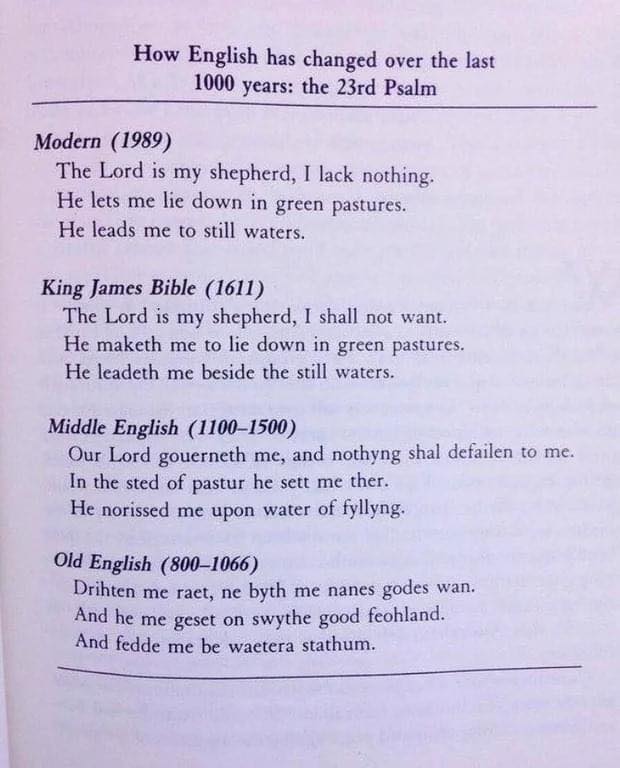
Most linguistic historians place Middle English between 1100 and 1500. Here is an example of what Middle English looks and sounds like compared to Old, Early Modern, and Modern English:

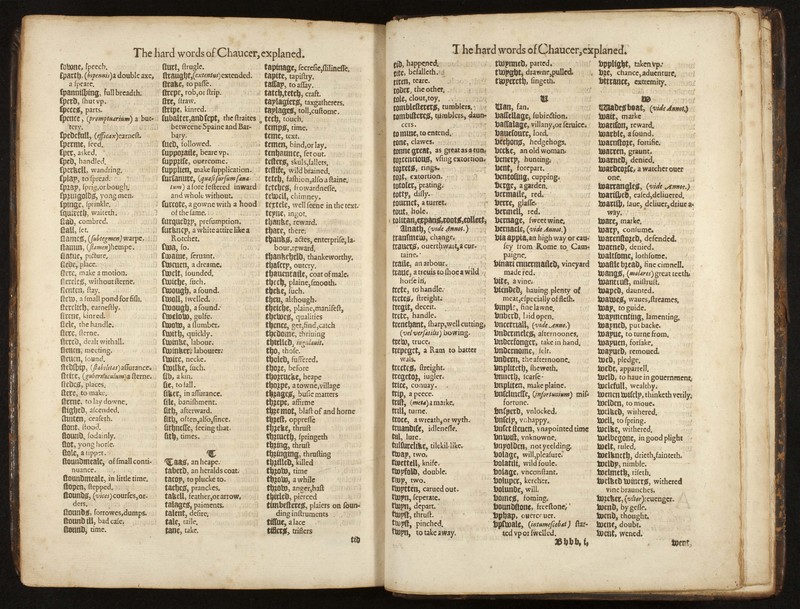
Anyone having trouble understanding “norissed” and “fyllyng”? Well you wouldn’t be the only ones. The image that heads this post is a portion of a gloss included in a compilation of Chaucer’s Canterbury Tails printed in 1598, 200 years after Chaucer’s original work and only 13 years before the writing of the 1611 KJV.

The aforementioned gloss contained over 2,000 entries of what Mark Ward would probably call archaic words and “False Friends.” And yet, instead of changing the original text of Chaucer, the compiler offered an extensive gloss. Ward would have us abandon the KJV for a puny 56 “False Friends” while Chaucer enthusiasts of the 16th century were fine with over 2,000 such entries. When do Ward’s arguments turn from shallow linguistic commentary to outright calls for lethargy and laziness? For the sake of unity around a standard sacred text I’d think the religious academics like Ward would be at least as stalwart as Chaucer enthusiasts.

But it doesn’t stop here. When did Tyndale write his first New Testament in English? That’s right, 1523, only 23 years into the regular use of Early Modern English. Tyndale’s parents undoubtedly spoke Middle English. Tyndale grew up around it. And yet the KJV translators did not take Ward’s stance on 1 Corinthians 14. They said nothing of Middle English as foreign. Indeed, Wycliffe, before Tyndale, translated the Bible into Middle English but the KJV translators didn’t malign Wycliffe’s work for its “False Friends” and archaic words. No, no, they said,

“we affirm and avow, that the very meanest translation of the Bible in English, set forth by men of our profession, (for we have seen none of theirs of the whole Bible as yet) containeth the word of God, nay, is the word of God.”

And Answer to the Imputations of Our Adversaries

Critical Text advocates love this line from the Preface, and now it’s time Ward owns it. Wycliffe’s translation was in Middle English, but it was not accounted as foreign by the writers of the preface and they certainly didn’t connect Wycliffe’s work to 1 Corinthians 14. Rather they affirmed it.

And how different is the Early Modern English from the Middle English? This article from the University of Kentucky observes,

“During the early modern period, between 10,000 and 25,000 new words entered the English vocabulary, primarily loan words adapted from Latin and foreign languages. Accordingly, many early modern writers stand as the first evidence for a particular word in the Oxford English Dictionary. As of May 9, 2017, Shakespeare is cited 1495 times as the first evidence of a word; dictionary writers Thomas Blount (1618–1679), Randle Cotgrave (d. 1634?), and John Florio (1553–1625) are cited as the first evidence for 1466, 1350, and 1201 words respectively; and John Milton holds 556 first citations for a word.”

https://exhibits.lib.ku.edu/exhibits/show/english-language/middle-and-early-modern

Could you imagine being someone like Tyndale attempting a translation of the New Testament at the advent of Early Modern English? Some 10,000 to 25,000 new words enter English Vocabulary in the early modern period. That’s a lot of words, a lot of opportunities for False Friends, but of course the KJV translators make no mention of these radical shifts in English, nor does anyone of note mention 1 Corinthians 14 as a biblical proof for condemning this growth in the English language.

Rather the works of Shakespeare and Milton survive as some of the greatest works ever written in English. And this leads me to another point. We are currently in a socio-cultural educational matrix where the literary brilliance of and like those mentioned above is maligned and/or ignored.

Rather than the English language growing more precise and enlightening it is growing more truncated and confused. You need look no further than the fact that so few, and especially academics, are unable to define what a woman is. Or the claim that homosexual civil unions are the same as divinely ordained marriage or the advent of safe-spaces or the obsession with microaggressions and hate speech or the fact that a human in the womb is regarded as a mere clump of cells. The list goes on and one. Words and what they mean are not being made better, more erudite, more beautiful. No, they are becoming more and more truncated, more like double-speak.

The KJV translators did not balk at the growth of the English language, rather they embraced it and translated a marvel of literary genius, the King James Version. Meanwhile, Ward and those of his ilk would have us cast off this marvel. Why? Because it doesn’t make sense to the common folk, he says.

So Ward would have us cast off the KJV and why not Shakespeare, and Milton while we are at it, only to embrace a truncated and deteriorated modern version based on a truncated and deteriorated version of the English language?

What happened to the spirit of the KJV translators who chose to translate the KJV into a language which was old even for their time, embraced a host of loan-words by receiving 10,000 to 25,000 new words into the contemporary vocabulary?

Ward’s arguments are taking us backward. His arguments explicitly and implicitly argue in favor of a devolution of the English language. Modern classical education demands that students read Shakespeare and Milton, and part of what we are saying is that the KJV ought to be retained for the same reasons we retain Shakespeare and Milton. Indeed, we ought to retain the KJV as the standard sacred text of the English-speaking Church.

Ward says the plowboy doesn’t understand KJV English and here my 15, 13, and 12 year old are reading Shakespeare, Milton, Kant, Aquinas and the KJV in high-school as part of the Great Books of the Western World curriculum or as part of Omnibus I-IV.

Do you know why there are words in the KJV that people don’t know? Simply because we stopped reading the Bible, we stopped preaching the Bible, and we stopped studying the Bible. The Multiple Version Onlyists divided the church on the version issue with their misguided and endless insistence on multiplying versions which has lead to greater and greater biblical illiteracy. Churches, individuals in churches, generations of Christians do not share a common biblical language. They don’t know what each other are saying and they don’t know what the Bible is saying. All it takes is a 10 minute look at your Facebook feed to prove that point.

And now that we are grossly illiterate regarding the words of Scripture, Ward would have us embrace a version of the Bible suited to that illiteracy while ignoring the fact that endless versions have drawn attention away from the KJV as the standard sacred text. Now, surprise surprise there are words in the KJV the plowboy doesn’t understand. He doesn’t understand because those like Ward promised a better Bible and didn’t deliver only to turn around and blame the KJV for being archaic.

The early text-critics were glad to be emancipated from the Ecclesiastical Text, and in their pride they thought they could make their own, only to fail to replace the KJV as the standard sacred text. Disarray, confusion, and dissention arose within the church and instead of text-critics blaming themselves for inciting such disarray, confusion, and dissention they turn around and blame the KJV for being archaic. Ward continues to carry this same water from the same broken and godless well. His work is merely a variation on the same theme:

KJV bad > Ours better > Ok, ours not better > Ours only sufficiently reliable > “150 years later” > Now church cannot understand KJV > See, KJV bad.

In sum, 1.) while the KJV translators did cite 1 Corinthians 14 they only cited it regarding foreign languages. 2.) Early Modern English is significantly different than Middle English and yet the KJV translators made no such attempt to besmirch the work of Wycliffe, in fact they approved of it. 3.) Early Modern English was in significant flux during the time of the writing of the KJV and yet the translators did not take the opportunity either to associate 1 Corinthians 14 with earlier and advancing versions of the English language. 4.) Finally, the reason why the KJV is archaic is not because it is archaic in itself but because for the last 150 years scholarship and her ecclesiastical acolytes have variously redirected the attention of God’s people to other Bibles and as such the language of the standard sacred text has fallen out of use both in the church and day-to-day living. In short, those like Ward have contributed and continue to contribute to making the KJV unfamiliar only to turn around and blame the KJV for being unfamiliar.

Ward’s Best Reply, Not So Good

A few days ago I wrote a blog post encouraging the readership here to take time to hear your opponents for several good and necessary reasons. In that post I linked to a video where Mark Ward attempted to respond to his “Best Opponent.” I also indicated in that post that I would write a response to Ward’s video but in my perusing of Facebook I came across Christopher Yetzer’s, aka Ward’s Best Opponent, treatment of Ward’s video.

Yetzer, a missionary to Italy and father of three, does a splendid job breaking down Ward’s video and dealing with the major points of contention. All in all I found his response penetrating and thorough to the point that, yet again, Ward’s video response to his best opponent is rendered largely ineffectual. I spoke with Yetzer and asked if I could copy his response to my blog. He agreed.

So in leu of my response, I give you Christopher Yetzer’s treatment of Mark Wards video response to his best opponent. It is submitted in its entirety and without edits or amendments. One note, ERI stands for Edification Requires Intelligibility, a favorite slogan of Ward’s.

_______________________________________________________________________________

This is my response to Mark Ward’s recent video (https://youtu.be/h4x5Di_9xJI) which I believe included several misrepresentations that I would like to clarify here.

For those who don’t like to read: I will introduce each remark made by Bro. Ward with a timestamp in bold (00:00). That will be followed by a summary of my response (Response:) a space and then a full explanation. Feel free to skip as desired.

I have some serious doubts and questions concerning various statements made in the video which were not specifically about me: like where does the Bible say “KJV onlyism is doctrinally wrong”. I also wonder why some of my arguments in the initial post were not addressed in the video, but I will try to stick on topic and make this as brief as necessary.

(05:00) “The value of any principle or slogan, like ERI, is its brevity and pithiness, the downside is that it doesn’t get to make all the necessary qualifications.

Response: My argument was not based on the use of a pithy slogan, but based on the use of a slogan supposedly drawn from 1 Corinthians 14.

Sure anyone can make a slogan like Nike’s “Just do it” without having to specify that “Just do it” does not intend “Go enslave Uyghurs to make our shoes.” If you want to make a catchy slogan, then you are welcome to express what you mean by that slogan. That is not where I disagree. Where I disagree (and the reason that I made the statement “At least it cannot be said honestly and without showing an exception clause”) is that the slogan is used as if it is an accurate representation of a principle from 1 Corinthians 14 without showing in 1 Corinthians 14 exceptions for foreign words and non-English transliterations. In this short section of this specific video, Bro. Ward tries to brush off ERI as just a slogan and not a biblical principle; however this is different than what he has constantly affirmed. In his book he says, “Paul…trained their minds to think like him by repeatedly providing the ‘why’ behind his instructions. Here’s the why: edification. Building up. Instructing. Encouraging. Over and over in this chapter (by my count, seven times), Paul makes basically the same argument: use intelligible speech rather than unintelligible, because only the former does any good for people… Paul cares too much about edification to let this happen without complaint.” In the comments of Bro. Ward’s video on false friend #1 he replied to me, “Chris, I absolutely stand on 1 Cor 14.” In his interview with Dr. Abraham Kuruvilla, Bro. Ward tries to awkwardly force his interpretation on Dr. Kuruvilla, who seems to only want to politely avoid the question. My original argument has nothing to do with the use of a vague general slogan, but only a slogan that the creator has constantly affirmed is based on a Scripture. I repeat again, please show the exception clause in 1 Corinthians 14 for foreign objects and non-English transliterations if it is truly your belief that your slogan is founded on that passage. So while Bro. Ward says, “I’m only asking us to eliminate unnecessary linguistic barriers.” if it is a biblical principle then it is not HIS principle to modify as he chooses. Thankfully at one point he does come out and admit, “MY edification requires intelligibility concept” (07:00).

(05:45) “I would key the level of intelligibility to the level present in the original for its original hearers.

Response: I don’t think Bro. Ward knows the level of legibility of the original hearers, “We don’t know how intelligible the word was for them.”(16:46)

I admit that I don’t know either. Robert Alter (who no doubt knows Hebrew better than both of us) says, “the Bible itself does not generally exhibit the clarity to which its modern translators aspire: the Hebrew writers reveled in the proliferation of meanings, the cultivation of ambiguities, the playing of one sense of a term against another, and this richness is erased in the deceptive antiseptic clarity of the modern versions…Another consequence of the impulse for clarification is to represent legal, medical, architectural, and other terms from specific realms of experience in purportedly precise modern technical language when the Hebrew by and large hews to general terms…The degree of temporal distance from inversion at which we stand may actually be an advantage for Bible translation because the switching of expected word order can give the translation a slightly antique coloration and create some resistance to the unfortunate impression conveyed by modern translations that the Bible was written the day before yesterday.”[The Art of Bible Translation] There are many places in the text that are unclear to us even when attempting to translate. Modern versions go against another principle mentioned here by Bro. Ward: Read it like they did. I have given specific examples of this in other places.

(10:03) “Then interpretation performed by the King James preacher would have to be a spiritual gift.

Response: I am not the one demanding that 1 Corinthians 14 be applied to Bible translating. Yes, I made the point that if we are going to extract a principle and apply it to a concept outside of the local context then we may continue to do so throughout the whole chapter. But that is not my belief and this seems rather an uncharitable mocking in my opinion.

(10:30) “What about private Bible reading times, when no interpreter is present?

Response: The context of 1 Corinthians 14 is about the public worship service, so this doesn’t really apply (even considering the errant stretch to Bible translating). However to humor the question, I would argue that there are some very good free commentaries, dictionaries and KJV Bibles made with footnotes for some of the more obscure words.

Bro. Ward himself acknowledges that ‘Sheol’ could/should be translated, but it is no bother to him because at home he can refer to several different Bible translations (16:00). Similarly, it is no problem for me since I permit and encourage the use of commentaries, dictionaries and KJV Bibles with footnotes. I formatted 3 historic reformation commentaries and uploaded them to a website for free distribution. I believe in studying and encourage people to do so. Since the beginning of Bro. Ward’s false friends video series, I have commented on his lack of recommending commentaries. I don’t feel like those lamentations have been heard. It seems as if Bro. Ward would prefer you use a dozen translations of the Bible before you use one commentary.

(10:40) “Is intelligibility a subjective standard”?

Response: Yes.

In his false friends video series, Bro. Ward tried to create an objective standard. He said that one step in the process of determining a false friend was to look at modern dictionaries. However we found out that when modern dictionaries disagreed with Bro. Ward, he chose to abandon his objective standard and return to the subjective. Video for false friend #3 in the comments Bro. Ward acknowledged “I occasionally do disagree with the referee!

Here is a list of the first 21 words in the false friends video series. I would note that ‘archaic’ does not mean ‘obsolete’, and many of the definitions were so close and in some way agreed with the sense. I tried to be fair. ‘*’ were ones we disagree on the definition, ‘?’ again are ones that the definitions are so similar that applying one of the definitions to the context would produce a proper result. ‘Yes’ means current, ‘No’ means no entry. AHD refers to the American Heritage Dictionary since it was recommended by Bro. Ward, OED stands for the Oxford English Dictionary. Many of these were found in other current dictionaries, but I stayed with the one he recommended.

Halt – AHD Archaic; OED Archaic
Apt – AHD ?; OED Archaic or Obsolete
Variance – AHD Yes; OED Yes
Emulations – AHD ?; OED Obsolete
Seditions – AHD Archaic; OED Obsolete
Heresies – AHD Yes*; OED Yes*
Cattle – AHD No; OED Yes
Meat – AHD Yes; OED Archaic
Commend- AHD Yes*; OED Yes*
Miserable – AHD Yes*; OED Yes*
Convenient – AHD ?; OED…
Wait on – AHD Yes; OED ?
Remove/Landmark – AHD Yes; OED* Yes
Careful – AHD Yes; OED Archaic
Spoil – AHD Archaic; OED Obsolete or Archaic
Equal – AHD No?; OED Obsolete
Incontinent – AHD Yes; OED Yes
Honest – AHD Yes; OED Obsolete
Judgment – AHD No; OED Obsolete
Enlargement – AHD No; OED Yes
Excess – AHD Yes*; OED ?*

Has Bro. Ward acknowledged that any one of these is not a false friend. Not that I have seen or heard. He just disagrees with the referee.

(11:39) Commendeth – a child in church said “If ‘commendeth’ means ‘shows’ then why doesn’t it just say ‘shows’?

Response: It doesn’t just mean ‘shows’.

I am so glad that Bro. Ward used this example. The real problem here is that ‘commendeth’ as used in Romans 5:8 doesn’t just mean ‘shows’. This is the fault of the preacher who told the poor child an error, not the fault of the child for questioning. Even anti-KJVO advocate James M Leonard said, “I am inclined to agree with you that commendeth does not mean demostrate/show.” I won’t include here all the details of my study on that word, but you can search and find it or go to Bro. Ward’s false friend video #9 and see my comment.

(12:18) “Christopher, for his part, uses dictionaries other than the OED for reasons I simply do not know…(12:30) To my knowledge no KJVO has ever said anything about linguistic corpuses or my use of them.

Response: This is blatantly false and I have proof. In brief, I use contemporary sources because I believe they are more accurate to what was understood at the time.

50 False Friends in the KJV #1—Series Introduction sets out the rules to finding a false friend, “Our process for discovering false friends has four steps and a possible bonus step. We’ll follow this process every time we deal with a false friend.” (2:24) I followed those rules using linguistic tools recommended in the video, and found that many of the initial false friends were in fact not false friends according to the rules (see list above). I have often complained that the OED (Oxford English Dictionary) sometimes parses words too finely into smaller definitions which were not considered different senses in 1611. I commented on the video for false friend #12, “Slow your video down and look at 9. a. & b. in the OED.” On the video for false friend #21 I stated, “Remember again the KJV translators did not have the OED and the separations of definitions like that, they didn’t have your responsible lexicon, they had dozens of Bible editions and languages.” Bro. Ward responded, “You are indeed now trying to question the role of OED as arbiter in this dispute.” To which I responded, “The OED is looking back and giving an interpretation on the words meanings just like you and I are trying to do. Sometimes they are wrong. Then they are dividing them into many distinct senses which didn’t even exist. So when one broader sense may fit the KJV, they may have it broken down to a sense that they say is now obsolete. I think “wait on” is this type of situation.” On false friend #23 I mentioned, “Secondarily I will say that you don’t need to have an OED to understand the Bible, you can use commentaries too.” On false friend #34 I noticed that Bro. Ward started to actually take my advice and use some contemporary sources, “First let me say congratulations on using some contemporary witnesses like the Bishop’s and Tyndale Bibles!” I also noted again the complications of the OED, “I honestly am struggling to separate the definitions in OED.” To which he replied, “This one is subtle, I acknowledge it. I had to puzzle hard over the OED myself.” On false friend #36 again I complemented that he was attempting to add some contemporary resources, “I like that you are adding some contemporary sources and other Bibles.” On false friend #39 where Bro. Ward calls for people to go stir up strife in churches, I said, “Normally I simply think that you are wrong on your premise, and that you don’t actually understand the work done by the KJV translators, nor do you use proper sources which should be contemporary ones,” On false friend #44 I said, “This is the perfect example of what I have been trying to say about the limitations of using the OED….If you were to go back and time and tell Englishmen that these are two completely different definitions in the dictionary I think they would look at you like you are crazy. The difference in nuance is so slight that it seems most scholars didn’t even give it any extra attention. They didn’t try to separate or clarify the word as meaning something different than the word means. They just explained the poetry behind it.” On false friend #46 I said, “I do believe that you study, but I do question at times the resources you choose to study from. I’m not sure why you just don’t use older dictionaries. https://leme.library.utoronto.ca/search/quick makes it very easy to look up older dictionaries and the meanings of words. I think you would find it interesting. I realize those older dictionaries wouldn’t tell you if a definition is archaic or not, but then again the OED is sometimes wrong on that and at points can lead astray by parsing a definition finer than what it was and then calling that one portion archaic.” Not sure how else to understand the situation here.

(12:40) “I also wish to say that no one, even Christopher, has responded to my historical theological arguments regarding 1 Corinthians 14.

Response: See point 1 of my previous post about why I disagree with ERI. I have responded to this.

(13:08) “Even if 1 Corinthians 14 has nothing to do with Bible translation, no legitimate application to it, do I have to have a Bible principle to tell me that the whole point of a translation is to bring meaning from one language to another…

Response: I am glad to see the doubt there as to the application of 1 Corinthians 14. I believe this is the first time I have seen a turn from the normal dogmatization.

(14:01) “any effort to say that language change is sin, gets people mired in impossibilities.”

Response: I have never said that and I do not believe that. It would be quite uncharitable if this were applied to my beliefs.

(14:10) “One of my questions I can’t seem to get answer an answer to from anyone in the King James only world is this: if there were a Wycliffe-only movement what would you say to them?… If you aren’t willing or able to make any scriptural arguments against Wycliffe-onlyism, do you have any wisdom arguments?

Response: This basic question has been answered in many places in different ways. It is my position that a belief in the KJV is more historic than Scriptural.

I am not going to force the Scriptures to say something it doesn’t say, as I feel Bro. Ward has tried to do with 1 Corinthians 14. I do not need to do that. I don’t have Scripture which tells me that Esther is a canonical book. I don’t have Scripture that says 2 Maccabees and the First Epistle of Clement are not inspired. I have history and God’s voice inside the books which demonstrate his blessing. I would like to turn the question around and ask, “Can you show me where in the Bible it says that Jude is Scripture or where in the Bible it says that no translation can be perfect and only the Hebrew and Greek can be perfect or that God’s word would only be preserved in those two languages and cannot be translated?” I see that God’s hand has been upon the KJV and that his voice speaks to me through it. I became a Baptist initially through the influence of the KJV, I accepted Christ after reading words from the KJV and I have seen the KJV’s effectiveness in leading others to Christ. “I have lived, Sir, a long time and the longer I live, the more convincing proofs I see of this truth – that God governs in the affairs of men.” – Benjamin Franklin. Sure Benjamin Franklin wasn’t referencing the Bible or translations of it, but if you think that God is active in this (world in every area except His words, I would question why.

(20:38) “I would like to ask Christopher Yetzer…to do something that no one else in any King James Only world has ever been willing to do to my knowledge…But not once in the four years since my book came out or the two years since I started my Fifty False Friends in the KJV YouTube series has any King James Onlyist of any stripe publicly or privately acknowledged an individual, specific false friend.“(21:48)

Response: As far as the final challenge, this is unfortunate. If you look back at my comments, I have acknowledged false friends. I have always disagreed that their quantity or the confusion caused by a rare one is greater than what we lose by changing the standard or moving to a modern critical text edition.

On Bro. Ward’s false friend video #3, 4, 5, and 6 in response to the same question I commented, “I have sent you at least one false friend before. I don’t disagree that to common language some phrases or words may be unclear in the KJV or all other Bibles. My point has always been that I am willing to sacrifice a few false friends for what I gain, and if you use commentaries, study tools, the Defined KJV, you really don’t even have to make that sacrifice.” There are more words lost in the critical text than there are false friends in the KJV (By this I do not mean multiple examples of the same false friend, but in the number of specific words that could be written on a page). Bro. Ward has a somewhat odd fixation on trying to get KJVO proponents to provide some sort of comfort for his work. I often hear my KJVO friends acknowledge difficult words in the KJV, but instead of calling for a shift away from the standard, they edify one another by teaching and explaining the meanings of these words (hence such tools as the Defined Bible etc.).

I would like to flip the question around though. Has Bro. Ward ever acknowledged that he was wrong on one of his false friends? Has he ever had to do a retraction video or remove a false friend when he got it wrong, or is it not possible for him to get one wrong? In the video on false friend #10 I mentioned to Bro. Ward the annotation from the work of a KJV translator which I believe demonstrates clearly that Bro. Ward understood this wrongly, and yet he is unshaken. I demonstrated with contemporary sources that he is wrong on number 9, and yet he has not acknowledged it. I don’t need his confirmation of my work though, so I suspect he never will acknowledge an error in his work.

_______________________________________________________________________________

Well said. We are now into our 10th month of writing everyday or nearly everyday on this blog. And the more interact with those like Ward the less they look like champions of their position. Ward’s arguments grow weaker and weaker under examination and his responses do little to buttress his position. It is beginning to look like Ward’s arguments are merely carrying the old stale putrefied water of tired dead arguments from 100 years ago.

If that side has not champions or if the best their champions can do is cry foul when they see homonyms in the Scripture, then the people who trust these men and their arguments are wide open for all kinds of very bad ideas.

If is this all they can muster, then arguments like those presented by Ward have left their adherents defenseless. It is important then for our part to fend off the evil and doubt that will most surely fill the void left by arguments like Ward’s and to meet people where they are in order to offer robust exegetical, theological, philosophical, historical, and practical arguments in the place of “oldest, hardest, and shortest” and “False Friends.”

Christ dealt with the religious leaders differently than he did with the common people. I think we should do the same. Where Ward and others are involved, then treat them as competent equals who are pedaling weak and untrue arguments. Where the common folk, the people in the pew are involved, be to them a gracious and patient teacher. They are going to need it because “edification requires intelligibility” does not survive in the ecclesiastical sphere among Christians let alone in the secular sphere among those who hate Christianity.

Put simply, our Critical Text opponents are going to need a more potent argument than “The Bible is sufficiently reliable” when talking to a Muslim or a New Atheist.

False Friends = False Equivalence

About a month ago I posted the following,

“For most of our readership you know about the term False Friends. This is a term co-opted by Mark Ward which is usually used in the context of comparing foreign languages. Still, Ward thought it best to bring the term into a comparison of English with English.”

Since then, Ward has yet to adjust his approach and so we are compelled to return to this point. In the comments of this post I observed that Ward has put forward both a strawman fallacy and the fallacy of special pleading yet to be address. Here, as we will shortly see, Ward continues his run of logical fallacies and that of false equivalence.

See, “false friend” is not a term which applies to words within a single language e.g., comparing English with English. Within the scholarly literature in the field of linguistics, the term “false friend” is used when comparing different languages, e.g., English and German. Consider the following definitions,

false friend

/ˌfôls ˈfrend/

noun

noun: false friend; plural noun: false friends

1. a word or expression that has a similar form to one in a person’s native language, but a different meaning (for example English magazine and French magasin ‘shop’).

Oxford Languages and Google

And

Noun Linguistics

a word in one language that is similar in form or sound to a word in another language but has a different meaning and may or may not be etymologically related: for example, English gift “present” and German Gift “poison” are false friends.

Dictionary.com

And

a word that is often confused with a word in another language with a different meaning because the two words look or sound similar

The French word ”actuellement” and the English word ”actually are false friends.

Dictionary.Cambridge.org

Here is a definition from the scholarly journal repository JSTOR,

“False friends” appear or sound like words in their own language, but have different meanings in others. They give us insight into how language changes.

https://daily.jstor.org/friend-or-faux-the-linguistic-trickery-of-false-friends/

And the list of definitions go on and on. False friends in the field of Linguistics are words that have same or similar form in two different languages but mean very different things. Among linguistics, false friends are also called bilingual homophones i.e., two similar looking words from two different languages that sound the same but mean something different. For example, gift in English means ”present” and Gift in German means ”poison”. The shape and/or sound of the word is the same in both languages but the meaning is very different.

So what Ward has done is he has taken a technical term and infused it with either his own definition or at best some obscure definition. Ward insists on using “false friend” in the context of comparing English with English when of course the rest of the world uses “false friend” in the context of comparing different languages. In sum, it seems that Ward’s use of “false friend” is by his own invented definition a ”false friend”. It seems he is using the term ”false friend” thinking he understands what it means but in the end does not [His definition of ”false friend” does not readily appear in linguistic studies literature if it exists at all]. The better word for him to use would be homonym. More on that later.

But perhaps Ward thinks that KJV English is another language, you say. It does not appear so in that he admits that the KJV is readily accessible apart from a relatively small percentage of archaic or dead words. What is more, KJV English is known as Early Modern English, where we currently speak Modern English. So this can be no answer as to why Ward insists that the technical term ”false friend” would mean what he thinks it means unless of course he made it up, which Ph.D.’s do all the time, myself included.

Still, this kind of made up definition of a term already in use is bad form and bad practice. Take for instance the field of Theology and the term justification. Justification is generally understood in Protestant circles as meaning ”to declare righteous.” Now imagine someone comes along and says that justification also means “a declaration of divine simplicity”. No one else in the field of Theology holds to this additional definition. Both use the term ”declare” but after that the definitions diverge considerably.

In fact, given the first definition, the second definition seems profoundly disjoined even absurd. To make matters worse, this someone makes no attempt to recognize that justification means “to declare righteous” nor does this someone attempt to connect his definition with the received definition.

Put more concretely, Ward no where recognizes that “false friend” is exclusively or nearly exclusively used in terms of comparing two or more different languages. Furthermore, he makes no attempt to show that ”false friend” can and does apply when comparing one’s native language with itself.

This is where the logical fallacy of false equivalence comes into the picture. Ward’s whole program in its entirety is based on drawing an equivalence between the received definition of “false friend” in the field of Linguistics [subject 1] and his personal definition of “false friend” [subject 2] because they share similarities within the sphere of Linguistics while ignoring the significant differences between them i.e., false friend is only used in the context of comparing similar words or same sounding words originating from different languages. This is the very definition of a false equivalency.

Halt means “stop” in a Modern context and “limp” in Early Modern English context, but that is merely a homonym i.e., two words that sound the same and are spelled the same but have different meanings [e.g., “can” as in able and ”can” as in a container]. Why won’t Ward simply call ”halt” is a homonym? What is more, halt as “stop” and halt as “limp” is not a bilingual homonym. Halt is a regular old garden variety homonym. Why? Because halt as “stop” is English and halt as “limp” is also English, indeed, Modern English of the earlier sort. The bilingual part is missing, and without this part you have no false friend. Ward has not demonstrated that Early Modern English “halt” is from a different language therefore his comparison of Modern ”halt” with Early Modern “halt” is not a comparison between two languages therefore ”halt” cannot be a false friend. Therefore Ward’s argument seems to disintegrate under its own weight and criteria.

In sum, Ward’s entire program is based on a logical fallacy and that of false equivalence. What is worse is that he charges the Bible with false friends, defines false friends as words we think we understand but don’t; only for us to observe that Ward’s use of “false friend” seems to indicate that he thinks he understands what “false friend” means but really he doesn’t given his prolific misuse of the term. Furthermore, he gives no robust reasoning for redefining “false friend” to use it in the way he does. In short, Ward charges the KJV of doing the very same thing he is doing by making that charge.

I really appreciate Ward’s demeanor and candor. I think he has lowered the temperature of this discussion in some sectors, but how many obvious and unaddressed logical fallacies must we endure from his arguments before we write Ward off as a pseudo-scholar/“influencer” propounding theology worthy only for a bumper sticker? Or as the ancients would put it, a sophist.

Got False Friends?

Ward’s Best Reply to His Best Opponent

“If you know the enemy and know yourself, you need not fear the result of a hundred battles. If you know yourself but not the enemy, for every victory gained you will also suffer a defeat. If you know neither the enemy nor yourself, you will succumb in every battle.”

Sun Tzu, The Art of War.

I apologize for the late entry today. Yesterday was a 15 hour work day in the 90 degree sun and then we had a long ride home, so I am just getting to this now.

While you may not enjoy understanding those with whom you disagree it is eminently necessary for a host of reasons: 1.) so as to avoid strawmanning your opponent as best as you can, 2.) to know and acknowledge any truth which they propound, 3.) so that you can locate and advocate for common ground if any exists, 4.) to remain up on the current conversation or literature, and 5.) to help others understand where your opponents are coming from. There are other virtues to listening to one’s opponents but I hope you can see that there is sufficient reason to take time to read and listen to those with whom you disagree.

That said, the video below is a recent entry on Mark Ward’s YouTube channel in which he, by his estimation, engages his best opponent. That opponent’s name is Christopher Yetzer (sp). Give the video a watch. Hear Christopher’s objections and judge for yourself if Ward’s answers alleviate the objections presented or if his answers exacerbate the problems rising from Christopher’s objections.

Lord willing, I will offer a critique of my own in the coming days.

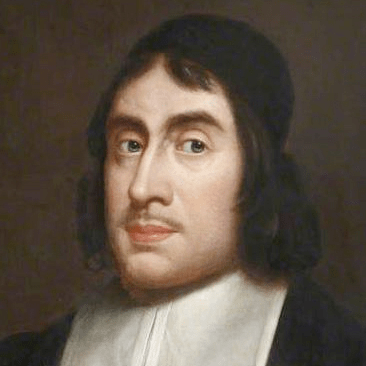
Thomas Watson,1692, A Body of Practical Divinity: “whom God intends to destroy, he gives leave to play with Scripture” (Luther)

Question: Why are the Scriptures called Canonical?

Answer: Because the Word is a Rule of Faith, a Canon to direct our lives. The Word is the Judge of controversies, the Rock of Infallibility; that only is to be received for Truth, which is consonant to, and agrees with Scripture, as the transcript with the original. All maxims in divinity are to be brought to the Touchstone of Scripture, as all measures are brought to the standard.

Question: Are the Scriptures a complete Rule?

Answer: The Scripture is a full and perfect Canon, containing in it all thins necessary to salvation: 2 Tim. 3:15, Thou hast from a child known the Holy Scriptures which are able to make thee wise unto salvation. It shews the credenda, what we are to believe, the agenda, what we are to practice. It gives us an exact model of religion and perfectly instructs in the deep things of God. The Papists therefore make themselves guilty, who go to seek out Scripture with their traditions, which they equalize it. The Council of Trent saith, that the traditions of the church of Rome are to be received pari pietatis affectu, with the same devotion that Scripture is to be received with and so bring themselves under the curse, Rev. 22:18, If any man shall add to these things, God shall add unto him the plagues written in this Book.

“Is all Scripture of Divine Inspiration, is it a Book made by GOD himself? Then this reproves, 1. The Papists who take away part of Scripture, and so clip the King of Heaven’s Coin; they expunge the second Commandment out of their catechisms, because it is against images; tis’ usual with them if they meet with anything in the Scripture they dislike, either to put a false gloss upon it, or if that will not do, pretend it is corrupted. These are like Ananias who kept back part of the money, Acts 5:2 so they keep back part of Scripture from the people. This is a high affront to God, to deface and obliterate any part of his Word. By this they bring themselves under that premunire [a writ charging an offense], Rev. 22:19, If any man shall take away from the words of the book of this prophecy, God shall take away his part out of the book of life. Is all Scripture of Divine Inspiration? 2. It condemns the Antinomians that lay aside the Old Testament as useless and out of date; they call them Old Testament Christians. God hath stamped a Divine Majesty upon both Testaments and till they can shew me were God hath given a repeal to the Old it stands in force.[1] The Two Testaments are the two Wells of Salvation. The Antinomians would stop up one of these Wells, they would dry up one of the Breasts of Scripture. There is much of the Gospel in the Old Testament. The Comforts of the Gospel in the New Testament have their rise from the Old. The great promise of the Messiah is in the Old Testament, A Virgin shall conceive and bear a Son:–Nay, I say more, the Moral Law in some part of it speaks Gospel, I am the Lord thy God; here is the pure wine of the Gospel. The saints great charter where God promiseth to pour clean water on them, and put his spirit within them, is to be found primarily in the Old Testament, Ezek. 36:26. So that they who go to take away the Old Testament, do as Sampson, Pull down the pillars. They would take away the pillars of the Christian comfort. 2. It condemns the Enthusiasts who pretending the Spirit, lay aside the whole Bible, they say the Scripture is a Dead Letter and they live above it. What impudency is this? Till we are above sin we shall not be above Scripture. Let not men talk of the revelation from the Spirit, suspect it to be an imposture. The Spirit of God acts regularly, in works in and by the Word, and he that pretends a new light, which is either above the Word of contrary to it, abuseth both himself and the Spirit. His light is borrowed from him who transforms himself into an Angel of Light. 4. It condemns the slighters of Scripture. Such are they who can go whole weeks and months and never read the Word. They lay it aide as rusty armor. The prefer a play and romance before Scripture, the Magnalia legis are to them minutula. O how many can be looking their faces in a glass all the morning, but their eyes begin to be fore when they look upon a Bible. Heathens die in want of the Scripture and these in the contempt of it. They surely must needs go wrong who slight their Guide. Such as lay the reigns upon the neck of their lusts, and never use the curbing bit of Scripture to check them, are carried to Hell and never stop. 5. It condemns the Abusers of Scripture. 1. Who do mud and poison this pure Chrystal Fountain with their corrupt glosses, who wrest Scripture, 2 Peter 3.16. The Greek word is στρεβλοῦσιν, they set it upon a rack, they give wrong interpretations of it not comparing Scripture with Scripture. The Antinomians pervert that Scripture, Numb. 23:21, He hath noy beheld iniquity in Jacob. Hence, they infer, God’s people may take liberty in sin, because God sees no sin in them. ‘Tis true, God sees not sin in his people with an eye of revenge, but he sees it with an eye of observation. He sees sin not in them, so as to damn them, but he sees it so as to be angry, and severely punish them. Did not David find it so when he cried out of his broken bones? In like manner the Arminians wrest Scripture: John 5:40, Ye will not come to me. Here they bring in free-will. This text shows 1. How willing God is that we should have life. 2. That Sinners may do more than they do; they may improve the talents God has given them, but it doth not prove the power of free-will, for it is contrary to Scripture, John 6:44, No man cometh to me, except the Father which hath sent me draw him. These therefore wring the text so hard as they make the blood come. They do not compare Scripture with Scripture. 2. Who do jest with Scripture. When they are sad they take the Scripture as their lute or minstrel to play with, and so drive away the sad spirit, as that drunkard I have read of, who having drunk his cups, called to some of his fellows, Give us of your oil for our lamps are gone out. In the fear of God take heed of this. Eusebius tells of one who took a piece of Scripture to make a jest of, who was presently struck with frenzy, and run mad. And ‘tis a saying of Luther, Quos Deus vult perdere, etc. whom God intends to destroy, he gives them leave to play with Scripture.

Thomas Watson,1692, A Body of Practical Divinity Consisting of above One Hundred Seventy Six Sermons on the Lesser Catechism Composed by The Reverend Assembly of Divines at Westminster: with a Supplement of some Sermons on several Texts of Scripture (London: Printed for Thomas Parkhurst, at the Bible and Three Crowns in Cheapside, near Mercers-Chappel, 1692), 15, 16-17


[1] On page 13 Watson writes, “The two Testaments are the two Lips which God hath spoken to us.”

Happy Independence Day

19Wherefore, my beloved brethren, let every man be swift to hear, slow to speak, slow to wrath: 20For the wrath of man worketh not the righteousness of God. 21Wherefore lay apart all filthiness and superfluity of naughtiness, and receive with meekness the engrafted word, which is able to save your souls. 22But be ye doers of the word, and not hearers only, deceiving your own selves. 23For if any be a hearer of the word, and not a doer, he is like unto a man beholding his natural face in a glass: 24For he beholdeth himself, and goeth his way, and straightway forgetteth what manner of man he was. 25But whoso looketh into the perfect law of liberty, and continueth therein, he being not a forgetful hearer, but a doer of the work, this man shall be blessed in his deed.

The perfect law, the complete law, look into it. Indeed, it is a sufficiently reliable law of liberty but it is more than that. It is the perfect law, the complete law; the only kind of law that can truly set a soul at liberty.

Happy Independence Day

N.B. – Don’t forget that we have book deals going on all 4th of July weekend. Check out this post for more details. Today is the last day. Blessings.

1 Samuel 6:19-How many men died?

The modern versions would like to dispute the number of dead recorded in 1 Samuel 6:19. The Authorized Version reads 50,070, but modern versions go with 75, 70, or 50. Obviously we have a huge discrepancy between these translations. So which is it?

The text in the Authorized Version reads,

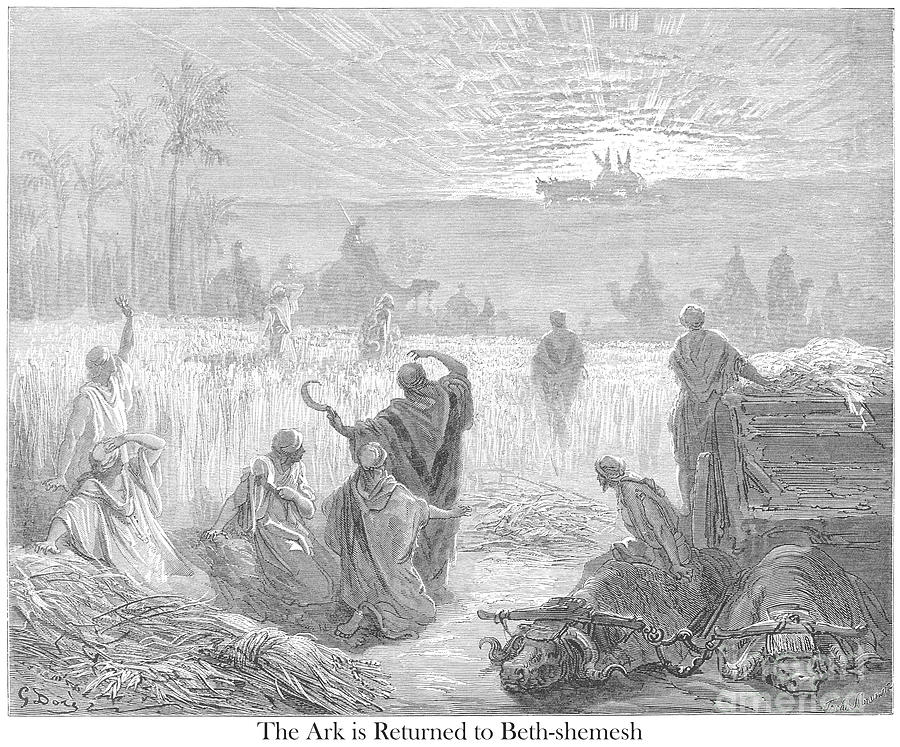
“And he smote the men of Bethshemesh, because they had looked into the ark of the LORD, even he smote of the people fifty thousand and threescore and ten men: and the people lamented, because the LORD had smitten many of the people with a great slaughter.”

1 Samuel 6:19

Here Will Kinney offers a reasonable answer for why the Authorized Version translation is perfectly fine. The following is an excerpt from his articles entitled, 1 Samuel 6:19 How many men died – 50,070, or 70 or 75, or 70 men 50 chief men, or 50 oxen of a man? You can read the full article here.

____________________________________________________

In a note on 1 Chronicles 11:11 the NIV 1984 edition has this statement: ?Many disagreements between numbers in Samuel and Kings, and those in Chronicles, are alleged. Actually, out of the approximately 150 instances of parallel numbers in these books, FEWER THAN ONE-SIXTH DISAGREE. (Boy, that’s reassuring, isn’t it?)  GOD GAVE US A BIBLE FREE FROM ERROR IN THE ORIGINAL MANUSCRIPTS. IN ITS PRESERVATION through many generations of recopying, HE PROVIDENTIALLY KEPT IT FROM SERIOUS ERROR, ALTHOUGH HE PERMITTED A FEW SCRIBAL MISTAKES.”

There you have it. This is the view of all modern Bible translators. “Only the originals were inspired, text garbled, error in transmission, desire to embellish the record, no serious error, a few scribal mistakes.”

Mr. Archer does not dispute the Hebrew reading of 50,070, but he says it is an error, and thus we have the reading of “70 of them” in the NIV. 

“He struck SEVENTY MEN of them” is the reading of the RSV, NRSV 1989, ESVs 2001, 2007, 2011 and 2016 editions, NEB 1970, Darby 1890, the Living Bible 1971, Amplified bible 1987, Easy To Read Version 2006 (Hey, it’s WRONG, but at least it’s “Easy to Read”, right?) Expanded Bible 2011 (Thomas Nelson), the 2011 Names of God Bible 2011, Common English Bible 2011, Lexham English Bible 2012, and the New Living Translation 2013. 

The footnotes found in the RSV, NRSV and ESV all tell us: “Hebrew – of the people seventy men, fifty thousand men”.  They all admit that this is the number found in the Hebrew texts. 

The absurd paraphrase called The Message says simply: “Seventy died.” 

The New Life Version 1969 has: “He killed 70 (50,070) men.”  Huh?

Young’s “literal” translation reads: “He smiteth among the people SEVENTY MEN – FIFTY CHIEF MEN.”  

The Jubilee Bible 2000 says: “he smote FIFTY THOUSAND OF THE PEOPLE AND 70 PRINCIPAL MEN.”

Lamsa’s translation of the Syriac Peshitta 1933 – “the LORD smote FIVE THOUSAND AND SEVENTY MEN of the people”  

Green’s “literal” 2005 and the Hebraic Roots Bible 2012 are different still, reading: “Yea, He struck SEVENTY among the people, FIFTY OUT OF A THOUSAND MEN.” (What does that even mean???)

The NKJV reads the same as the KJB in the text, but it has a ridiculous footnote that reads “OR, He struck SEVENTY men of the people AND FIFTY OXEN OF A MAN.”!

The New Living Translation of 2013, whose text reads “The Lord killed 70 men”, also mentions in their footnote: “Perhaps the text should be understood to read ‘The LORD killed 70 men AND 50 OXEN.”!

But the modern scholars are not done yet. 

The Holman Christian Standard Bible 2009 has come up with a reading that is different from them all. The HCSB now says: “He struck down 70 men out of 50,000 men.”

And The Voice of 2012, one of the new Critical Text versions, actually says: “God struck down 75 men” and then Footnotes “50,000 and 70 men”!!!  

Do you think there may be a chance that modern version translators are losing their minds because they keep messing with The Book?

Dan Wallace’s NET Version

Surprisingly, even Daniel Wallace and Company’s generally goofy NET version also follows the Hebrew texts here and says 50,070 men slain. Then they give us this interesting footnote: “The number 50,070 is surprisingly large, although it finds almost unanimous textual support in the MT and in the ancient versions. Only a few medieval Hebrew mss lack 50,000, reading simply 70 instead. However, there does not seem to be sufficient external evidence to warrant reading 70 rather than 50,070, although that is done by a number of recent translations (e.g., NAB, NIV, NRSV, NLT). The present translation (RELUCTANTLY) [Note – he actually puts the word “reluctantly” there in his footnote] follows the MT and the ancient versions here.” 

50,070

The Bible versions that correctly read that God struck down 50,070 men are Wycliffe 1395, Coverdale 1535, the Great Bible 1540, Matthew’s Bible 1549 – “And he slue of the people fyftye thousand and thre skore & ten persones.”, the Bishops’ Bible 1568 -“he slue among the people fiftie thousand and three score and ten men”, the Geneva Bible 1587, the Douay-Rheims 1610, the King James Bible, The Bill Bible 1671, Webster’s 1833, The Lesser Bible 1853, the Julia Smith Translation 1855, The Wellbeloved Scriptures 1862, The Jewish Family Bible 1864, the Smith Bible 1876, The Revised English Bible 1876, The Sharpe Bible 1883, the Revised Version 1885, the ASV 1901,  Rotherham’s Emphasized Bible 1902, The Ancient Hebrew Bible 1907, The Improved Bible 1913, the JPS (Jewish Publication Society) 1917, Hebrew Publishing Company Bible 1936, the 2004 Hebrew Complete Tanach, the NASB 1972 – 1995, the Complete Jewish Bible 1998 – “He killed 50,070 of the people.”, the Third Millennium Bible 1998, the International Standard Version – “He struck down 50,070 men among the people” and the 2012 Natural Israelite Bible – “He struck FIFTY THOUSAND AND SEVENTY MEN OF THE PEOPLE.”, The Hebrew Names Version 2014 and The New English Septuagint Translation 2014. 

Other English translations that follow the Hebrew text and tell us that “God stuck 50,070 men” are  The New Jewish Version 1985, God’s First Truth 1999, The World English Bible 2000, The Sacred Scriptures Family of Yah 2001, The Word of Yah 1993, The Apostolic Polyglot Bible 2003, The Complete Apostles’ Bible 2005, The Revised Geneva Bible 2005, the Bond Slave Version 2009, Hebraic Transliteration Scripture 2010, Online Interlinear 2010 (André de Mol), Holy Scriptures VW Edition 2010, The New Heart English Bible 2010, the Conservative Bible 2011 – “even he smote of the people fifty thousand and threescore and ten men”, The New Brenton Translation 2012, the Interlinear Hebrew-Greek Scriptures 2012 (Mebust), World English Bible 2012 – “he struck fifty thousand seventy of the men”, the International Standard Version 2014 – “He struck down 50,070 men”, and the Holy Bible, Modern English Version 2014. And this Interlinear Hebrew Old Testament 

 http://studybible.info/IHOT/1%20Samuel%206:19 

Foreign Language Bibles

Among foreign language Bible that correctly have the Spanish Sagradas Escrituras 1569, Cipriano de Valera 1602, Biblia de las Américas 1997, Reina Valeras of 1909-2011 – “Hizo morir a CINCUENTA MIL SETENTA HOMBRES del pueblo.”,  Luther’s German Bible of 1545 and German Schlachter Bible 2000 – “Und er schlug des Volks fünfzigtausend und siebenzig Mann.”, the Portuguese de Almeida 1681 and the Almeida Actualizada “CINQUENTA MIL E SETENTA HOMENS”,  the Italian Diodati of 1649 -“percosse ancora del popolo CINQUANTAMILA E SETTANTA UOMINI.”, the French Martin 1744, the French Ostervald of 1996 and the French Louis Segond of 2007 – “Il frappa 50’070 hommes” and Rumanian Cornilescu and the 2009 Romanian Fidela Bible , the Hungarian Karoli Bible – “Megvere pedig a nép közül ötvenezer és hetven embert.”, the Russian Synodal Bible – ” и убил из народа пятьдесят тысяч семьдесят человек” = 50,070 men, the Tagalog Ang Dating Biblia 1905 – “sa makatuwid baga’y pumatay siya sa bayan ng pitong pung lalake at limang pung libong tao.”, the Dutch Staten Vertaling Bible, 

and the Modern Greek bible – “και επαταξεν εκ του λαου ανδρας πεντηκοντα χιλιαδας και εβδομηκοντα·” 

The Explanation of the large number 50,070 men. 

The number of 50,070 is the total number of all the people, both Israelites and Philistines, that were slain by God from the time the ark was first taken to this final day of death when the men of Bethshemesh (the 70 men?) looked into the ark.

In 1 Samuel 4:2-3 we read: “And when they joined in battle, Israel was smitten before the Philistines: and they slew of the army in the field about FOUR THOUSAND MEN. And when the people were come into the camp, the elders of Israel said, Wherefore hath the LORD smitten us to day before the Philistines?” Notice it was the LORD who smote them.

In verse 10 we read of another battle in which “and there was a very great slaughter; for there fell of Israel THIRTY THOUSAND FOOTMEN.” In 5:6,9,11,12 and 6:9 we read of additional men being slain by the LORD. It was God Himself who was behind this great slaughter of both the children of Israel and the Philistines. 

Four thousand, thirty thousand, and easily a few thousand more in the succeeding battles; thus the figure of 50,070 total men slain by God is quite believable.

Notice the wording of 1 Samuel 6:19 “And he smote of the men of Bethshemesh, because they had looked into the ark of the LORD, even he smote of the people fifty thousand and threescore and ten men: and the people lamented, because the LORD had smitten many of the people with a great slaughter.”

It is possible to read this with the understanding that God smote the men of Bethshemesh because they looked into the ark (possibly the 70 men), and the total number of people slain, both Jews and Philistines, throughout this whole episode with the ark of the covenant being taken and its recovery was 50,070.

Matthew Henry also notes: “Some think the seventy men were the Beth-shemites that were slain for looking into the ark, and the 50,000 were those that were slain by the ark, in the land of the Philistines.”

John Gill and another commentator also mentions the view (one of many) that the number of 50,070 includes both the large number of people killed during the battles that occurred during this event of the taking of the ark and when the men of Bethshemesh looked into it.

The modern bibles are riddled with false readings, false statements and unbelief. They are false witnesses to the truth of God, and they are translated by men who do not believe God has been able to preserve His words for us today. 

I and many other Christians believe God Almighty has preserved His inerrant words and we have them today in the King James Holy Bible.

___________________________________________________

Again, a reasonable answer defending the reading of the Authorized Version on this point is only a few clicks away. If you really want to know, the answer is at your fingertips. Thanks again to Will Kinney and brandplucked.webs.com for writing the article and for allowing us to repost his findings.

N.B. – Don’t forget that we have book deals going on all 4th of July weekend. Check out this post for more details.

James Ussher, 1647, on Scripture as the Unchanging Rule

The Scripture you say are a rule and a line: but are they not (as the Church of Rome imagineth) like a rule of lead, which may be bowed everyway at men’s pleasure.

“They are as a rule of steel, that is firm and changeth not. (Matt. 5:18; Psalm 19:9) For seeing they are sufficient to make us wise unto salvation, (as is before proved): it followeth of necessity, that there is a most certain rule of truth for instruction both of faith and works, to be learned out of them, by ordinary means of reading, prayer, study, the gifts of tongues, and other sciences, to which God promiseth and assistance of his grace (Job 5:39; James 1:5). And this sword of the Spirit, which is the word of God written, (as the example of Christ, our General Captain showeth, Matt. 4) is delivered unto us by the Holy Ghost, both to defend our faith, and to overcome all our spiritual enemies, which the Devil and his instruments, false Prophets, Heretics, Schismatics, and such like. (Eph. 6:17) Therefore the holy Scriptures are not a nose of wax, or a leaden rule, (as some Papists have blasphemed) that they may be so writhed every way by impudent Heretics, but that their folly and madness (as the Apostle saith, 2 Tim. 3:9) may be made manifest to all men.”

Ussher identifies two practical purposes for the Scripture being an unchanging standard – apologetic and polemic. Scripture is unchanging as the basis for Christian apologetic and as the grounds to “overcome all spiritual enemies” which he goes on to elucidate. Spiritual warfare the Scripture speaks of throughout its pages is a topic ignored by modern text critics and contemporary Evangelicalism. Muslim apologists identify an insurmountable weakness in the Christian Faith because of the low and changing view of Scripture brought on by modern text critical practices.[1] Uncertainty has replaced divine faith, handicapping the Church and transforming the once bold assertion of “Thus saith the Lord,” into a pusillanimous whimpering of ambivalent concessions.

The Devil does have his instruments but the modern Evangelical acts as if the unchanging Scripture is unnecessary to defeat his schemes. Considering most modern English Bibles remove any reference to Lucifer in Isa. 14:12, in another generation, the fallen angel, Lucifer, may no longer be believed to exist. And if there is no Lucifer, who Satan is, if there is such a person or thing, becomes problematic. The most skillful of enemies are the ones who convince those they wish to defeat that they do not exist. See Daniel 8:25, “And through his policy also he shall cause craft to prosper in his hand; and he shall magnify himself in his heart, and by peace shall destroy many: he shall also stand up against the Prince of princes; but he shall be broken without hand.”


[1]See Hava Lazarus-Yafeh, “Some Neglected Aspects of Medieval Muslim Polemics against Christianity,” Harvard Theological Review, 89:1 (1996), 61-64. The historical critical method has not only had negative impact on Christianity in the West but also on the world stage: “Muslim scholarly criticism of the Hebrew Bible and New Testament never brought about a corresponding study of the Qur’an. When European biblical criticism was brought to the Muslim East in the nineteenth century, it served only as an additional corroboration of the traditional polemical arguments about the falsification and unreliability of the Hebrew Bible and New Testament.”

Roe v. Wade and the Quest for a Standard Sacred Text

For almost 50 years Christians of all stripes and denominations as well as politically conservative Americans have been speaking, writing, and lobbying for the overthrow of legalized abortion here in the States. Last week a huge advancement legally as well as a significant symbolic step took place last week with the Supreme Courts’s overturning of Roe v. Wade.

For many, such a reversal seemed unlikely if not impossible. The right to abortion seemed woven into the fabric of American life and the legal definition of the right to privacy. But here we are. The legality of abortion has been put on the shoulders of individual states. Local politics matter now more than ever.

My family and I have decided to make June 24 a kind of family holiday to commemorate and celebrate the overturning of such an unjust judgment as Roe v. Wade and to offer thanks and gratitude to the Lord for His mercy in this way and in the saving of so many lives.

When such a momentous change took place I couldn’t help but hope that other seemingly unlikely or impossible changes could also come about. One of those of course is the hope that the English-speaking church would return to a single text of Scripture as a united rule of faith and practice.

Certainly, Anglicans, Presbyterians, and Baptists differ on church governance but they can all share the same English text of Scripture. We may differ on the efficacy of the communion elements or the mode of baptism but we can agree on a standard sacred text. We may even disagree on the nature and scope of the creation account in Genesis and even the role of free will in light of divine sovereignty, but we can all hold to, read from, teach from, and evangelize from one English text of Scripture.

In this way we could be united as a Church by the Spirit around the words of our Savior in a way the Church has never enjoyed in the modern and post-modern eras. And why not? What does the proliferation of versions provide that such unity in the word of God does not overshadow?

Roe v. Wade seemed unconquerable, and so does the continual commercialization of and experimentation on the Scriptures. But that is not the case, which is why we must all continue in the work and remain faithful. Perhaps in my lifetime a new family holiday will be in order and that for the reuniting of God’s people around God’s word by the power of God’s Spirit.

N.B. – Don’t forget that we have book deals going on all 4th of July weekend. Check out this post for more details.