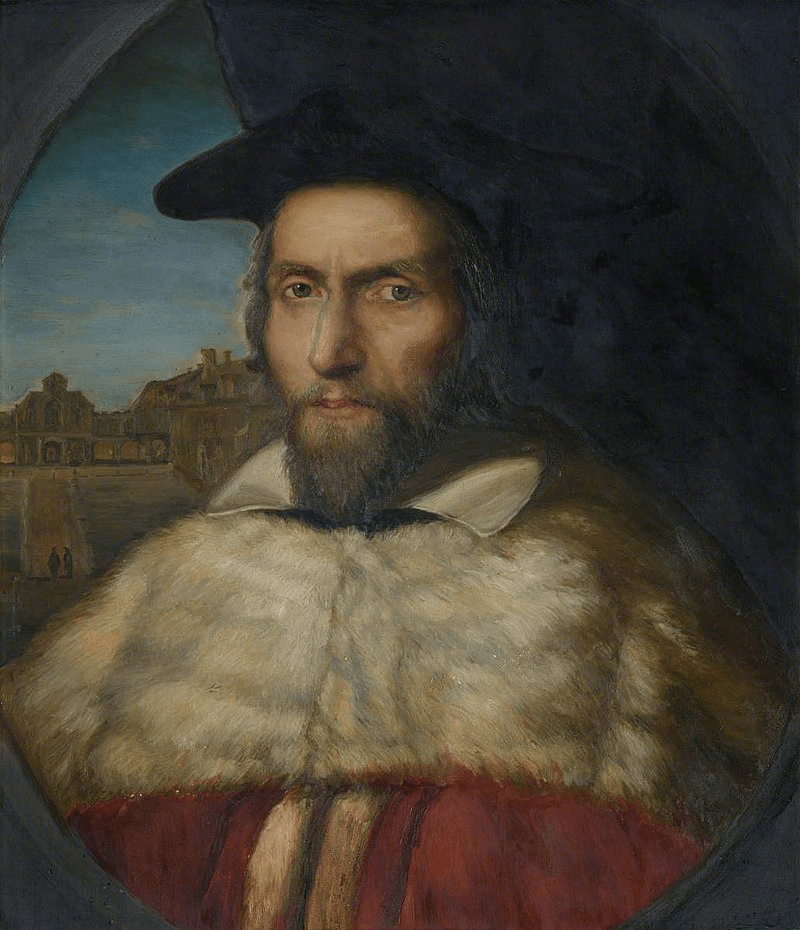
John Owen, 1658, and the Bond between the Spirit and Word

John Owen, with erudite precision makes the following observations dealing with the role of the Spirit in the confirmation of the Authority of Scripture. Owen argues that in reading the Scripture the covenant keeper hears the Authority of the Holy Spirit’s testimony in the word, and the self-authentication of the Truth spoken by the Spirit.

Sect. 11.2 There is a testimony of the Spirit, that respects the object, or the Word its self, and this is a public testimony, which, as it satisfies our souls in particular, so it is, and may be pleaded [alleged], in reference unto the fashion of all others, to whom the Word of God shall come. The Holy Ghost speaking in and by the Word, imparting to it Virtue, Power, Efficacy, Majesty, and Authority, affords us the Witness, that our faith is resolved unto. And thus whereas there are but two heads, whereunto all Grounds of Assent do belong, namely Authority of the Testimony, and the self Evidence of Truth, they do here both concur in one. In the same Word we have both the authority of the testimony of the Spirit, and the self Evidence of the Truth spoken by him; yea, so, that both these are materially one and the same, though distinguished in the formal conceptions…. The Spirit’s communication of his own Light, and Authority to the Scripture, as evidences of its originall, is the testimony pleaded for [or alleged, or the argument maintained].

Owen is alleging [testimony pleaded for] that the testimony of the Spirit and the self-evidence of the truth spoken by the Spirit concur in the Word both being materially “one and the same.” Though formally distinct, the Spirit’s testimony, or the communication of his own Light, and the Authority of Scripture as self-attesting or self-evidencing are evidence of its source in the original or autographa.

John Owen, Of the Divine Originall, Authority, self-evidencing Light, and Power of the Scriptures: With an Answer to that Enquiry, How we know the Scripture’s to be the Word of God. Also A Vindication of the Purity and Integrity of the Hebrew and Greek Texts of the Old and New Testaments; in some Considerations on the Prolegomena (Oxford: Printed by Henry Hall, Printer to the University for Tho: Robinson, 1658), 96-98.

Understanding the CBGM: Coherence

In our fourth installment of Understanding the CBGM we now come to the idea of coherence which is the primary and most important contribution of the CBGM. Generally, and simply, there are three ways in which coherence is observed in the CBGM: pregenealogical, genealogical, and stemma. Beginning with the first,

“Pregenealogical coherence is the percentage between the texts of any two witnesses at all places of variation where both are extant and legible.”

Wasserman and Gurry, A New Approach to Textual Criticism: An Introduction to the Coherence-Based Genealogical Method, 27.

In other word, pregenealogical coherence is the percentage of places where two manuscripts differ and where both of the manuscripts have that text, and that text is legible. From these differences it is possible to observe how the two manuscripts cohere minus their differences. For example,

“If manuscript A and manuscript B are compared at one hundred places and disagree at twenty, then their pregenealogical coherence is 80 percent (eighty out of 100).”

Wasserman and Gurry, A New Approach, 27.

The second kind of coherence is that of genealogical coherence which Wasserman and Gurry define in the following way:

“Whereas pregenealogical coherence only tells us how closely two witnesses are related, genealogical coherence also tells us the direction of their relationship.”

Wasserman and Gurry, A New Approach, 28.

They go on…

“Recalling the ways that the relationship between any two witnesses is determined (A equals B; A-> or A<-B; A-?-B), pregenealogical coherence only accounts for the first (A equals B) whereas genealogical coherence includes all three.”

Wasserman and Gurry, A New Approach, 28.

So pregenealogical coherence allows us to know where two texts differ and where they are the same. Genealogical coherence allows us to know which text is the ancestor text and which is the descendent text. On the genealogical front

“The direction of the relationship is taken directly from the editors’ own decisions made at each place of variation.”

Wasserman and Gurry, A New Approach, 28.

In sum, subjective human interpretation with the assistance of computer tools makes the decision about which is an ancestor, and which is a descendent when comparing two witnesses/texts. Wasserman and Gurry use Sinaiticus and Vaticanus as an example. They observe that Vaticanus has readings which are deemed prior to those of Sinaiticus in 250 places, and conclude,

“…the CBGM is not suggesting that Codex Sinaiticus was directly copied from Codex Vaticanus. The relationship is a more abstract one. It is not a relationship between manuscripts but between texts conveyed in them. Since Vaticanus has the prior text overall to Sinaiticus, its text is considered one of multiple potential ancestors for Sinaiticus within the CBGM.”

Wasserman and Gurry, A New Approach, 29.

It is interesting to note that it is feasible that “one of multiple potential ancestors” means direct ancestor, or copy, or copy of a copy. If this is the case, then it is also feasible that Vaticanus and Sinaiticus are one witness, kind of like how text critics treat they Byzantine Text Form even in the CBGM.

The third type of coherence concerns that of stemmata: local stemma, substemma, and global stemma. The first tries to determine which variant is the ancestor of the other or which variant gave rise to the subsequent variants of that kind. Our authors observe that “the construction of these local stemmata involves the traditional tools of textual criticism” e.g., oldest, shortest, hardest, internal and external evidence etc. The second, or substemma, determines “the minimal number of ancestors for a given witness in a given book or corpus” (31). The point here being that the aim of the editors, in observing Ockham’s Razor, is to offer the least number of witnesses that can account for the text of some particular witness. The third is “the combination of all available substemmata.” Wasserman and Gurry point out that at this stage of the CBGM game, “there is not yet a complete global stemma for any portion of the New Testament” (33).

In our next installment we will turn to a more thorough treatment of pregenealogical coherence as a tool to help editors make decisions about what is or is not the NT. Blessings.

Faith & Philosophy

Welcome to the Brickyard. This is a place to find quotes for use in your own research and writing. The bricks are free, but the building is up to you. The following quotes are drawn from various philosophical sources dealing with faith and belief. I include these quotes because faith and belief are foundational to the arguments we make here at StandardSacredText.com. And seeing that all that is truth is indeed God’s truth, sometimes it is good to see familiar objects of thought from different perspectives.

“I do not seek to understand so that I may believe, but I believe so that I may understand; and what is more, I believe that ‘unless I do believe I shall not understand.’ (Isaiah 7:9)”

Anslem of Canterbury, Proslogion, Opera Omnia, 1, 100.

“I have therefore found it necessary to deny knowledge in order to make room for faith.”

Immanuel Kant, Critique of Pure Reason, trans. N. Kemp Smith, B xxx.

“…the opposite of sin is not virtue but faith.”

Soren Kierkegaard, The Sickness unto Death, trans. H.V. Hong and E.H. Hong, 82.

“…but at least get it into your head that, if you are unable to believe, it is because of your passions, since reason impels you to believe and yet you cannot do so. Concentrate then not on convincing yourself by multiplying proofs of God’s existence but by diminishing your passions.”

Blaise Pascal, Pensees, trans. A. J. Krailsheimer, No. 418, 152.

If you say the evidence doesn’t support the promises of God, you are misinterpreting the evidence

Edward Stillingfleet was a British theologian and scholar, considered an outstanding preacher as well as a strong polemical writer defending Protestantism. In his work Origines Sacrae he argues for the truth of Scripture in history. What he published in 1680 rings true for us today. Must the extent of God’s omnipotent power “pass the scrutiny of our faculties, before it obtains a place for Divine revelation?” Stillingfleet argues,

“Secondly, to commensurate the perfections of God with the narrow capacity of the human intellect; which is contrary to the natural idea of God; and to the manner whereby we take up our conceptions of God; for the idea of God doth suppose incomprehensibility to belong to his nature; and the manner whereby we form our conceptions of God, is by taking away all the imperfections we find in ourselves, from the conception we form of a being absolutely perfect, and by adding infinity to all the perfections we find in our own natures. Now this method of proceeding doth necessarily imply a vast distance and disproportion between a finite and infinite understanding. And if the understanding of God be infinite, why may not he discover such things to us, which our shallow apprehensions cannot reach unto? what ground or evidence of reason can we have that an infinite wisdom and understanding, when it undertakes to discover maters of the highest nature and concernment of the world, should be able to deliver nothing but what comes within the compass of our imperfect and narrow intellects? And that it should not be sufficient that the matters revealed do none of them contradict the prime results or common notions of mankind (which none of them do) but that every particular mode and circumstance, as to the existence of God, or the extent of his omnipotent power, must pass the scrutiny of our faculties, before it obtains a place for a Divine revelation?”

Has the Church come to place regarding the Scriptures that because the promises of God can’t be classified, categorized, or easily referenced, that after the “scrutiny of our faculties” it concludes that what God said just couldn’t happen, an indictment against the “narrow capacity of the human intellect” when contemplating divine matters?

Edward Stillingfleet (1635–1699), Origines Sacrae, or a Rational Account of the Grounds of Christian Faith, as to the Truth and Divine Authority of the Scriptures, and matters contained therein (London: printed by M.W. for Henry Mortlock at the Phoenix in St. Paul’s Church-yard, and at the White Hart in Westminster Hall, 1680), 234-235

A Little Help for our CT/MVO Friends

Christians historically have formulated a robust Theology of Scripture, but as has been noted, current critical trends have forsaken the importance of this grounding for the Church. Apparently, there is no exegetical or theological grounding for the modern CT/MVO endorsing church. So, to assist with the prolegomena of such a system Calvin’s Institutes are suggested as a starting point. John Calvin (1509-1564) wrote his Institutes (1559) in the early orthodox period (1565-1640) of the Protestant Reformation. His work was taken up by the great apologist William Whitaker (1548-1595) in A Disputation of Holy Scripture Against the papists especially Bellarmine and Stapleton (1588). According to Wayne Spear, Whitaker was quoted more frequently than any other theologian by the Westminster Divines in the formulation of the 1647 Westminster Confession. The transmission and preservation of Calvin’s theology throughout the Reformation demonstrates the enduring truth of his early writings. Calvin’s genius in the theological grounding of the Protestant Reformation cannot be overstated, and intellectual honesty demands the recognition of this theological grounding in current applications. Calvin writes,

            [But] I reply, that the testimony of the Spirit is superior to all reason. For as God   alone is sufficient witness to himself in his own word, so also the word will never gain credit in the hearts of men, till it be confirmed by the internal testimony of the Spirit. It is necessary, therefore, that the same Spirit, who spake by the mouths of the prophets, should penetrate into our hearts, to convince us that they faithfully delivered the oracles which were divinely entrusted to them…; because, till he illuminate their minds, they are perpetually fluctuating amidst a multitude of doubts.” Calvin, Institutes, 1.7.4.

Using this quote as a framework, it is suggested that the answers to the following issues Calvin raises would provide just the theological grounding the CT/MVO position is yet lacking. So far, the strength of the CT/MVO position is solely negative, saying it’s just not as bad as the Authorized Version. This post is meant to help provide a positive theological apologetic based on the merits of the CT/MVO position itself. Based on the Calvin quote, then,

  1. How is the testimony of the Spirit superior to all reason according to the CT/MVO position?
  2. How is God a sufficient witness to himself in his own word according to CT/MVO position?
  3. How is this witness confirmed by the internal testimony of the Spirit according to CT/MVO position?
  4. Why is it necessary for the Spirit to convince us that the prophets faithfully delivered the words divinely entrusted to them according to CT/MVO position?
  5. Why is the Spirit’s illumination the solution to minds that are perpetually fluctuating amidst a multitude of doubts according to CT/MVO position?
  6. Based on these answers, then, in summary, “How is the Holy Spirit inseparable from the CT/MVO position?”

Blessings!

Questioning One’s Belief in Their Bible

There seems to be an unavoidable yet precarious conflict which necessarily arises whenever there is a discussion about original texts and Bible versions. That conflict contains the inevitable claim that this or that guy’s Bible is not the word of God in the same way that this or that guy’s Bible is. Given the gross proliferations of Bible versions especially, this inevitability is a very modern problem though lesser species of this inevitability existed in the past e.g., Rome’s Latin Vulgate vs. Tyndale’s English NT.

As history would have us remember the whole calling out the other guy’s Bible as not the Bible or not the NT in modern and post-modern times started with the critical text camp. This happened when Wescott and Hort and those of their textual persuasion jettisoned TR priority and in effect started from the ground up on a new Greek NT. It was in this time that the Byzantine Text-From was arbitrarily regarded as a less reliable text-form when determining the wording of the original NT. We now know through the CBGM that Byzantine texts are now seen in a far more favorable light by many believing and unbelieving text critics.

Those who held to the Traditional Text or the Ecclesiastical Text or now the Confessional Text retorted, resisted, and otherwise rejected the presuppositions of these modern text criticism as well as many or most of their conclusions. But that mattered little to the inteligencia until the modern text critical machine was firmly ensconced in both Christian and non-Christian academic institutions. As such, Christians started to argue against their exegetical and theological forebearers on no other grounds than the current interpretation of the manuscript evidence seemed to demand such an argument against their Christian forebearers.

Then the modern Christians holding a modern view of text-criticism began to print modern Bibles in English while simultaneously declaring that all versions of the Bible are equally the word of God because they are sufficiently reliable. And now in the present we have some Christians reading the Bible of their exegetical and theological forebearers with sufficient reliability to teach their children, to preach from the pulpit and to lead godly lives. We call this Bible the KJV. Then there are those who read this or that other translation or these or those other translations. As a result, when the discussion of which version comes to the fore someone is telling someone else that the Bible he/she is reading needs to be different.

This happened to me at my Ph.D. defense. I have accomplished all that is necessary both in achieving prior theology degrees as well as all that was necessary to enter my Ph.D. Dissertation Defense and yet one of my readers plainly said, “Why do you use the KJV? You need to get a new Bible.” The point being that even if you are on the verge of having your Ph.D. and you already have a post-graduate degree in tow, educated well-meaning people will flatly tell you the KJV needs to be replaced without giving an argument and without receiving yours, yet it is not the KJV people who have moved.

We hold to the English Bible the English-speaking Chruch has held to for over 400 years. All the other versions are movements away from that history, and again, the stated reason of my opposing interlocutors boils down to, “Well, I interpret the manuscript evidence from a more neutral and naturalistic point of view and therefore disagree with you KJV folks.” Well, no kidding. Anyone who does not start from a distinctively Christian Archimedean Point will not end with a distinctively Christian conclusion. On that point I just read a blog post written by P.J. Williams whose view of inerrancy was as equally as fluid as water itself. It seemed that there is no statement on inerrancy that he would not sign no matter how liberal or conservative.

So, what do we do with this idea that no matter what argument I make I am going to besmirch some fellow Christian’s belief in their Bible, and not matter how hard my opposing interlocutors try, every time they tell me that the KJV is not the standard sacred text of the English-speaking community they are taking a swing at my Bible and my belief? I can’t post this every time I go to make critiques of modern translations and modern text-critical method and conclusions, but in my mind, this is how I understand the inevitable questioning of someone’s belief in Scripture.

The answer is one of order and perhaps even chronology, thus (1) represents early developments or initial developments in a Christian’s thought on the version issue and the further down the line we go the more developed and mature their argument/belief becomes.

1.) Christian X believes that all or most or many English versions are equally God’s word. On this point, my aim is not to besmirch their belief in the Bible as much as to question the idea that two things which are substantively different cannot be the same. Furthermore, it is not possible that God both inspired the long ending in Mark and did not inspire the long ending in Mark. So there are at lest two defeaters for this possition – on logical and one theological. Certainly, one of the versions you hold to may be the word of God, but it is not possible that they are all the word of God at the same time and in the same way.

2.) Occasionally you run into someone who holds to one version of the Bible as the word of God in English while simultaneously claiming that version is not the KJV. So, these folks believe the NIV or the ESV or some other one is the word of God in English to the exclusion of all others. For these folks I applaud their conclusion. It is logical and more consistent both with exegesis and theology than #1. That said, in #1 the person has at least two defeaters for his own belief which arises from that very belief. For #2, the defeater comes when I say that the KJV is the standard sacred text and Christian X says that the ESV is the standard sacred text. It is feasible that we are both wrong, but it is not possible that we are both right. It is also feasible that one of us is right. So, at a minimum one of our positions serves as a defeater for the other’s.

3.) At this point, rather than hating each other’s guts and demonizing each other we begin cordial and meaningful discussion exchanging thoughts, arguments, insights etc. Still, after all that it is the Holy Spirit who will guide each of us into all truth. So, for the sake of our example, let us assume that the KJV is indeed the next iteration of the standard sacred text for the English-speaking community. The way that Christian X is going to come to the conclusion that the KJV is the standard sacred text of the English-speaking community is by the power of the Holy Spirit speaking through the KJV to Christian X who receives the very voice of God by faith. This is how any meaningful change happens in the Christian when they have a change in one of their Christian beliefs. It is no different for when a person goes from believing this version of the Bible is the standard sacred text to believing this other version is the standard sacred text.

4.) One of two things may happen given these personal and spiritual interactions. 1.) In our example, Christian X is led by the Spirit to recognize that the KJV is indeed the standard sacred text for English-speaking Christians. This of course is the most favorable. 2.) Neither change their position on this point. They both hold to their respective texts until the day they die. This is not the most favorable, but it happens all the time. Perhaps the most famous of such a situation is when Zwingli dies in battle, Luther, disagreeing strongly on points of communion and baptism with Zwingli, writes,

“Zwingli drew his sword. Therefore he has received the reward that Christ spoke of, ‘All who take the sword will perish by the sword’. If God has saved him, he has done so above and beyond the rule.”

Martin Luther, Zwingli, Too, May Be Saved by God, (1532).

In summary, 1.) The Confessional Text side did not start the doubting game. The CT side did and to this day plainly admits that their method assumes doubt as part of the process of textual criticism, and they continue to peddle doubt among God’s people in phrases like “The original is in the text or apparatus” coupled with “We have something like 95% of the original text” coupled with “There are words in your Bible that are not God’s words, but rest assured they don’t affect any major doctrine” coupled with “Only the originals were inspired” as if immediate inspiration is the only way the historic orthodox have construed inspiration. 2.) While there is an inevitable clash of beliefs on which Scripture is the Scripture there is a charitable way of going about that discussion which expects first and foremost exegetical and theological rigor followed by scholarly rigor in the field of textual criticism done while our Christian pre-commitments about the Scriptural text remain intact. 3.) Though we may continue this discussion for years to come, we still may not agree but that should not keep us from making our case. In the end though you must ask which position has a positive and robust exegetical and theological grounding and which does not. If the modern CT position has such a grounding it is currently impossible to find by both TR and CT advocates.

“For whosoever are led by the Spirit of God, can easily discern his power speaking in the Scripture”

How may it appear that the writings of the Prophets and Apostles were indicted of God?

Partly by testimonies, partly by reason. And the testimonies, partly inward, partly outward. The internal witness is one alone; namely of the holy Ghost inwardly speaking to our heart, and persuading us that those writings are inspired of God, and sealing them up in our hearts, Eph. 1:13; 1 John 2:20, 27, Ye have an anointment of the Lord, and this anointment teaching you all things. For whosoever are led by the Spirit of God, can easily discern his power speaking in the Scriptures. As it is said, 1 Cor. 2:15, The spiritual man discerneth all things, and Isa. 53:1, The arm of the Lord is not revealed to all men. So, Luke 8:10 and Mark 13:11, The mysteries of the kingdom of heaven are not revealed to all men, but to whom it is given of God. And this testimony properly maketh for our confirmation, and this alone doth satisfy us, being known of them alone that are converted unto Christ, which doth evermore agree with the Scripture, without which the testimony of the Church can be no weight with us. For as none but God alone is a fit witness to testify of himself in his word, even so the word never findeth credit in our hearts, till such time as it be sealed up unto us by the inward testimony of the Spirit.*

*Note the continuity of Bucanus’ commentary with that of the Westminster Confession of Faith, 1647, Ch. 1.5., “yet notwithstanding, our full persuasion and assurance of the infallible truth and divine authority thereof, is from the inward testimony of the Holy Spirit bearing witness with and by the Word in our hearts,” and John Calvin in his Institutes written in 1559, “[But] I reply, that the testimony of the Spirit is superior to all reason. For as God alone is sufficient witness to himself in his own word, so also the word will never gain credit in the hearts of men, till it be confirmed by the internal testimony of the Spirit. It is necessary, therefore, that the same Spirit, who spake by the mouths of the prophets, should penetrate into our hearts, to convince us that they faithfully delivered the oracles which were divinely entrusted to them…; because, till he illuminate their minds, they are perpetually fluctuating amidst a multitude of doubts.”  Calvin, Institutes, 1.7.4. For a century, from 1559-1659 and indeed, before and after, Protestant orthodox theology recognized that it is the Holy Spirit through the Word that confirms the truth of Scripture to the faithful believer in Jesus Christ.

William Bucanus, Body of Divinity or Institutions of the Christian Religion; framed out of the Word of God, and the writings of the best divines, methodically handled by was of questions and answers, fit for all such as desire to know and practice the will of God. Written in Latin. Translated into English by Robert Hill and Fellow at St. Johns College in Cambridge, for the benefit of the English Nation. (London: Printed for Daniel Pakeman, Abel Roper and Richard Tomlins, and are to be sold in Fleet-street, and at the Sun and Bible near Py-corner, 1659), 45-46.

We Are Miles Away But Still Walking

Taking a break from the CBGM for a moment I want to turn to Mark Ward’s latest interview with Dwayne Green. Having watched each episode in the three part series I have come to the conclusion that we are on the same road but so far apart I’m afraid he cannot see us. As a result he cannot understand us. So while my dad an I have take hours upon hours of original language work and studied under the likes of Vern Poythress, it is quite apparent that Ward has little experience in pre-critical exegetical argumentation exemplified in those like Francis Turretin and Richard Muller. This became evident in the last interview especially and for the following reasons:

1.) It seems obvious to me that someone with a Ph.D. like Dr. Ward should have at least a little understanding of philosophy. I mean beside meaning Piled Higher and Deeper, Ph.D. also means Doctor of Philosophy. It stands to reason then that he would have some sense of philosophy and yet he seems to have little understanding of material vs. substantial change. If the Bible is [substantial] the words of God, then to change the words of God is to changes the substance of the thing. If the Bible is merely a set of symbols through which God speaks then to change the words of the Bible is merely to change symbols, or the material, the shape and amount of the ink. Because Ward seems blissfully unaware of this distinction he cannot comprehend how the CT and the TR can be substantially different texts, and the same goes for substantially differing versions. As such, Ward seems wholly unaware that the Law of Non-Contradiction serves as a potent defeater to his case given the substantial difference between the CT and TR as well as modern versions and the KJV.

2.) Continuing with the theme of philosophy and particularly philosophical theology, the notion of “sufficient reliability” is wholly bankrupt. Who argues that by my lights Jesus is God in a sufficiently reliable way therefore Jesus is God or that my faith is sufficiently reliable by my lights therefore my faith is faith? No, Christians assert that Jesus is the Son of God with certainty and conviction. Yet we hear all the time that this or that version is sufficiently reliable by my lights therefore it is the Bible, it is “Thus saith the Lord,” it is “Hear the word of God.” Ward should just say his judgment on this point is utterly subjective and move on.

3.) Exegetically, there is zero ground for the position Ward et al hold. I have read all the material presented to me by CT advocates which is purported to be the theological and exegetical grounding for modern text-critical methodology and the assertion that multiple versions only is the only charitable Christian position. To this point none of them, exactly zero of them employ exegesis to make their case. To this point none of them have an ecclesiastical history to their position reaching any further back than B.B. Warfield or the 20th century. To this point none of them have presented a cogent theological argument let alone a robust theologian argument for their position. In sum, their argument is not distinctively Christian. It is at this point merely the argument of agnostic Bart Ehrman coupled with an unfounded consensus view on inerrancy, and they are losing ground on the consensus as well if this book is any indication of the trajectory of inerrancy in the American Christian Church and the Western Christian Church at large.

4.) Ward chuckles when explaining that the new versions don’t remove the deity of Christ. Christians don’t believe the new versions omit the deity of Christ, he quips. Yet 51% of professing Christians in a recent Legonier State of Theology survey agree or strongly agree that Jesus is not God. I don’t need to draw a direct line between certain omissions in the new translations to this alarming phenomenon in the American Church. All that needs to be said is that the critical text advocates and multiple version only crowd have held the reigns for over a 150 years first in the academy and then in pulpit. In short, if the Bible is the only way to know that Jesus is God and if the CT/MVO position is the prevailing and godly position then it is the sacred standard which has presided over such a theological fiasco as denying the deity of Christ as well as things like legal abortions and the equality of homosexual marriage which even the pagan Greeks wouldn’t do. Congratulations on your success. And before you trot out the coincidence-vs-caustion argument remember that the Bible is the only way we can know Jesus is God and it was the CT/MVO Bible(s) steering the ship when we ran aground on this 51%.

5.) Socio-culturally Ward seems entirely unaware that his current argument for choosing this or that version is in near lock-step with rise and triumph of the modern self as explained by Carl Trueman in his book by the same name. Ward does not see that one can no more subjectively choose one’s Bible than they can subjectively choose what gender they are. The Church does not choose the Bible any more than a man can choose to be a woman. God’s creative word determines what is a man and what is a woman and God’s revelatory word determines what is or is not God’s word. The Bible informs the Church, has authority over the Church, teaches, and judges the Church. The Church does not choose the Bible, she recognizes and accepts the Bible. Ward’ argument on the other hand, and he seems entirely unaware that it is, is a form of expressive individualism pointed at the Bible.

The professing Christian is like an actor on a stage and they choose these or those Bibles and we are all supposed to watch and gladly affirm their choices. For to challenge their choices is to challenge who they are in their being. Put more simply, Ward and company have no problem with your choice of versions. They accept the way you feel about your versions and your choice. But if someone says, “Your choice is wrong. It is not anchored in the Scripture. You have no theological grounding for your choice” then Mark Ward and company will “fight” you insofar as they are able.

6.) On the point of receiving a version of the Bible and sanctification, it is unclear to me why this is an issue. If our belief in the Bible is like all other Christian beliefs, then why not believe that moving from one iteration or version to a better one is an act of sanctification in the heart of the believer. Now this assumes that you believe the Bible is substantially the word of God and that God cannot both say and not say the long ending in Mark at the same time and in the same way. I am a soteriological Calvinist, but for the sake of an example let’s assume that my position is wrong and that Molinism is the correct mode of divine decree in the salvation of men’s souls. When I read the word of God the Spirit of God teaches me and compels me to believe the truth and that truth is Molinism. So one day I finally switch from one version of soteriology [Calvinism] to a different version of soteriology [Molinism]. Even though both positions have much in common they are still substantively different like in the case of versions of the Bible. Seeing that Molinism is the better version though similar in many ways with Calvinism, I have experienced a sanctification of by beliefs and thereby am more set apart [i.e., sanctified] unto God.

What is more, to say that one person is more sanctified than another on this or that point is rude or unfounded is hardly a critique. Perhaps it hurts your feelings but the Bible is clear in Galatians 6 that there are those who a spiritual and Paul in other places warns that the pastor not be a novice both in knowledge and experience. Paul says in yet other places that some are babies in need of milk while yet other are ready for the meat of the word. People are in different places in their sanctification. That is obvious from Scripture. Why this is an issue for Ward continues to baffle.

7.) While I appreciate Ward’s tone and demeanor, his claim that the Confessional position or even the KJVO position is the divisive side of the version argument is plainly false on two accounts: (1) The Confessional position is the historical position and the KJV has been the standard sacred text of the believing community for over 400 years. Therefore it is the post-critical, Post-Enlightenment, Post-1900’s critical text position which has caused a schism in the literature, in the academy, and in the church. It is their position which has strayed and it shows especially in their utter and total lack of any meaningful exegesis, historical grounding, theological defense, or philosophical argumentation. Their position is simply too young and too lifeless to provide such robust fare.

(2) Seeing that it is the birth of Ward’s position 150 years ago that divided us over the Church’s standard sacred text, it is now the Confessional position which is trying to reunite the two halves. The Confessional position has always aimed to unite the English-speaking church around one Bible. This is why prior iterations of this argument were those like the Traditional Text position of Burgeon which focused on the text held by the English-speaking believing community over the centuries. Then there was the Ecclesiastical Text position of Letis which again pointed to the the text of the Church, the unified body of Christ. Now there is the Confessional Text position and a confession is a body of received beliefs held by a united community of believers. We argue here for a standard sacred text or a text around which all English-speaking Christians whether Presbyterian, Methodist, Lutheran, Baptist, and Episcopal can gather.

So while Ward and those like him can make claims that our position is the one that divides he simply has it completely backwards. The very assertion that “Multiple versions are the word of God so choose the one you like” is a statement in division. It is subjective and individualistic at its core. The aim is not community the aim is personal preference. The very history of Ward’s position is predicated on an split from the exegetical, theological, and philosophical position of the Spirit-led believing community. In sum, Ward’s position and those like him are by definition and by regular admission, divisive.

All of the above observations are largely lost on those in Ward’s camp because there are far more and far more popular voices advocating for his position. That position is the comfortable position and he and those like him are playing for the home team at home. Still, we here at StandardSacredText.com will continue to bring our message, that old exegetically and theologically grounded message, to you and those like Ward and perhaps one day Ward and those like him will leave that city called Destruction and that insufferable circus of Vanity Fair and we will welcome them back.

John Wollebius, 1660, The Abridgement of Christian Divinity and who determines the Scriptures are the Scriptures.

Doing research on volume 3 of the Standard Sacred Text series, A Theological Grounding for a Standard Sacred Text, I have been reading through many pages of 16th and 17th Protestant theologies. On a personal level, the Christ-centeredness and biblical consistency of their arguments is a refreshment to my soul. I told my family that unless you knew the Lord as your Savior you could not read this stuff for very long before your conscience, suffering under the convicting work of the Holy Spirit, had enough. John Wollebius’ [or Wolleb] work, which I am quoting below, was in its 3rd edition in 1660. Few have heard of John Wollebius, Doctor of Divinity and Ordinary professor at the University of Basil, Switzerland, yet he stands with Voet and Turretin as one of the most influential 17th c. Protestant dogmaticians. What stands out broadly is the consistency of their argument and their polemic against the external criteria of the Roman Catholic sanctioning of the Latin Vulgate as the word of God.

These men and their encyclopedic theological systems have so much to teach the contemporary Church. To our detriment, with minor exceptions, these Protestant orthodox systematic theologies have been forsaken by the modern academy, so much so, that to quote them seems something quaint and distant, not at all like current theological structures. They write theology cognizant that they wrote in the very presence of their Savior.

The quote below relates to the issue of external criteria for what is and is not Scripture, and for Wollebius, the ecclesiastical authority of the Church of Rome. Touching external criteria as you read this quote, substitute any external criteria that comes to mind – the historical critical method, CBGM, a favorite writer, what your seminary professor said, personal preference, etc., — for Church. You will get a sense in the 21st century of what Dr. John Wollebius, Professor at the University of Basil and his colleagues were up against in the 17th century. Though the presentation of the controversy has changed, the controversy itself is the same.

“The Romanists argue the Churches authority alone, which we they have in such high esteem, that they will have the whole authority of Scriptures to have its dependence from the Church; and for this only cause they will have it to be God’s Word, because the Church is witness of it. But this is not to make the Church a witness of Scripture’s divinity, but to make herself capable of divinity. But we will prove by these ensuing arguments, that the testimony of God’s Spirit alone is it, which firmly assures us of the Scripture’s divinity.”

John Wollebius, The Abridgement of Christian Divinity, 3rd ed. (London: Printed for T. Mabb. For Joseph Nevill, and are to be sold at his shop at the sign of the Plough in the New Buildings in Paules Church-yard, 1660), 6.

Understanding the CBGM: The Method (Part 1)

As we continue our efforts to understand the CBGM we now turn to chapter 2 of Wasserman and Gurry’s A New Approach to Textual Criticism: An Introduction to the Coherence-Based Genealogical Method. The beginning of this chapter sets the historical stage for the rise of the CBGM which is the focus of today’s blog. Lord willing, tomorrow we will explore a 30,000-foot view of the method itself and look at a couple examples.

Gerd Mink, to whom Wasserman and Gurry’s dedicate their book, is the pioneer and inventor of the CBGM. Our authors observe of Mink,

“What Mink wanted was to find a way to relate Greek New Testament manuscripts despite their wildly intermixed nature, a feature that makes it difficult to sort out their true relations. This problem, known as contamination, has plagued textual scholars for centuries. Without a solution, New Testament scholars have resorted to relating groups of manuscripts instead of the manuscripts themselves.”

Wasserman and Gurry, A New Approach, 18-19.

In other words, because the text of the manuscript is intermixed with other text-forms it is exceedingly difficult to determine what the immediate ancestor is of that individual manuscript and even more difficult to determine the immediate ancestor of a given portion of text. Thus, it was the practice pre-CBGM to group contaminated manuscripts into families, but Mink took it a step further and sought to group the various texts within the manuscript with the various texts of other manuscripts via coherence. This comparison and subsequent relation of texts from contaminated manuscripts gave rise to the concept of coherence as in the Coherence-Based Genealogical Method. In fact, Wasserman and Gurry observe

“Across the span of hundreds of years, such contaminations clearly happened again and again with the result that the New Testament ‘affords, beside Homer, the paramount example of a ‘contaminated tradition.'”

Wasserman and Gurry, A New Approach, 22.

By Wasserman and Gurry’s light while we have an embarrassment of riches in the NT manuscript tradition when compared to other works of antiquity we also, apart from Homer, have the most contaminated tradition. Our authors go on to speak of the “traditional method” or the method used before the CBGM,

“Such contamination presents a major problem for traditional methods of relating manuscripts. Known by the name of their most prominent proponent, Karl Lachmann (1793-1851), such methods depend on the principle that shared, distinctive textual errors imply shared origin.”

Wasserman and Gurry, A New Approach, 22.

But Wasserman and Gurry retort,

“Where the tradition is contaminated, one cannot assume that a shared error implies shared ancestry; instead, it may only imply multiple ancestry. At its worst, contamination can flip the historical relationship of manuscripts.”

Wasserman and Gurry, A New Approach, 23.

Again, like yesterday, I was surprised and this time at the content of the last quote. Lachmann has been dead for 170 years and we are just now realizing that shared errors might not mean shared ancestry? I thought textual criticism was a robust science where doubt is de facto assumed. Where is the doubt concerning their methodology? It’s not like the data has substantially changed over the last 100 years. Whether this is a pristine example of groupthink or not, I leave that to the reader, but the considerable lack of self-criticism on the part of text-critics about the text-critical method should not go unobserved.

At this point Wasserman and Gurry offer a series of examples via simple graphs in an attempt to help the reader wrap their head around the idea that a text is often made up of several textual streams. In other words, a manuscript can often represent its several ancestors via portions of the ancestral text appearing in descendent texts even though the descendent text may not be a direct descendent. Our authors put it this way,

“For instance, a young manuscript may have a very old text that may then be ancestral to the text of an older manuscript.”

Wasserman and Gurry, A New Approach, 24.

By focusing on the text of the manuscript we are able to see that each manuscript is a mut of sorts. It has many breeds of text (i.e., readings from a couple uncial and also readings from a several minuscules) united in one manuscript. In this sense, the texts of manuscript X have potentially many ancestorial texts recorded in yet other manuscripts – some written before manuscript X and some written after manuscript X. The way the CBGM determines which ancestor texts gave rise to which descendent texts and which do not is through coherence.

“Rather than relating witnesses deductively based on shared errors, it relates them inductively using the relationship of their variants as determined by the editor.”

Wasserman and Gurry, A New Approach, 24.

In other words, the traditional method began with the assumption that shared errors meant shared ancestry. Thus, when said error was encounter it was thought that the already known error type meant that the newly found manuscript had the same ancestor as all the other manuscripts that possessed that error. Now, with the CBGM, we are able to look at the texts, inductively, as aggregates, and begin to determine ancestry on a more aggregated level, perhaps even a word-by-word level. Still, the problem of contamination is not the only hurtle to be crossed by the CBGM. There is the problem of “coincidental agreement,” or agreement in textual errors but the error in text A did not give rise to the same error in text B, nor did B give rise to A. Or they have the same error, but the error came from two different ancestors.

“The CBGM takes a novel approach to such coincidental agreement. Rather than excluding any and all agreements that we think could be coincidental, the CBGM uses the overall agreement between witnesses to decide whether agreements are coincidental.”

Wasserman and Gurry, A New Approach, 25.

In sum, the CBGM includes more data and therefore more ancestors and more descendants thus what may seem coincidental may in fact not be.

On the problems of contamination and coincidental agreement it is the opinion of Wasserman and Gurry that the CBGM has done and will do a better job at identifying the coherence and relation of texts across a broader range of textual data than had heretofore been the case. Before concluding this post, I want to offer the following quotes to illustrate one point.

It is important to Wasserman and Gurry that you do not think of the CBGM as a computer doing the “thinking” of a textual critic. The human subject is in control of the data input and in large part, the data output. In other words, the computer tools are not replacing the textual critic’ subjective interpretation of the data, but the CBGM does increase the speed at which he can make those subjective interpretations. See the following:

“It is important to emphasize that this connectivity [of texts] is always determined in concert with our text-critical knowledge of the variant in question.”

Wasserman and Gurry, A New Approach, 25.

“…if the computer keeps track as it does in the CBGM, then it can begin to feed this accumulated data back to the editors so they can start to see trends in their own decisions.”

Wasserman and Gurry, A New Approach, 26.

“The direction of the relationship [i.e., whether A gave rise to B or B to A] is taken directly from the editors’ own decisions made at each place of variation.”

Wasserman and Gurry, A New Approach, 28.

“It is important to stress that the construction of these local stemmata involves the traditional tools of textual criticism.”

Wasserman and Gurry, A New Approach, 31.

“The computer never makes the decision for the user, not even when it offers additional data in the form of coherence.”

Wasserman and Gurry, A New Approach, 31.

See you all tomorrow, Lord willing.