The Irrelevance of Counting Manuscripts (MSS)

After reading Dean John William Burgon’s unanswered defense of the long ending of Mark and reflecting to the genius of his argument, several of his observations lingered with me this morning that apply to the transmission of all MSS to a greater or lesser degree.

First, because the process is unquantifiable not knowing what the autograph looks like, the counting of MSS gives no illumination to resolve the lost autographa dilemma. If the exemplar or “initial” text, was mutilated and copied many times the number of mutilated witnesses would outweigh the single, correct, unmutilated copy. To say there are more MSS is to say nothing relevant in the collation of preserved inspired words. (This is also true for the Majority Text, as if the majority reading somehow bridges the gap between the “initial” text and the autographs.) The one exception could be the original reading, but the scholar cannot know for sure. Under these circumstances, all the quantifying textual critical genealogical rules are incorrect. If the oldest was mutilated, it is the shortest, the source of all other mutilated MSS, and in its mutilation harder to read. So the majority text and critical text meet all the criteria for the modern genealogical method but has not delivered the true reading of the passage though it has passed the standard of the critic.

The two essential elements missing in this scenario are the witness of the Holy Spirit through the Church and the linguistic acumen of scholars in their personal recognition of the churchly text, the written Word. Since the 1st century, God has not left his people without the Word. If you want to find the Word, find God’s people and vice versa. The scholar’s work is futile if the Spirit does not bear witness through his linguistic labor to the Church. The Church is not engaged in the scholarly work or comparison and collation, but the Church is the body through which the Spirit receives or rejects the scholar’s work. The interaction between the Church, Spirit, and Word is unquantifiable but effective in identifying the preserved word of God. This makes the witness of the Spirit through Church to the reading of text the final arbitrator of the scholars’ labor.

So, along comes a mutilated MS that omits large portions of Scripture, like the long ending of Mark. It is already suspect because the Church has never seen a document that reads as it does when compared to the text they have already received. The Church, in response, recognizes the attempt to quantify the unquantifiable by the interloping novel methodology and rejects the novel text as unsustainable thus keeping the theological precommitments of the Church in place and continuing to hold to the King James Version as the Standard Sacred Text for English-speaking people.

The Unanswered Dean John William Burgon (1813-1888) on the Last Twelve Verses of the Gospel of Mark

        The following is a brief excerpt of Dean Burgon’s 400 page defense of the authenticity of the long ending of the Gospel of Mark. This section is near the end of his erudite apologetic. 

It being freely admitted that, in the beginning of the 4th century, there must have existed Copies of the Gospels in which the last chapter of S. Mark extended no further than ver. 8, the Question arises, — How is this phenomenon to be accounted for? The problem is not only highly interesting and strictly legitimate, but it is even inevitable. In the immediately preceding chapter, I have endeavored to solve it, and I believe in a wholly unsuspected way.

But the most recent Editors of the text of the New Testament, declining to entertain as much as the possibility that certain copies of the second Gospel had experienced mutilation in very early times in respect of these Twelve concluding Verses, have chosen to occupy themselves rather with conjectures as to how it may have happened that S. Mark’s Gospel was without a conclusion from the very first. Persuaded that no more probable account is given to the phenomenon that that the Evangelist himself put forth a Gospel which (some unexplained reason) terminated abruptly at the words efobounto gar (chap. 16:8), –they have unhappily seen fit to illustrate the liveliness of this conviction of theirs, by presenting the world with his Gospel mutilated in this particular way. Practically, therefore, the question has been reduced to the following single issue:– Whether of the two suppositions which follow is more reasonable:

First, –That the Gospel according to S. Mark, as it left the hands of the inspired Author, was in this imperfect or unfinished state: ending abruptly at (what we call now) the 8th verse of the last chapter:–of which solemn circumstance, at the end of eighteen centuries, Cod. B and Cod. Aleph are the alone surviving Manuscript witneses? Or,

Secondly, –That certain copies of S. Mark’s Gospel, having suffered mutilation in respect to their Twelve concluding Verses in the post-Apostolic age, Cod. B and Cod. Aleph are the only examples of MSS. so mutilated which are known to exist at the present day?

  1. Editors who adopt the former hypothesis, are observed (a) to sever the Verses in question from their content:[1] (b) in introduce after ver. 8, the subscription “KATA MAPKON”[2] — (c) to shut up verse 9-20 within brackets.[3] Regarding them as “no integral part of the Gospels,”[4] – “as an authentic anonymous addition to what Mark himself wrote down,”[5]—  a ”remarkable Fragment,” placed as a completion of the Gospel in very early times”;[6] —  they consider themselves at liberty to go on to suggest that “the Evangelist may have been interrupted in his work:” at any rate, that “something may have occurred, (as a result of the death of S. Peter), to cause him to leave it unfinished.”[7] But “the most probable supposition “ (we are assured) “is that the last leaf of the original Gospel was torn away.[8]

            We listened with astonishment, contenting ourselves with modestly suggesting that surely it will be time to conjecture why S. Marks’ Gospel was left by its Divinely inspired Author in an unfinished state, when the fact has been established that it was probably so left. In the meantime, we request to be furnished with some evidence of that fact.

            But not a particle of Evidence is forthcoming. It is not even pretended any such evidence exists. Instead, we are magisterially informed by “the first Biblical Critic in Europe,” – (I desire to speak of him with gratitude and respect, but S. Mark’s Gospel is a great deal more precious to me that Dr. Tischendorf’s reputation), –that “a healthy piety reclaims against the endeavors of those who are for palming off as Mark’s what the Evangelist is so plainly shown [where?] to have known nothing at all about.[9] In the meanwhile, it is assumed to be a more reasonable supposition, — (a) That S. Mark published an imperfect Gospel; and that the Twelve Verses with which his Gospel concludes were the fabrication of a subsequent age; than, –(b) That some ancient Scribe having with design or by accident left out these Twelve concluding Verses, copies of the second Gospel so mutilated became multiplies, and in the beginning of the 4th century existed in considerable numbers.

            And yet it is notorious that very soon after the Apostolic age, liberties precisely of this kind were freely taken with the text of the New Testament. Origen (A.D. 185-254) complains of the licentious tampering with the Scriptures which prevailed in his day. “men add to them,” (he says) “or leave out, –as seems good to themselves.”[10] Dionysius of Corinth, yet earlier, (A.D. 168-176) remarks that it was no wonder his own writings were added to and taken from, seeing that men presumed to deprave the Word of God in the same manner.[11] Irenaeus, his contemporary, (living within seventy years of S. John’s death), complains of a corrupted Text.[12] We are able to go back yet half a century, and the depravations of Holy Writ become avowed and flagrant.[13] A competent authority has declared it “no less true to fact than paradoxical in sound, that the worst corruptions of the New Testament has been ever subjected originated within a hundred years after it was composed.”[14] Above all, it is demonstratable that Cod. B. and Cod. Aleph abound in unwarranted omissions very like the present,[15] omissions which only do not provoke the same amount of attention because they are of less moment. One such extraordinary depravation of the Text, in which they also stand alone among MSS and to which their patrons are observed to appeal with triumphant complacency, has already been made the subject of distinct investigation. I am much mistaken if it has not yet been shown in my 7yj chapter, that the omission of the words en Efesw from Ephesians 1:1, is just as unauthorized, — quite as serious blemish,–as the suppression of S. Mark 16:9-20.

John W. Burgon, The Last Twelve Verses of the Gospel According to S. Mark (Erlanger, KY: Faith and Facts Press, nd, 1871), 323-326


            [1] Tischendorf, Tregelles, Alford

            [2] Tregelles, Alford

            [3] Alford

            [4] “Haec non Marco scrita esse argumentis probatur idoneis.” [“These things are not written by Mark, is proven by appropriate argument”]– See the rest of Tischendorf’s verdict, supra, p. 10; and opposite, p. 245.

            [5] Tregelles, Account of the Printed Text, 259.

            [6] Alford, New Testament, vol. 1, Prolegomena, [p. 38] and p. 437.

            .[7] So Norton, Tregelles, and others.

            [8] This suggestion, which was originally Griesbach’s, is found in Alford’s New Testament, vol. 1. 433 (ed. 1868). –See above , p. 12. The italics are not mine.

            [9] Vide supra, 10.

            [10] Opp. Vol 3, 671.

            [11] Eusebius, Ecclesiastical History, 4, 23. Consider Rev. 22:18, 19.

            [12] Note the remarkable adjuration of Irenaeus, Opp. 1, 821, preserved by Eusebius, lib. v. 20, — See Scrivener’s Introduction, 383-384. Consider the attestations at the end of the account of Polycarp’s martyrdom, P.P. App. 2, 614-616.

            [13] Allusion is made to the Gnostics Basilides and Valentinus, especially to the work of Marcion.

            [14] Scrivener, Introduction, 381-391.

            [15] See Chapter 6.
The Apostolic Message and Your Bible (Part 4)

This is the last installment by from Dr.’s Van Kleeck on the topic of the Apostolic Message. The aim of this part of the discussion is to explain the substantive and linguistic bridge between Christ, the teachings of Christ, the teachings of the Apostles, the Apostolic Message, and finally to the written record of the canon and the subsequent versions.

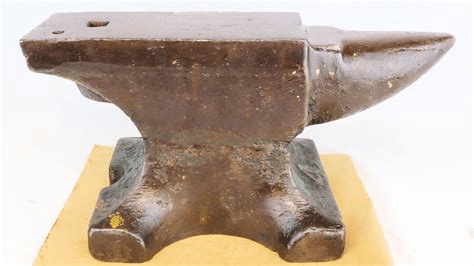
The Anvil of God’s Word

attributed to John Clifford

Last eve I passed beside a blacksmith’s door,

And heard the anvil ring, the vesper chime.

And looking in, I saw upon the floor,

Old hammers, worn by beating years of time.

“How many anvils have you had?” said I,

“To wear and batter out hose hammers so?”

“Just one,” said he, and then with twinkling eye,

“The anvil wears the hammers out, you know.”

And so I thought, the Anvil of God’s Word,

For ages, skeptic blows have beat upon.

But tho the sound of falling blows is heard,

The Anvil still remains – the hammers gone!

When Ought We to Call Men’s Word, God’s Words

Setting aside the fact that autographs are in one respect the words of God and the preaching of the word so long as it accords with God’s revealed words is also in one respect the word of God, in what sense do we say that men’s words are God’s words?

Before there ever was creation God knew and knows a form of the Scripture, or a blueprint if you will as He did with all revelatory particulars [heavenly bodies, plants, animals, and man]. In philosophy we speak of this particular kind of cause as the formal cause. Just as God had/has a blueprint of the makeup of a man or a woman so He had/has a blueprint of the word of God. With man, God determined what spiritual and physical aspects comprise a man. In the same manner, God determined what words of what language and in what order those words appear in comprising the written word of God. To stray from this blueprint, from this formal cause, is not to make some other good thing but to make of that thing something bad.

Take for instance a man who grows his hair out, endures hormone therapy, and has a bout of plastic surgery or two. Is that man still a man? According to many in the current wester ethos, that man is no longer a man, first because of his desires and second because of his chosen appearance. Indeed, we are told that he is a woman now and we are compelled to believe this under pain of ostracization in the USA and prison in Canada. But is this person a woman and by whose definition? If we take the position that a man is a man by God’s definition and according to His blueprint, then a man who tries to be a woman is not a woman but a bad man.

Now the word bad here can have several referents. Among them is a moral component and an aesthetic component. The moral component is that anyone who goes against God’s ordained law whether special or general is in violation of that law and has fallen short of God’s glory [i.e., has sinned]. The man’s soul is in rebellion against God’s ordained order. The aesthetic element is that if a man were to seek to change his sex/gender He can no more do that than a leopard can change his spots. As such, the attempt to make an aesthetic change is an attempt to change his very being. That is, the change attempted is not an attempt at accidental change [i.e., peripherals] but an attempt at substantial change [i.e., his very being] through aesthetics. His attempts have made His maleness less clear, less complete, and less symmetrical. And for these reasons he is a bad man both morally and aesthetically. But what has he really changed?

He has changed his hair, his nails, he now wears makeup, he has surgically altered his body, but he has not changed his soul he has not changed his being and so he has failed to change his being though he would like to but has only changed certain accidental elements. As such he remains a man, but a bad one both morally as well as aesthetically.

So now we come to the words of Scripture. We here at StandardSacredText.com maintain that there is not a single word of Scripture which is peripheral or accidental or a secondary substance or merely aesthetic. Every word is essential because every word is included in God’s blueprint for this particular structure – the structure called written inspired Scripture. And while we do hold that every word is essential to the teaching of Scripture at one point or another, that is not the emphasis I intend to dwell on here. The point I am making is that every word is essential in a substantive way. God is the formal cause of His revealed written word. God determined what words, in what order, and in what language count as the inspired infallible word of God.

Every word is essential because every word is part of the formal structure found in the divine mind, the substantive structure of the thing we call Scripture. And not because we say so but because God made and implemented the blueprint of revealed Scripture with certain verbal constitutive elements. If God calls for 1,721 rivets to build a sea-worthy vessel, then we get 1,721 rivets. If God’s blueprint calls for these words in this order in this language, then who are we to say that any element of God’s blueprint as formal cause is peripheral or doesn’t matter or doesn’t affect doctrine? If God is the formal cause of Scripture and as the formal cause He has called for certain words, in a certain order, in a certain language, then the claim that “Our build is good enough” does affect doctrine – the doctrine that God and not man is the formal cause of Scripture [2 Peter 1:20-21].

So, when modern evangelical text-critic after modern evangelical text-critic expresses doubt in their Greek text they are in effect saying that our build is good enough. In fact, in my experience, most evangelical textual critics will demur to claim that even a single word of Scripture is certainly the word of the original let alone a whole chapter or the Bible itself and still claim their build is good enough. Of course, we have to ask, who appointed man to say, “We admit our build is not according to God’s blueprint, but our build is good enough”?

What is more, our more critically inclined pastors across the fruited plain admit that their Bible is mostly God’s word and then proclaim every Sunday, “Hear the word of God.” They mean, in other words, “There is a high probability that we have God’s words, but we know that we don’t have some of them, and it is in this sense that I mean, word of God.” So, when do we call the words of men, God’s words? When we simultaneously claim that most of our Bible is probably God’s word and some of it probably is not only to turn around and say, “Hear the word of God.”

Are they really sawing the lady in half?

If the 4th century neutral text of Westcott and Hort or the 4th century initial text of Wasserman and Gurry have an unquantifiable link to the autographs, the 16th century Received Text may also be reasonably considered to possesses an unquantifiable link to the autographa through the apographa. Unquantifiable cannot be quantified by historical duration, which is of course relative to your place in history. It is a different duration epochally but of the same kind unquantifiably. If the Lord further delays his coming, in a millennium secular scholars will be calling the Received Text another iteration of the “initial” text. The vast difference is that the foundations of the critical text was rejected by the Church while the Received Text has been the ecclesiastical text since the early 16th century.

Indeed, Wasserman and Gurry’s CBGM and the “initial” text have given the critical text community something to ponder. If these men are correct in their assessment of data and the conclusion that only the initial not the original text of Scripture is scientifically discoverable, then, Westcott, Hort, Tregelles, Warfield, Wikgren, Martini, Black, Aland, Nestles, Metzger, et al., along with all their pliant evangelical and fundamentalist disciples, were fundamentally mistaken and the publishing and academic empire built upon this failed premise is constructed on thin air. With a schism in the critical tradition, which tradition of critical scholarship is now owed allegiance, the old school mainline textual critical search for the originals or the conspicuously truer to the historical critical method presentation of Wasserman and Gurry and the “initial” text?

The controversy then is between the ecclesiastical reception of an unquantifiable text and the two ideas of the critical unquantifiable text. It seems that the expressed purpose of reconstructing the originals was necessary to counter the Orthodox historical, exegetical, and theological argument of providential preservation through the apographa. It is logical to conclude that the façade was maintained because no one would accept the critical text if the critic acknowledged it could not reconstruct the autographs. Furthermore, to solidify the ruse, the textual critical discipline was performed by elite scholars writing in highly specialized and technical terminology. The entire method, however, was nothing more than a highly elaborate magic trick. They did not saw the lady in half, and after 150 years they did not reconstruct the autographa all the while like all magicians giving the impression that the impossible was actually being done. This magic trick has been so convincing that the Evangelical seminaries of America have taught this method as orthodoxy. “Yes,” seminary X tells the student, “they really are sawing the lady in half,” giving the impression that to reject this alternate reality is to be unscholarly.

How then should the evangelical and fundamental institutions of higher learning proceed? Like any change in trajectory, practical adjustments must be made. For example, stock the bookstore with Turretin, Whitaker, Owen, and Muller, and prepare lectures based on their writings. Already having a handle on the critical process, a robust series of apologetic lectures could be produced to show the rise and fall of the historical critical method and the strength of the Christian principium. To round out the return to a philosophical, exegetical, and theological grounding of the Doctrine of Scripture also make the Trinitarian Bible Societies Received Text available in the bookstore and require that the TR be used in language and NT theological courses.

The Church and Christian Academy are on the threshold of great strides for the sake of the Gospel if it will only admit that the critical path has run its course, no longer serves the church and academy as it might have once been thought to do and return to the Protestant orthodox theological bedrock of pre-critical exegesis and theology.

The King James Bible, 1611, and Psalm 12:6-7

The Hebrew translation of “them” in 7a, is interpreted as people following Rabbi Kimshi in the Great, Geneva, and Bishops’ Bibles, not based on a change in the Hebrew grammar or diction but because of the choice of antecedent. For these three versions, the single reading assigned to the pronoun “them” refers to the larger theme of the passage, the oppressed people. The Great Bible because of its temporary paragraph format, lends itself to referring to people. For the Geneva Bible, the marginal note informs the reader of the translator’s selection. The Bishops’ takes an unwarranted course replacing the pronoun with a noun.

Jerome, Ayguan, Luther, Rogers, Medieval Rabbis Kimchi and Abraham Ibn Ezra, and Becke are all aware of the interpretation of “them” within the churchly exegetical tradition as either words or people, with Jerome, Ayguan, Luther, Rogers, and Ibn Ezra arguing that the pronoun in 7a refers to the words.

It appears that without some formatting, marginal note or editorial change to the version, the reader would not be compelled to accept people as the single interpretation of “them” in 12:7a. Indeed, as Muller noted, “the choice of the antecedent is what limits the exegesis, and in fact excludes the broader interpretation of the ‘them’ as a reference to Israel and God’s people.” Which brings us to the rendering of the King James Version. “The words of the Lord are pure words; as silver tried in a furnace of earth purified seven times. Thou shalt keep them (O Lord,) thou shalt preserve them, from this generation for ever.” At preserve them, a marginal note in the King James Version explains, “Hebrew: him, i.e., every one of them.”[1]

While the Geneva Bible includes a marginal note at 7a referring to people, the King James Version does not designate the rendering of the Geneva and rather includes a marginal gloss at v. 7b. While the comment indicates the translators’ knowledge of the tradition, noting a regular practice in the Hebrew to change the number, the text nonetheless reads “them.” Considering the first stanza of 12:7 for the Geneva and King James Version is the same, that the King James translators allowed the immediate antecedent to take precedent without reorienting the reader’s interpretation to another antecedent by a marginal gloss. By so doing, the King James Version translators followed Abraham Ibn Ezra’s rendering of the passage referring to the words. Also, by duplicating the pronoun “them” in this passage, the King James Bible translators provide an unambiguous rendering of the verse limited by the immediate antecedent, words.

Five factors are in play:

  1. Dependency upon the Hebrew text
  2. Limitation of the v. 7 pronouns by the immediate antecedent, words.
  3. Knowledge of the practice in the Hebrew to change the number for the pronouns noted in v. 7b.
  4. Providing an unambiguous, single reading of the verse so that both pronouns have a single antecedent. Note that in word order the two verbs with pronominal suffixes are sequential תִּשְׁמְרֵ֑ם תִּצְּרֶ֓נּוּ contributing to the case for a common antecedent “pure words.”
  5. With v. 7’s reference to preserving the words, or promises, the case can still be made for God’s care for his people. In that these promises are kept forever; it is through the keeping of the promise that the people are preserved.

[1] Holy Bible: 1611 King James Version (Nashville: Thomas Nelson Publishers, 1982). Also see John Calvin, Commentary on the Book of Psalms translated by James Anderson (Grand Rapids: Eerdmans, 1949), 179. Calvin notes a common Hebrew practice of changing the number but referring to the same thing, commenting, “With respect to his changing the number, for, he first says, thou wilt keep them, and, next, Thou wilt preserve him,) it is a thing quite common in Hebrew, and the sense is not thereby rendered ambiguous…But as the Jews, when they speak generally, often change the number, I leave my readers freely to form their own judgment.” Henry Ainsworth, Annotations Upon the Five Books of Moses, the Book of the Psalms, and the Song of Songs, or, Canticles (London: Printed by John Haviland for John Bellamie, 1627) For verse 8 [v. 7 in the English Bible], Ainsworth interprets “preserve him” as, “every one of them: so before in the end of the sixth verse, and often in the scripture, like sudden change of number may be observed.”

Please note, that there is no exegetical or hermeneutical case for “people” being the singular antecedent to “keep them” concluding that Psalm 12:6-7 is a passage of Scripture teaching the providential preservation of “pure words.” To say otherwise is to express a prejudiced, non-exegetical interpretive presupposition. Please also note, that because there is a category called “Providential Preservation,” Matthew 5:18, et al, can now fall under that paradigm.

“Our Lord” In 1 Corinthians 15:47

This is the first of a series dealing with text-critical issues in the Pre-Critical era. The purpose of these posts will be to demonstrate that Pre-Critical Exegetes and Theologians were well aware that there were discrepancies in the apographa [i.e., the copies] but that did not mean they abandoned a standard sacred text. Rather they turned around and used their standard sacred Greek and Hebrew text to combat the standard sacred text of Rome identified as the Latin Vulgate. Furthermore, the Reformers did not do there “text-critical” work via recourse to a wholly or largely naturalistic methodology in an attempt to interpret these discrepancies. Oldest, shortest, and hardest are not by default the best. The Reformers had encountered too much old but faulty medieval theology to conclude that oldest is defacto best in any human category.

As a part of writing these posts, I am going to draw on Roger Omanson’s A Textual Guide to the Greek New Testament. Concerning every variant in the UBS text, Omanson’s book offers a brief reason as to why the editors of the UBS text chose the text they chose and, in some cases, why they did not choose the other available options. To sweeten the deal, I am going to draw on Reformers like Francis Turretin and William Whitaker to show that they engaged the very same textual issues we debate about today were debated about during the Reformation. Our first candidate is 1 Corinthians 15:47 and the words “the Lord.”

In the late 1600’s Turretin writes,

“There is no corruption in the Greek text of 1 Cor. 15:47, but only in the Vulgate. The latter omits the word Kyrios (which here refers to Christ to make it evident that the Lord is Jehovah, not a mere man).”

Francis Turretin, Institutes of Elenctic Theology, vol. 1, Second Topic, Q. X, Sec XXI.

In Turretin’s text, Kyrios or the Lord, is present in 1 Corinthians 15:47 and it is the Latin Vulgate that is in error on this point. Why does Turretin believe this is the case? He makes a theological argument centered on clarity for its originality. Turretin writes,

“The antithesis of the first and second Adam becomes much stronger: ‘the first man is of the earth, earthy; the second man is the Lord (kyrios) from heaven.'”

Turretin, Institutes, Second Topic, Q. X, Sec XXI.

For Turretin the presence of Lord is the best reading because it lends clarity to the theological examination of that passage. In this case the longer reading is better because Paul wished to clarify what he meant by this second man. So, in the TR “the Lord” is preserved in the Greek and then in the English, but what of the CT. Do you think that Omanson overserves an agreement here or does the CT diverge from the traditional rendering? Omanson writes 1 Corinthians 15:47,

“The reading in the text best accounts for the original of the other readings, and it has the support of a strong combination of early and good witnesses representing several text-types. The insertion of the article and the noun ὃ κύριος (the Lord) in many witnesses is an obvious addition made in order to explain the nature of ‘the man from heaven.'”

Omanson, A Textual Guide, 351.

Here it seems to Omanson that the addition of ὃ κύριος (the Lord) is an “obvious” addition. And on what account does Omanson make this claim? 1.) Shortest is best – the omission of ὃ κύριος makes the reading shorter. 2.) Oldest is best – The omission has “a strong combination of early and good witnesses.” So, on the one hand, the oldest and shortest reading makes it “obvious” to the editors that the ὃ κύριος should be omitted. While Turretin argues on the other hand that the longer reading is the original reading because it lends clarity to the passage. In sum and in this case, the CT advocate says that shorter is better and the TR advocate says longer is better. The CT advocate makes a largely naturalistic assessment of the reading while the TR advocate makes a largely theological assessment of the reading.

In all, as the Preacher tells us in Ecclesiastes, “That which hath been is now; and that which is to be hath already been” [Ecc. 3:15]. There is no new thing under the sun. And this will not be the only time the Reformers had to answer text-critical questions which are the exact same questions brought up by CT advocates today as if there haven’t been sufficient answers already. Indeed, Reformation era TR advocates did a form of textual criticism, and they did indeed use historical evidence to make their claims, but it is clear that their theological precommitments played a substantial role in their text-critical efforts. Sound familiar? For this reason, we here at StandardSacredText.com have said and will continue to say that the text-criticism of the past and that which is practiced now are not the same species and we will continue to advocate for the obvious and substantial role theological precommitments when doing textual criticism.

Manuscript Witnesses Are Not a Special Species of Historical Witness

It seems we live in a time; indeed, it has been this way my whole academic carrier and for generations before me, that the oldest manuscripts are said to be the best manuscripts but that does not seem to bear itself out theologically. I have been told innumerable times that the oldest is best because these manuscripts are closest to the original. Yet if we take a look at the theology closest to the original theology of the apostles in time, we see that there is a bit of trouble brewing, indeed, considerable dispute.

Before the end of the first century Paul warns that there are those which may preach another Gospel other than the one preached by Paul [Galatians 1:8]. We see that during Paul’s time there are some preaching out of contention and adding to Paul’s bonds [Philippians 1:15]. The apostle John observes that some would not receive him, particularly Diotrephes [3 John 9]. Then in the end of Revelation John warns not to take away from or add to Revelation and by extension, the whole canon [Revelation 22:18-19]. I say all of this to say that before the end of the first century church there is significant and sufficient divergence from the Apostolic Message that the apostles themselves are issuing numerous warnings to combat that real divergence.

Then there are the host of early church heresies. Let me name a few: Adoptionism [c. 190 AD – taught the Father adopted the Son], Apollinarianism [ 4th century AD – taught Jesus had a human body and divine mind], Arabici [3rd century AD – taught the soul died with the body], Arianism [2nd-3rd century AD – taught Jesus was created], Collyridianism [4th century AD – taught that the Trinity was composed of the Father, Spirit and Mary], Docetism [2nd century AD – taught that Jesus did not really have a body], and Monophysitism [482 AD – taught that Jesus’ divinity overrode His humanity].

Note that Sinaiticus and Vaticanus are considered a 4th century manuscript. So, while the Church is arguing over the nature of the soul, the nature of Jesus’ hypostatic union and the nature of the Trinity we also get written manuscripts during these same times of uncertainty. But these two species of witnesses (i.e., theological and manuscript) do not get the same treatment. We do not embrace the theological machinations of Arianism within orthodox evangelical circles even though those machinations are old in the history of theology. But we do embrace old manuscripts simply because they are old.

It is clear that the further back you go into the early church the more varied are the opinions of the early church going all the way back to the time of the apostles. Then through years of discussion, debate, and things more severe the Church endured a winnowing effect with regard to her theology. The result of which was that the Church by the leading of the Holy Spirit through the word of God by faith rejected Arianism, Nestorianism, Sabellianism and the like. Thus, the further along the theological timeline we go the more uniform the beliefs of the Church become. Why? It takes time for revelation to sanctify the people of God no matter if they are scholars or illiterate laity.

Interestingly enough this is the same argument we here at StandardSacredText.com make about the textual issue. It is a fact that the earliest manuscripts in the extant tradition vary far more among themselves than the later manuscripts among themselves, just like the theology of the Ancient Church compared to following generations of the Church. It is a fact that through the progression of time the later manuscripts are far more uniform, just like the theological progression of the Church from the Ancient to the Reformation for instance. As such there is a winnowing effect which the textual tradition has undergone just like the winnowing effect which the theological tradition has undergone. That winnowing effect in the manuscript tradition has over time excluded the Gospel of Thomas from the Bible and included the long ending in Mark and the account of the woman caught in adultery just like the winnowing effect of the theological tradition has excluded Arianism and included that Jesus is the same substance as the Father or that the persons of the Trinity are three subsistences of one essence.

Using the winnowing effect of theology as a lens it is preposterous to think that simply because Patripassianism [i.e., the belief that the Father died on the cross] is an old theological system it therefore by default receives greater weight in the formulation of theological systems going forward. Yet this is the exact argument made by the CT/MVO position. The older the manuscript the greater the weight it receives among other manuscripts in the manuscript tradition going forward.

What is more, and this is a common plague among my CT/MVO brothers, they have little patience for questioning the divinity of Christ or the nature of the Trinity like those of the Ancient Church did, but they have nearly infinite patience to doubt the Scriptures on this or that point. So, they will doubt the source of their theology, but they will not allow you do doubt their theology. Put another way they will allow you to doubt the nature of the rule [Scripture], but they will not allow you to doubt the nature of that which is ruled [theology].

Finally, it is widely held that each manuscript in addition to being a record of this or that NT text it is also a witness to the time in which it was written and specifically a witness to the beliefs of the Church at that time. In this sense the manuscript is the same kind of witness as a theological treatise. They are both written and tell the story of the beliefs of the Chruch at that epoch in time. So just as age of a theological witness is not a prime factor in its truth so too the age of a manuscript is not a prime factor in determining its reliability.

Rather, in both cases the prime factors are the leading of the Holy Spirit through His words, the word of God, to His people by faith. This is how we sorted out theological differences over time and this is how we have ultimately sorted out manuscript differences over time. Certainly, there were brilliant, studied academicians making theological arguments in defense of orthodoxy as there are brilliant, studied academicians making arguments in defense of this or that reading. Still, it is not the Clements or Augustines that settled orthodox theology nor is it the Wallaces, Gurrys, and Wassermans that settle what is the NT. Both in theology and in manuscripts it is the Spirit of God through the word of God to the people of God which settles what is orthodox theology and what is the NT.

It’s about time we jumped off the oldest-reading-is-the-best train.