Because Christ is immutable and eternal, he is “able to save us to the uttermost” — “uttrermost,” παντελές –made up of two words “all” and “end” or “perfection”– Christ is able to save “completely to the end,” to the uttermost. Vine: the neuter of the adjective panteles, “complete, perfect,” used with eis to (“unto the”), is translated “to the uttermost” in Hebrews 7:25, where the meaning may be “finally.” Thayers: παντελής, παντελές (πᾶς and τέλος), all-complete, perfect (Aeschylus, Sophocles, Plato, Diodorus, Plutarch, others; 3Macc. 7:16); εἰς τό παντελές (properly, unto completeness (Winers Grammar, § 51, 1 c.)) completely, perfectly, utterly: Luke 13:11; Hebrews 7:25 (Philo leg. ad Gaium 21; Josephus, Antiquities 1, 18, 5; 3, 11, 3 and 12, 1; 6, 2, 3; 7, 13, 3; Aelian v. h. 7, 2; n. a. 17, 27).
This Sunday morning as we consider the vicarious, redeeming work of Christ for us, ask yourself a question. If Christ has the power to save a lost sinner “to the uttermost” is he not also able to preserve His word from which saving faith comes (Rom. 10:17) with the same power? The answer is of course, yes, he has the power to save the lost “to the uttermost” and preserve his word. Blessings!
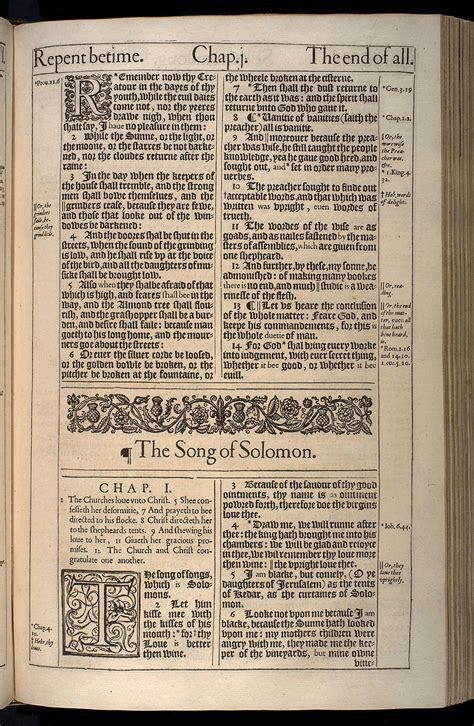
[This excerpt is taken from A Primer for the Public Preaching of the Song of Songs (Manassas, VA: Outskirts Press, 2015), 12-13, 43-47.]
The Song was in circulation within both the religious and popular contexts of Israeli life. Pope writes, “In the Hebrew Bible the Song of Songs is placed among the Writings, ketubim, following Job as Five Scrolls (Song of Songs, Ruth, Lamentations, Ecclesiastes, Esther). This order corresponds to the sequence of their use in the liturgy, the Song of Songs being read on the eighth day of Passover.” Pope, Song of Songs, 18. Pope also notes on p. 18 that Rabbi Aquiba, who regarded the Song as the “veritable Holy of Holies,” uttered the following anathema upon those who considered the Song a mundane ditty, saying, “He who trills his voice in chanting the Song of Songs in the banquet house and treats it at a sort of song (zemir) has no part in the world to come.” Although Rabbi Aquiba understood the Song allegorically, clearly other Israelis took it otherwise. Alter states, “References in rabbinic texts suggest that at least by the Roman period the poems were often sung at weddings, and, whoever composed them, there was surely something popular about these lyric celebrations of the flowering world, the beauties of the female and male bodies, and the delights of lovemaking.” Robert Alter, The Art of Biblical Poetry (New York: Basic Books, Inc., Publishers, 1985), 186.
A great Jewish savant began his commentary on the Song of Songs with these words, “Know, my brother, that you will find great differences in interpretation of the Song of Songs. In truth they differ because the Song of Songs resembles locks to which the keys have been lost.”[1] With 1,440 glosses on the Song of Song compiled by Patristic and Medieval scholars by 1110,[2]the Church Fathers’ allegorical reading of the Song[3]confirm the assessment, “No other book of the Bible (except perhaps Revelation) suffers under so many radically different interpretations of the Song of Songs.”[4]Lecturing on the Song of Songs in November 1530, Martin Luther expressed his dissatisfaction with the three primary interpretive methodologies of his predecessors, lamenting,
For we shall never agree with those who think it [the Song of Songs] is a love story about the daughter of Pharaoh beloved by Solomon. Nor does it satisfy us to expound it as the union of God and the synagogue, or like the [Alexandrian] tropologists, of the faithful soul. For what fruit can be gathered from these opinions?[5]
The interpretive, historic dissonance in the ecclesiastical tradition persists with no sign of an exegetically based, codified interpretation.[6]Redford succinctly states the contrasts, “The allegorist gives the reins to his fancy and ends in absurdities; the literalist shuts himself up in his naturalism and forfeits the blessings of the Spirit.”[7]
The history of the Song’s interpretation, with minor exception, is entirely allegorical, the Song’s message referring to Jehovah and Israel or Christ and the Church. The one noted exception to this interpretive convention among medieval theologians was Theodore of Mopsuestia (350-428 who also denied the inspired character of the book. Considering the Song as a referring only to human love and non-canonical, Theodore was anathematized by the Second Council of Constantinople in 533.[8]
The substantive question was whether the Song is an allegory and based on its genre received by the Church as canonical. Was the allegorical interpretation of the Song the basis for its acceptance as canonical, or was the divine authority of the Song accepted and subsequently determined by Jewish and Christian scholars to be interpreted allegorically?
John Barton’s short essay, “The Canonicity of the Song of Songs”[9] makes a compelling argument for the Song’s canonicity apart from any interpretive qualification. Barton’s research finds that in the history of the Song’s interpretation scholars make a decuit ergo factum argument rather than a factual one, that the “celebration of physical love” is the primary reason for disputing the Song’s canonicity.[10]Barton also explains that the allegorical interpretation of the Church Fathers and medieval scholastics was “precisely practiced on books that had a high status” and that again there is no evidence that the Song was identified as canonical and secured as Scripture based on its allegorical reading.[11]In other words, the Song’s canonical authority was recognized prior to the formulation of Jewish and Christian interpretive philosophy. The Song was interpreted allegorically because it was already accepted as canonical. Barton’s findings are consistent with the medieval convention of a four-fold method of interpreting the Scriptures (literal, tropological, allegorical, and anagogical)[12]employed of the scholastics of the Middle Ages. This hermeneutical convention was challenged and rejected by the post-Reformation dogmaticians who emphasized a singular meaning for each text.[13]
Barton’s research concludes that the “allegorical reading was a consequence, not a cause of canonicity.”[14] As canonical, the Song was read allegorically and in the Song’s history of interpreted was rendered in a manner considered fitting the Holy Scripture.[15]
[2]The Glossa Ordinaria on the Song of Songs, translated by Mary Dove (Kalamazoo, MI: Western Michigan University, 2004), xxi. “Anselm of Laon (perhaps with his brother Ralph) is the compiler of the glossed Song of Songs, but we can only confidently ascribe to his authorship about a sixth of the 1,440 glosses. These are the glosses that are shared with surviving reportationes, ‘written reports’ of lectures on the Song of Songs which Anselm gave at Laon ca 1100-10.” Also see J. Robert Wright, ed., Proverbs, Ecclesiastes, Song of Solomon, Ancient Christian Commentary on Scripture, Old Testament (Downers Grove: InterVarsity Press, 2005), 9:286-368; Mark W. Elliot, The Song of Songs and Christology in the Early Church 381-451 (Tubigen: Mohr Siebeck, 2000), 15-50.
[3]For a succinct history of the Song’s interpretation until 1690 see Richard Littledale, A Commentary on the Song of Songs, (New York: Pott and Emery, 1869), xxxii-xl. Also see John Barton, “The Canonicity of the Song of Songs,” Perspectives on the Song of Songs (Perspektiven der Hoheliedauslegung), ed. Anselm C. Hagedorn (New York: Walter de Gruyter, 2005), 2.
[4]Garrett, Proverbs, Ecclesiastes, Song of Songs, 352.
[5]Martin Luther, Luther’s Works, American Edition (St. Louis and Philadelphia: Concordia and Fortress, 1955), 15:194-195. “Although difficult to trace exactly, it is highly suggestive to think that the ‘new pathway’ of Luther for the sixteenth century has historical roots in particular late medieval Christian scholarship (circa 1300) and in latter medieval ‘rabbinic’ exegesis.” Endel Kallas, “Martin Luther as Expositor of the Song of Songs,” Lutheran Quarterly, 2 (1988): 323-41.
[6]Longman, Song of Songs, 54-55. “The question of the structure of the Song is a difficult one, as is demonstrated by the plethora of hypotheses found in the secondary literature. No two scholars agree in detail, though there is what might be called schools of thought on the subject. While we feel confident in the general conclusions reached regarding the structure of the Song, we have no illusions that the following is the final word.” Alter, The Art of Biblical Poetry, 185: “We have no way of knowing the precise circumstances under which or for which the Song of Songs was composed.”
[7]H.D.M. Spence, Joseph S. Excell, eds. Song of Songs, vol. 22, The Pulpit Commentary(London and New York: Funk and Wagnalls Co., nd), xxiv.
[8]Ibid., 38-39. Longman also cites John Calvin and Sebastian Castellio as two who accepted the congruity of marital love and divine love in the canon; also see Roland Murphy, “Canticle of Canticles,” The Jerome Biblical Commentary (Englewood Cliffs, NJ: Prentice-Hall, Inc., 1968), 506.
[9]Barton, “The Canonicity of the Song of Songs,” 1-7.
[12]See Andrew Willet, Hexapla in Leviticum, that is, a sixfold commentary upon the third book of Moses, called Leviticus (London: Printed by Aug. Matthewes, 1631), 120. “The tropological, which is applied to moral things, allegorical, to spiritual things, and anagogical, to heavenly things, as Jerusalem signifieth the soul of man; allegorically, the church militant; and anagogically, the church triumphant in heaven.”
[13]Ibid. In his commentary on Leviticus, Andrew Willet (1562-1621) agrees that the content of Scripture deals with historical matters and mysteries but those elements in themselves do not prove diverging senses in interpretation. He succinctly addressed the crux of the matter by explaining, “There is a difference between the literal, or historical sense, and the application, or accommodation of it. That is the proper sense of the scripture, which is perpetual and general; it is therefore dangerous for men, of their own brain, to pick out every place mystical senses. It belongeth only to the Spirit whereby the scriptures were written, to frame allegories and mysteries.” Of particular significance Willet makes clear that there is a literal or historical sense to the words of scripture. Citing 2 Timothy 3:16, Willet states that there are four profitable uses of inspired Scripture: to teach, to improve, to correct, and to instruct in righteousness. And thus, he says, “To devise and frame allegories and mysterie (wherein the Spirit intended them not) is none of them.”
[14]Barton, “The Canonicity of the Song of Songs,” 3.
[15]For useful discussions on the canonicity of the Song, see William Frederic Bade, “The Canonization of the Old Testament,” The Biblical World 37, (Mar., 1911): 151-162; David Kraemer, “The Formation of Rabbinic Canon,” Journal of Biblical Literature 110, (Winter, 1991): 613-630; Solomon Zeitlin, “An Historical Study of the Canonization of the Hebrew Scriptures,” Proceedings of the American Academy for Jewish Research, (1931-1932): 3:121-158; Albert C. Sundberg, Jr., “The Old Testament of the Early Church (A Study in Canon),” HTR 51, (Oct., 1958): 205-226.
Henry VIII, in 1530, demanded that Tyndale be brought to England and punished for sedition for publishing the Bible in English. In 1535, while in Antwerp, Belgium, Tyndale was the writing his final revision of the Bible that would form the foundation for later translations. During that time Romanist Henry Phillips, also an Englishman and Oxford graduate, under false pretenses, befriended Tyndale. After gaining Tyndale’s confidence, while walking down a winding street, Phillips signaled soldiers who arrested Tyndale. Shortly thereafter, Tyndale was executed for the crime of printing Bibles in English and rejecting Roman Catholic dogma. This is the early history of what would become the King James Bible.
Of Phillips it is said, “He spent the next few years of his life fleeing from King Henry’s agents…By 1542 he passes from history as a prisoner under threat of losing his eyes or his life. Disowned by his family, by his country and by almost every prince on the continent and even those with whom he collaborated in his terrible crime, he died – Fox conjectures, “consumed at last with lice.’” Brina H. Edwards, “Tyndale’s Betrayal and Death,” Christian History 6 (1988), 12-15.
In this article written by Ben Wright, pastor of Cedar Point Baptist Church in Cedar Park, TX explains what the attractional church methodology [i.e., do whatever it takes to make Church appealing] is,
” We’re offering the experience of worship that you’re looking for.”
Let’s make a minor adjustment to the above to see if attractional church methodology as a form of Expressive Individualism is in the same neighborhood as Multiple Versions Onlyism being a form of Expressive Individualism. The text-critic in conjunction with the publisher says,
“We’re offering the version(s) of the Bible you are looking for.”
The formula is identical. All we’ve changed is the variable “experience of worship” with “version of the Bible.” And the result is the same as well. Where with the former variable we have to deal with church-hopping; in the latter variable we have to deal with Bible-hopping.
American Church’s have become attractional because Expressive Individualism is the air we now breathe. Quoting from Trueman’s The Rise and Triumph of the Modern Self,
“It [Expressive Individualism] is the very essence of the culture of which we are all a part. To put it bluntly: we are all expressive individuals now.”
Trueman, Rise and Triumph, 25.
Trueman goes on to observe after noting that we can choose which church to go to among several Christian denominations; we can also choose the kind of worship we like
“as well as a host of other subjective variables – where we feel comfortable, welcomed, supported. We can choose our churches as we choose our house or car. We may not have infinite choice and may still be subject to some material restrictions, but the likelihood is that we have more than one church option with which we choose to identify.”
Trueman, Rise and Triumph, 385.
Again the formula is the same and all that has changed is the variable. The MVO crowd do choose their preferred version of the Bible like they do their house or car. Most MVO adherents advocate for choosing the version(s) which with which you feel most comfortable, welcomed, and supported [i.e. the one that makes sense to you, the one that uses language you are used to, the one that says it the way you like]. Indeed, we do not have infinite choices of versions of the Bible but “the likelihood is that we have more than one [version] option with which we choose to identify.” Sound familiar?
The funny part [in a strange and sad kind of way] is that most pastors around the country would warn against church-hopping but wholeheartedly advocate for Bible-hopping. The tragic comedy of the whole thing is that there are indeed many pastors so why not be MPO – Multiple Pastors Only? There are multiple Bible preaching churches, so why not advocate for MCO – Multiple Churches Only? These are the natural outworking of Multiple Version Onlyism.
If it is within my purview to choose multiple Rules at the same time and in the same way then it is within my purview to choose multiple pastors at the same time and in the same way. And if it is in my purview to choose multiple Rules and multiple pastors at the same time and in the same way then it is in my purview to choose multiple churches at the same time in the same way.
Translation: I believe several Bibles are the word of God at the same time and in the same way and I believe the pastor at the Presbyterian church and the Baptist Church and the Lutheran Church are all equally my pastors at the same time and in the same way. Furthermore, I believe that I am a member in good standing in the local Presbyterian church and the local Baptist church and the local Lutheran church. As such I expect each of these churches to minister to my several needs. That is, I expect each pastor to visit me in the hospital. I expect three funerals done by each of my pastors when a loved one passes away. I mean, if they are all sufficiently reliable pastors and sufficiently reliable versions of Christianity then why not have 10 pastors in 5 denominations and be shepherded by and a member of each respectively?
Come on, pastors! Who’s with me!?
I jest.
The point is pastors, if you are going to allow Bible-hopping/Rule-hopping then don’t be surprised when your people go Pastor-hopping which either looks like comparing your messages with other pastor’s messages only to find that you are not as good at preaching like the other guy is. That of course can turn into people leaving your church for the better pastor or it can turn into the people asking you, the pastor, to leave so they can get a pastor that make sense to them or a pastor that better meets their preferences of delivery or wording. Sound familiar? If you can choose a Bible based on your preferences of syntax, delivery, and wording you can certainly choose a pastor based on those same preferences. And as we are encouraged to do, when your preferences change you may change which Bible you’d like to read and while you’re at it, get yourself a new church and pastor based on those same preferences.
Some of you all were so short sighted that you thought people could prefer a Bible but not their pastor. Well ladies and gentlemen that time has come, and now churches and pastors are objects of “what makes sense to people” and “what they prefer.”
Be not deceived. God is not mocked. For whatsoever a seminary/church/pastor sows that shall he also reap.
In closing, turn with me in your non-existent hymn books to 357, Bringing in the Sheaves…
When lecturing on the superiority of the King James Bible at a Midwest Bible College, I was invited to the home of one of the Theology Professors. Our conversation was casual but lead around to questions on the subjectivity of the mind, the proper analysis of Scripture, and finally the certainty of saving faith. As we worked through the content, the professor, without solicitation, and based on our discussion said that he could only be 99% sure he was saved. I gave no reply, but that event has remained with me. Here is someone well versed in the Scripture, indeed and teacher of Theology, but when reflecting epistemologically on what he knew could only speak of his personal, saving faith in relative terms. But one might reply, the difference between the certainty of salvation and this minimal degree of doubt is only 1%. One might even press the point to say that for practical purposes 99% and 100% are equal. However, any chemical engineer knows that a 1% difference is the foundation of total loss and ruin, so apart from theological issues the marginalizing of the difference is unwise. But because saving faith, the conduit to the finished work of Christ on Calvary, is a gift of God (Eph. 2:8-9), not originating in the heart or mind of man, but in the Word of God (Romans 10:17) through the regenerating work of the Spirit (John 3:6-7), saving faith gives the saint 100% certainty of its efficacy (1 John 5:13). The Professor’s conundrum was not an expression of degrees of faith but of his unwillingness simply to take God at His word. The simplicity of the Gospel in his mind had been swallowed by the chasm of critical issues. Being 99% sure you’re saved is not being saved. Christ saves to “the uttermost that come unto God by him, seeing he ever liveth to make intercession for them.” (Heb. 7:25)
Here at Standard Sacred Text, we believe that everyone should take God at his word, whether we understand it all or not. We do not know how the subconscious works, how regeneration works. We do not know how election and the free choice of man work together. But these things and others should not prevent the redeemed soul from rightly believing they are true because God said it in his Word. If God said it, and our evidence does not agree with what He has said, then we are misinterpreting the evidence. With the Apostle Paul all should say, “let God be true, but every man a liar” (Rom. 3:4).
Andrew Willet wrote that if Scripture were not self-interpreting everyone would have to carry “the Pope around in his pocket” for reference before a clear rendering of the text could be made. Anyone pretending to know the mind of God better than himself would also gladly take on the responsibility of being the new “Pope in the pocket,” establishing a new “rule” or “canon” of interpretation for the Church, to replace the authority of the self-interpreting Canon or Rule of Scripture as taught by the Holy Spirit. As you read Wilson’s work a stark contrast is evident between the high regard for Scripture in his day and the subordinate role of Scripture today.
The following is a quote of Cambridge fellow John Wilson (1588–1667), writings that “the Scripture is the only Authentic Record of the Mind and Will of God, “
“For it is certain and undoubted Voice of God himself; and what that speaks, He speaks. And who so fit to interpret the meaning of the words as himself? Ejus est Interpretarm cujus est condere, is an approved Rule in Civil Law; “He that made the Law, is fittest to interpret it.” And in the present case the reason is evident; God best knows his own mind; and he hath nowhere so plainly and fully revealed his mind as in Scripture. Certainly, there can be none so sure and infallible Interpreter of these sacred Records, as the Holy Spirit that edited them; and he Interprets them, not by suggesting to us anything for their understanding which is not there already, by but speaking to us more clearly from some part of Scripture what is delivered most darkly to others. Can any man, or sort of men in the world, pretend to know the mind of God better than himself? or give us better assurance what his mind is, than the Word which himself hath appointed to be written for this very purpose? Whatsoever sense may be put upon any Scripture-assertion, and by whomsoever framed, it cannot challenge our undoubted reception, unless we can discern the Voice of God in it.”
John Wilson, The Scriptures Genuine Interpreter Asserted: or a Discourse Concerning the Right Interpretation of Scripture (In the Savoy: Printed by T. N. for R. Boulter, at the Turks Head in Cornbil, over against the Royal Exchange, 1678), 215-216.
If you’ve spent more than five minutes on the internet over the last couple days you probably ran across this exchange between SCOTUS nominee Ketanji Brown Jackson and Senator Marsha Blackburn,
Senator Blackburn: “Can you provide a definition for the word ‘woman’?”
Judge Jackson: “I can’t…not in this context. I’m not a biologist.”
In continuation from yesterday’s post, we once again return to the topic of Expressive Individualism. Judge Jackson, being a woman, cannot give a definition for the word “woman” because she has chosen a Rule, a Standard which allows her to be ambiguous about that which is ruled, because of the Expressive Individualism that pervades her worldview. She does not understand that the Rule is already set, God has set the Rule long ago and as a revelation of His person. Instead, she has chosen a different Rule and as such has chosen how the game of “What Counts as Woman” is played, and the Rule states that she can be ambiguous or non-committal on what a woman is.
Furthermore, she has chosen a Rule which makes her non-committal answer one of epistemic humility and deference. In other words, she is virtuous for saying the definition for “woman” is something a biologist would know about and seeing she is not a biologist then such a question is beyond the purview of her expertise. In other words, Judge Jackson is going to graciously stay in her lane. And for this modesty, Judge Jackson is regard as intelligent, virtuous, and humble by her acolytes for not claiming a standard definition of what a woman is.
The same goes for the current textual and version debates. Frist, the Multiple Version Only position is intelligent. I mean, look at all the Ph.D’s that support the MVO position. The MVO position is humble because such adherents would never think harming someone’s sincere feeling or preference that this/these version(s) is/are the best one(s) for the moment. And all of this is virtuous or an excellence heaped upon the Church for its ambiguity clothed in modesty.
But then there are those who call for a standard sacred text and believe the Bible in their hand is that text to the exclusion of all others. Now those people are Bible bigots. And who are they anyway to say that the KJV or the TR are the Bible when all the smart people [i.e., text-critics] disagree with those Bible bigots. I mean, stay in your lane TR/KJV folks and leave it to the experts. Take a page out of Judge Jackson’s playbook, but instead of leaving the answer to biologist, leave the answer to the text-critics. In the end, how dare you have a single authoritative standard for what counts as a woman? Even further, how dare you have a single authoritative standard for what counts as the Holy Bible?
Second, who chooses the readings of the NT in the text-critical method? Well the smart people do, the “biologists” of the text-critical world. And how many of the readings do they choose? All of them. They choose to start with Sinaiticus and Vaticanus and then choose to add or omit additional readings thus creating the ECM/NA 28/UBS 5. The point is, scholars choose all the readings of the entire text. They choose every reading of the Rule and declare them the NT according to their interpretation. Then those readings get translated into versions and who chooses the Rule then? English-speakers do based on which ones make the most sense. In sum, scholars choose every reading of the Greek NT then English-speakers choose whichever version(s) of those chosen readings they like the best. At no point is there any appeal to the Spirit of God moving through the word of God in the people of God to receive those words by faith. No such admissions would mean that more than “biologists” can tell us all what counts as a “woman” and more than “text-critics” can tell us what counts as the Holy Bible. /Gasp
Since Warfield, the definition of God’s providence has included the textual definitions and choices provided by men like Wescott, Hort, and Lachmann. With “providential” so defined, God’s providential care has governed Wescott and Hort to define the Bible and its readings as they did. In like manner, God’s providential care has just as likely governed Judge Jackson to define or rather fail to define “woman” a she did. The English-speaking Church is ambiguous about what counts as the Bible and Judge Jackson is ambiguous about what counts as a woman and both parties are considered intelligent, epistemically humble, and virtuous for their respective stances.
Ask Judge Jackson, “Is that person over there a woman?” She may reply, “Well that person sounds like a woman, that person looks like a woman, that person has the apparent structures of a woman, but the fact is that she may not be.”
Ask your average text-critic, “Is that reading original?” The text-critic will most probably reply, “Well that reading currently appears to be the original reading, that reading has the apparent structures of an original reading, but the fact is that that reading may not be the original reading.”
Third, we don’t choose God. God first chooses us and then we are able to choose Him. When scholars choose every word of God in the original and English-speakers choose a version of those words which best comports with their feels or personal preferences, then we have Expressive Individualism at its finest. The Expressive Individualism of the current western ecclesiastical community is manifest in its ambiguity about what counts as “The Holy Bible” while Judge Jackson is ambiguous about what counts as a woman. Most conservatives can hardly contain their disdain about the latter, but if we had a choice between ambiguity about what counts as the Bible and ambiguity about what counts as a woman, it seems we should prefer the latter.
For if we had a standard sacred text of Scripture we could figure out what counts as a woman from the pages of Holy Scripture – a Holy Scripture which chooses us, which Rules over us and is not an object of our current cultural affections or preferences. But if we had a clear understanding of what counts as a woman but we lacked a clear understanding of what counts as “The Holy Bible”, the definition of a woman would be as mailable as whatever prevailing power structure would have it to be and soon after that, the so called “clear definition” would become irrevocably ambiguous. And that is where we are. Welcome to 2022.
In sum, our culture does not know what counts as a woman because the Church does not know what counts as Holy Scripture.
When God entered the covenant with Abram (Gen. 12:1-3), God Himself promised to accomplish the content of His declaration contained in the future, “I will.” “I will” as the manifestation of God’s good pleasure (eudokia) manifests itself in history by the exercise of the gifts of faith and repentance; elements reciprocated to the object of that faith, Jesus Christ. Together, God’s will and its redemptive derivatives reflect the foreknowledge and predestination of God’s sovereign choice to save the elect, guaranteeing the fulfillment of His covenant to Abram.
By God’s design, all those who are elect exercise a God-given faith derived from the revelation of God’s Word, the reasonability of Scriptural claims and the Holy Spirit moving the will to desire salvation. Faith comes by hearing and hearing by the word of God, (Romans 10:13). Scripture is therefore the central objective, historical element toward accomplishing God’s pre-creation decree to elect some of all those who are dead in trespasses and sins, Eph. 2:1. God’s covenant of election, the Holy Spirit and Scripture combine to secure the eschatological consummation of redemptive history.
By God’s grace before and after conversion, those who are elect are irresistibly impelled by the Holy Spirit through the testimony of Scripture to intellectual concurrence as to the trustworthiness of Scripture’s subject and object, Jesus Christ, and the assent to believe the truth claims of God. This is the supernatural work of regeneration performed by the Holy Spirit whereby old things are passed away and … all things are become new, (2 Cor. 5:17). In this soteriological manner God, by grace, drives redemptive history to the certain end of eschatological consummation. How then does the Scripture participate in this driving or impelling force in the lives of those God chooses?
The Scripture as God’s covenant was given by divine inspiration as the rational, empirical revelation of God to mankind through which the Holy Spirit would act judicially at the instruction of the Son. As such, the covenant is also a legal indictment against the sins of mankind and the mandate for escape from the sentence of eternal damnation. Mankind did not ask for this record, nor does it appreciate its revealing light. Being found guilty of the basest and most depraved sort of sin, living moment by moment under the constant fear of death and judgment, and being personally responsible and accountable to God Almighty, like Adam, the unregenerate hurry to conceal themselves from the impending doom which awaits them. From the fundamental truth of man’s total depravity, it may be properly argued that Scripture, to be efficacious in its results, has been imposed upon mankind and that in this imposition mankind, through the Spirit of God, has been impelled to obey the Scripture’s teachings. We read in Hebrews 4:12, For the word of God is quick and powerful, sharper than any twoedged sword, piercing to the diving asunder of soul and spirit, and of the joints and marrow, and is a discerner of the thoughts and intents of the heart.
According to this passage, the word of God is living, zwh and powerful, energhV. Philip Hughes comments,
It is no dead letter, no utterance lost as soon as it was spoken in an unresponding void. As the word of the living God it cannot fail itself to be living. And as God is the God who acts with power, his word cannot fail to be active and powerful. Its effectiveness derives from its source, which is God himself, and from its purpose, which is the will of God; and neither God nor his will is ever subject to frustration or defeat. God’s word, says Lefevre d’Etaples, “is not a transient and evanescent word which when uttered is immediately diffused through the air and perishes, but it is a permanent word, not carried off, not dispersed, not diffused, but sustaining and binding together all things.” Hughes, Hebrews, p. 164.
The Word “has of its own power thus prevailed” over the incessant attacks of the world to destroy it, according to Calvin. Calvin, Institutes, 1.8.12. This has made it customary to seek the proper principium immediately in the Holy Scriptures–principiumcognoscendi materiale. As such, the principium is a living agent. God is never a passive phenomenon but drives men with and through Scripture to “see His glory.” Kuyper, Principles, p. 347.
Deuteronomy 28:2, reads, And all these blessings shall come on thee, and overtake thee, if thou wilt harken unto the voice of the Lord thy God. “Overtake” nasag (reach, take hold upon) occurs only in the hiphil stem, often occurring as a complement to radap “pursue.” Commenting on the opening verse of Deuteronomy 28, one writer has noticed,
The condition sine qua non of all enjoyment of the Divine bounty was obedience on the part of the people of the word and Law of Jehovah their God. This rendered, the blessing would come on them rich and full, and abide with them…. The blessings about to be specified are represented as personified, as actual agencies coming upon their objects and following them along their path. W. L. Alexander, Pulpit Commentary vol. 6, p. 428.
Scripture prevails, moves, impels, drives, and overtakes. The written word of God is living in a redemptive sense. Each of these descriptive words deal with the Scripture as a canon of truth, which has its own “external” life, outside and apart from the ecclesiastical community. The word of God “lives” because the product of the unique process of giving inspired Scripture is itself inspired.
One example of God’s living call in the principium is found in the Canons of Dort (1618-1619). Under the heading, “The Perseverance of the Saints,” Article 7 reads, “And again, by His word and Spirit He certainly and effectually renews them to repentance.” The key words are “certainly and effectually.” God’s Word and Spirit impel the believer to repent of his sins, the necessary complement of God’s elective grace. This impelling is God’s action in believers’ lives corresponding to His keeping power.
The principium cognoscendi externum is cognitive foundation of the believer’s knowledge of God. According to Muller, the principium cognoscendi materiale, is the written Word which impels the principium cognoscendi internum, “the internal principle of faith which knows the external Word and answers its call.” Muller, Dictionary, p. 246. The interaction between the believer’s knowledge of the written Word and the power it has in conjunction with the Holy Spirit is the basis for the self-attesting, self-authenticating nature (autopiston) of Scripture. Calvin writes,
Let this point therefore stand: that those whom the Holy Spirit has inwardly taught truly rest upon Scripture and that Scripture indeed is self-authenticated; hence, it is not right to subject it to proof and reasoning. And the certainty it deserves with us, it attains by the testimony of the Spirit. For even if it wins reverence for itself by its own majesty, it seriously affects us only when it is sealed upon our heart through the Spirit. Therefore, illumined by his power, we believe neither by our own or by anyone else’s judgment that Scripture is from God. Calvin, Institutes, 1.8.5.
Presupposing the insurmountable subjectivity of the human mind to confuse the interaction between the Spirit, Word and believer, there is a persistent tendency to resist the objective components of this process. To deny the objective results, i.e., Scripture is true; Moses Crossed the Red Sea; Jesus rose bodily from the grave, of this subjective interaction is to close one’s eyes to the historical, observable continuity of biblical faith and doctrine. The dual driving force of Spirit and Word impel the true believer to a historically congruent common set of beliefs and practices. The fact that the believing community exists as the “Body” and “Bride” of Christ is sufficient to show the objectivity of this interaction.
This is not to say, however that objective adherence to the Spirit and Word will always result from reading the Bible. While the Holy Spirit is convicting the world of sin, the noetic effects of the Fall upon one’s ability to comprehend what they have been shown, leads them to a subjective, autonomous turning from the truth to idolatry. Furthermore, simply because one knows what they should do, does in no wise mean that they shall do it.
Arguments and data can be presented from the Scripture that will lead an individual to think differently about something because of the new information. Learning is the obvious representation of this external influence. But assent or reasonable acceptance of the truth content of Scripture, no matter how logical, is insufficient to produce faith. Romans 1:18ff is the principal passage which delineates mankind’s comprehension of the truth, or that he knows what he should do but has no desire to do it.
This leads us to considering the element of passion or desire. The will cannot be moved externally. The will either moves itself driven by passion or God Himself moves the will. No one can move another’s will. The adage, “You can lead a horse to water, but you can’t make him drink” contains the sense. The simple presentation of this discussion is insufficient to move the reader’s will because it simply cannot. However, if the argument is biblically sound, grounds exist for the Holy Spirit to move the will to obedience in light of the new information. Not to follow the Spirit’s leading in the latter case, as orthodox believers, would be called sin.
From this brief exchange we gather that negatively, the subjectivity of the covenantal interaction can be prohibited by resistance to the Spirit’s leading. Positively, when the Spirit moves one’s will according to the reason of God’s mind revealed in the Word, or, in other words, imparting faith subjectively exercised, this faith in the truth of Scripture bridges the perceived chasm between subject and object. The Scripture and Spirit testify to their own truth and perfection. The believer is illuminated to this power by none other than God the Holy Spirit to accept the testimony of the Word giving the believer certainty of Scripture’s truth content. Calvin expresses it this way,
the testimony of the Spirit is more excellent than all reason. For God alone is a fit witness to himself in the Word, so also the Word will not find acceptance in men’s hearts before it is sealed by the inward testimony of the Spirit” Calvin, Institutes, 1.7.4 and again, “Let us, then, know that the only true faith is that which the Spirit of God seals in our hearts.” Calvin, Institutes, 1.8.3.
The Spirit and Word move the subject to the objectivity and certainty of the Spirit’s witness and the Word’s revelation. This does not happen to all, but it does happen in the life of every covenant keeper.
Turning again to Francis Antony Knittel, New Criticisms on the Celebrated Text, 1 John 5:7, and the Translators Preface written by William Evanson we receive a glimpse into late 18th criticism of the Textus Receptus’ inclusion of 1 John 5:7. Note that in Evanson’s estimation, the attack upon the reading was driven by heterodox theological presuppositions. We pick up the reading on page 17 of the Translator’s Preface.
“Nor, when we leave Manuscript evidence to examine that of the Printed Editions of the Greek New Testament, will that conclusion be invalidated; but, on the contrary, most power fully corroborated. First in honor, as in place, stands that stupendous and magnificent monument, the Complutension Polyglot of Ximenes, which contains the “Princeps” Edition of the Greek Testament.[1] Every Princeps Edition is prima-facie evidence of the Readings in con temporary or antecedent Manuscripts. The Complutensian reads 1 John V. 7.: therefore that verse stood in the Greek Manuscripts of the New Testament then existing and consulted by the Editors. Those Greek Manuscripts, we are assured by the Editors, were the most ancient, and the most valuable which could then be procured from the best public or private Collections in the world. The munificent Patron and Projector of that Work spared no expense or toil, and employed the ablest Scholars and Critics of the day in its completion. Its authority was held equivalent to that of the most authentic and ancient Greek Manuscripts then extant (as even Michaelis admits). It was referred to as the ultimate appeal from every subsequent Printed Edition; and it remained in the undisputed possession of that preeminence, throughout all Christendom, for nearly one hundred and fifty years, during the brightest days of the Reformation.”
The “first assailant” of the authenticity of 1 John 5:7 was Johann Semler. Evanson continues,
“Its first assailant was the celebrated Wetstein; whose charges were repeated by the learned Sender [eminent Critics no doubt, but, as we can fully prove, unsafe and most suspicious witnesses in the point at issue,] and upon their sole authority, upon their unsupported and peremptory dicta, have all subsequent opponents of the disputed verse impeached, not only the genuineness of that verse in the Complutensian New Testament, but the character of the whole Polyglott.
Now, if it be remembered, that both Wetstein and Semler ground their accusations almost solely upon motives which they invent, and impute to the Editors of the Complutensian, we are perfectly justified, not in fabricating and imputing any sinister intentions to these two Critics, but in stating their avowed religious tenets— tenets of such a nature, as, in ordinary cases, engender not only a suspicion of sinister motives, but of invalidity in those deductions which such persons choose to draw, in favour of their peculiar opinions.
Whoever has impartially examined Wetstein’s Annotations on the New Testament will be con vinced that the Learned Annotator did not believe in the Proper Divinity of our Lord Jesus Christ. Indeed, he was openly charged with Socinianism; a charge which he could neither palliate nor deny. He was fully aware, that so long as the verse 1 John V. 7. remained an integral part of God’s Holy Word, no ingenuity of criticism could argue away the Consubstantiality of the Father and the Son. Great then was his anxiety, and incalculable the toil and pains which he encountered, to destroy, if possible, the reputation of that Princeps Edition in which that verse was inserted. Where History or argument fails, he has recourse to sneer and sarcasm. Let any one read the subjoined Notes, and say whether I am not justified in impeaching Wetstein as an unsound witness in this cause. Biased and hostile as he shews himself, against the foundation-truth of Christianity, his testimony cannot be received without suspicion: it must be scrupulously weighed; and the result will be found to be captious, superficial criticism, insidious and un founded calumnies, upon the munificent Promoter and the learned and honest Editors of the noblest Biblical Undertaking in the world. Semler, who repeated these accusations, with many additional effusions of his own spleen, in his Reprint of Wetstein’s Prolegomena (1764-8), was an avowed supporter of Pelagianism. He denied the divine inspiration of the Scriptures. He was, if not the originator, certainly the great promoter of that Infidel system so fashionable amongst the modern Neologians or Rationalists of Germany: I mean the Accommodation Theory,[2] according to which Revelation is to be judged of, not by the evidences of its divine origin, but by its supposed utility. It is notorious, that at the time when he repeated Wetstein’s accusations against the Complutensian, he had never seen that Polyglott:[3] but he knew that it contained the disputed verse 1 John V. 7, and he was therefore determined to crush it altogether. Unquestionably he possessed gigantic intellectual powers, immense erudition, and unparalleled industry. But he has been encountered by a formidable antagonist, the celebrated Goezen,[4] of Hamburg who has thoroughly exposed the shallowness of his pretensions as a Critic of that great Work, demolished the whole fabric of his baseless invectives, and consigned him, and his prototype, Wetstein, to the pity of every impartial Theologian and genuine believer in the doctrines of Christianity.
Wetstein and Semler are, in fact, the only authorities appealed to by the depreciators of the Complutensian. Their unsupported assertions have been assumed as axioms; their sophisms, as mathematical demonstration. Their hypothesis respecting especially the Greek New Testament in that Polyglott, is, that ” the Editors formed the Greek on the Vulgate.” This hypothesis, unsubstantiated by even a shadow of proof, has been repeated by Protestants, in the face of unanswerable evidence to the contrary:[5] and, curious to say, it’s very opposite is maintained by a celebrated Roman-Catholic critic, Richard Simon, (Hist. Critiq. p. 516,) who asserts that the Complutensian Editors corrected the Vulgate Latin of the New Testament by the Original Greek Text!”
Note Evanson’s observation writing, “He was, if not the originator, certainly the great promoter of that Infidel system so fashionable amongst the modern Neologians or Rationalists of Germany: I mean the Accommodation Theory, according to which Revelation is to be judged of, not by the evidences of its divine origin, but by its supposed utility. ” This dichotomy continues to today. Either the Scripture is God’s word by “evidences of its divine origin,” that is, Scripture is self-authenticating (autopiston), self-attesting, ands self-interpreting, or it is judged by its “supposed utility,” or by some external criteria.
Francis Antony Knittel, New Criticisms on the Celebrated Text, 1 John 5:7, translated by William Alleyn Evanson (London: C. and J. Rivington, St. Paul’s Church-yard, J Hatchard and Son, Piccadilly, 1829, 1785), Translators Preface, xvii-xxiii.
[1] The Greek New Testament was first printed in the Complutensian Polyglott, and finished in the year 1514; though the entire Work was not completed until 1517, nor the Papal Privilegium obtained until 1520. Erasmus’s First Edition was printed in 1517.
[2] For a fuller account of Semler, see Rev. H. J. Rose’s Four Ser mons on the State of the Protestant Religion in Germany : (a most valuable and interesting Work,) p. 45 et seq. First Edition.
[3] This appears, from his Note on Erasmus’s Annotation already quoted. He there observes: “Since Erasmus has here noticed all the Variations between the Complutensian and the Codex Britannicus, yet without expressly stating that the former has epi thV ghV where the latter reads en th gn, he must have committed a mistake a few lines before, and been thinking of the Greek instead of the Latin in terra, which is much more correct than en th gh. Now, from what we learn in other Works, of the order of the words in the Complutensian New Testament, it is certain that the latter actually printed en th gh.” Every one knows, that the reading in the Complutensian is en thV ghV : therefore, Semler either deliberately falsifies, or never saw the Work which he criticizes. (See Goezen’s Vertheidigung &c. p.78.)
[4] Goezen’s Works on this subject are enumerated in Knittel’s Note, p. 95. I am engaged in preparing a Translation of them for the press; and am encouraged to hope, they will prove a valuable accession to our Biblical Literature.
[5] Goezen has collected nearly 1000 Variations between the Complutensian Greek New Testament and the Latin Vulgate; and these not trivial or insignificant, but the majority most important: in many, the sense of the Readings in the Complutensian is directly opposite to that in the Vulgate. (See Ausfuhrtichere Vertheidigung, pp. 276—506.)
I am about half way through Carl Trueman’s brilliant work, The Rise and Triumph of the Modern Self. Trueman weaves together a beautiful intellectual tapestry by tying together the ideas of men like Charles Taylor, Jean-Joques Rousseau, Percy Bysshe Shelly, Fredrick Nietzsche, Karl Marx, and Sigmund Freud. Trueman’s aim in gathering such a distinguished group of brilliant societal mavericks is to offer an explanation as to why there is such an emphasis on the individual qua individual in the West. Or to answer questions like, “What accounts for the murder of children on demand in the act of abortion or of the irrational compulsion that all people recognize a man as a woman because that is how he identifies at that moment?”
If I could boil down Trueman’s answer to the above question into one term that term is “Expressive Individualism”. Expressive Individualism is defined as
“a way of thinking or a worldview whereby individuals believe their dignity and personhood depend on casting off any and all relationships and traditions—including religion—that get in the way of their deepest and most authentic selves.”
Trueman puts meat on these definitional bones when he writes,
“In the world of expressive individualism, however, the truth of emotions is found not in their conformity to God’s revelation but in the sincerity of their expression.”
The question we have asked over and over here at StandardSacredText.com is whether the Multiple Version Only position is in “conformity to God’s revelation.” We have argued that one sacred text comports quite easily with one God, one faith, one Spirit, one Savior, one Gospel etc. But the MVO crowd have yet to provide any argument to show their “conformity to God’s revelation.” In fact, the response that we most often get is, “Read the Bible that makes sense to you.” If the Bible is Canon or the Rule which rules over us and we can read whatever Rule makes sense to us [so long as our academic overlords deem it a Bible], then why can’t we be what makes sense to us? In other words, if we can pick the Rule we can pick how we are ruled.
Note that the hallmark of this sense/emotion is that it be “sincere,” not that it can be defended from Scripture and not that it makes any rational sense. All that matters is that you hold to multiple versions with sincerity and that is enough for your position to resist all objections.
I have often asked myself why so many people, from back-woodsy college professors to elite Ivy League divinity school professors, could not resist attacking KJV adherents. Why the disdain? Why the derision? Why the contempt? The MVO position is the prevailing position in the Western Church. The MVO position is the prevailing position in the colleges, seminaries, and divinity schools. They have had a run of the place for the last 150 years. How is it that the Traditional Text position or the Ecclesiastical Text position or the Confessional Text position could be a threat to such a monopolous goliath?
An Expressive Individualist would have us think of him as an actor on a stage in a play that is all about him. When he gets up on stage we are all supposed to accept the character that he chooses to be today. If we do not, then in his mind, we hate who he is because who he is is who he chooses to be in that moment. As such, when we say that you many not choose the Rule, but that the Rule chooses you by the leading of the Spirit of God through the word of God, our interlocutors are immediately incensed. And not because we are rejecting some detached academic argument but because we are rejecting their Expressive Individualism. Each day they get up on stage and choose to be ruled by the Rule they choose and to reject their choice is to reject them because they are what they choose to be ruled by.
In sum, if which Bible you read is a matter of choice then which gender you are is also a matter of choice. If accepting special revelation [i.e., which Bible version] is a matter of preference then accepting natural revelation [i.e., which gender] is a matter of preference. You may say, “Well now you’ve gone too far! Choosing your Bible version and choosing your gender are miles apart.” No, they are not.
The Bible is the rule of all faith and practice. The Bible tells us what a man is and what a woman is. The Bible is the primary source of Christian knowledge on what counts as a man and what counts as a woman. Therefore, to say, I can choose my Bible is to infer that you can choose your own gender because you have already allowed yourself to choose the authority upon which your definition of gender primarily rests as a Christian.
If you get to choose the rule book you get to choose how the game is played. If you get to choose the rules about what makes a man, a man [i.e., you get to choose the Bible you want to read], then you are necessarily choosing how that game is played [i.e., you are choosing what makes a man, a man]. In the end, you have chosen the Rule. The Rule has not chosen you.
We are going to hang out here a bit. If you have any feedback on this line of reasoning I would appreciate it. I’ll see if I can get ahold of Dr. Trueman and ask him questions along these lines as well. Blessings.







 Standard Sacred Text.com