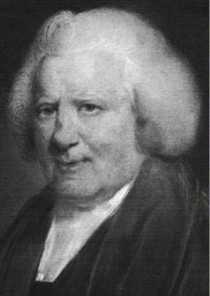
Willian Bucanus observes that it takes more than a keen mind to understand Scripture. In the following three quotes taken from his Body of Divinity, Bucanus accents regeneration as the essential element to understanding that Scripture comes from God, that it is clear to the elect, and that it is the Authority standing above the Church and men.
Regeneration and God’s Truth
What is the true infallible note, whereby all men of sound judgment do acknowledge doctrine to be the doctrine of the true God?
Because that doctrine which doth teach us to seek the glory of the one God and of him alone and everywhere to cleave unto him, out of all doubt that the doctrine is the doctrine of the true God. But only the regenerate do rest in it, as that that bringeth salvation and the doctrine of God, with full assurance to their heart. 48-49
Regeneration and Scripture’s Obscurity
Is the Scripture manifest, or is it obscure?
It is manifest if you regard the foundation of the doctrine of salvation; as the Articles of faith, the precepts of the Decalogue hence it is called a Lantern to those whose minds God doth open: but it is obscure to those which be blind, and to all that perish, whose minds the god of this world hath blinded.
But is not always obscure to the Elect, and only in part, 1. That they should not too much rely upon their own wit but should seek understanding of at the hands of Gid by prayer. 2. That they might be stirred up to a more careful study of the same. 3. That they might make more account of the ministry of the word whereby they are taught, and therefore stand in need to have it expounded, by the example of Christ and of Philip. 50-51
Regeneration and the Question of Scriptural Authority
What shall we answer to that saying of Augustine: I would not believe the Gospel, unless the authority of the Church moved me?
That Augustine speaketh of himself, as yet not converted unto the faith. Neither is it any marvel that those which are not as yet converted , are moved with the consent of the Church, and the authority of men. Therefore his meaning is, that the Church is as it were an introduction (eisagoga, eisagwgh), whereby we are prepared to give credit to Scripture. 51-52
Such writing on the part of our 17th c. Protestant forefathers sounds quite unsettling to the modern reader, protesting, “Let’s keep this born again experience out of our theological formulation and discourse.” Bucanus argues that the acceptance of Scripture’s doctrine being from God, its perspicuity, and the superiority of Scriptural authority to ecclesiastical or external authorities come from the reasoning of a regenerate man. Not believing the Scripture came from God, finding its meaning totally obscured, and subjugating the Scripture to the authority of men, according to Bucanus, is not the practice of born-again saints. The spiritual condition of the speaker, scholar, writer, accordingly, has a direct impact on whether or not he has any assurance it is God’s Word at all, whether he is spiritually blinded to the meaning of the Word, or whether he holds other authorities above Scripture’s authority.
William Bucanus, Body of Divinity or Institutions of the Christian Religion; framed out of the Word of God, and the writings of the best divines, methodically handled by was of questions and answers, fit for all such as desire to know and practice the will of God. Written in Latin. Translated into English by Robert Hill and Fellow at St. Johns College in Cambridge, for the benefit of the English Nation. (London: Printed for Daniel Pakeman, Abel Roper and Richard Tomlins, and are to be sold in Fleet-street, and at the Sun and Bible near Py-corner, 1659), 48-52.
“Nearly allied to this careful meditation on the word of God is another important rule, which we must observe when we read any principal part of it; that is, to exact of ourselves correspondent affections and if we do not experience them, to lament and bewail the poverty and misery of our condition. For instance, when the character of God is before us; when we are reading such passages as describe him infinite in power, glorious in holiness, continually adored by the host of heaven, yet more tender and affectionate than any father to the faithful in Christ Jesus, and interesting himself in all the most minute circumstances that can affect the welfare of those that love him: to read such descriptions of God will be to very little purpose, unless we pause and ask ourselves;—whether we in this manner really behold the glory of the Lord, and the excellency of our God ;—whether we have such views of him who is thus represented, as to make him indeed our delight; as to satisfy us of his good and gracious intentions towards ourselves in particular, and to lead us with comfort to rely on him for all we want. In like manner, when we read the scripture representations of the glory, the offices, and the character of the Redeemer, with the inestimable promises he makes to them who trust in his name; little will it profit us unless we also at the same time search and try our souls, whether these representations make us eager to embrace a Savior thus altogether lovely; —unfeignedly thankful to God for this unspeakable gift ; —and able, without doubt or wavering, to yield ourselves up to his service, and to trust him as the guardian of our eternal interests. When we meet with Scripture assertions of the weakness, blindness, guilt, and depravity of fallen man; in vain shall we assent to them, because found in the book of God, if we do not trace each of these branches of natural corruption as they have discovered themselves in our behavior, and behold some remains of them still in ourselves. When the self-denying tempers of the faithful in Christ, their deliverance from the dominion of worldly hopes and fears, their unfeigned love to God and man, and their real imitation of Jesus in the abhorrence of all evil, is the subject before us; —in vain shall we read of these spiritual attainments, unless we examine in what degree the infinitely desirable transformation has taken place in our own hearts. Unless we thus read all Scripture with self-application, we shall do just enough to flatter and deceive ourselves that we are something, when we are nothing enough to make us imagine we have a great regard to Scripture, when in fact it has no weight at all with us to form our judgment, or to determine us in the grand object of our pursuit. It is our duty, therefore, not only to read the word of God with frequency; but like men in earnest, who know that everything is to be determined by its declarations;—like men who know that he only is blessed whom that word blesses; and that he is most assuredly cursed whom that word curses. It is our duty to labor and pray, that we may have the lively signatures of Scripture impressed in all our sentiments, breathing in all our desires, realized in all our conduct; so that all may see, and we ourselves most delightfully prove, that the word of the Lord is pure, converting our souls.”
Henry Venn, The Complete Duty of Man, or A System of Doctrinal and Practical Christianity designed for the use of families, 1763, Revised and Corrected by H. Venn, (New York: American Tract Society, 1838), 392-394.
In making the Standard Sacred Text argument we defend two positions, one leading to another. The first position is meant to defend the proposition that a standard sacred text is better for the English-speaking Church touching unity. Though we may disagree on certain points of theology and church polity we can certainly agree on the Bible from which we ought to derive our theological conclusions.
And this unity would not simply be for a single denomination but would also be a unity across generations. Multiple generations of Christians would share in the same language and terminology that their fathers and grandfathers shared in. With this common language and terminology multiple generations of commentary and study helps would also be “standardized” in that they derive their material from the same standard sacred text.
For example, it is our belief that the Southern Baptist Convention would be more united and stronger if it would accept as a matter of doctrine the Christian Standard Bible as the standard sacred text of the SBC. Such a stance would be better for the convention as a whole and for the people that are a part of that convention. The SBC then would not be gathering around a denomination or ecclesiastical celebrity or even the Baptist Faith and Message. The SBC would be gathered around and united in a standard sacred text upon which the SBC denomination, sermons of the celebrity, and Baptist Faith and Message are built. Not the other way around.
The SBC is one denomination. The celebrity pastor is one man. The Baptist Faith and Message is one document. It stands to reason then that the SBC would stump for one Bible, a standard sacred text, in order to found the SBC as one denomination and the Baptist Faith and Message as a standard confessional baptist document. Else, it seems reasonable that the SBC have multiple versions of the Baptist Faith and Message having multiple additions and omissions as well as varying readings and terminology. They certainly allow it in God’s standard for faith and message why not allow such variation in the Baptist standard for faith and message?
This leads to our second front which asks, “What English translation should be the standard sacred text not just of the SBC but of the English-speaking Protestant Christianity as a whole?” If denominations where to accept a standard sacred text for their respective denomination, the Church overall would be better off, but for all English-speaking Christians to all have the same sacred text in English would be better still. In our truncated and simplistic example, debates would ensue about which version of the Bible ought to the be the standard sacred text.
This of course is the main difference from current discussion. Few are willing to accept a standard sacred text for themselves let alone their home, church, or denomination. But if that were the case, then we could have discussions about which one ought to be the one standard sacred text for the one bride and body of the one Christ in English-speaking ecclesiastical communities.
If and when that debate ensues we here at StandardSacredText.com will make our arguments for why the TR/KJV should be that standard sacred text for the English-speaking Church. Until which time we will continue to engage in this two-front argument in preparation for that day. Blessings.
It was a great day in the Lord’s house today. Pastor began a series on Christ’s High-Priestly prayer with specific emphasis on the Christian’s belonging to the Father before the world began. What is more, the Father made a promise within the Trinity to appoint certain unto eternal life before the world began [Titus 1:2]. And part of that promise was the Father giving those that are His to the Son.
That said I got home late so today’s post is going to be short and simple. Below you will find a quote from Herman Bavinck’s Our Reasonable Faith: A Survey of Christian Doctrine. Speaking specifically of the Psalms, Bavinck writes,
David would not have been the sweet singer of Israel if he had not been a man of striking character and rich life experiences that he was. And it was his state of mind, or state of soul, rather, in all of its variations of grief and anxiety, temptation and drive, persecutions and rescue, and like experiences, which are the strings on which are played the melodies of the objective words and deeds of God in nature and history, in institutions and preaching, in judgment and redemption.
It is the harmony of God’s objective revelation and His subjective leading which is voiced in the song, and which is sung as in the presence of God, dedicated to His honor, which calls upon all creatures to join in the paean [a song of praise or triumph] of praise, which keeps on singing until all that is in heaven and on earth picks up its chords, and which is, therefore, for all ages and for all generations, the richest expression of the deepest experiences that the human soul has felt.
If all creatures are called to join this song of praise which is God’s objective revelation in the Psalms, then it will take more than text-critical principles to direct such a choir. And if it takes more than text-critical principles in the Psalms then it will take more for the whole of Scripture. That “more” is the Spirit of God speaking through the word of God to the people of God, and in the Eschaton, to the whole of God’s creation.
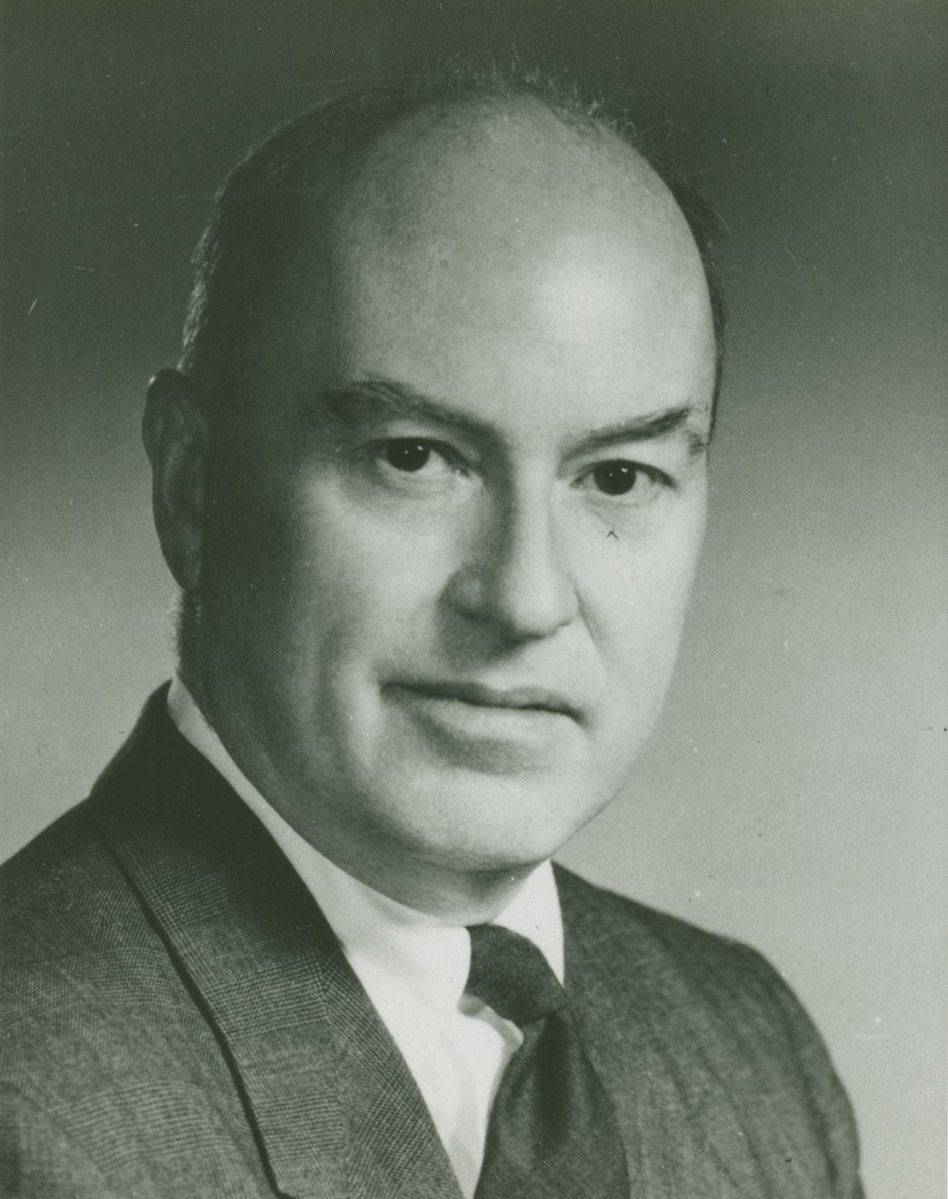
Fredson Bowers was first a professor at Princeton University and then became professor of English at the University of Virginia where he founded the Bibliographical Society of the University of Virginia. Today we are going to look at Bowers in his own words as they appear in Bibliography and Textual Criticism [1963]. Bower’s emphasis fell to the works of Shakespeare mostly, but you will notice the commonality of language between Bower’s treatment of Shakespeare and our evangelical brother’s treatment of God’s word. In short, there is no noticeable difference. Quoting J.G. McManaway regarding the works of Shakespeare, Bowers writes,
“‘…a Shakespeare drama is not one, but many plays: the ideal play as the author conceived it; the text as written; the tidied up fair copy, later marked and abridged for representation; the imperfect rendition on the stage; and the printed text or texts, that may represent one or more of these versions, either “maimed and deformed”, or “perfect in their limbs”.'”
Bowers, Bibliography, 9.
Sound familiar? This is exactly the line that Bart Ehrman offers to all evangelical text-critics when they claim that they know what the NT original looks like. Which original? There are many originals according to text-critical scholarship. Is it the one in the writer’s head, the one written down, the corrected one, the copied one, the abridged one etc. etc.?
But at least Bowers is able to admit that searching out such an original even in trying to find the original of a Shakespearian play is out of the question. And given Shakespeare is far closer to us in time than the text of 1 Corinthians, identifying the original of the NT by modern text-critical lights is a greater impossibility for textual criticism. Bowers writes,
“Some of these [the potential originals mentioned above] neither bibliography nor any other form of criticism can recover, for certainly we have no means of knowing what ideal form a play took in Shakespeare’s mind before he wrote it down.”
Bowers, Bibliography, 9.
Instead, Bowers goes on to vie for what we now call the “initial text”. Bowers writes,
“…drawing on what is practicable here, we may say that the immediate concern of textual bibliography is only to recover as exactly as may be the form of the text directly underneath the printed copy.”
Bowers, Bibliography, 9.
Does anyone else find this interesting? Bowers knew the immediate concern of the bibliographer was to recover the “text directly underneath the printed copy.” Many call that text, the initial text. The text directly underneath the printed copy is certainly a definitional referent for the term “initial text” in CBGM circles. To no surprise, it appears NT textual criticism and the CBGM is very late to the text-critical game.
Finally, Bowers offers a conclusion to which we whole-heartedly agree. In fact his critique is a critique we have made here many times. All told, we couldn’t say it better ourselves. Bowers concludes,
“Moreover, no matter how rigorous the logical treatment of evidence, the factual basis for the argument may be incomplete, owing to unknown gaps in the physical evidence or to our defective knowledge of the printing process. Thus if the reasoning depends upon a concealed false premise, quite erroneous conclusions may be reached.”
Bowers, Bibliography, 79.
If only modern evangelical textual critics would be like Fredson Bowers on this point, perhaps evangelicals would stop inflating the capacities of modern NT textual criticism and make room for an exegetical and theological grounded for determining what is or is not the New Testament.
In that famous martial treaties, The Art of War, Sun Tzu makes the following observation,
“If you know the enemy and know yourself, you need not fear the result of a hundred battles. If you know yourself but not the enemy, for every victory gained you will also suffer a defeat. If you know neither the enemy nor yourself, you will succumb in every battle.”
Sun Tzu, The Art of War
While we do not consider the likes of Wasserman, Gurry, Hixon, Ward etc. our enemies, we do consider them our intellectual and theological opponents. And so it is good that first we understand our own position and then seed to understand our opponents, read their books, and interact with their arguments.
Over the years we have accumulated books on textual criticism as part of our educational journey. So perhaps it is best that we allow our opponents to speak in their own words so that those who do not understand modern textual criticism may better understand and those who oppose modern textual criticism may more accurately and incisively dismantle their opposition.
Today we are going to look at J. Harold Greenlee in his own words. According to the cover of Introduction to New Testament Textual Criticism: Revised Edition (2003), Greenlee is a professor of New Testament and an International Translation Consultant with Wycliffe Bible Translators.
Here at StandardSacredText.com we have argued and continue to argue that the Textus Receptus and its tradition represents the Greek New Testament recognized and accepted by the believing community, the Church. The book itself represents the movement of the Spirit of God through the word of God in the people of God. It is a monumental artifact which bespeaks the singular care and providence of God in His words to His people. And very much the same can be said about the KJV, but that is not the focus of today’s post.
Given what the TR represents to the Church over time and as a book of ancient origins it seems odd that the TR would be treated with derision even by godless scholars seeking to be objective in their work. Rather it seems the TR should at least be a wealth of scholarly wisdom for generations to come informing the next crop of scholarly professionals in understanding the content of the NT. And is it so outlandish to make these claims? Let’s check in with Greenlee.
“The credit for abandoning the TR is therefore generally given to Karl Lachman. Lachman was a classicist and not a theologian; consequently, he was unaware of how violent the criticism against his work might be.”
Greenlee, Introduction, 69.
And in the wake of “abandoning the TR”
“Lachmann’s great contribution, therefore is that his [Greek text] was the first generally recognized ‘critical text.'”
Greenlee, Introduction, 69.
But merely abandoning the TR was not enough it must be vanquished as if the Wescott and Hort are Beowulf and the Bible of the Church is Grendel himself.
“With the work of Wescott and Hort the TR was at last vanquished.”
Greenlee, Introduction, 71.
And what was the end result of WH’s “heroic feat” according to Greenlee?
“In the future, whatever form an editor’s text might take, he or she would be free to construct it with reference to the principles of textual criticism without being under the domination of the Textus Receptus.”
Greenlee, Introduction, 71.
Finally, that old dragon, the TR was vanquished, never again to have dominion over text-critical principles to this day.
It is difficult to put into words the abject poverty of Greenlee’s conclusion in the above quote assuming a distinctly Christian worldview. His conclusion is godless, transcendentless, and autonomous, or in a word, rebellious. Furthermore, the book is an introduction and as such is material meant to shape the youngest minds in our colleges and seminaries. Greenlee speaks positively of abandoning and vanquishing the Church’s NT and invites us all to do the same because in his opinion the Church’s NT “characteristically fails the test of the basic principle of textual criticism: viz., that the reading from which the other reading or readings most likely arose is generally original” [77]. Such a tactic may prevail today but it cannot win in the end.
To secure ourselves against defeat lies in our own hands, but the opportunity of defeating the enemy is provided by the enemy himself. – Sun Tzu, The Art of War
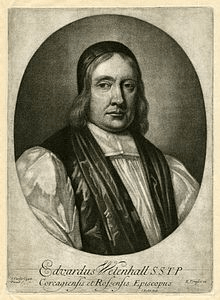
Bishop Edward Wetenhall, 1636-1713, unknown to many, was held in such high esteem that he was buried in the south transept of Westminster Abbey. The inscription reads: “Here lie buried the remains of the Right Reverend Father in Christ Edward Wetenhall D.D. Bishop first of Cork for 20 years, then of Kilmore and Ardagh for 14 years in the Kingdom of Ireland. He died 12 November, year of our Lord 1713 in the 78th year of his age.” Wetenhall (or Wettenhall) was born at Lichfield in Staffordshire on 7th October 1636 and educated at Westminster School and Trinity College Cambridge. After brief preferments at Exeter and Dublin he was consecrated bishop of Cork and Ross in 1679. In 1699 he was translated to the diocese of Kilmore. He was married twice.
In 1688 he authored a book designed to address Rome’s objections against our English Bible, the Authorized Version, of which the following is an excerpt. As you read, note Wetenhall’s commitment to Scripture being by inspiration from God, that Scripture was providentially preserved, his eschatological focus on the saints’ final accountability to God, the privilege of possessing the Scripture and to hold the Scripture’s honorably and with humility, the importance of learning the core of theology early in life and of being able to read.
“Now, to put a due conclusion to this discourse, there are some Christian Practices which the scope of it does naturally recommend and some advices which it may occasion.
And first, let the reflection on what has been discoursed touching the certainty of Holy Scriptures and their Authentic Verity raise in our hearts a due Esteem and Cordial Reverence of them as not being from Man nor merely by man, but given by inspiration of God, and in a peculiar and marvelous manner, preserved and transmitted by his special Providence from age to age, through multitudes of hands down to us, who live probably near the end of time. It was once the great privilege of the Jews that to them were committed the Oracles of God: that privilege is now common to us, with them. Though perhaps therefore we may not keep those Oracles with so superstitious a care and curiosity as they did yet let us both keep and treat them as cordial adherence, and as awful esteem. But especially let us take care that we use not passages out of them in our ordinary discourse flightingly in jest and drollery to create laughter to ourselves and others. Holy things should not be played with, and we are to remember that if we do play with them, we teach people to think we do not believe them to be Holy.
Secondly, let not a Prize be put into our hands, and we such fools as not to have hearts to use it. Have we the Word of Prophecy, surer than other miraculous revelation? Have we the Gospel of Truth too both mutually confirming and confirmed by one another and shall be so idle and gross as to be any of us in a manner uncapable of using either? Why should there be a person in a Christian Church or Nation to whom the Holy Scripture should be a Book sealed, who should know no more by the Book open and laid before him than if fast closed up. I mean who should not be able to read the glad tidings and terms of his Salvation? Good people, deny not yourselves that, which an excellent person has most justly styled, the CHRISTIANS BIRTHRIGHT, the use of the Holy Scriptures. Take care and endeavor that both you and yours be able to read. And being so, whatever Book you read not through or rarely look into, let not the Bible be that neglected one. Rather account such a day lost in which you have not attentively and considerately read some part thereof.
Thirdly, remember him who said, Hold fast till I come, that no man take thy crown. He sists at the right hand of his Father, ready to give it, and will in good time come and give it us if we fainty not.
And lastly, as most excellent means to insure to ourselves a right use of Scripture and to preserve us from misinterpreting or misapplying them, let us be careful of the two following particulars.
First, to furnish our minds with a form of sound Doctrine gathered out of the Holy Scripture. This, it is to be hoped, we had in some degree in our early years by Catechism, and without this both Scripture and Sermons are in a great measure unserviceable. It is the Apostle’s Rule that they who Prophesy (that is in the New Testament notion of Prophesying, interpret Scripture) do it according to the proportion of Faith, Rom. xii. 6. His meaning seems to be that understanding first the several articles of the Christian Faith, we should interpret or take Scripture in consistency therewith. This rule will prevent the abuse of Holy Scripture to error and novelty.
Secondly, to endeavor the honest and impartial practice of what we know in the fear of God, and as we shall answer the not doing according to our Lord’s will when we have known that his will. This most assuredly will prevent Scriptures being useless and besides will both lead us to a higher pitch of knowledge and secure us from dangerous errors. For amongst other parts of the Christian duty, we shall then practice meekness, humility, and a low conceit of our selves. We shall not therefore too much lean to our own understanding, we shall not exceed our own measures. And then (Psalm xxv.9.14.) The meek will the Lord guide in judgment, the meek will he teach his way. The secret of the Lord is with them that fear him, and he will shew them his Covenant.
There are the great uses we should make of this sure Word of Prophesy, Law, and Gospel, to value and reverence it. In testimony thereof, to capacitate not only ourselves but all ours by moderate at least the lowest degree of learning (being able to read) to make use of it, and then diligently to read it and hold it fast. But especially by getting into our minds a form of sound words (a due understanding Catechetical doctrine) and by living according to what we know, to ensure to ourselves the right use of it. And is we thus take heed to this sure word, tis sure we shall do well. We shall be sure not only to our Faith, but to the End of it too. We shall be certainly and unspeakably rewarded in Glory and Bliss everlasting.”
Edward Wetenhall, A Plain Discourse Proving the Divine Authority of the Holy Scriptures; wherein bold attempts and aspersions of Jesuits and other Missionaries of the Church of Rome are Confuted; and all their objections against our English Bible are fully and clearly Answered (London: Printed and sold by Randall Taylor, near Stationers-Hall, 1688), 56-63
Wettenhall’s emphasis on an early understanding of Catechetical doctrine should not be overlooked. He argues for the inculcation of a prior theological framework in the minds of young people that will enable the proper dissemination of the Scripture as it is read. Children must have 1. a rudimentary knowledge of Christian theology, “a form of sound words” and, 2. a minimal reading proficiency to value and reverence the Scripture. Without this early training Wettenhall says that “both Scripture and Sermons are in a great measure unserviceable.”
Bishop Wetenhall’s observations are illuminating and something that needs additional exploration. In Wetenhall’s day there were brothers and sisters in the Lord that found the KJV problematic because they lacked rudimentary theological training in the home. They did not receive early in their lives the “form of sound words” and as such were raised in such a state “that both Scripture and Sermons” for them “are in a great measure unserviceable,” or of little help. Because Wetenhall and Standard Sacred Text are speaking of the same English Bible, it seems apparent that the lack of early theological training in the home is a perpetually besetting issue for the spiritual well-being of the saint and church.
In recent days we have seen public school parents catching up with home-schooling parents, asserting their parental authority over the school boards, and rightly taking back the education of their children from the government school. Perhaps its time for parents to expand their God-given authority and rightly take back the theological training of their children from the church and academy in such a way that their families will no longer perceive “both Scripture and Sermons” to be “in a great measure unserviceable.”
Trelcatius listed five points in his polemic against Roman Catholic scholar Franciscus Costerus (1532-1619) and Rome’s emphasis of the superiority of the Church Authority over Scripture. As cited in previous posts, there is a close analogy between Rome’s notion of authority and that of the modern evangelical text critic. Though writing in 1604, Trelcatius provides a succinct discussion, outlining the salient points for demonstrating the Authority of Scripture against externally imposed criteria whether ecclesiastical or otherwise.
I
There is a double consideration of the Church and the Scripture; the one common in respect of the Author; the other singular in respect of the Authority which the Author hath put into them. God is the Author of both, whether mediately or immediately, but the Authority from God is diverse, that of the Scripture is principal and formal, but the other of the Church is secondary and ministerial.
II
The Scripture is in two ways considered, either according to the substance of the Word principally, or according to the manner of writing. Secondarily, in that the Scripture is more ancient than the Church as by the Church was begotten or generated.
[Scripture is considered first, in itself, res or as substantia doctrinae, the substance of the writing or what the word means, and second, as substantia verba, or the accidence of writing, the external shape of the words. Scripture, being more ancient than the Church, birthed the Church and not vice versa. (Note: If the priority of the Scripture over the Church were reversed, the Church’s capacity to generate the Scripture is limited to the accidence of writing not possessing access to the inspired meaning, or substantia doctrinae which comes only from God. That is, the Church cannot beget an inspired text of Scripture, but a God-inspired Scripture can generate the Church.)]
III
Some things are required for the confirmation of a thing absolutely and of it self, and some by accident and for another thing. If the Scripture need any confirmation of the Church, it needeth the same by accident, and not of it self, and therefore the confirmation of the Church belongeth not to the Cause Efficient, but ministerial.
[The confirmation of the authority of Scripture by the Church is not of Scripture’s self-authentication or the Cause Efficient, but only by the accidence of writing. The authority of Scripture resides in the Scripture itself and secondarily the Church recognizes this authority in Scripture’s words.]
IV
In causes coordinate, those which are inferior, and latter cannot obtain force and faculty of others, which are the former. Now every Authority of the Church is subordinate, yet the use is very great of the Scripture as the means principal to believe and of the Church, as the mean outward and ministerial.
[As stated above, God is the Author of both the Authority of the Scripture and the Authority of the Church, the Authority of the Scripture being principal and formal, the authority of the Church being secondary and ministerial. The Authority of the Church is latter and inferior and cannot overrule the Authority of the Scripture which is former. The Authority of the Church is therefore subordinate to the Scripture. The Scripture is the principal to faith and the Church’s use of Scripture the outward standard and ministerial, or for the practice of religion.]
V
There is one corruption of words and certain particular places, through the blemish whereof the principal parts cannot be corrupted, and there is another corruption of the essential parts of the Scripture: the former, if any hath happened unto the Scripture, (for the latter, we utterly deny) is not the corruption of the Scripture, but was caused either by the naughtiness of some other, or through the infirmity of the church, or through the particular ignorance of them that were of the household.
[There are two kinds of irreparable corruption of Scripture. The first can occur only in the accidence of writing due to naughtiness, infirmity, and ignorance. The cause of this corruption is known and can be corrected. The second notion of corruption relates to the essential parts of Scripture or in the substantia doctrinae, or res is denied. The Protestant Orthodox Church in 1604, (unlike many today) was confident that it was in possession of the Holy Scripture.]
Lucas Trelcatius, A Brief Institution of the Common Places of Sacred Divinitie wherein the Truth of every place proved, and the sophisms of Bellarmine are reproved, translated by John Gawen (London: Imprinted by T. P. for Francis Burton, dwelling in Pauls Church-yard, and the sign of the Green Dragon, 1610), 34-36
Please note that Trelcatius places the weight of his argument upon the Scriptures themselves.
The following is a prayer copied from The Valley of Vision: A Collection of Puritan Prayers and Devotions. May we pray in the same spirit for wisdom and understanding to know the Triune God and the content of His revealed Holy Scriptures.
THE SPIRIT AS TEACHER
That which I know not, teach thou me, Keep me a humble disciple in the school of Christ, learning daily there what I am in myself, a fallen sinful creature, justly deserving everlasting destruction; O let me never lose sight of my need of a Saviour, or forget that apart from him I am nothing, and can do nothing. Open my understanding to know the Holy Scriptures; Reveal to my soul the counsels and works of the blessed Trinity; Instil into my dark mind the saving knowledge of Jesus; Make me acquainted with his covenant undertakings and his perfect fulfilment of them, that by resting on his finished work I may find the Father’s love in the Son, his Father, my Father, and may be brought through thy influence to have fellowship with the Three in One. O lead me into all truth, thou Spirit of wisdom and revelation, that I may know the things that belong unto my peace, and through thee be made anew. Make practical upon my heart the Father’s love as thou hast revealed it in the Scriptures; Apply to my soul the blood of Christ, effectually, continually, and help me to believe, with conscience comforted, that it cleanseth from all sin; Lead me from faith to faith, that I may at all times have freedom to come to a reconciled Father, and may be able to maintain peace with him against doubts, fears, corruptions, temptations. Thy office is to teach me to draw near to Christ with a pure heart, steadfastly persuaded of his love, in the full assurance of faith. Let me never falter in this way.




 Standard Sacred Text.com