The 13th Warrior and Textual Recovery

In 1976 renowned fiction writer of Jurassic Park fame, Michael Crichton wrote The Eaters of the Dead. Crichton wrote the book on a dare. He had an academic colleague who proposed to teach a class on the “The Great Bores” of literature the first of which he considered to be Beowulf.

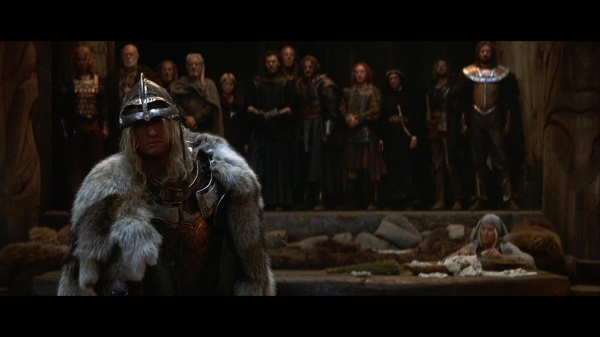
Crichton disagreed. He thought Beowulf was a compelling story and the only reason why people thought it was a bore was because it was not presented to them in a way they liked [Doesn’t that sound familiar in the Bible version world?]. That night Crichton began his work on The Eaters of the Dead, a story of twelve Vikings and one outsider who were called upon by a desperate king from the north to deliver he and his kingdom from an unspeakable evil – the Wendols.

Crichton first sought to demythologize Beowulf by seeking out an eyewitness account of ancient Vikings. He recalled such a one from his undergrad work, a 10th century record of an Arab, Ibn Fadlan, who had traveled into Russia and there encountered the Vikings. His work was a record of his experiences with them.

Crichton took Ibn Fadlan’s record, and with little modification made the first three chapters of The Eaters of the Dead. From there Crichton mimicked the style and phrasing of Ibn Fadlan for the remainder of the work, passing it off as a kind of Beowulf 2.0. But in doing do Crichton realized that he had confounded himself. In the third appendix of The Eaters of the Dead he wrote,

But certainly, the game that the book plays with its factual bases becomes increasingly complex as it goes along, until the text finally seems quite difficult to evaluate. I have a long-standing interest in verisimilitude, and in the cues which make us take something as real or understand it as fiction. But I finally concluded that in Eaters of the Dead, I had played the game too hard. While I was writing, I felt that I was drawing the line between fact and fiction clearly; for example, one cited translator, Per Fraus-Dolus, means in literal Latin “by trickery-deceit.” But within a few years, I could no longer be certain which passages were real, and which were made up; at one point I found myself in a research library trying to locate certain references in my bibliography, and finally concluding, after hours of frustrating effort, that however convincing they appeared, they must be fictitious. I was furious to have wasted my time, but I had only myself to blame.

I relate this story to make on simple observation. Michael Crichton was unable to ascertain the original of his own work because of prior emendations, fault in memory, compelling evidence, and inability to locate the supposed source. These are the same kinds of conditions and faults which are present to every scribe and modern textual critic. It seems naïve then to conclude that modern textual critics 2000 years removed from the original could accurately and authoritatively identify all of the original words by mere scientific evaluation. The burden for such a task is too great for them and the merely scientific tools for the task, too impotent.

Only the Spirit of God moving through the word of God in the people of God can determine what are and are not the words of God. All other transcendentless attempts to identify the words of God are at best mere suggestion.

Traditional – Ecclesiastical – Confessional – Standard

It was recommended yesterday by one of our readers that I offer a brief treatment of the interrelation of the following positions: Traditional Text position, Ecclesiastical Text position, Confessional Text position, and the Standard Sacred Text position.

Often when seeing different terms we expect that each term would denote different things. In this case, as I wrote yesterday, I believe these terms mean the same thing though their emphasis falls in different places. In other words, there are differences but the differences are not substantial in the defense of the Scriptures.

In order to show these similarities, Dean Burgon’s The Traditional Text of the Holy Gospels and Theodore Letis’ The Ecclesiastical Text will suffice. We will see in brief that each position held to the TR and the KJV as the standard sacred text given their respective linguistic spheres, but they held to that position for different reasons than the others. Beginning with Burgon and the Traditional Text position, Burgon writes,

“Speaking generally, the Traditional Text of the New Testament Scriptures, equally with the New Testament Canon, rests on the authority of the Church Catholic. ‘Whether we like it, or dislike it’ (remarked a learned writer in the first quarter of the nineteenth century), ‘the present New Testament Canon is neither more nor less than the probat [i.e., to establish the validity of] of the orthodox Christian bishops, and those not only of the first and second, but of the third and fourth, and even subsequent centuries.'”

Burgon, Traditional, 23.

Here Burgon takes “Church Catholic” not to mean Roman Catholic but rather and particularly, to mean the Anglican Church of which Burgon was the Dean of Chichester Cathedral. For Burgon the New Testament Canon rested upon the authority of the Church Catholic and that text was the Textus Receptus and the Authorized Version or the King James Versions being approved by, as Letis points out,

“all the Bishops of the Anglican Church…but it was called ‘authorized’ because James I, the Supreme Governor of the Church, had given this translation his authority and sanction.”

Letis, Ecclesiastical, 175-176.

Burgon clearly held to the TR and KJV or AV as the standard sacred text for the true Church and he did this by leveraging the witnesses of the Church reaching back to the first and second centuries. In his view, the TR and the KJV were the text the true Church had traditionally held to since the inception of the NT Church. And being a High-
Churchman, tradition was not merely local custom. Rather, “tradition” carries with it a divine superintendence of God’s Spirit in God’s people thus leading them to orthodoxy and orthopraxy.

Next let’s turn to the Confessional Text position which is most recently propounded by the likes of Dr. Jeff Riddle from Louisa, VA. Perhaps the modern progenitor of this position though is found in the work of Edward F. Hills in his work, The King James Version Defended aka Text and Time. Letis notes of Hills,

“Hills came to many of the same conclusions as Burgon, but in the place of the high church argument of apostolic succession as a guarantee (perhaps more implicit than explicit in Burgon), he appealed directly to the affirmation of the Presbyterian Westminster Confession of Faith.”

Letis, Ecclesiastical, 183.

So while Hills and Burgon came to many of the same conclusions regarding the TR and KJV; their emphasis on how those conclusion were to be drawn differed. Burgon’s derived his arguments in favor of the TR and KJV from the his Ecclesiology and Pneumatology while Hills and subsequently Riddle derive their arguments from Bibliology and Pneumatology.

For Burgon the Church Hierarchy has authority because the Spirit has preserved that hierarchy and therefore the deliverances of that hierarchy have authority. For Hills and Riddle, God has kept His words pure in all ages through His singular care and providence and that by the Holy Spirit. Still, whether Burgon or Hills, both arrived at the same conclusion: the TR ought to be the standard sacred text undergirding the standard sacred text of the English-speaking Church, the KJV.

Turning now to the Ecclesiastical Text position, remaining in line with Burgon and Hills, Letis turns his attention (his emphasis if you will) on the role of corporations and money in the making of Bibles. To that end, he concludes,

“Pandora’s box has been pried open and the Bible, no longer in the possession of the Church and her specific theological criteria for a religious understanding of the translation task, is now a commodity of the ‘Bible society’ and the Bible landlords of the corporate world.”

Letis, Ecclesiastical, x.

Letis understood that the textual issues facing the Church are more complex than merely an assessment of variant readings. Part of the Church’s problem is that there is lots of money to be made in the making of multitudes of translations and study helps and designer Bibles. In other words the textual issue is an issue of text and an issue of consumerism.

Letis’ goal then was to put the Bible back into the hands of the Church, to make the Bible the possession of the Church again with all her “specific theological criteria for a religious understanding of the translation task.” The starting place for the Church’s repossession of her Bible is to acknowledge the TR and KJV as the Church’s Bible, indeed, to admit that the Church has a Bible.

The Standard Sacred Text is merely the next iteration in the flow of these three positions. We attempt to carry the emphasis of Burgon in that we see the Church as the vehicle through which God preserves and recognizes His words though our emphasis is not as heavy on the authority of the clergy. We carry identical positions with the Confessional Text position in that we argue that the Holy Spirit preserves His word by an act of singular care and providence. Thus when combining these two [Burgon and Hills] you get that regular refrain around here, The Church knows what is and is not the word of God because the Spirit of God speaks through the words of God to the people of God.

Furthermore, we have taken a queue from Letis, recognizing that the Church’s textual issues and the version debate at large are more than a debate about textual variants. There are robust historical, theological, philosophical, exegetical, economic, methodological, ecclesiastical, and educational considerations to take into account when some person or entity endeavors to change the one traditional confessional text of the English-speaking Church which has formed and informed the West for the last 400 years.

Where the Conflict Really Lies

Over the weekend I had a couple interesting experiences. On Saturday I spent over 3 hours watching this debate between a real and properly defined KJVO advocate and Nate Cravatt co-host of The Recovering Fundamentalist podcast and MVO advocate.

Observation 1: Cravatt was wholly incapable of appreciating the reality that beliefs can be properly basic and held in a rational and warranted way while at the same time recognizing a bad argument in attempt to demonstrate that properly basic belief.

Observation 2: Anyone who equates the Traditional Text position or the Ecclesiastical Text position or the Confessional Text position or the Standard Sacred Text position to the KJVO position as evidenced in the linked video above is simply and clearly ignorant or maliciously mischaracterizing the above positions. Such attempts to equate our position with KJVO represents a profound lack of charity and academic acumen.

Incidentally, before my readers start sweating the different names of the above positions I would contend that all the position above hold to the same tenets but have particular foci. It is all the same position with different points of emphasis.

Then on Sunday I had the opportunity to observe the baptism of an infant and hear a pastor preach an hour sermon from the ESV. Both practices I disagree with but nevertheless find it interesting and helpful to observe those with whom I disagree.

Having experiencing these two things over the weekend I came to several observations:

Assuming the different versions of the English Bible are close enough [which is a large concession given yesterday’s sermon. His text read “weakness” mine read “infirmity” because they mean the same…riiight???] and that a lost person can be saved out of them, the following still remain significant problems which the CT/MVO position has yet to remotely begin to answer.

1.) The fact is, and Mark Ward’s Which TR totally misses this point, when comparing the KJV and modern versions there are major sections in the other versions which are omitted, bracketed, or openly doubted in the text. We find this behavior both in the printing and asserting of such things to be exegetically and theologically untenable.

2.) The modern versions regularly flatten the metaphorical/analogical language used in the KJV and as such the modern versions are less precise and beautiful.

3.) The multiplicity of English-versions does not comport in any way with the language of the unity of the Church or unity in Christ found in the Scriptures.

4.) It seems to us that the multiplicity of versions is predicated on a love for money. The printing of the Bible and all subsequent commentaries and study helps is good for business. If it is wrong to make merchandise of God’s people (2 Peter 2:3) then it is seems wrong to make merchandise of God’s words.

5.) The current CT/MVO position has rejected its history as grounded in the Church and particularly the Reformation Church as it came out of the superstition of the Middle Ages. In a word, the current CT/MVO position is transient homeless position and is thought to be virtuous for it.

6.) If all the versions are basically the same then a call for one should be hardly controversial. But it is controversial. We are the one’s calling for one and it is the CT/MVO position that insists on the splintering of the text into as many sufficiently reliable versions that content our hearts. This is definition of schismatic.

7.) Our Greek and Hebrew texts differ in multitudes of places. Our foundations are different. If we are off by an inch at the beginning we will be off by a mile at the end.

8.) Our methodology is different. The CT/MVO position has little place for the Church’s input while running their methodology primarily and almost exclusively from academic sectors. Our methodology on the other hand grants the use and means of textual criticism but places its deliverances thereof under the authority of the Holy Spirit moving through His words in His people, the Church.

9.) The current CT/MVO position offers little or no exegetical, theological, or philosophical foundation for why they think themselves good and righteous in treating the Bible the way they do. We on the other hand treat the Bible the way we do because the Bible speaks of itself as one from one God to one Church for one salvation toward one Kingdom. No where in Scripture is the Christian called to doubt the content of Scripture or bracket the content of Scripture and certainly not to omit or add to the content of Scripture.

My point is, even if we admit that the TR and the CT are close in content or the KJV and the modern versions are close in content (which for us are problems in themselves), there still remains a series of other issues which reach far beyond a variant here or there.

Our resistance to the CT/MVO position is not merely textual but also methodological, philosophical, theological, exegetical, apologetic, socio-cultural, ecclesiastical, economic, and historical.

When a CT/MVO advocate claims that “weakness” is the same or close enough to “infirmity” we are not so truncated in our assessment as to merely attend to the textual apparatus. For us such claims could just as easily have methodological, philosophical, theological, exegetical, apologetic, socio-cultural, ecclesiastical, economic, and historical motivators which are neither objective nor right. And while we are at it, in many places we reject the CT/MVO assessment of the textual evidence as well.

Speak the Same Thing: The Tower of Babel in 21st Century American Churches

“Now I beseech you, brethren, by the name of our Lord Jesus Christ, that ye all speak the same thing, and that there be no divisions among you; but that ye be perfectly joined together in the same mind and in the same judgment.”

I Corinthians 1:10

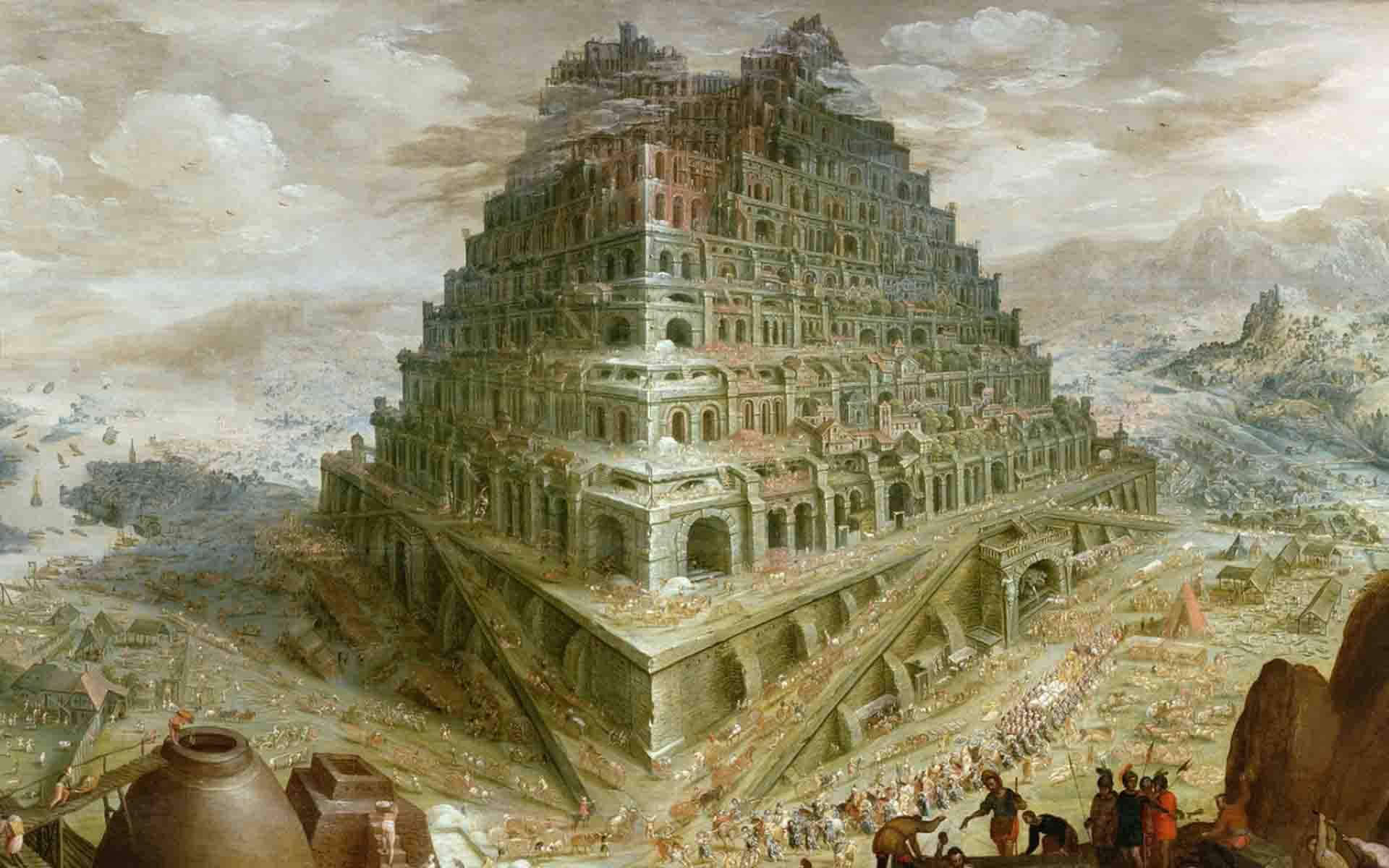
Man has often attempted to reach God, to be God and to do so on his own terms. Among the more notorious attempts was the one in which man thought to build a tower so great that it would reach to heaven. Moses records the observation of our Creator,

“And the LORD said, Behold, the people is one, and they have all one language; and this they begin to do; and now nothing will be restrained from them, which they have imagined to do. Go to, let us go down, and there confound their language, that they may not understand one another’s speech. So the LORD scattered them…”

Genesis 11:6-8a

Man was united perhaps in a way that has never been before. And why? Because they were of one mind? Yes, but they were only of one mind because they were of one language and one speech (v. 1).

But it was not their one language or one speech for which God scattered them in judgement. Nor was it their unity. No, He scattered them because they had their hearts set on something contrary to the revealed will of God which was to subdue the whole earth and not merely their neighborhood or immediate locale.

Turning to the NT, Paul in 1 Corinthians 1:10 declares a redemption of the Tower of Babel. The Church in Paul’s time according to Acts 2 was composed of many languages as was the whole world – a sign of God’s judgment upon mankind for their disobedience. Again, the multiplicity of languages is not part of God’s original order and the rise of multiple languages is a direct result of divine punishment.

So Paul declares not a redeeming of the time because the days are evil but a redemption of language itself and he does so in that place which is to be a piece of heaven on earth, the Church. Saints are to be a glimpse into the Kingdom to come. They are citizens of a Heavenly Kingdom which must shortly come to pass. Among these redeemed Paul calls for a redemption of that which was lost at the Tower of Babel, unity of language.

To do this he first invokes the name of the source of all language, Jesus Christ – the Word. And from the Word he implores his Christian readers to “speak the same thing.” He is reversing Babel. Babel went from speaking the same thing to speaking divergent things. Now in the New Testament Church the call is to go from speaking our own thing or divergent things and to speak the same thing in the name of He who is the Word.

And why? Because when you speak the same thing then ecclesiastical division is mitigated. Paul says “…that ye speak the same thing, and that there be no divisions among you.” The two go hand-in-hand. When the Church is saying the same thing then the potential for division decreases. Here he speaks negatively but Paul being a Hebrew of the Hebrews can’t seem to resist the temptation of a Hebrew couplet and so he repeats himself but in the positive and writes, “that ye be perfectly joined together.”

And what is the character of this joining? Well, of course, it is in Christ and specifically as Paul herein states, in mind and judgment. Elsewhere Paul rights, “Let this mind be in you which was also in Christ Jesus” (Rom. 12:1) and “…we have the mind of Christ” (1 Cor 2:16). Regarding judgment, Paul tells the Christian to think on those things which are “true, whatsoever things are honest, whatsoever things are just, whatsoever things are pure, whatsoever things are lovely, whatsoever things are of good report.” (Phil 4:8).

Where do we find the mind of Christ? How are we to judge what is good, true, lovely etc.? From the word of God, of course.

In Paul’s time though all the Church had was the OT and perhaps a few of Paul’s letters. So what was the version debate in Paul’s day? No, it was not versions of the Bible. Rather it was, “I am of Paul; and I am of Apollos; and I of Cephas; and I of Christ.” (1 Cor. 1:12). This is the Tower of Babel relived in the first century Church and it was a version issue.

The 21 century Babel version is: I am of the ESV; I am of the NIV; I am of the LSB; I am of the KJV. How does Paul respond to the Tower of Babel in his time [i.e, I am of Paul and I of Apollos etc.]? Did he say, Paul is sufficiently reliable and so is Apollos and while we are at it so is Peter and even Jesus Himself. No, Paul does not pull the sufficient reliability card. Instead, he asks a rhetorical question,

Is Christ divided?

And so I put it to our multiple version only brothers and critical text brothers, Is Christ divided? Would you have us return to Babel? Must you insist that the judgment poured upon those at the Tower is a good thing for the Church to continue to emulate with her multiple versions?

Or ought we to speak the same thing having the same mind and the same judgment? Ought we not to cast off Babel and redeem that which was lost in that place? How might we accomplish this? In a word, a standard sacred text.

One Greek text and one Hebrew text from which all the Bible translations of the world are translated. And so long as the aftermath of Babel remains with us then we must have one translation for one language.

In this way we as an English-speaking Church will speak the same thing is responsive reading, public reading, family devotions, personal devotions, college studies and on and on. And with this will come greater unity and less division which will lead to sameness of mind and judgment.

With so much to gain, how about you join us on the side of a standard sacred text, truly a belief to change the world.

Deathworks, Forgetfulness, and Modern Textual Scholarship

What could be less then to afford him praise,
The easiest recompence, and pay him thanks,
How due! yet all his good prov’d ill in me,
And wrought but malice; lifted up so high
I sdeind subjection, and thought one step higher
Would set me highest, and in a moment quit
The debt immense of endless gratitude,
So burthensome, still paying, still to owe;
Forgetful what from him I still receivd,
And understood not that a grateful mind
By owing owes not, but still pays, at once
Indebted and dischargd; what burden then?

– John Milton, Paradise Lost, 46-57.

Here John Milton proposes perhaps the greatest fault of Satan in his rebellion against God – forgetfulness. Satan recognizes that his requirement to praise God is a meager requirement given who God is and what He had done for the fallen angel. Yet Satan admits, “Forgetful what from him I still receivd.” And with this forgetfulness he refused to praise or show gratitude to his Creators and with his refusal to praise came pride and with his pride came his fall from grace. No doubt, forgetfulness is a greater evil than perhaps we are willing to admit in our modern day.

As we continue our journey through Carl Trueman’s The Rise and Triumph of the Modern Self while making comparisons to modern evangelical textual scholarship, we come now to another feature of deathworks, and that is, “forgetfulness”. If you have been following this series at all you will know that American sociologist and cultural critic, Philip Rieff, has featured prominently thus far, particularly in his assertion regarding third worlds.

For Rieff, if you remember, first worlds are those who have a mythical or fateful grounding for their morality and societal norms. Second worlds are those that ground their morality and societal norms in faith e.g., Christianity. Third worlds are those which admire first and second worlds but desire to destroy those worlds. Part of that destruction stems from the third worlds “forgetfulness”. Trueman writes,

“Underlying the notion of the deathwork is, as we noted, a basic repudiation of history as a source of authority and wisdom. This in turn means that what Rieff calls ‘forgetfullness’ is one of the hallmarks of third worlds and a dominant trait of modern education.”

Trueman, Rise, 100.

I have argued in other posts here and here that modern evangelical textual scholarship is the very definition of a deathwork. Indeed, modern evangelical textual scholarship fits the bill even in the area of forgetfulness or “a basic repudiation of history as a source of authority and wisdom.” Metzger and Ehrman observe under the section entitled, The Overthrow of the Textus Receptus,

“It was perhaps not surprising that Wescott and Hort’s total rejection of the claims of the Textus Receptus to be the original text of the New Testament should have been viewed with alarm by many in the church.”

Metzger and Ehrman, The Text of the New Testament, 181.

Again the standard fair of Expressive Individualism fits like hand in glove when compared with modern evangelical textual scholarship. Plainly and obviously, Wescott and Hort rejected the historical claims that the Textus Receptus was the original form of the original text and Metzger and Ehrman recognize as much. Furthermore, they do not seem to include themselves among those alarmed by this rejection. And why should they be alarmed by the rejection of a basic repudiation of the textual history represented by the TR as a source of authority and wisdom? Such a repudiation seems to be baked in. Here is a quote from Harold Greenlee,

“With the work of Westcott and Hort the TR was at last vanquished. In the future, whatever form an editor’s text might take, he or she would be free to construct it with reference to the principles of textual criticism without being under the domination of the Textus Receptus.”

Greenlee, Introduction to New Testament Textual Criticism, 71.

“Without being under the dominion of the Textus Receptus” is the same as saying, “Without being under the dominion of the standard sacred New Testament text of the believing community.” Which is equal to “a basic repudiation of history as a source of authority and wisdom,” and particularly the New Testament theological textual history of the English-speaking believing community.

Textual scholarship is now free from the dominion of the standard sacred text of the English-speaking believing community and Queer scholars are now free from the dominion of the same in large part because there is no standard at all, not even for evangelicals. “Well, wait. There is a standard in the original,” says B.B. Warfield “but are long lost.”

“But…but…we do care about textual history,” our interlocutors say. “We look at historical texts for a living,” they retort. If you think such objections, then you have miss my point entirely. The history I speak of is not primarily one of ancient manuscripts. The history of the TR is one which represents the work of the Holy Spirit in preserving His word though His word to His people.

The rejection and vanquishing of the TR was a rejection and attempted vanquishing of the Spirit of God’s moving through the words of God in the people of God to recognize those words as the words of God. The rejection and vanquishing of the TR is a rejection and vanquishing of a distinctively Christian view and understanding of Scripture. And if we can reject a distinctively Christian view of Scripture we can easily reject a distinctively Christian view of man, woman, marriage, and sexuality.

Indeed, forgetfulness regarding the TR and the KJV has become one of the hallmarks of third worlds and a dominant trait of modern evangelical higher education. Again, the likeness of modern Expressive Individualism and that of Modern Evangelical Textual Scholarship is familial. These two are cousins or even sisters whose names are Forgetfulness and Immediacy and modern evangelical textual scholarship can’t decide who to marry so they’ve married them both.

N.B. – It seems that most of our interlocutors when speaking of KJV-Onlyism or a Standard Sacred Text or a Confessional Text they always go after that small town pastor who’s doing his best to navigate personal issues, family issues, church issues, cultural issues, and also the version issue. Why don’t they swing at Burgon or Hills or Letis? Why haven’t they build robust exegetical, theological, and philosophical groundings to support the way they treat the Bible? The cynical answer is that they are lazy or weak-willed. The more gracious answer is that they simply haven’t gotten around to it after 150 years of being at the helm of nearly all evangelical schools of higher learning. Which do you think is more reasonable?

I’ve called out Metzger and Greenlee here, both exceedingly proficient in text-critical disciplines who most of the other side argue are evangelicals. We’ve also gone after Blomberg, Jongkind, Wasserman, Wallace and many other scholars. Set your sights higher boys. It’s easy to pick on people who haven’t made it their life’s calling to have this discussion. But to set your sights higher will take work, a lot more work given your abject failure to properly construe our position and those like it.

What I Have Written I Have Written

“And Pilate wrote a title, and put it on the cross. And the writing was, JESUS OF NAZARETH THE KING OF THE JEWS…Then said the chief priests of the Jews to Pilate, Write not, The king of the Jews; but that he said, I am King of the Jews. Pilate answered, What I have written I have written.”

John 19: 19, 21-22

The Jews want the title changed. Why, it is unclear. Perhaps they feared their ethnic association with seditious king. Perhaps they hated the fact that Jesus would be called their king even in execution and death. Perhaps they saw the sign as an insult perpetuated by their oppressors and particularly Pilate. Whatever the reason, the Jews wanted the words changed.

Why should Pilate change what he had written? Were his words false? We know that Jesus is indeed King of the Jews and of all Creation. There is no square inch of creation over which Christ does not say, Mine. But it is also true that Jesus claimed to be the King of the Jews, the Lord’s Anointed One, the Messiah. So both claims are true.

If Pilate were to change his words would they communicate his message in a sufficiently reliable way? It seems so. Whether the sign reads, “Jesus of Nazareth who said he was the king of the Jews” or “Jesus of Nazareth the king of the Jews”; the greater bulk of the political and theological implications are carried in both versions. That is, both versions are sufficiently reliable versions.

We see further that there are two versions in the “manuscript tradition.” – one version, the Pilate version, and another version, the Jewish version. Both versions are in the historical literature. Obviously the Jewish version is the older oral version in that the Jew did not believe that Jesus was the king of the Jews but only that He said He was the King of the Jews.

As far as we know, Pilate had little to no knowledge of Jesus to this point as is indicated by his rather elementary line of questioning to both the Jews and Jesus. Which again points to the facts that Pilate’s reading, Jesus is the King of the Jews, is the more recent reading. Pilate did not think oldest was best and of course it is Pilate’s reading that makes it into the Scriptural text while the Jewish reading is relegated to the apparatus of history.

So why is it that Pilate’s reading is the reading that is chosen and the one that appears in the text? Pilate’s reading is on the sign and ultimately in the Scripture text because in that historical moment Pilate invoked his authority and didn’t change the sign. What he wrote is what he wrote, and that is enough of an answer for the sign to remain unchanged. Pilate’s words are the words that prevailed because Pilate has the authority as governor of Israel and as author of those words.

How then do you think a reading is chosen for the Bible? Is it God the Holy Spirit who has ultimate authority as Governor of the universe and as Author of His own words speaking through His words to His people or do you think it is the NT text-critical Judaizers of our day who come to God and say “Write not…but rather…”?

What God has written God has written and that fact alone possesses the requisite potency and authority to determine what readings are and are not the word of God.

Standard Sacred Text Is Now on Facebook

In approaching our 400th post we have decided to actively reach out beyond the blog and to make that first foray into the realm of Facebook.

All are welcome to join. We will be posting content there that will not be posted here. Additionally, we will start holding Facebook LIVE events every Saturday around 11am. We’d love to have you join us, ask questions, and glean useful insights into the Standard Sacred Text position.

https://www.facebook.com/Standard-Sacred-Text-105417532184254

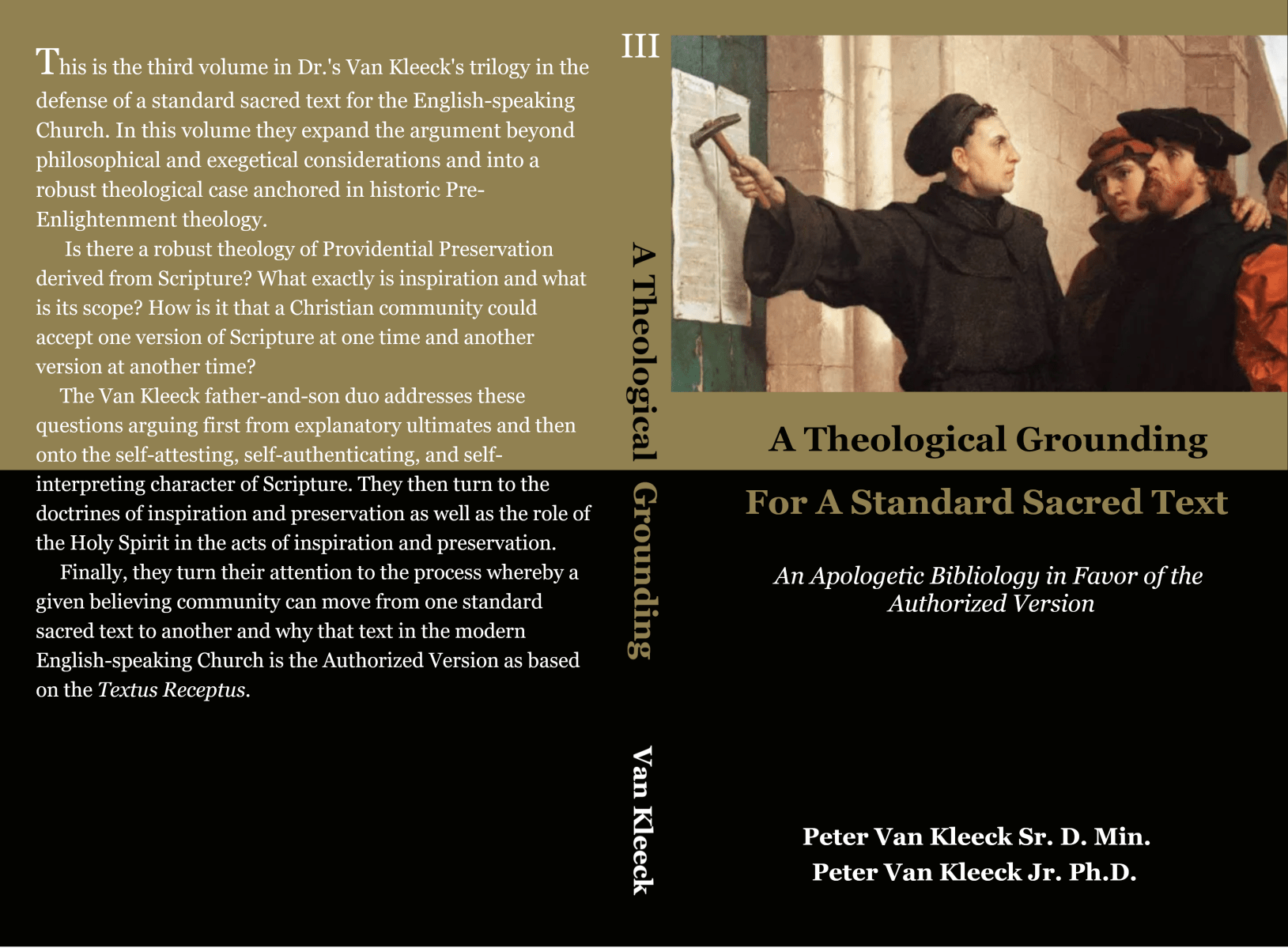
In other exciting news, we just received our third volume in the Standard Sacred Text series from our proofreaders. This third volume is A Theological Grounding for a Standard Sacred Text. It is our largest volume to date and has received high marks by all those who have read it.

Lord willing, we will have it published in June and once we publish the work we will make it available for purchase on our Facebook page at a significant discount.

Is Multiple Version Onlyism Essential to Saving Faith

The egregious error of modern textual criticism and it evangelical surrogates is that the process is essentially Christless. Christ as Prophet, Priest, and King, rather than being essential to the analysis is considered a liability of one’s theological precommitments. In what other venue or discipline of life would a faithful saint argue that Christ has no access to that part of one’s heart and mind? The synchronic worship of Jehovah and “their own gods,’ (2 Kings 17:33) is indicative of the theological schizophrenia of modern evangelicalism. “Sure,” our interlocular would say, “I’m a follower of Jehovah, but not when it comes to the analysis of Scripture texts. Then I’m a follower of Adrammelech or Anammelech.”

The following is an excerpt taken from the writing of Nathaniel Ingelo in his 1659 edition of The Perfection, Authority, and Credibility of the Holy Scriptures. In this pericope Ingelo addressed the Christocentricity of Scripture.

“After God had spoken by several parcels, and after divers manners by the Prophets, at last he sent his Son to perfect the book, write it in full, and seal it up: and this is so well done that whosoever shall add anything instead of mending the work, and doing the world a courtesy, he shall bring a curse upon himself: for Christ had made it a perfect Canon.

Now that appears thus. God hath declared Christ to be our Prophet, commanded us to hear him, told him all his mind concerning us, laid up in him all the treasures of divine wisdom He told his disciples, all that heard of his Father, had them go and preach it, and promised salvation to all that should believe it. Paul professed that he declared the whole counsel of God in his preaching and pronounced a curse upon any angel that should bring another Gospel. The Evangelist Luke wrote that Christ taught till his ascension, and Saint John added as much concerning the miracles of Christ, as was enough for motive to faith.”

In following paragraph, note the timeliness of Ingelo’s 17th century observations.

“From all which we argue, Christ was in the bosom of the Father, and knew all; he came from thence and told all, his Scholars at his command preached, and, for the benefit of future times, wrote all. We acknowledge they did, received their books, and are satisfied. Only the Papists and some other heretics, that they might have honor and profit to make supply, say they did not.”

In the 17th century only Roman Catholics and heretics were unsatisfied with the Received Text and KJV while today it appears that much of mainstream Evangelicalism has joined their ranks. What are we to make of this? Were Papists and heretics more orthodox than the Reformers gave them credit or is modern Evangelicalism a modern expression of 17th century Papal teaching and heresy on the Bible? I leave that to you to decide. Ingelo then asks an illuminating question:

“But who will believe them?”

Yes, who in the 17th century of those that name the name of Christ would believe the apologetics and polemics of Papists and heretics? The question is rhetorical. But who in 2022 are unsatisfied with the Received Text and KJV and believes the critics? Ingelo would be unable to ask the question today and expect the same answer. Evangelicals believe the critics as they embrace the eclectic reconstruction of the Protestant sacred text. Satisfaction is not a word that accompanies the Evangelical attitude toward the Bible. Indeed, dissatisfaction with the Bible has become a Christian virtue welcomed in Evangelicalism.

The last quote of this post is also thought provoking. Though stated within a redemptive context comparing salvation by grace and faith alone with salvation by grace, faith, and works, the idea of “necessaries to be believed” is insightful.

“When Christ says, Go and preach what I have taught you, and promised salvation to those which believe that and no more. They [papists, heretics] will make pretty work, that after this appoint other necessaries to be believed, (i.e.) such necessaries to salvation, as one may be saved and not believe them.”

Papists and heretics are saved by acts based on other ecclesiastically designated “necessaries.” Currently, Multiple Version Onlyism is an ecclesiastically designated necessary. No space exists in modern Evangelicalism for a standard sacred text. MVO must be believed, in addition to salvation by grace through faith which begs the question, “Can one be saved by grace alone by faith alone without being MVO? And if they can, then why is MVO necessary? And why is holding to a standard sacred text unacceptable?

When you are standing in the frame of 2022, you are too close to see the whole picture. When standing upon 17th century writings, from that distant perspective the whole picture comes into view. You see, to argue for the Christocentricity of Holy Scripture is to argue for historic orthodox Christianity. If you leave Christ out of the prolegomena, the result of such theological formulation is a Christless faith tradition.

Nathaniel Ingelo, The Perfection, Authority, and Credibility of the Holy Scriptures. Discoursed in a sermon before the University of Cambridge at the Commencement, July 4, 1658 (London: Printed by E.T. for Luke Fawn at the sign of the Parrot in Pauls Church-yard, 1659), 22-25.