Atheism and the Authority of Scripture

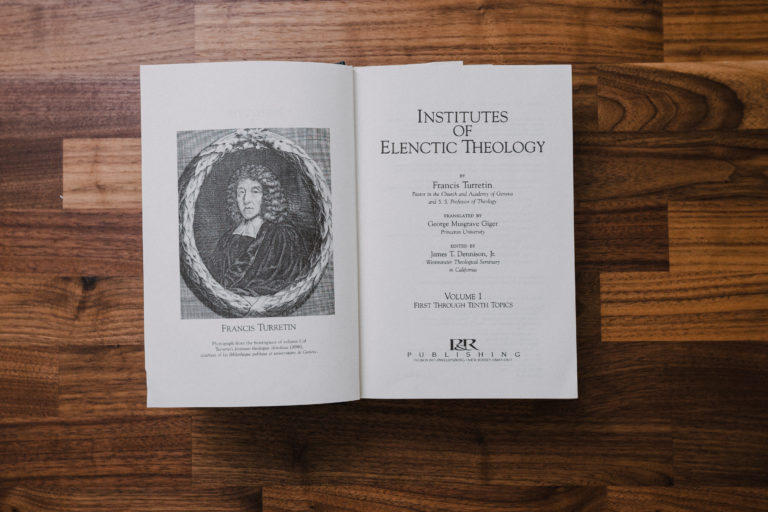
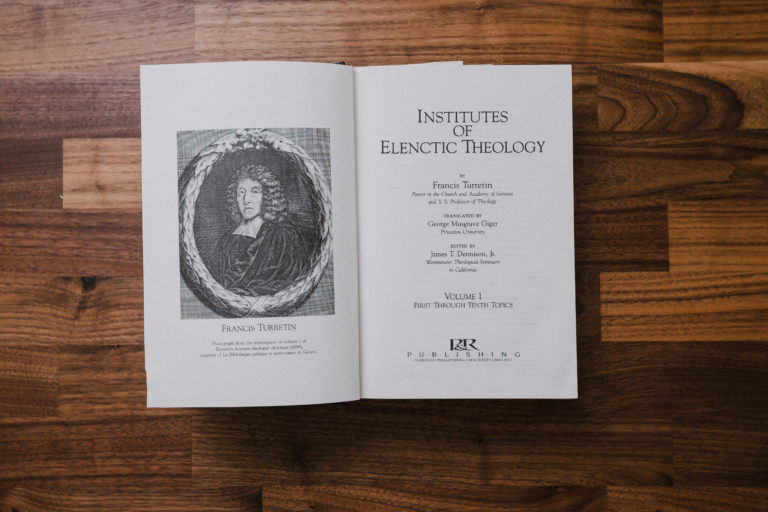
As we continue our way through Francis Turretin’s Institutes of Elenctic Theology as a Bibliology Primer we come to the question, “Are the holy Scriptures truly authentic and divine?” Of course Turretin assumes the affirmative. He then goes on to say that the question could be divided into two sub-heads:

“(1) with atheists and the heathen, who attribute no higher authority to the Scriptures than to any other book; (2) with those Christians who, while acknowledging its authority, nevertheless wish to make it depend (at least as far as we are concerned) upon the testimony of the church.”

Turretin, Institutes, Section 2, Q. 4, Sec. I. 62.

Turretin goes on to clarify these statements and proceeds by first addressing the former of the two sub-heads. It is important to observe that Turretin in addressing the atheist does not begin with rational arguments for the existence of God followed by markedly Christian claims. Instead he begins with markedly Christian claims and then defends those, rather than seeking neutral ground, and then positing Christian dogma from there. Turretin, in identifying what the question is not about, writes,

“The question is not whether the sacred writers (as men simply and in a divided sense) could err (for we readily grant this); or whether as holy men influenced by the Holy Spirit and in a compound sense, they did in fact err (for I think no one of the adversaries, except a downright atheist, would dare to say this.)”

Turretin, Institutes, Section 2, Q. 4, Sec. IV. 62.

He then goes on to define the question as it is.

“Rather the question is whether in writing they were so acted upon and inspired by the Holy Spirit (both as to the things themselves and as to the words) as to be kept free from all error and that their writings are truly authentic and divine. Our adversaries deny this; we affirm it.”

Turretin, Institutes, Section 2, Q. 4, Sec. V. 62-63.

Note the tenses employed here by Turretin. He speaks of the act of inspiration in the past tense [kept] but speaks of their authenticity and divinity in the present [are/sunt]. He could have just as easily employed [were/erant]. If you continue to follow us here at StandardSacredText.com you will see among the Protestant scholastics an intentional and regular emphasis on the possession of the originals in their here-and-now. They held that the Greek and Hebrew Bible in their hand was equal to the original and here we see a glimpse of that confession.

Turretin’s first argument for the authenticity and divinity of the Scriptures is…the Scripture’s testimony of itself. He writes,

“The Bible proves itself divine, not only authoritatively and in the manner of an artless argument or testimony, when it proclaims itself God-inspired (theopneuston).”

Turretin, Institutes, Section 2, Q. 4, Sec. VI. 63.

He then goes on to offer four external proofs and five internal proofs. The external proofs are:

  • Quoting Tertullian, “That which is most ancient is most true.” Because the Scriptures are ancient they are true. [Turretin, Institutes, Section 2, Q. 4, Sec. VII. 63].
  • Concerning its longevity Turretin writes, “With regard to the duration; the wonderful preservation (even to this day) of the divine word by his providential care against powerful and hostile enemies who have endeavored by fire and by sword to destroy it, while so many other books, against which nothing of this kind has ever been attempted, have wholly perished” [Turretin, Institutes, Section 2, Q. 4, Sec. VII. 63].
  • The candor and sincerity of writers in that they do not “conceal their own faults but ingenuously confess them” [Turretin, Institutes, Section 2, Q. 4, Sec. VII. 63].
  • Finally, “the number, constancy and condition of the martyrs who sealed it with their blood.” [Turretin, Institutes, Section 2, Q. 4, Sec. VII. 63].

Of the five internal proofs, he writes,

  • The mysteries contained therein [e.g., the Trinity, incarnation, Christ’s propitiation, and resurrection].
  • The style of Scripture in that “the divine majesty, shinning forth no less from the simplicity than the weight of expression and the consummate boldness in commanding all without distinction, both the highest and the lowest.” [Turretin, Institutes, Section 2, Q. 4, Sec. IX. 64].
  • “[T]he divine agreement and entire harmony of doctrine.” [Turretin, Institutes, Section 2, Q. 4, Sec. IX. 64].
  • “[T]he direction of all things to the glory of God alone and the holiness and salvation of men.” [Turretin, Institutes, Section 2, Q. 4, Sec. IX. 64].
  • “[T]he light and efficacy of the divine doctrine which is so great that, sharper than any two-edged sword, it pierces to the soul itself, generates faith and piety in the minds of its hearers, as well as invincible firmness in its professors, and always victoriously triumphs over the kingdom of Stan and false religion.” [Turretin, Institutes, Section 2, Q. 4, Sec. IX. 64].

This post is getting long so I will leave you with a couple quotes and comments from this question. First, Turretin acknowledges that other religions make the same claims concerning their “sacred texts.” He writes,

“Although false religions usually claim for their doctrine these criteria, the true religion may appropriate these criteria to herself because the vain and false opinions of men do not weaken the truth of the thing itself.”

Turretin, Institutes, Section 2, Q. 4, Sec. XII. 64.

Simply because false religions claim to be true or that their god is the living and true God is not grounds enough for a Christian to avoid or cease from making these claims. The same goes for the Christian’s claims of Scripture. Finally I leave you another hint from Turretin in affirming the priority of Presuppositional methodology.

“Although faith may be founded upon the authority of testimony and not upon scientific demonstration, it does not follow that it cannot be assisted by artificial arguments, especially in erecting the principles of faith.”

Turretin, Institutes, Section 2, Q. 4, Sec. XIII. 64.

First, faith cannot be founded on evidential demonstration, but evidence can assist in supporting “the principles of faith.” The conclusions of textual criticism count as scientific/evidential demonstration. It is the Reformed orthodox position that such demonstration cannot lead to faith, and, given evidentialism and the state of the evidence to date, it is unreasonable to believe textual criticism has yielded a document equal to the autographa. Rather, I submit to you that it is only reasonable to believe that textual criticism has yielding a document somewhat representative of the sources immediately behind the manuscript tradition we currently have.

Next time we will continue down this road with Turretin as he continues to give arguments for the authenticity and divinity of his Bible.

Van Til and Self-Attesting Scripture

Welcome to the Brickyard. This is a place to find quotes for use in your own research. The bricks are free but the building is up to you. The following quotes are from Van Til’s Apologetics: Reading & Analysis by Greg L. Bahnsen. Our specific attention is on the section entitled, The Redemptive Self-Attesting Revelation of God in Scripture.

Bahnsen states,

“Van Til’s apologetic insists that Christian faith is not a ‘blind faith.’ It is fully warranted – and not simply in the subjective sense that the inward testimony of the Holy Spirit persuades the believer.”

Bahnsen, Van Til’s Apologetic, 198.

Indeed, Van Til taught that there was public objective evidence for all to see. But, as Bahnsen asks, where is it found? He admits that those without Christ may reject this evidence but it remains evidence nonetheless.

“Van Til realized that there are ‘confirmatory’ but inconclusive indications that the Bible is the word of God. These evidences can, when viewed in the alien context of unbelieving presuppositions, be reinterpreted and pushed aside by those who are attempting to escape facing God.”

Bahnsen, Van Til’s Apologetic, 198-199.

These inconclusive evidences include the “testimony of the church to the Bible, the consent of its parts, and indeed its entire perfection ” [199]. Taking these as inconclusive, Bahnsen asks,

“Who is in a position to tell us what the proper indications of divinity would be when it comes to a purported revelation from God?”

Bahnsen, Van Til’s Apologetic, 199.

Bahnsen concludes that “only God could tell us reliably and authoritatively what qualities mark out His word as really His” [199]. It seems then that fruitful way forward would be to find some testimony or document in which such a divine testament can be found. Where would we find such a testimony or document?

“If some document purported to be God’s word answering this crucial question, what adequate evidence could man have that this second message is a divine message to us? At some point, the message claiming to from God would have to be its own authority, and there is no reason, then, why that should not be at the first point.”

Bahnsen, Van Til’s Apologetic, 199.

In short, if there were some book or paper , other than the Christian Scriptures, that claimed to be God’s word on the question of the “proper indications of divinity” it would seem that a more basic authority would need to undergird the authority of this book or paper. And then that authority would need a more basic authority and that authority would need another more basic authority and on and on. Sooner or later one of these words from God would need to be first having no more basic authority undergirding it other than God Himself.

For Bahnsen and for us here at StandardSacredText.com, if God is behind this succession of authoritative statements then why not take the first statement [i.e., Holy Scripture] seeing that He immediately undergirds the first statement through inspiration? Indeed, we do say that Scripture itself attests to the “proper indications of divinity” of itself and as such is self-attesting. Or as we noted in another blogpost, the Scriptures are the first principle of theological knowledge which includes knowledge of the nature and content of Scripture. Thus Bahnsen concludes,

“The fundamental evidence that Scripture is the word of God is its own testimony to that effect. Thus Van Til taught that the Bible is self-attesting.”

Bahnsen, Van Til’s Apologetic, 200.

Was it necessary for the word of God to be committed to writing? We affirm.

In framing the question Turretin writes,

“[T]he question is not whether the writing of the word was absolutely and simply necessary, but relatively and hypothetically; not for every age, but now in this state of things; nor relatively to the power and liberty of God, but to his wisdom and economy as dealing with man.”

Francis Turretin, Institutes of Elenctic Theology, Second Topic, Q. 2, Sec. III.

The necessity spoken of here is a necessity determined for the church in our time. Indeed, God spoke in times past by the fathers and prophets. Yet in the writing of the canon God saw fit, and in this sense it was necessary, to reveal Himself through the inspired written propositions of Holy Scripture. Turretin goes on to add that the writing of the Scriptures was an act of obedience on the part of the penmen as they were moved by the Holy Spirit. As such, the writing of the Scriptures took placed under the observance of a command via the Holy Spirit bearing penmen along and in this sense the writing of Scripture was necessary.

The three proofs, according to Turretin, in support of this necessity are:

“(1) the preservation of the word; (2) its vindication; (3) its propagation.”

Francis Turretin, Institutes of Elenctic Theology, Second Topic, Q. 2, Sec. IV.

Turretin explains,

“It was necessary for a written word to be given to the church that the canon of true religious faith might be constant and unmoved; that it might easily be preserved pure and entire against the weakness of memory, the depravity of men, and the shortness of life; that it might be more certainly defended from the frauds and corruptions of Satan.”

Francis Turretin, Institutes of Elenctic Theology, Second Topic, Q. 2, Sec. VI.

Let me make a few brief notes here. First, “the canon of true religious faith” encompasses the whole of Christianity not just the salvific elements. Again, the potential of being saved out of this or that text is no test of Scriptural authenticity. Second, this “canon” remains constant and unmoved. Turretin’s confession here is important because clearly he is aware of the artillery rolled up against the doctrine of preservation: weakness of memory, human depravity, brevity of life, and the work of Satan himself.

Knowing these threats Turretin speaks of Scripture in the 17th century as “constant and unmoved.” Third, in light of the second point, Turretin goes on to infer that this same canon is and states that this canon will be “easily” preserved “pure and entire.” In this sense, given the foes of preservation, this easily preserved, pure and entire canon of true religious faith remains preserved thus proving that the Scriptures are indeed from God Himself.

And why would this preservation effort seem so strange. Certainly we see it in the sphere of man’s laws. Turretin writes,

“Nor for any other reason are the public laws, statutes and edicts of kings and decrees of the commonality inscribed upon brass or committed to the public tablets, except that this is the most sure method of preserving them uncorrupted and of propagating through many ages the remembrance of those things which it is important for the people to know.”

Francis Turretin, Institutes of Elenctic Theology, Second Topic, Q. 2, Sec. VI.

Still, some Christians proclaim that their Bible is not yet complete and yet would not proclaim an incomplete view of the “canon” of human sexuality. They would assert without equivocation that sex belongs within the bonds of marriage and that marriage is between one man and one woman. They allow no incompleteness here but they do in the canon of Scripture.

Some Christians call for regular and constant revisions of the Scripture both in the original and in the translation but those same Christians seem reluctant to commit the law of the land [i.e., the U.S. Constitution] to revisions on a yearly basis. Turretin points out that kings emulate the God who made them by committing their works into writing, but it seems in many ways the Western Church is fine with biblical revisions and not so much for their own laws. Idolatry much?

Weekly Question – How did you come to believe?

How did you come to believe in your Bible and what it teaches? Which came first in the order of belief: evidence, manuscripts, the testimony of your pastor or professor? What is the ground/foundation of your belief in Scripture – the evidence, the Bible, something else? What makes your belief in your Bible dependable, meaningful, and true? What makes your belief in your Bible different than your belief in the stability of a bridge or the worthiness of a commercial aircraft? Is your belief in your Bible different than your belief in created things? Should it be different? If so, how is it different?

All Scripture and Inspiration

In the first century AD, the apostle Paul wrote a letter to a young preacher regarding the nature and scope of the Christian Scriptures and its teaching. Paul declared,

“All scripture is given by inspiration of God, and is profitable for doctrine, for reproof, for correction, for instruction in righteousness.”

II Timothy 3:16

In this post I want to give a brief analysis of the words in this most familiar passage.

πᾶσα – Translated “all, each, or every.” We see here that the KJB translates it “all” and we here at StandardSacredText.com believe rightfully so. Paul’s emphasis is on the collective nature of the text rather than the distributive [i.e., each or every]. Central to this conclusion is the context and particularly the prior verse. Paul emphasizes the fact that Timothy has known the ἱερὰ γράμματα [holy writings] since he was a child. “Holy writings” is a technical term used through out the Scripture pointing not to the Septuagint/LXX but the Hebrew Scriptures. Thus when we get to verse 16, Paul has in view the whole of the Hebrew Scriptures, the canon, rather than isolated aggregates.

γραφὴ – Carrying on from verse 15, Paul declares that all such γραφὴ [writings] fall under the same category. The emphasis here of course is on the mode of revelation – writing. Paul is saying that these particular written words are of a certain quality. They are a kind unto themselves, sui generis, if you will. And what is that quality which they all possess?

θεόπνευστος – Literally translated, God-breathed or God-spirated. All holy writings are breathed out by God. This is that unique quality which the words of Scripture are and that no other words possess. These written words are God’s words thus having God as their author. These words were not mediated which means the authority behind these words is the very authority of God Himself. What is more, seeing they are God’s words, they are by definition spiritually discerned because they came from God who is a spirit. God is the immediate, ontological, and epistemological source for these particular words.

καὶ – Having God as their author, these words carry the power and authority of God Himself. Thus it is necessary that an emphasis fall to καὶ [and]. “And” can be taken here as coordinating or correlative. But Paul is not merely making a correlation between God’s words and their profitability. No, his emphasis bears more on the idea of result. Thus, we understand, “All scripture is given by inspiration of God and is profitable,” as “Because the scriptures are inspired they are profitable.” As such, something of the reverse is also true. If the words under examination are not inspired then they are not profitable in the sui generis way Paul depicts here in II Timothy. What then is the nature of this profitability?

διδασκαλίαν, ἐλεγμόν, ἐπανόρθωσιν, παιδείαν – Translated respectively, doctrine, reproof, correction and instruction. There is much that can be said here but I would like to leave you with this. The profitability of Scripture which derives from its Author is not only the means of faith and salvation. Certainly, we would contain such cardinal doctrines within the scope of profitability. The litmus test for whether a copy of Scripture is indeed the Scripture is not whether or not you can receive Christ as Savior through its teaching. No, the scope of Scriptural profitability reaches far beyond that into the life of sanctification which touches the whole of Christian living throughout the whole of a Christian’s life. As the Scriptures teach, “Sanctify them through thy truth: thy word is truth” [John 17:17]. So do you believe your Bible contains truth or is it truth? And if it is truth like that depicted can it have errors or corruptions? And if does have errors or corruptions, can those be profitable in the same way as God’s word are profitable?

Authoritas Divina Duplex

twofold divine authority;

a distinction between (1) the authoritas rerum, or authority of the things of Scripture, the substantia doctrinae (substance of doctrine); and (2) the authroitas verborum, or authority of the words of Scripture arising from the accidens scriptionis, the accident of writing.”

Richard Muller, Dictionary of Latin and Greek Theological Terms: Drawn Principally from Protestant Scholastic Theology, Term: authoritas divina duplex.

Muller here states, and we here at StandardSacredText.com are in agreement, that there are two kinds of authority associated with Scripture: that of the substance of Scripture and that of the form of Scripture. That is, both the meaning of the word and the very shape of the word [i.e., jots and tittles] bear out the authority of the Author. Muller writes concerning “authority,”

“authoritas: authority, originality, genuineness;

the power, dignity or influence of a work that derives from its author, or auctor.”

Richard Muller, Dictionary of Latin and Greek Theological Terms: Drawn Principally from Protestant Scholastic Theology, Term: authoritas .

For the Protestant Scholastics then, both the substance [i.e., meaning] of the words as well as the accidents [i.e., shape] of the word are original, genuine, and authoritative. In common twenty-first century parlance both the meaning and the shape of the original languages are original, genuine, and authoritative. What then of translations – Russian, Chinese, Urdu, English etc.? Muller concludes,

“The authority of the substantia, or res, is a formal, inward authority that belongs both to the text of Scripture in the original languages and to the accurate translations of scripture. The authoritas verborum is an external and accidental authority that belongs only to the text in the original languages and is a property or accident lost in translation. Thus the infallibilitas of the originals is both quoad verbum and quoad res, where as the infallibilitas of the translations in only quoad res.”

Richard Muller, Dictionary of Latin and Greek Theological Terms: Drawn Principally from Protestant Scholastic Theology, Term: authoritas divina duplex.

Muller changes up the terminology here a bit but the sum of it is that the original text [i.e., the copy of the Hebrew and Greek held to be Holy Scripture], is infallible and authoritative both in the meaning of the words and in the shape of the words. A translation on the other hand, being of a different language and therefore having different shaped words, is not infallible and authoritative in the shape of the words. Still, said translation is infallible and authoritative as to substance or res. So while “word” and “λόγος” do not share the same accidents/shape they do share in the same substance/res/meaning.

The argument for authoritas divina duplex is one reason why we here at StandardSacredText.com argue for both the infallibility and authority of the original as well as a translation, the King James Bible.

Was a Verbal Revelation Necessary? We Affirm.

Continuing our Bibliology Primer we turn to Francis Turretin’s first question, “Was a verbal revelation necessary?” At this point the discussion is only about words whether spoken or written and their necessity. Why must revelation be a revelation of words? Turretin affirms this necessity under two heads: 1.) the goodness of God and 2.) the appetites of man. The first head contains three causal lines: 1.) the perfect goodness of God, 2.) the blindness and wretchedness of man, and 3.) right reason. Concerning the first he writes,

“For when he made man for himself…he was without doubt unwilling that he should be ignorant on the subject [i.e., theology] and has declared to him by the word, happiness itself and the way to reach it.”

Francis Turretin, Institutes of Elenctic Theology, Second Topic, Q. 1, III. 55.

Of the second he writes of mankind that

“he is so blind and depraved, that he can neither become acquainted with any truth, nor perform any good thing unless God leads the way (1 Cor. 2:14; Eph. 5:8)”

Francis Turretin, Institutes of Elenctic Theology, Second Topic, Q. 1, III. 55.

Regarding the third, right reason, it

“teaches that God can be savingly known and worshipped only by his light, just as the sun makes itself known to us only by its own light (Ps. 36:9)”

Francis Turretin, Institutes of Elenctic Theology, Second Topic, Q. 1, III. 55.

Turning then to the second head, not only is the necessity of verbal revelation proven through the goodness of God, plight of men, and good reason it is also proven by the twofold appetite of man himself. All men desire in some way, often in a twisted and malformed way, two things: truth and immortality. Interestingly, Immanuel Kant touches on this very same idea as he argues for morality and particularly the need for God and immortality to lead a truly complete moral life. He concludes,

“God and a future life are two hypothesis which, according to the principles of pure reason, are inseparable from the obligation which this reason imposes upon us.”

Immanuel Kant, The Critique of Pure Reason, Transcendental Doctrine of Method, Chap. 2, Sec. 2. GBWW, 238.

Turning back to Turretin, he writes of truth and immortality, that former is

“for knowing the truth, the other for enjoying the highest good that the intellect may be completed by the contemplation of truth and the will by the fruition of good in which a happy life consists.”

Francis Turretin, Institutes of Elenctic Theology, Second Topic, Q. 1, IV. 56

Thus he concludes,

“Therefore the higher school of grace was necessary in which God might teach us by word the true religion, by instructing us in his knowledge and worship and by raising us in communion with himself to the enjoyment of eternal salvation – where neither philosophy, nor reason, could ever rise.”

Francis Turretin, Institutes of Elenctic Theology, Second Topic, Q. 1, IV. 56.

In sum, for Turretin, the acquisition of truth, theology, and a method of right worship is necessarily dependent upon divinely revealed words, spoken or written. Furthermore, man has an innate appetite for truth and eternal life, the latter of which is also necessarily dependent upon divine verbal revelation. Put another way, in order for the human subject to acquire truth and eternal life that same subject must necessarily encounter divine verbal revelation. Let us know your thoughts in the comments below.

Our next instalment in this series takes Turretin’s question a step further and asks, “Was it necessary for the word of God to be committed to writing?” See you then.

The Reformed Principia Theologiae

Welcome to the Brickyard. This is a place to find quotes for use in your own research. The bricks are free but the building is up to you. The following quotes are from Richard Muller’s Post Reformation Reformed Dogmatics: Prolegomena to Theology. We turn specifically to the doctrinal formulation of the “Reformed Principia Theologiae.”

Muller describes the Principia Theologiae as

“the sine qua non, the necessary and irreducible ground of theology, apart from which not even the fundamental articles of the faith could be set forth and no articles of theology, fundamental or derivative, could be correctly stated.”

Muller, Prolegomena to Theology, 9.3, A, 1. 430-431.

The “necessary and irreducible ground” of theology, the faith, and Christian fundamentals is known as the principia or first principles. Muller explains,

“From Aristotle and more recent commentators, Iaullus and Zabarella, Lubbertus draws the argument that principia are necessary and immutably true and must be known per se as both immediate and indemonstrable.”

Muller, Prolegomena to Theology, 9.3, A, 1. 431.

Muller goes on,

“Furthermore, the principia of any given discipline must be identified as a principium essendi, literally a “principle of being” or essential foundation – and a principium cognoscendi, a “principle of knowing” or cognitive foundation. The former is necessary for the existence of the discipline, the latter for knowledge of it.”

Muller, Prolegomena to Theology, 9.3, A, 1. 431.

So what are the principia of the discipline we call theology? Muller insists that

“By defining both Scripture and God as principal in the strictest sense – namely as true, immediate, necessary, and knowable or, alternatively, as both self-evident and indemonstrable – the early orthodox asserted the priority of Scripture over tradition and reason and gave conceptual status to the notion of its self=authenticating character in response to both Roman polemicists and philosophical skeptics of the era.”

Muller, Prolegomena to Theology, 9.3, A, 1. 432.

Conclusion? The historically Reformed position is that both Scripture and God are principium. As such, each is true, immediate, necessary, knowable, self-evident, and indemonstrable in Christian apologetic and polemic endeavors. If true, then the Bible cannot be mostly true. If immediate, then knowledge of the Bible is not mediated by some more basic authority. If necessary, then true Christian theology cannot be had apart from the Bible. If knowable, then Scripture cannot be the ward of Christian academia. If self-evident, then textual criticism cannot be the primary means of knowing what is Scripture and what is not. If indemonstrable, an “embarrassment of riches” cannot be the means whereby Christians “prove” the Scripture to be what it says it is.

A Bibliology Primer and the Institutes of Elenctic Theology

This is the first of a new series entitled, A Bibliology Primer drawn Principally form Francis Turretin’s Institutes of Elenctic Theology, or a Primer on Bibliology for short. Richard Muller writes of the term “elenctic,”

“elenchticus, -a, -um (adj.): elenctic(al), for the purpose of confutation or logical refutation;

a descriptive adjective frequently used by Protestant scholastics with reference to the polemical section of their dogmatic systems. Whereas polemical indicates simply attack, elenctic(al) implies refutation leading toward positive statement.”

Richard Muller, Dictionary of Latin and Greek Theological Terms: Drawn Principally From Protestant Scholastics, Term: elenchticus.

As we make our way through this primer it is important to know that material under examination happens in a dogmatic context with the aim to confute [i.e., prove to be wrong] or refute [i.e., disprove] certain assertions under the give topic. The Protestants at this time were in a kind of intellectual combat over the soul of the believing community. This of course gives rise to tacitly militant language in terms like apologetic, polemic, and elenctic.

Regarding Bibliology, Turretin’s offering was written at a time when the Protestant orthodox were under political and theological assault, thus the observations he makes took place in an adversarial context. Rome had her Bible and the Protestants had theirs. Note, there was a time when both sides held to a standard sacred text – one Latin, and the other Greek and Hebrew. We here at StandardSacredText.com would like to see similar circumstance come about in the 21st century church.

On final note regarding Turretin’s Institutes. He begins his first topic with the existence and necessity of theology as a discipline and system of study. His second topic is not God, or sin , or the church. His second topic is Scripture. We see this in the Westminster Confession and its cousin, the London Baptist Confession. Again, for Turretin he saw fit first to start with Scripture, our epistemological foundation for Christian belief, rather than with God, our ontological foundation for Christian belief. Certainly this ordering is not the same with all Protestant scholastics, but in this case as in many others, it is.