Lucifer: to be or not to be?

First, was there ever such a being named Lucifer? The answer is yes because of what we read in the KJB in Isaiah 14:12, “How art thou fallen from heaven, O Lucifer, son of the morning! how art thou cut down to the ground, which didst weaken the nations!” However, according to the ESV in Isaiah 14:12 the answer is no. No one named Lucifer ever existed, the entry blamed on bumbling King James Bible translators. Instead, for the modern bible version translator, the verse refers to an ancient practice of speaking of rulers in deified terms. The verse reads, “How you are fallen from heaven, O Day Star, son of Dawn! How you are cut down to the ground, you who laid the nations low! For the editors of the ESV, this passage refers to Nebuchadnezzar and the desolation of Babylon, not the fallen angel named Lucifer. The KJB alone translates הילל Lucifer and הילל is found only in this place in the Hebrew OT. Jerome’s Latin reads, quomodo cecidisti de caelo lucifer qui mane oriebaris corruisti in terram qui vulnerabas gentes. It is interesting to note that advocates of the ESV translation argue that הילל simply means “morning star” or “day star.” Albeit the ESV capitalizes “Day Star” after the manner of a name or title. While arguing a strictly literal rendering against the KJB, derived from the Latin, the ESV translates הילל as the name or title of someone or something. In any case the Latin lexical defense of the modern reading is significantly diminished considering the way the English was translated. The question then is, who does “Day Star” refer to? After long linguistic criticisms of the King James translators, the translation choice can be summarized to who, not what, does הילל refer to – Lucifer or Nebuchadnezzar. Given the gravity of the immediate context of verse 12, “being fallen from heaven,” the heavenly setting of verses 13 and 14, and the fact this is the only time הילל is in the Hebrew OT, “Lucifer” is the superior rendering. The Holy Spirit, through Isaiah, also would have been the author of Nebuchadnezzar’s supposed inspired deification, another argument against this passage that is set in the context of heaven referring to a man.

With the omission of the name “Lucifer” from the ESV, so also the angel Lucifer ceases to exist from the biblical record. Bible study helps, concordances, commentaries, lexicons, etc., based on the new Bibles have erased the name and person of Lucifer from their content. With the ESV and other similar translations, the end of Lucifer has come to the Church. Who might you consider the principal beneficiary of this omission?

God and His Word have no superior

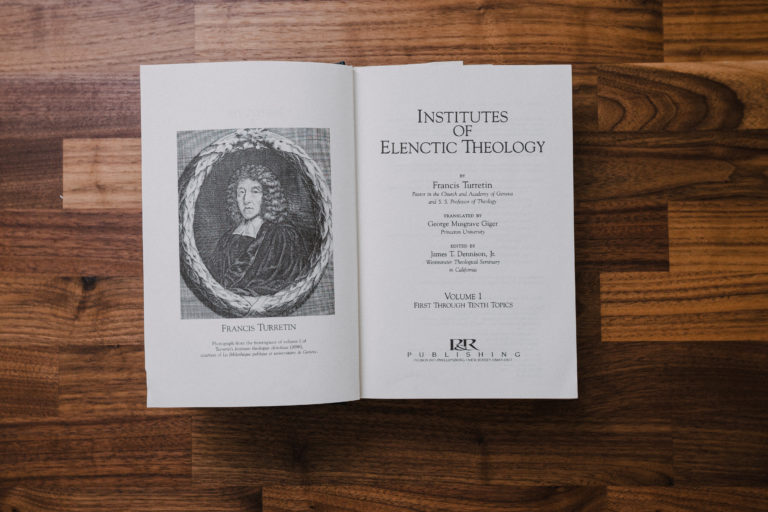
“A supreme and infallible judge is one who never errs in judgment, nor is he able to err; is uninfluenced by prejudice and from whom is not appeal. Now these requisites can be found in nether the church, nor councils, nor pope, for they can both err and often have erred most egregiously, and they are the guilty party. They are accused of being falsifiers and corruptors of the Scriptures and from them appeals are often made to the Scriptures (1 Jo 4:1; Is 8:20; Jn 5:39; Acts 17:11). But God speaking in the Scriptures claims these as his own prerogative alone, as incapable of error in judgment, being truth itself, uninfluenced by partiality, being no respecter of persons (aprosopoleptes); nor can any appeal be made from him because he has no superior.”

Turretin, Institutes, 156.

Luther’s Hymn Based on Psalm 12 and the Preservation of the Words

martin-luther-2017

Penned in 1523, Luther’s hymn elegantly reflects his interpretation of Psalm 12 and that of Jerome in the 4th c. and Ayguan in the 14th. The first strophe of the sixth stanza has as its antecedent the pure Word: “Thy Word, thou wilt preserve, O Lord, From this vile generation.”

Of this hymn Lambert references its importance to the Reformation: “This hymn, and its companion, Nun freut euch, greatly furthered the cause of the Reformation. Bunsen, 1833, says, it is ‘A cry, by the Church, for help, founded upon the Word of God, and as a protection against its contemners and corrupters.’ Its strong and passionate temper is easily estimated from Luther’s personal experiences.”[1]

Ach Gott bom Himmel sieh barein

“Look down, O Lord, from heaven behold”

Salvum me fac, Domine

“Lord, Save me!”

Psalm 12

Title: The Word of God, and the Church

The Silver seven times tried is pure

From all adulteration;

So, through God’s Word, shall men endure

Each trial and temptation:

Its worth gleams brighter through the cross,

And, purified from human dross,

It shines through every nation.

Thy truth thou wilt preserve, O Lord,

From this vile generation,

Make us to lean upon thy Word,

With calm anticipation.

The wicked walk on every side

When, ‘mid thy flock, the vile abide

In power and exaltation.[2]


[1] James Franklin Lambert, Luther’s Hymns (Philadelphia: General Council Publication House, 1917), 52.

[2] Lambert, Luther’s Hymns, 52.

Nathaniel Ingelo, 1659, on the Credibility of Holy Scripture

That the Scriptures are a proposal of all these truths to our understandings in a way of most fair and full credibility, and that appears in these three things.

  1. The way of proposal is most credible.
  2. The things propounded are in themselves evidently true.
  3. The expressions in which they are laid down, are plain, and fairly intelligible.

No man can say, but when things are propounded so, he is fairly dealt withal.

First, the way of proposal is most credible. That whatsoever God says is true is the ground upon which this assertion sets its foot, and that is such a great Truth, that it is above the necessity or proof. He which believes there is a God, believes his veracity and he which believes not that there is a God hath no reason to believe anything. He hath no reason to believe anything, if there be not Truth. And if there be not a God, there is nothing, and so no truth.

But as that foundation is firm and unquestionable, what God saith is true, I must build two things upon it, and on them the credibility of the first particular is founded. Viz.

  1. That since, what God says is true, we ought to receive whatsoever, we have abundant reason to believe that God did say it.
  2. Whatsoever comes to us as God’s word, we ought by no means to reject it, without most weighty reasons to make us think that God did not say it.

As to the first, Scripture is the way of proposal, (i.e.) God hath written his mind to us; now we have two great reasons to make us believe this writing to be his word.

  1. Because writing was the fittest way to communicate his will to us.
  2. Because since all writings need witness, that we might not doubt this to be his, he hat sent it attested by the witness of all those that were worthy to be believed, (i.e.) the good men of all ages.

Because writing was the fittest way to communicate the Gospel or his will to us, that appears thus; all nations and ages of the world, could not be present at the birth of Christ, nor be eyewitnesses of his miracles, see him rise out of the grave, and ascend into heaven, put their finger in his side, etc., what then? Will they not believe unless they do? Shall Christ be crucified afresh in every age, that we may see him rise from the dead? But because Christ was not to remain always below, not come again in that manner, and it concerned the world to know the Gospel, God committed it to writing, and hath made the holy Scriptures the safe repositories of his Truth, that is, excellent preservatives against weakness of memory, and the rust of malicious designs, Monumentam Christi est divina Scriptura, in qua divinitatis humanitatis ejus mysteria densutate litera veluti quadam muniuntur Petra.

                How much God was in love with this way appeared of old, for though he was pleased to converse familiarly with his plain friends the Patriarchs, yet lest his counsels should slip out of the frail minds of men, he commanded Moses to write them. Litera scripta manet. The Jews nice care of the letters was well made us use by God; for it became Septum Legis, while they looked to the words; God secured the sense: and how unsure all other ways are, we may perceive in that the Church hath not preserved the remembrance of Christ’s miracles which were unwritten. Language in the garb of truth, it comes not abroad till it be clothed in words; and since Christ was not to stay here to preach always, he enabled those whom he deputed to declare his will in several languages, that it might be understood by divers nations, when it was spoken and heard, and because the Apostles were to die too, he commanded them to write it, and hath enabled his Church to translate it into several languages of the world, and so they understand it being written and read.

Nathaniel Ingelo, The Perfection, Authority, and Credibility of the Holy Scriptures. Discoursed in a sermon before the University of Cambridge at the Commencement, July 4, 1658 (London: Printed by E.T. for Luke Fawn at the sign of the Parrot in Pauls Church-yard, 1659), 63-69

When a Non-Standard is Held as the Standard

The advocates of a Stand Sacred Text (SST) are held to a level of consistency unknown to the formulators of the Critical Text (CT). The comparison is the difference between a document that claims to be from God, which is inherently absolute in its declarations–pure, infallible, inspired, preserved — and a document that is inherently relative based upon claims that are various measures of a subjective human enterprise. The first, to be consistent, is held to an absolute standard for truth, while the later, also to be consistent, is not a standard for anything. In a transcendentless culture, absolutes are rejected uncritically, prima facia, while relative commodities fit the cultural milieu perfectly. The CT is of human design, so nothing exceptional is expected of the document because the CT is like every other human writing. Furthermore, the CT is not a standard for anything. Standards by definition are settled. Because nothing in the CT is settled it cannot be the measure of morality, spirituality, or theology. Moreover, the CT is inherently unfinished alleviating any pressure to bring about its completion. None of these three characteristics are allowed for the SST, which begs the question, “How can a humanly designed, non-standard for anything, incomplete document be made the standard for the rejection of anything including something absolute?” Minimally, the CT proponents should be agnostic when considering the SST, as they are with the CT, not knowing themselves what the CT or SST looks like. After all, maybe they passed over the final text in Westcott and Hort’s 1881 Greek NT and should have stopped there. Or perhaps Beza’s 1598 Greek text and the King James Version of the Bible are what the CT group has been looking for all this time and given another Renaissance and Reformation come to the conclusion they now reject? Only time will tell.

Imagine Sunday School

Sunday School on the Prairie | Western art, Art, Western ...

It’s Sunday Morning and everyone is on their way to church, to greet the saints and gather around the preaching of the Word. The parking lot is full. Ushers are at the front door with a welcoming handshake and a visitors card for those who are looking for a church to attend. Kids are running everywhere but especially to the senior saint all the children know has a pocket full of candy for them. The pastor is welcoming the adult Sunday School class that meets in the auditorium, walking back and forth across the pews shaking hands with the saints as they gather. At 10:00am, the Pastor opens in prayer, asking the Lord’s blessing on the Lord’s Day, opens his Bible, and begins teaching the flock what God says in His Holy Word. He doesn’t once mention is advanced theological degrees, nor does he create questions in the minds of the people as to the authority of the Word. He is the under-shepherd of God’s flock and counts his care for the saints both a burden for their spiritual well-being and a honor for being called of God to minister. Some of the material is not easy. Questions are asked seeking clarification. Illustrations are given and cross references are read to assure the saints of the truth of what is being taught. Growing in the Word is an exhilarating thing. It makes coming to Sunday School worthwhile.

The Birth of Jesus, the Son of God

Luke 2:1-20 

1 And it came to pass in those days, that there went out a decree from Caesar Augustus that all the world should be taxed.

(And this taxing was first made when Cyrenius was governor of Syria.)

And all went to be taxed, every one into his own city.

And Joseph also went up from Galilee, out of the city of Nazareth, into Judaea, unto the city of David, which is called Bethlehem; (because he was of the house and lineage of David:)

To be taxed with Mary his espoused wife, being great with child.

And so it was, that, while they were there, the days were accomplished that she should be delivered.

And she brought forth her firstborn son, and wrapped him in swaddling clothes, and laid him in a manger; because there was no room for them in the inn.

And there were in the same country shepherds abiding in the field, keeping watch over their flock by night.

And, lo, the angel of the Lord came upon them, and the glory of the Lord shone round about them: and they were sore afraid.

10 And the angel said unto them, Fear not: for, behold, I bring you good tidings of great joy, which shall be to all people.

11 For unto you is born this day in the city of David a Saviour, which is Christ the Lord.

12 And this shall be a sign unto you; Ye shall find the babe wrapped in swaddling clothes, lying in a manger.

13 And suddenly there was with the angel a multitude of the heavenly host praising God, and saying,

14 Glory to God in the highest, and on earth peace, good will toward men.

15 And it came to pass, as the angels were gone away from them into heaven, the shepherds said one to another, Let us now go even unto Bethlehem, and see this thing which is come to pass, which the Lord hath made known unto us.

16 And they came with haste, and found Mary, and Joseph, and the babe lying in a manger.

17 And when they had seen it, they made known abroad the saying which was told them concerning this child.

18 And all they that heard it wondered at those things which were told them by the shepherds.

19 But Mary kept all these things, and pondered them in her heart.

20 And the shepherds returned, glorifying and praising God for all the things that they had heard and seen, as it was told unto them.

The Translator’s Preface to the Reader of the 1611 KJV

Welcome to the Brickyard. This is a place to find quotes for use in your own research and writing. The bricks are free, but the building is up to you. The following quotes are from The Translator’s Preface to the Reader of the 1611 KJV. In a prior post I dealt with the term “meanest.” In this post I offer some of the less quoted material. As always, I hope these quotes can aid you in your own study and argumentation. Under “The Praise of the Holy Scripture” the Preface reads,

“But how what piety without truth? what truth (what saving truth) without the word of God? what word of God (whereof we may be sure) without the Scripture…If we be ignorant, they will instruct us; if out of the way, they will bring us home; if out of order, they will reform us; if in heaviness, comfort us; if dull, quicken us; if cold, inflame us. Tolle, lege; tolle, lege: Take up and read the Scriptures.”

The Praise of the Holy Scriptures

“Translation it is that openeth the window, to let in the light; that breaketh the shell; that we may eat the kernel; that putteth aside the curtain, that we may look into the most holy place; that removeth the cover of the well, that we my come by the water.”

Translation Necessary

“So much are they [i.e, the Church of Rome] afraid of the light of the Scriptures…that they will not trust the people with it, no not as it is set forth by their own men.”

The Unwillingness of Our Chief Adversaries, That the Scriptures Should be Divulged in the Mother Tongues, &C.

“Many men’s mouths have been open a good while (and yet are not stopped) with speeches about the translation so long in hand, or rather perusals of translations made before: and ask what may be the reason, what the necessity of the employment.

The Speeches and Reasons, Both of Our Brethren and of Our Adversaries, Against This Work

And what exactly were these mouths saying? The translators share some very similar themes and questions. Ones we face even today.

“Hath the Chruch been deceived, say they, all this while? Hath her sweet bread been mingled with leaven, her silver with dross, her wine with water, her milk with lime…Was their translation good before? Why do they now mend it? Was it not good? Why then was it obtruded to the people?

The Speeches and Reasons, Both of Our Brethren and of Our Adversaries, Against This Work

Sound familiar? Briefly, the KJV translators plainly state that the Christians of their time critiqued and criticized those who translated the KJV. And why wouldn’t they? The KJV translators took upon themselves the work of retranslating a text that was already received by many Protestants – the Geneva Bible. So, the KJV translators were criticized for their work. In the end though, the KJV served and serves the believing community across multiple centuries.

There are many lessons to learn here but two seem to be of the utmost importance: 1.) If great scholars are to retranslate the Bible it is only natural that they be criticized because of the strong belief and conviction held by the believing community regarding the book they regard as the word of God. 2.) When all was said and done the Holy Spirit worked in those nay-sayers and critics and their progeny to accept the KJV as the word of God in English and it remained that way for over four-hundred years. Finally, on this Christmas Eve, I leave you with these words from the Preface.

“Many other things we might give thee warning of, gentle reader, if we had not exceeded the measure of a Preface already. It remaineth that we commend thee to God, and to the Spirit of His grace, which is able to build further than we can ask or think. He removeth the scales from the eyes, the vail from our hearts, opening our wits that we may understand His Word, enlarging our hearts, yea, correcting our affections, that we may love it above gold and silver, yea, that we love it to the end.”

Reasons Inducing Us Not to Stand Curiously Upon an Identity of Phrasing