A Recent Discussion: Should We Speak of Holy Scripture as Sufficiently Reliable?

Below is a recent discussion I had on Facebook regarding the meaning and use of “sufficient reliability” as applied to Holy Scripture. I have changed my interlocutors name and made some minor edits to make the conversation more readable.

James –  I think “sufficient” is absolutely necessary for any form of bibliology that recognizes that the Lord’s sheep know his voice in translations and even defective ones. Since no two extensive Greek manuscripts of the NT are identical then it also applies prior to printing to the original. And since no two editions of the printed Greek text are identical (including the multiple various editions of the Textus Receptus) it also applies after the invention and inception of the use of printing for the GNT. 

Sufficiency in the end is not decided by us, but rather by God.

Me – We clearly diverge on the use of the term, sufficient reliability. I don’t intend to change anyone’s mind on a FB post, but I think it might be good to lay out a few elementary observations which serve to make me reticent to use the term. If you could point me to a book which would address these observations, please share. 

>The phrase, ”sufficiency is absolutely necessary”, though primary to your argument, is unsubstantiated and ungrounded under the current text critical position. It is merely assumed without any meaningful exegetical, theological, philosophical, or historical grounding. If it is substantiated it is largely done so on the grounds that other ancient books [e.g., the Iliad] are considered reliable therefore the NT is reliable having more and older manuscripts. I find this argument to fail on multiple fronts as to explanatory scope, explanatory force, and normative ethical grounds. 

> The Lord’s sheep know his voice – Indeed, but it must be His voice and not the voice of a man. Sufficiently reliable texts necessarily infer the presence of man’s voice In the Greek NT. Man’s voice is being pawned off as the Shepherd’s voice which seems irresponsible at the very least. God’s people do hear God’s voice so long as it is indeed the words of God and not men.

>manuscripts of the NT are not identical – Agreed, but there is no pervading phenomena throughout the history of the Church where Christians at Time 1 doubted their present Bible. They may have doubted a prior iteration like the Bishops vs the KJV or a competing iteration like the Latin Vulgate vs. the Hebrew/Greek apographa. But you will find no robust Pre-Enlightenment statement of Christian doctrine claiming things even close to ”It’s in the text or apparatus” or “Inerrancy is merely in the doctrinae and not the verba.” In sum, “sufficient reliability” regarding Bibliology seems to me to be a novel invention indicative of modern expressive individualism.

>Sufficiency in the end is not decided by us, but rather by God – Agreed, but again the modern textual critic has no substantive grounding to show what God means by ”sufficient”. Rather, the entire use of the term is predicated almost exclusively on evidential groundings concluding in abduction, the weakest form of logical inference. From such an evidential approach, God is metaphysically extravagant which is best shown in the fact that Bart Ehrman can make an equally compelling case for the “sufficient reliability” of the NT without ever invoking God. Ultimately, the evangelical text critic’s invocation of God unnecessarily multiplies metaphysical entities [Ockham’s Razor] which goes a long way in explaining why many Christian text-critics bracket their Christian precommitments [e.g. TR priority based on the fact that Church used it for so long]. There is no need for Christian precommitments to determine the sufficient reliability of the NT. As such there is nothing distinctively Christian about “sufficient reliability.” Muslims could say the same about their text or Mormons about theirs.

Again, these are a few quite elementary observations which make “sufficient reliability” an unwarranted Christian belief for me. I’m not looking to fight. I’m only trying to offer a glimpse into why I diverge from you on the use of the term. Again, if there is a scholarly source which addresses these concerns I would be very open to giving it a read. Thanks.

James – But you do believe it and express it in your own work. It is the explanation you yourself give for how come people are converted by proclamation based on the ESV, or worse the NIV, or maybe even a lot worse again (think of those millions globally who have been brought to a saving knowledge of God through versions much like the Good News Bible…). Most of the stuff in your response above is by the by. We both agree God has spoken, he has spoken ultimately in his Son, but he spoke by the prophets and apostles, His voice is heard when his word is preached, and that is true also if translation as well as the original tongues. You and I both know this happens even with translations at which we both would turn up our noses somewhat, or even textual bases we’d query. The difference between us lies on the location of the norm to which sufficient similarity applies.

Me – C’mon, you‘ve read enough of my stuff. People don’t need Bibles to be converted. A lost soul only needs a small mutilate fragment of Scripture to come to saving knowledge. To say someone can be converted out of a text is simply not an argument showing, proving, inferring that that text is a Bible or the Bible. 

Of course my arguments are considered “by and by” from your perspective; we’re in disagreement.

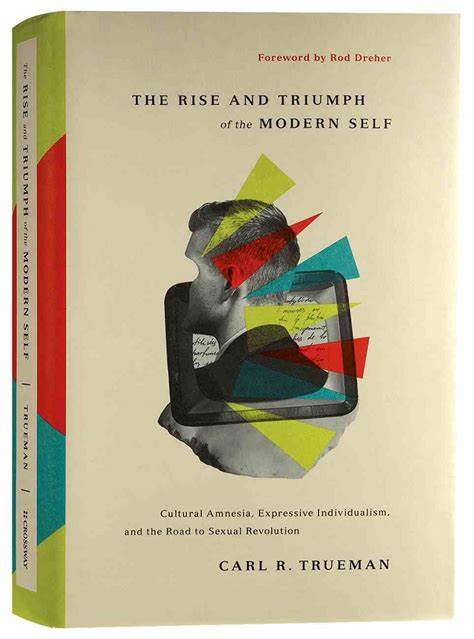
After finishing Carl Trueman’s The Rise and Triumph of the Modern Self it is hard not to see profound similarities with the rise and triumph of modern textual criticism. They seem to be cut from the same cloth in so many crucial ways.

Though you and I experience a consensus on major theological issues I believe the differences between us on how we reached that consensus as a believing community and how we ought to reach that consensus lies more precisely in differences in position on authority, epistemology, and methodology.

Again, if there is some scholarly article/book out there that offers robust epistemological, exegetical, and theological grounding for sufficient reliability as the standard for what counts as God’s word, then I’d be more ready to acquiesce. I certainly don’t enjoy holding to a minority academic position, but enjoyment is an insufficient grounds to cease the pursuit of truth. Such a course belongs to cowards and those with weakness of will. 

I’m told over and over that I am one of the few Ph.D.’s that hold to pre-critical Bibliology and that there are so many Ph.D.‘s in opposition to my position. I would think then that there would be myriads of scholarly pages explaining from a distinctly Christian perspective that the Reformation Protestants had it wrong on Bibliology. Like, where did they screw up in their exegesis when debating Catholic Apologists like Bellarmine and Stapleton? Where’s that gaff in logic committed by Turretin in defense of the apographs as the originals? No such treatment is even attempted. Two weeks ago I watched James White read Turretin on the DL about 1 John 5:7 and then launch exclusively de facto objections to Turretin’s observations akin to “We now know that 1 John 5:7 isn’t original therefore Turretin’s wrong.” And as someone who opposes White’s position am I supposed to respond with something like, “Brilliant! That James White, pulling out another insightful and penetrating observation!”? /sigh Where are the de jure arguments from the cadre of Ph.D. scholars who oppose pre-critical Bibliology? I digress…

Thanks for giving me a portion of your day. I leave the last word to you.

James – You know full well that there’s an asymmetry here that I’m more than ready to own. You’ve invested far more time, energy and even cold hard cash in thinking through and articulating your position (via your PhD) than I have. However, when I point out that your own argument (which came out once more in the response above: NB “A lost soul only needs a small mutilate fragement of Scripture to come to saving knowledge”) undermines your attempt to isolate the TR, but underwrites virtually all forms of the text known to us as being the word of God – individual mms, the pre-TR, the TR, the Colines, the Complentusian, the Tregelles, the W-H, the NA, SBL, THGNT etc etc… (let alone the versions) your response is tho throw the kitchen sink at the response (now including Trueman’s “Rise”) but not really get back to the issue. If people hear God’s voice in these multitudinous texts then which one (if any) is “the text”. Your answer is that there is enough (i.e. sufficiency) similarity to the TR even in mutulated texts. My answer is there is sufficient similarity to the autograph – that I don’t have to know. It’s the Lord’s choice to use whatever text. Not only does he “know his own” people but I would suggest his own text. Another way of articulating this is the image from Van Til highlighted by Brash (who is now Bash-ed) of the submerged bridge.

N.B. – I very much appreciated this interaction with James, but it seems at this point that his primary standard for determining whether a Bible is God’s word is whether or not someone can be saved out of it. But the word of God is written to Christians and is spiritual discerned. Paul tells us to leave off the rudimentary principles of the Gospel and move on to perfection/completeness [Hebrews 6:1]. The vast majority of Scripture exists to lead the Christian onto perfection. To limit the criteria for what counts as Scripture to whether someone can receive Christ through its words is to by implication throw the door open to the omission of the entire Bible with the exception of the Romans Road.

I appreciate James’ focus on evangelism and the text of Scripture but it seems he has yet to move beyond the rudimentary principles of the Gospel and onto perfection. But why should he think he could move on to perfection or completeness if he hasn’t a perfect or complete text of Scripture? The product can only be as perfect as the source. Indeed, it does seem that Christians have little desire to move on to perfection or completeness. Rather they desire to move onto sufficiently reliable Christianity in accordance with their sufficiently reliable Scriptures.


We Are All Expressive Individuals Now

`Last week I was able to finish my first time through The Rise and Triumph of the Modern Self by Carl Trueman. It is perhaps the seminal work for future offerings toward a meaningful and well-aimed polemic against the moral degradation of the individual, morality, and western politics in the 21st century. He offers nearly 400 pages to make one point, that by the beginning of the 21st century the self had been psychologized and psychology had been sexualized and sexuality had become political [377].

Before coming to this conclusion Trueman sought to offer a rationale for why the morality of West has been so bent as of recently to uphold sexual behavior like homosexuality and transgenderism. Why such an ascendency in so little time? And why is it that Christian ethical standards are waning? Why is it that tolerance is not enough for the LGBTQ+ community? Instead of tolerance, why must it be acceptance and if not acceptance then “war”? Perhaps the most penetrating question of all is, What accounts for the revolutionary ascendancy of radical modern psychologized individualism and its emphasis on the erotic and and therapeutic? Trueman answers all of these questions and more via a thorough and disturbing tapestry which unfortunately for us does not exclude the Church as part of the weaving.

He writes,

“The problem is that we are all part of that revolution, and there is no way to avoid it.”

Trueman, Rise, 385.

and

“When it comes to how we think of ourselves, we are all expressive individuals now, and there is no way we can escape from this fact.”

Trueman, Rise, 386.

Indeed, Trueman observes the Christian’s revolutionary modern psychologized individualism when he writes,

“Today we do not simply choose to be Christians; we also choose what type of Christian we want to be: Presbyterian, Anglican, Methodist, Baptist. And within each of these subdivisions there are yet further sects – further choices – for which we can opt: Reformed, Arminian, charismatic…Then there are worship styles to consider…We can choose our churches as we choose a house or car. We may not have infinite choices and may still be subject to some material restrictions, but the likelihood is that we have more than one church option with which we can choose to identify.”

Trueman, Rise, 385.

Borrowing Trueman’s words, we can choose our Bibles as we choose a house or car. We may not have infinite choices of Bibles and may still be subject to some material restrictions like the current scholastic interpretation of the manuscript tradition, but the likelihood is that we have more than one Bible option with which we can choose to identify.

The funny thing is that Trueman concludes with, “one church with which we can choose to identify” but most evangelicals have multiple Bibles with which they choose to identify. It sounds like the doctrine of gender fluidity, doesn’t it? That is, the belief that I can choose to be the gender I want to be based on my feelings on a given day or in a given moment. For Christians it’s, I can choose the Bible I want to read based on my feelings on a given day or in a given moment.

Remember, we are all expressive individuals now. Still, there’s those like us here at StandardSacredText.com who push against our collective expressive individualism at this point. And guess what, just like the Church’s opinion against homosexuality is now the minority position in the West, so the argument for the standard sacred text is the minority position. Why? Because at the base, both orthodox Christian sexuality and claiming a single standard of faith and practice flies directly in the face of the collective ecclesiastical expressive individualism now on display in Christian institutions of higher-learning across America.

Which do you think came first, choosing churches like we choose cars or choosing Bibles like we choose cars? It is hard to imagine that the former is the likely choice. Once we choose our Bibles like we choose cars, then we can choose churches and pastors and worship styles etc without the slightest prick in conscience. Interestingly enough, right around the same time Freud sexualized the psychological-self and Herbert Marcuse politicized sexuality via the wedding of Freud and Marx, Wescott and Hort did away with the standard sacred text of the Church, the TR.

Modern textual criticism has not helped the Church. Modern textual criticism as started by Wescott and Hort and their acolytes have championed expressive individualism is the Church and as the Church goes so goes the nation.

As an aside, given Trueman’s work I am prepared to have a vigorous discussion with any qualified person [i.e., possesses a post-graduate degree and has read Trueman’s book] about the fact that modern textual criticism is a, if not the, direct progenitor of the LGBTQ+ movement in the West.

The law of thy mother

  1. Proverbs 1:8

“My son, hear the instruction of thy father, and forsake not the law of thy mother” (Prov. 1:8).  

Those who look upon the Proverbs as the address of Solomon to his son Rehoboam naturally take “father” as standing for the former. Naamah, in this case must be the mother – not an Israeli.

1 Kings 14:31, “And Rehoboam slept with his fathers, and was buried with his fathers in the city of David. And his mother’s name was Naamah an Ammonitess. And Abijam his son reigned in his stead.”

And forsake not the law of thy mother

Forsake. The radical meaning of הִּטּשׁ (tittosh) is that of “spreading,” then of “scattering” (Aiken), and so the word comes to mean “forsake, reject, or neglect.”

Three categories to learn from your mother

Practical truths: The law; תּורַת (torath), construct case of תּורַה (torah), from the root יָרָה (yarah), “to teach,” hence here equivalent to “a law” in the sense of that which teaches – a precept.

Life example: Titus 2:3, “teachers of good things” — (καλοδιδασκάλους); only here in the New Testament, not found in the LXX., or in classical Greek; teachers, by their holy demeanor as well as by their words. 

Theological doctrine: The law (torah) of the mother is that practical teaching which she imparts orally to her son, but torah is also used in a technical sense as lex,  to signify the whole body of the Mosaic Law.

2 Timothy 3:14, “But continue thou in the things which thou hast learned and hast been assured of, knowing of whom thou hast learned them;” Eunice – mother; Lois – grandmother.

“Mother. This he adds, because children, when grown up, are very prone to slight their mother’s advice, because of the infirmity of their sex, and because they have not that dependence upon and expectation from their mothers which they have from their fathers.” Matthew Poole

From Lois to Eunice to Timothy to those taught by Timothy, this transgenerational inculcation of the law implies all the guiding principles argued for here at Standard Sacred Text. Practical wisdom, consistent life example, and preserved theological doctrine is dependent upon a codified standard sacred text. Happy Mother’s Day!

A Recent Discussion on Paraphrasing God’s Words and the Use of the LXX in the NT

Gulfstream G-650 LX-LXX

Recently I had an email exchange with someone working their way through the version debate and the merits or demerits of the Standard Sacred Text position. My interlocutors position was that NT writers and NT accounts quote from the Septuagint/ LXX and also seem to paraphrase passages from the OT therefore the Bible can remain inerrant even if we choose words that are not exactly God’s words. My response to him is the following:

Yes, this is an old approach to issues of inerrancy and infallibility. The point that the NT penmen led by the Holy Spirit might have used the LXX or paraphrased OT texts as a defense for inerrancy may not be as robust as many think it is. In large part because it ignores the fact that it is the Holy Spirit bearing these men along as they quoted from the LXX or paraphrased the OT. As such, every word was inspired by God both in the original giving of the OT and in the paraphrase as it appears in the NT. Certainly the Holy Spirit can “paraphrase” His own words because they are His words. We on the other hand cannot paraphrase His words. There is no place in Scripture where the Christian is commanded to or encouraged to paraphrase God’s words or use words different than those God has chosen. But there are plenty of places where the prophet is commanded to say, “Thus saith the Lord…” 

In fact, the idea that a prophet would hear God and then be like, “Well I think my version sounds better and furthermore, I think it means the same thing” seems ridiculous and if true, is an act of will-worship or idolatry. In sum, the issue with the “Jesus used the LXX” or “Paul paraphrased the OT” is to almost entirely sideline the fact that the words of Scripture are God’s words and God can quote the LXX and paraphrase His prior words and when He does, those specific words become just as inspired and authoritative as the words upon which the LXX/paraphrase is based. We can certainly paraphrase our own words or the words of another man because they are for all intents and purposes our equals. God on the other hand is infinitely above us and we infinitely below Him in being, wisdom, and holiness and as such we have no moral ground upon which to paraphrase His words and then claim that paraphrase equals God’s words. We must know and believe His words and His only.

I liken it to the time when Nadab and Abihu, the sons of Aaron, offered strange fire before God. It was certainly fire and fire that could burn. It definitely would burn incense or the flesh of an animal. It was being offered by priests, the sons of Aaron, the rightful offerers. It was being offered in the tabernacle, the appropriate place for such an offering. It appears that Aaron’s sons intended to carry out God’s ordained priestly duties, so their hearts seemed to be in the right place. There is no indication that they thought their sacrifice to be anything other than pleasing to God. And yet after all that, God kills those two young men with divine fire and commanded that Aaron not uncover his head in mourning because his sons simply as a practical matter got fire from the wrong place.

God gave specific instructions about where to get correct fire and a kind of paraphrase on the part of two men led them to believe that fire from the brazen altar and fire from somewhere else were the same kind of fire and they had plenty of reason to believe that as I mentioned above. But in the end God struck those men down in a fashion similar to that of Sodom and Gomorrah. The same goes for Uzzah trying to steady the Ark on the cart when the cart hit a pothole. God struck Uzzah dead. Then there is the example of Eve who added “neither shall ye touch it” to God’s command not to eat of the tree. This was her paraphrase and it led to the fall of all of humanity. Then there was Cain’s paraphrase that God accepted fruits from the field rather than a blood sacrifice which ultimately led to the first murder. Examples abound throughout Scripture that man is in no place to paraphrase God’s word or to assert some other words which God has not said and then claim those words to be God’s words (e.g., every false prophet). 

In the end I find this argument only superficially Scriptural and largely at odds with the biblical narrative from the OT to the NT about God’s relationship to His own words vs. man’s relationship to God’s words. 

That said, I know we can only believe the things we think are true and you are working your way through these things. I hope the above can be a help to you. May the Lord continue to grant you wisdom and grace that the Spirit of God may guide you into all truth.

Blessings, 

PWVK

The Evangelical Mob

Since the early 19th century is there anyone who believes that the MVO position can produce a text to replace the King James Version having proven that the two things that are different cannot be the same axiom makes it impossible to come up with a definitive answer to the believer’s question as to whether the Church is in possession of the words of God? The neutral text failed, the genealogical method failed, the oldest, shortest, most difficult and text that is the source of another reading failed. Reconstructing the original failed leading to accepting the fluidity of the initial text. The science project of evangelical textual criticism over the past 100 years has moved the Church no closer to the original reading of Scripture while constantly disparaging the Received Text. Clearly, the King James Version has no credible contender as the Bible of the believing Church.

Justice Samuel Alito’s draft of the Supreme Court 5-4 decision striking down Roe vs Wade uncovered and highlighted the visceral attachment of pro-death advocates to the killing of babies in the womb. The fact that the 49-year law was egregiously void of Constitutional grounding is irrelevant to the howling mob. By mob, in kinder, gentler terms “mob” could be restated as a “consensus expressed forcefully.” The mob is not motivated by the rule of law but by a heightened emotional attachment to this visceral desire in many cases expressed violently. Note that reason or the rule of law does not ameliorate the emotional high in the least. Indeed, appeal to reason exacerbates the emotion. For the mob, there is no place for reason.

The mob is powerful. If the mob is forceful enough or intimidating enough, the rule of law will be forsaken and what the mob wants will take its authoritative place. And when the mob rules, chaos ensues. When the mob rules two things that are different can be the same, like the MVO. For 400 years the KJV has been the Law of God to the Church and morally an element of civil government to the Nation. Supporting the Law are thousands of pages of Protestant Dogmatics, like legal briefs successfully and eruditely arguing for the credibility of the Law. But a visceral desire to throw off the Law and replace it with the passion of the mob, or a “consensus expressed forcefully” that characterizes this cultural milieu. For the MVOist, what God has said has been replaced with what the evangelical mob approves of.

So pastors and professors, fearful of the mob have remained in their academic domiciles, intimidated by the Academy or Church that will have them fired if they speak against them. Writers and thinkers know not to go cite the Law. The mob is camped on their front lawn waiting to scorn them for their appeal to historic orthodoxy.

We will have to see what kind of impact the mob has on the Justice’s ruling. I suspect it will hold up, but if it doesn’t take notice. If this ruling is reversed, and the rule of law succumbs to the mob, then the mob becomes the law. Alito and the four other Justices were correct in their analysis and application of the Constitution, but their finding will be irrelevant to the saving of the unborn. MVOism is the religious element that feeds cultural mob mentality. MVOism is not exegetically, theologically, philosophically, or historically grounded, but it is viscerally, emotionally, and irrationally maintained as the present measure of Christian orthodoxy. The fact that the root of MVOism perpetually fails is not enough to dissuade the evangelical mob from its passion. For much of Christianity in 2022 the evangelical mob, not Scripture, is the law.

Pro-Choice Bible Versions

If you’ve spent any time watching the American media you know that there has been a huge leak coming out of the Supreme Court. Now there have been prior leaks coming out of the Supreme Court especially when big decisions are in the balance. But this leak is unprecedented in that never before has an entire draft been leaked. There have been names and vote counts leaked or simply the Court’s decision, but never the whole of the argument as a draft yet to be agreed upon. Still, this draft has caused no small kerfuffle.

Many of those who are pro-choice, which is a euphemism for pro-murder, have come to the fore in order to insist on the right to murder babies. Can you imagine it? People being upset even to the place of protesting that babies will no longer be torn apart and by the consent of their mothers. You don’t have to imagine it. It’s a reality.

Several pro-choice arguments have found popular daylight in defense of child murder. Ones like, “It is hard to believe that girls born today will have less right than girls born 50 years ago.” and “Sadly, without abortion, children will be born into poor homes.” Unfortunately and I pray, unwittingly, there is a perverse thread here which is also shared by the standard CT/MVO position.

In the case of abortion, the act of murdering a baby is a ghastly evil, but there is an evil which is prior and therefore more primary. That evil is the thought or disposition that one has the power or moral right to choose to kill a baby. Put another way, the act of killing their baby is evil, but the belief that one has the moral right, the choice, to kill their baby is a prior and more egregious evil. So while a Pro-Abortion woman may never murder her child; she believes herself to have the moral right to choose to do so.

Toughing the version debate, few of our interlocutors would seek to “abort” the Scriptures, which would be a grave evil in itself. Most though maintain the prior and more egregious evil of believing themselves and themselves alone as having the moral right, the choice, to choose what is or is not God’s word. And yet this is wholly backward.

Consider the Christian faith in general. It is not the person who first chose Christ, but Christ who first chose the person. It is not the person who first loved Christ, but Christ who first loved the person. Christ chose the disciples and not the other way around. It is not us who work effectually to the formation of the canon and the canonical words. It is the word of God dwelling richly in us whereby we hear and know the voice of the Shepherd in those canonical words. As such, we receive those words not as the words of men but indeed as the words of God. We are the recipient. The Bible tells us what is the Bible.

We do not choose the Bible. The Bible chooses us.

And no two Bible versions say the same thing. Ask our interlocutors. All they can speak of is the “sufficient reliability” of versions. This is an academic way of saying, “All ‘good versions’ [however that is construed] are close enough to God’s word to count as God’s word.” The prior sentence is evidence enough that modern Christians choose what is or is not God’s word because modern man chooses what is or is not sufficient.

Continuing on, if all “good versions” are sufficiently reliable they are so as to quantity and quality. That is, there is enough of God’s word present and that which present is of sufficient divine substance per the present manuscript evidence. No two versions agree in quality and quantity and as such cannot be equally God’s words as to quantity and quality. A choice must be made between Greek texts and between versions and it cannot be a choice initiated by the Christian.

Circling back, though our position is concerned with the continual weakening of doctrines like infallibility to inerrancy to qualified inerrancy to inerrancy being a Scriptural misnomer in the works of those like Pete Enns; there is an additional doctrinal divergence which teaches that choosing a Bible is up to the saint when in fact that choice is beyond their moral and spiritual purview. Rather, the Spirit of God speaks through the word of God telling the people of God what is the word of God. Then both the scholar and the people in the pew submit to the Spirit’s injunction. All else is will-worship. Idolatry, where man is God.

In sum, the problem is not only that some choose different versions or multiple versions or reject the Bible as the rule of faith and practice. The problem is also that they think themselves morally entitled to make such choices. In this regard, there is no difference between Pro-Abortion and Pro-MVO being pro-choice.

Apologetics in a World of Contemporary Inerrancy

Next week will mark one year since I graduated with my Ph.D. in Christian Theology and Apologetics from Liberty University. I love apologetics and especially the defense of the Principium: the Doctrine of God and the Doctrine of Scripture, which is a large part of why this blog exists.

If you look around at Ph.D. programs, they differ in requirements. At Liberty I first had to complete 48 yours of class work where fulltime is two classes a semester. This took me about four years to complete. Then I had to take a German or Latin comprehensive exam. I chose German. Then it came time for comprehensive exams. There were three exams to be done in one week. Each exam took approximately three hours to complete.

As the Lord would have it, the third one was the worst. I hadn’t felt that crushed since my early days at Westminster. Once completing those exams I could then officially begin my dissertation. At first, I was going to write on moral apologetics but a series of irksome events made that impossible. So I returned to what I love, the Principium and specifically the doctrine of Scripture.

The short of that story is, I had taken a class on moral theory and had bought a books written by an atheist who employed an exceedingly graphic example of exceptional human brutality toward a child in order to illustrate his point of moral objectivity apart from a divine lawgiver. Without giving the example I explained to my wife the content of the book.

We have young voracious readers in my house and my wife was concerned that my older sons, following the footsteps of their dad, would read this book and be exposed to grave evil without any meaningful internal recourse or robust coping mechanism. So my wife made a deal with me, “Trash the book and I will buy you Alvin Plantinga’s three volume work on warrant.” One banal little book for three written by a world class philosopher!? Deal. Thus began my journey of relating basic belief and Scripture beliefs.

Then the day came for my dissertation defense, the final hurdle between me and graduation. As you can imagine, given my stated position here at StandardSacredText.com there were some meaningful differences between my position and those of my dissertation committee. But the one that stuck out was, “Why can’t a Muslim say they have warranted basic belief in the Quran just like you [Peter] have warranted basic belief in your Bible?” It was a good question and I was able to offer a thorough answer to successfully defend my work.

But a similar question pertinent to Christian apologetic endeavors can be asked to those who do not hold to standard sacred text. Certainly many Muslims believe their text to be inspired and inerrant, and many Christians not of our persuasion call the Muslims out in order to dispute the inerrancy of the Quran. But why?

Many Christians openly admit the Bible in the Greek and Hebrew apographa has errors in it. They openly admit the text is not settled and therefore may have errors in it. They openly admit that the original reading is either in the text or in the apparatus and therefore may have errors in the body of the text. They regularly engage with fellow Christians demanding that those Christians recognize that the story of the woman caught in adultery or the long ending in Mark are not the Scripture [i.e., errors] though they have been regarded as Scripture longer than Islam has been a religion.

What is more, many evangelical Christians like Pete Enns and N.T. Wright reject a traditional understanding of inerrancy altogether. What then is the point of the accusing Muslim’s of not having an inerrant text? It seems only to relocate the Muslim text into a position consistent with the modern evangelical standard of no standard. In sum, the current Christian argument is not something like “We claim our Bible is infallible in the Greek and Hebrew, therefore your Quran cannot be infallible seeing that is disagrees with our infallible Bible.” No, the argument is something more like, “Our Greek/Hebrew Bible currently has errors and it may be that inerrancy doesn’t really matter. The Quran suffers from similar faults, therefore it also is not inerrant.”

The modern evangelical mind will allow no one to have a standard sacred text, themselves included. For them “no standard” is the standard which more resembles the Marxist ideology of Herbert Marcuse than orthodox Christian doctrine.

We Live and Die by The Measuring Tape

The Lord has blessed my wife and I with the opportunity to homeschool our 9 children. Well, the last of the 9 starts next year but she still participates in academic life in her own way even if it is spilling her milk at the table where everyone is doing their language arts.

That said, our two oldest sons will be graduating this year and heading off to college in the Fall. And as part of the preparation for college my oldest has started a job with a local master carpenter.

While I have spent my share of days roofing in the summer sun and laying road for the state of VA, I have virtually no skill in the world of carpentry and therefore have not taught my son much in that field. As a result, his eager mind is impressed with the care and precision of the carpenter as he does rough and fine work.

On his first day of work my son learned the carpenter’s four rules to becoming a master carpenter: integrity, honesty, how well you follow directions, and diligence. These of course do not merely apply to the world of carpentry but employers and employees around the world would benefit from like pledges and behavior.

Still, there was one rule that is more applicable to the carpentry trade which was, “As a carpenter, you live and die by the measuring tape.” Indeed, when the directions call for a precision of 1/16th or 1/32nd of an inch, the minutest increment takes on significance. And is it not the same with Christianity and the Holy Scriptures?

Do we not as Christians live and die by the measuring tape that is Scripture? Does not the minutest expression of the Holy Spirit in Scripture take on particular and even unfathomable significance? Indeed, it does. So much so that it may be said that 1/32nd of a word or even a letter bears that particular and unfathomable significance from the mouth of the Holy Spirit.

Preservation and Collation of the Scriptures (Part 3)

In this episode of Warrior Theology Podcast, Dr.’s Van Kleeck continue there discussion on the Preservation and Collation of the text of the Scripture. It is important to note that if the believing community by the Holy Spirit is the ultimate arbitrator of what is or is not a book of the canon of Scripture, then it also stands to reason that the believing community by the Holy Spirit is the ultimate arbitrator of what is or is not a canonical word of a given canonical book of Scripture.

Modern Evangelical Textual Criticism is Grounded in Vicious Circularity

Ask any modern textual critic, “Given the current manuscript data, how do you know you have all the pertinent manuscript data?” Be shrewd with them and even pedantic if necessary and they will finally confess, “We know we have all the manuscript data because the current manuscript data has all the manuscript data.” And based on this confession they are able to claim when speaking of the Ethiopian Eunuch like,

“There is every reason to believe that a scribe added this clarification, because without it the story never explicitly indicates that the eunuch has come to believe.”

Craig Blomberg, Can We Believe The Bible, 24.

Or this concerning the long ending in Mark’s Gospel,

“The open end of a scroll was the most vulnerable part of a manuscript for damage perhaps Mark literally got ‘ripped off’! More likely, he intended to end with the fear and failure of the women.”

Craig Blomberg, Can We Believe The Bible, 20.

Blomberg assumes that the manuscript evidence current in hand is all that has been or could be considered. And by assuming the current manuscript evidence is all that has been or could be considered the conclusions which follow can only be all that has been or could be considered.

Put simply, their argument is,

We have the best conclusions about manuscript data because we have the best manuscript data.
We have the best manuscript data because we have the best conclusions about manuscript data.

You see the first proposition [We have the best conclusions about manuscript data ] in CT advocates’ insistence upon abandoning the TR and starting fresh with Alexandrian priority. You see the second proposition [we have the best manuscript data] in CT advocates’ regular appeal to number and age of manuscripts compared to those supposedly had by our Reformation era forefathers and before.

In the end though, if the New Testament manuscript tradition were a tree, historically blind modern evangelical textual critics are wholly unable to tell whether the manuscript tradition they have a hold of is the trunk or a very large branch or even a twig when in the end they are looking for the root and don’t know it.

In sum, while the CT academic is intellectually blind and reasoning in a circle he compels us to join him because all the smart kids are doing it. I simply haven’t the intellectual inner ear to join them.