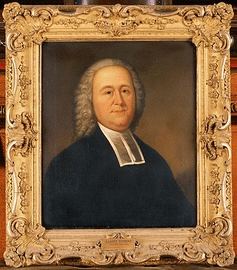
Gilbert Tennet, 1744 on the Qualities of Scripture’s Canonicity

[Gilbert Tennent (1703-1764) was undoubtedly the single most important Presbyterian minister in North America before the War for Independence (1776-1783).]

And here I may summarily observe, that the sacred Scriptures are the perfect and only Rule of our Faith and Practice, Hence in our Text they are said to make the Man of God perfect and thoroughly furnished to every good Work; and hence they are called a Light to our Feet and a Lamp to our Paths and expressly, a rule, Gal. 6:16, “And as many as walk according to this rule, peace be upon them, and mercy, and upon the Israel of God.” From this we must not swerve to the right or left hand. Isa. 8:20, “To the Law and to the Testimony: if they speak not according to this word, it is because there is no Light in them.”

And indeed the holy Scriptures, have only the nature and properties of a Rule, which are these following,

1st a Rule ought to be prescribed by God alone, Mat. 15: 9. A religious rule cannot be prescribed by another than him to whom the persons ruled belong. And indeed, the sublimity of the matter which such rules concern, sufficiently manifest, that they cannot be well made by Creatures.

[Note, following modern text critic practices it is impossible that the Bible be a Canon or Rule in that the “rule” is created internally by the scholar and self-imposed and not external to the Church and imposed by God. Every use of the word “canon” or “canonical” based upon solely empirical textual critical practices is spurious. The “rule,” following this critical scenario, the rule is created by the scholar and the thing ruled is the Church.]

2dly, A Rule ought to be received and public, otherwise how shall it determine Controversies? And thus it is in respect of the Scriptures, they have been prescribed by the public Authority of God himself, and received by the common consent of the Christian Church, as has been before proved; and hence the Church is called the Pillar and Ground of Truth, 1 Tim. 3:15.

[Tennet’s conclusion that the canon of Scripture is received by the “common consent of the Christian Church” is demonized by the modern Evangelical critic. The shear acceptance of the Church of the Textus Receptus and King James Bible manifest the proof of Tennet’s statement.]

3dly, A Rule ought to be clear and plain, otherwise how can we know what we have to believe and do? And so are the Scriptures, especially in the explication of such things, as are of absolute necessity to salvation, And hence they are called a Light, and said not to be hid from us, Deut. 30:11. Where we meet with obscurity, this arises from the sublimity of the things treated of, or the weakness of our understanding rather than from the Scriptures themselves.

[Difficulties with understanding are not ascribed to God’s failure to keep His Word but to “the weakness of our understanding.”]

4thly, A Rule ought to be perfect and adequate, or equal to the thing ruled, so that it need never to be augmented or diminished in the least, otherwise it will be unfit to measure its object. Such is the Holy Scripture, there is nothing to be believed or done, but what it contains and prescribes. Now the Perfection of the Scriptures is two-fold, viz. Integral or Systematical, and Essential, the first consists in its full number of books, which is now complete, and the cannon sealed, (Rev. 22:18.19.) the latter respects the doctrine contained in those books; and this most certainly is complete, as our text asserts, and many other places. And hence we are bound to the Scripture alone as our Guide, by the strictest injunctions. (Deut. 17:19; Isa. 8:20) And forbid to add to it or detract from it, under the severest penalties! (Deut. 6:2; Rev. 22:18. 19.) And informed that we shall be at last judged by it, John 12:42. And Reason will inform us, that it must be perfect, seeing that it is the first Principle, and last explication of our Faith, 2 Pet. 1:20, 21. If it were not so, true and perfect conclusions could not be drawn from it, for the effect cannot be better than its cause. The sacred Scripture has all its essential parts, viz. Matter and Form, and all its integral, viz. Law and Gospel, and is therefore Perfect.

[Tennet writes to the Scripture in the tradition of Church in autographic terms not to add or subtract from he text. Augmentation essentially removes the text from the being Integrally or Essentially canonical. For the believer, “reason informs us, that it must be perfect seeing that it is the first principle (principium) and last explication (revelation, exposition) of our Faith.”

5thly. A Rule ought to be constant and immovable, evermore and everywhere like to itself, otherwise how can any certain measure be ruled by it, and such is the Holy Scripture, 2 Pet, l. 19. We have a more “sure word of prophecy, (bebaioteron propheticon logon.)

[The canon, to be such, cannot be mutable, the essential failure of multiple version onlyism. (After reading Tennet, it is impossible to equate our nation’s early theologian’s and writer’s understanding of Scripture with the feckless drivel espoused by White, Ward, and Carson, et al.)]

Gilbert Tennet, The Divine Authority of the Sacred Scriptures, the being and attributes of God, and the doctrine of the Trinity (Philadelphia: Printed by W. Bradford, 1744), 80-82.
Lecture Series 2 Starting Tomorrow Evening Tuesday 1/24 @7:30 with Dr. Peter Van Kleeck, Sr., author of “An Exegetical Grounding for a Standard Sacred Text: Toward the Formulation of a Systematic Theology of Providential Preservation.”

Tomorrow evening 1/24 at 7:30pm EST we will begin a 10-week series on the Biblical basis for the theology we call the Providential Preservation of Scripture. For the Church to possess such a doctrine there must be a sound exegetical grounding for this element of Systematic Theology and specifically, the Doctrine of Scripture or Bibliology. Since the mid-19th century what was once a robust element of Orthodox Theological formulation and grounding has dwindled even among advocates of the TR and KJV. If Christian theology and apologetics are ever again to meet the challenges of transcendentless, radically historical, solely empirical arguments, it must return to its exegetical roots. This series lays the groundwork for Volume 3, Theological Grounding, and a traditionally cohesive, timely formulation of the Doctrine of Scripture’s Providential Preservation. Hope to see you tomorrow evening at 7:30pm.

Then He Poked The Bear: Episode VI

This week we continue working our way through Then He Poked the Bear, a small book written by Van Kleeck Jr. in order to stir the scholastic pot. In this episode, Dr. Van Kleeck, assuming a merely evidential method, deals with the reality that compounding interdependent evidence does not yield greater certainty but instead diminishes the probability of a given belief because along with the compounding of higher-level probabilities we also compound the lower-level uncertainties. This phenomenon will be illustrated by using a simple version of Bayes’ probability calculus as it appears in Alvin Plantinga’s Warranted Christian Belief.

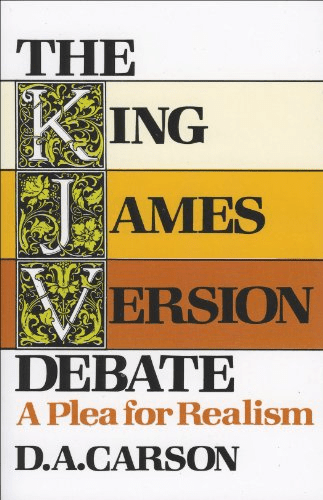
Carson’s Confusion

Thesis 6: The argument that defends the Byzantine text by appealing to the providence of God is logically and theologically fallacious.

This assertion is of course logically and theologically fallacious. On the next page (56) Carson reverses himself and writes, “God, it is argued, has providentially preserved the Byzantine tradition. That is true….” Was Carson “logically and the theologically fallacious?”  

In thesis 6, Carson interprets divine providence in such a way as to reinterpret the 1646 Westminster Confession of Faith, where “kept pure in all ages” does not mean kept pure in all ages. He does so from a radically historical perspective while identifying as a Christian author. “The process by which the words of the Canon were collated cannot be classified, categorized, or easily referenced because all external criteria for canonicity fails. Also, because the result of divine providence is only recognized after the fact.” How God kept his word pure in all ages is a historic algorithm of divine proportion, that he did preserve his word pure is a as sure as the promises of God – Psalm 12:6-7; Prov. 30:5-6. While he agrees that the Byzantine text type has been providentially preserved, he also argues that all the other so-called “text types” have been providentially preserved. This is of course true as was argued in Theological Grounding. What he fails to recognize is the role of the Holy Spirit, text of Scripture and Covenant keeper who function providentially within this providential context. He writes as if providence is some sort of deistic power void of the moving of God through the Spirit, Word, and Believer.

Because it has been some time since Carson’s book has been considered, allow me again to cite Myths and Mistakes on the so-called Byzantine text type. In Myths and Mistakes, we read “The entire textual stream – including the Byzantine tradition – is far more stable than typically admitted.” p. 115, and on p. 116, “Distinctly Byzantine readings often have ancient roots.” Carson, in writing this book, has forever demonstrated the true fallacy of writing dogmatically in a disciple that is perpetually changing. Carson’s primary target of ridicule has critically proven to be unworthy of Carson’s condemnation. If you were to take the pejorative content relating to the so-called Byzantine text type out of Carson’s book, the volume would look more like a drive-in menu than a scholarly offering.

Carson then hypothetically appeals to a growing population and the expected abandonment of the King James Bible to Multiple Version Onlyists. For English reading people, none of the Multiple Versions Onlyist texts have surpassed the popularity of the King James Bible. The now feckless prediction has been proven false, a reminder of how much credence a misguided, that is someone not guided by the wisdom of God in His Word, should be given no matter what his credentials.

If one were to embrace Carson’s “plea for realism” your life would be lead astray by the pretend world his book creates, and in a desperate way, in that, by making Carson’s confusion regarding Scripture your confusion, the source of true meaning would be obscured or for some, much worse, and forsaken.

Road Creek Ford

Not far from my house is a road that cuts off several mile when heading west. This road has a unique name as do many roads in America – Road Creek Ford. For me, every time I take the right down Road Creek Ford, I am reminded of the error it would be for historians to interpret the name of this road according to some prescribed road-naming convention.

You can imagine the textual road naming elite attempting modern critical methods to determine the proper name of the road. Most conspicuously, “Road” should receive an (A) rating for being the third word in the name. After all, “Road” is what is being described. “Ford” as a shallow place to cross a stream would perhaps receive a (B) or (C) rating as the last of the three words describing the historic location, but dropping to a (D) rating when attempting to replace the (A) rated “Road.” The likelihood of “Road” being the first word of the name is negligible. “Ford Creek Road” raises the issue of “Ford” being the name of a person for whom the creek was named. This seems the most likely rendering of the road’s name.

The next possibility would be “Creek Road Ford” where again “Creek” serves as an adjective for “Road” and on “Creek Road” there is a “Ford” thus “Creek Road Ford.” While this makes logical sense, it does not answer the question of giving the road’s name. It is not a ford at issue but a road. Unless, a ford was the issue and the name is simply in an entirely wrong naming category. Add to this the historic improbability of a 21st century ford, the notion of “Creek Road Ford” as the lost name would reveal a high degree of doubt and receive a (C) or (D) rating.

Again, if the issue was “creeks,” “Ford Road Creek” where again, consistent with the naming convention, “Ford” is the adjective describing “Road” and then naming a nearby creek makes logical sense, but only if the name was of a creek and not a road.

Note that there is no naming convention that makes the noun “Road” an adjective for another noun “Creek” to describe another noun “Ford.” The likelihood of this name being the original, according to modern road naming convention has a high decree of doubt and would receive only a (D) rating. Only if “Road Creek” is the name of the creek due to its proximity to a road or being named after someone named “Road”, and on that creek there is a ford, does the name of the ford make any sense. Such a rendering should receive minimally a (B) or (C) rating.

With the addition of competing (A) ratings, the solution to the correct name beginning or ending with the word “Road” falls to some naming authority. The modern road naming authority, while citing the variants, will assure the reader that while the reading in the text received an (A) rating, “Ford Creek Road,” that the questions about this choice and variant readings are included in the textual apparatus.

The point of this brief exercise is that the elite naming critics without access to the road sign, the autograph, on the corner of “Double Cabin” and “Road Creek Ford” possess only limited and subjective knowledge of the road name and will be forever at the mercy of fluctuating empirical surmising making their best guess at the road’s name and then pretending they have it right. And with this pretending is the demonization of all those who declare the truth that the name of the road is Road Creek Ford. After all, how unscholarly would someone be to believe that?

What we all need, including the critic, is an authoritative map to which everyone must appeal for the true reading.

Lecture Series 2 Starting Next Tuesday 1/24 @7:30

We will be beginning a 10 week study of passages dealing with Scripture’s providential preservation. To inaugurate the series, this Tuesday we will be considering elements that make exegesis and theology a distinctly Christian discipline including a glossary of words that will be used throughout the study. For those who want to read ahead, the first lesson will hit the high points of Pages 1-44 of An Exegetical Grounding for a Standard Sacred Text. Hope to see you Tuesday evening!

LIVE Lecture and Q&A w/ Dr. Van Kleeck Jr. – 01/16/2023

Today [Monday, January 16th] will be the sixth lecture of the Standard Sacred Text lecture series. I had to move this week’s lecture up a day because we have something going on at church this Tuesday night. We will begin at 7:30pm EST and will be held on the Zoom meeting platform. The lecture should run 50 or so minutes with LIVE interaction and Q&A both as the lecture is going on as well as afterward.

This week we conclude our journey through Then He Poked the Bear, a small book written by Van Kleeck Jr. in order to stir the scholastic pot. In this episode Dr. Van Kleeck, assuming a merely evidential method, deals with the reality that compounding interdependent evidence does not yield greater certainty but instead diminishes the probability of a given belief because along with the compounding of higher level probabilities we also compound the lower level uncertainties. This phenomenon will be illustrated by using a simple version of Bayes’ probability calculus as it appears in Alvin Plantinga’s Warranted Christian Belief.

Join us tonight at 7:30pm EST by clicking the button below. See you there.

N.B. – Next week Dr. Van Kleeck Sr. will begin lecturing through his work An Exegetical Grounding for a Standard Sacred Text. Here he will begin a robust positive exegetical argument in favor of holding to a standard sacred text.

Then He Poked The Bear: Episode V

This week we continue working our way through Then He Poked the Bear, a small book written by Van Kleeck Jr. in order to stir the scholastic pot. In this episode Dr. Van Kleeck, assuming a merely evidential method, addresses the reality that the statement, “It’s in the text or the apparatus” is a prime example of a Gettier Problem. That is, modern evangelical textual criticism can only yield beliefs based on relative degrees of probability but it can never deliver justified true belief or what is more commonly called, knowledge. Dr. Van Kleeck will explain this point by way of an example which employs well-meaning farmers from the Wisconsin countryside.

LIVE Lecture and Q&A w/ Dr. Van Kleeck Jr. – 01/10/2023

Tomorrow will be the fifth lecture of the Standard Sacred Text lecture series. We will begin at 7:30pm EST and will be held on the Zoom meeting platform. The lecture should run 50 or so minutes with LIVE interaction and Q&A both as the lecture is going on as well as afterward.

This week we continue working our way through Then He Poked the Bear, a small book written by Van Kleeck Jr. in order to stir the scholastic pot. In this episode Dr. Van Kleeck, assuming a merely evidential method, addresses the reality that the statement, “It’s in the text or the apparatus” is a prime example of a Gettier Problem. That is, modern evangelical textual criticism can only yield beliefs based on relative degrees of probability but it can never deliver justified true belief or what is more commonly called, knowledge. Dr. Van Kleeck will explain this point by way of an example which employs well-meaning farmers from the Wisconsin countryside.

Join us tomorrow at 7:30pm EST by clicking the button below. See you there.

Why the Most Recent Critically Based “Better” Version Fails the Church

The most recent critically based “better” version fails the Church because:

  1. it is not the theological or exegetical standard.

So let’s say we capitalize the pronouns referring to Deity, add some italics, and change the name of God by transliteration and not translation in the new version. Are we to gather because this the “better” version that all other versions in the MVO family must make changes to rise to the new standard? While one new version makes changes, there are plenty remaining that read differently and are not in translational alignment. In reality, all a new version gives the reader is more optional readings to consider, muddying the interpretive water while hoping to achieve a larger market share for its investors. There is no recent critically based “better” version that occupies the place of theological or exegetical standard. Indeed, one more version solidifies the truth that with the disparagement of the King James Version, the design of the critical camp was to guarantee that the Church would never again have a standard sacred text. The best arguments for another non-standard is the introductions to all the versions in the MVO family. After all, they are all the finest translations, that the finest modern scholars, with the best access to manuscript evidence, can produce.

  • it’s creators only pretend it is infallible Scripture. “Pretend” is defined, “to give a false appearance of being, possessing, or performing.”

The most recent critically base “better” fails the Church because it gives the false appearance of being the Word of God, of possessing self-attesting, self-authenticating, self-interpreting, inspired, infallibility, and of performing the unifying work of a standard sacred text. Once the Church pretends it has the Scripture, the essential realities that make Scripture God’s infallible Word are no longer necessary. Those transcendent qualities and characteristics are disregarded, the inauguration of the modern version’s acceptance grounded in an academic consensus to pretend it is the Scripture. Because pretending begins with a willingness to suspend reality, once the pretend Bible is adopted, all reason based, systemically formulated empirical arguments to the contrary are as irrelevant as saying the water in the little teacup in front of the teddy bear is really tea and that the stuffed bear actually requested a cup of tea. This is the apologetic and polemic sphere in which the defense of the pretend Scripture resides. The best argument for the pretend Bible is by analogy. Water is a liquid and so is tea or, theologically speaking, the Bible contains elements of God’s Word. As for the talking stuffed bear, the Evangelical text critic will do the talking for everyone around the table. After all, he or she is preeminently skilled in pretending.

And you are required to pretend the new bible is Scripture because of legacy institutions’ information dominance assuring you that pretending is acceptable and normative. Introductions to the new bibles assure the reader that novel literary and translational conventions are an improvement of the prior iteration. Not even in the Reformation Bible tradition did most recent mean better when considering the inability of the Bishops’ Bible to surpass the utility and popularity of the Geneva Bible. There are abundant reasons even within the multiple version only universe why novel renderings and translational conventions have been avoided. Why is 151st Psalm only found in the NRSV? Why the inclusion of the long reading of Mark 16 when the critical philosophy rejects the pericope as Scripture? Why is El-Shaddai translated “Almighty” and not “the breasted God?” Because even for the MVO advocate, some additions, subtractions, and translational changes are too extreme for people to pretend it is or is not Scripture. And it is the capability of the market, or Church, to pretend, that governs the shape of the modern translation. After all, the version is only as good as its marketability.

  • It is merely another addition to the pantheon of versions contributing to the theological and ecclesiastical malaise characteristic of multiple version onlyism.

It is impossible that the most recent new version is superior to the King James Version for the following reasons:

  1. It has not been vetted; it has only been endorsed. No one knows how the new version will withstand historical critical scrutiny. Will it show some utility or drift away as an anomaly?
  2. It cannot rise as the superior translation and remain part of the multiple version only library of bibles. The fact that it is not a standard restricts its ascendancy within the translational ranks to versional widespread mediocrity.
  3. And because of this versional mediocrity it is illegitimate to say that the chosen means of translation and adjusted literary convention is better than its predecessors.
  4. It is essentially the same as the other formally equivalent modern translations of the bible, hemmed in by the same underlying textual principles and methods. The most recent version is not better because all the previous modern versions have not been better because of the common malleable textual base.
  5. The new version cannot be spoken of in autographic terms because empirical evidence cannot connect the version and underlying text with the autograph. One can only say “Thus saith the Lord,” when reading the new version by pretending the Lord said it.
  6. The new version will add to the cacophony and impossibility of corporate responsive reading.
  7. The new version will lead to further confusion in the church as pastors replace the last best version with the most recent best version in the pews. This action will demonstrate that it is not the Scripture that governs the church but the man who governs the bible. Under the guise of Evangelicalism, the pastor functions more like a little pope than the undershepherd.
  8. The new version will lead to further schisms in the church as sides are taken based on the testimony of endorsers and personal opinion on which of the MVO versions are the best.
  9. The King James Version brought exegetical, theological, ecclesiastical, institutional, and societal stability to the English-speaking world. Another new version among the many is not going to reverse the present trend toward diminished exegetical grounding, theological ambivalence, ecclesiastical fecklessness, institutional deterioration, and societal chaos in the church and culture.
  10. With the world going to “hates in a hat basket,” publishers and apologists throw the church a lifeline that is moored to nothing. “Grab ahold,” they say, “I’ll pull you to safety.” But you find that the so-called lifeline is perpetually changing, always lengthening, and while you pull with all your might, you remain in the raging seas of contemporary culture and sinking. Publishers and apologists for new bibles are in the business of giving false hope, a cruel and despicable trade when what we all need is the sure and certain promises of God in His Holy Word.