The Prophet Jeremiah and Inspiration (Part 1)
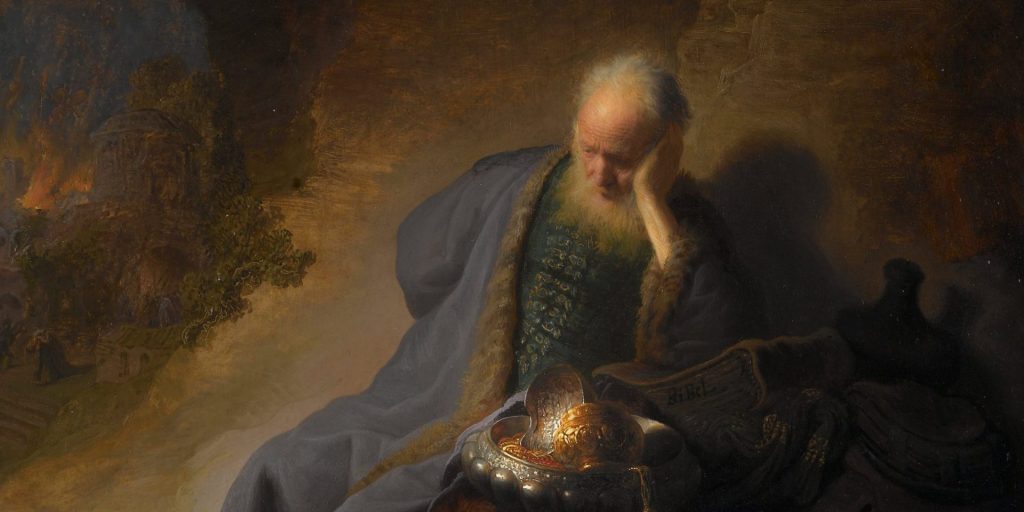
Today we begin a short series on Bibliology and the prophet Jeremiah. Our focus falls on chapter 36. In this chapter we find at least four relevant themes: 1.) inspiration, 2.) transmission, 3.) textual criticism, and 4.) the status of the original. Let us begin with the first theme – inspiration. Jeremiah writes in Jeremiah 36:1-2,
“And it came to pass in the fourth year of Jehoiakim the son of Josiah king of Judah, that this word came unto Jeremiah from the Lord, saying, Take thee a roll of a book, and write therein all the words that I have spoken unto thee against Israel, and against Judah, and against all the nations, from the day I spake unto thee, from the day of Josiah, even unto this day.”
Jeremiah 36:1-2
In the general discussion surrounding the immediate inspiration of the Scriptures there often arises a series of questions. These questions include: How did inspiration take place? What was imported to the penman’s mind via inspiration? To what degree did the penman retain his will? Who chose the words to write? Here in Jeremiah 36:1-2 we get answers to all of these questions.
First we see that God commissioned the writing of this book. The command to write is followed by an act of obedience and of worship on the part of Jeremiah. God not only condescended to man to command the writing of the text, but He also provided the very words to be written. Jeremiah records God saying, “write therein all the words that I have spoken unto thee.”
Second, who chose the words? God did. God gave the words to Jeremiah to write. Did this act usurp Jeremiah’s will in some way? Not any more than the words of a lawyer may be said to “usurp” the will of the stenographer or the words of the executive may be said to “usurp” the will of the secretary. Jeremiah is in a state of obedience to his Lord as he writes. God is his King and Jeremiah is the herald of this royal and divine message.
Third, note the nature of the command. God commands that Jeremiah write all the words God spoke to him from the time Josiah [Jehoiakim’s father] until the present time. Anyone want to recount all the words which God spoke to you over the last year? Especially after God commanded that you write all of them?
The point being that because the words spoken in the past are God’s words, and the command in Jeremiah’s present is also composed of God’s words, then the potential element of human frailty via forgetfulness is immaterial. These words are not Jeremiah’s words. He did not formulate and order them. God did. So what was imported to the penman’s mind via inspiration? The present words of chapter 36 as well as the words which God spoke to Jeremiah back in the time of Josiah up the point of chapter 36. And this is not the only time such a phenomenon happens in Jeremiah 36. That we will discuss in the fourth part of this series.
What then does it look like when holy men of God spoke as they were moved by the Holy Ghost? It looks like what happened here in Jeremiah 36:1-2: God commanded. Jeremiah freely obeyed that command and wrote down the immediately inspired words which God gave him, both present and past. All while God did not “take control” of Jeremiah and usurp his will.
Certitudo

“certitudo: certainty, certitude, surety;
the certainty of knowledge (ceritiudo cognitionis), also termed the certainty of assent or adhesion (certitudo adhaesionis).
Richard Muller, Dictionary of Latin and Greek Theological Terms: Drawn Principally From Protestant Scholastics, certitudo.
Muller goes on to explain that according to the Protestant scholastics, certain knowledge occupies at least four spheres:
“(1) Certitudo demonstrativa, or demonstrative certainty, which is an absolute certainty resting on logical demonstration or proof.”
Muller, Dictionary, certitudo.
As Christians, especially in the academic sphere, this is the kind of certainty we are often exposed to. Can you prove X via rational argument or demonstration? This is the kind of certainty employed by textual critics in choosing this or that reading. While this form of certainty can assist the Christian worldview and subsequent arguments it is not the whole of the certainty.
“(2) Certitudo moralis is a nondemonstrative certainty found in ethical decision and resting on probable arguments.”
Muller, Dictionary, certitudo.
This form of certainty as little bearing on our work here in that is speaks to the certainty one has in making moral judgements.
“(3) Certitudo principiorum is the certitude of principles, i.e., the certainty of basic principles known in and through themselves.”
Muller, Dictionary, certitudo.
This is the certainty we here at StandardSacredText.com refer to when we speak of the Scriptures as being the principium cognoscendi. Scripture is certain in and through itself. Thus, the certainty we appeal to is not the same certainty appealed to by the text critic and the evidentialist [i.e., demonstrative certainty]. The self-certainty of Scripture is not demonstrable by some more basic principle. It is only demonstrable by itself via certitudo principiorum. As such, the standard evangelical text critical argument and the dogmatic arguments of the Confessional Text/Ecclesiastical Text/ Standard Sacred Text have not the same principle or aim. But we must go a step further.
“(4) Certitudo theologica, theological certainty, is also termed the certitudo fidei, the certainty of faith. This certainty is not demonstrative, nor does it derive from self-evident principles. Nevertheless, theological certainty is not simply a probable certainty but a certitudo absoluta et infallibilis, an absolute and infallible certainty, resting on divine revelation by faith.”
Muller, Dictionary, certitudo.
So then the Scriptures are certain as the first principle of knowledge and the Christian can be certain via faith. Indeed, the certainty of faith is not demonstrative nor is it derivative [i.e., discursive] nor merely probable. The certainty of faith is absolute and infallible, resting on divine revelation by faith. I hope now you can understand why we hold to our Scriptures so strongly and why we continue to amid the slings and arrows from our brothers and sisters in Christ.
I hope you can begin to see why those who hold to the TR or KJV and those who hold to something else are really not aimed at the same thing. The latter seems to aim only at the certainty by demonstration while the former admits that Scripture is self-certain and the Christian can be certain via faith about what he believes regarding his Bible. In this case, he believes his Bible is certain and authoritative down to the very words.
We [the TR and Critical Text sides] simply do not share the same vocabulary. But let’s be clear, it is not the TR side which has abandoned the Protestant orthodox language of certainty and certitude. So, who’s the schismatic now?
Do Real Contradictions Occur in Scripture? We deny. (Part 2)
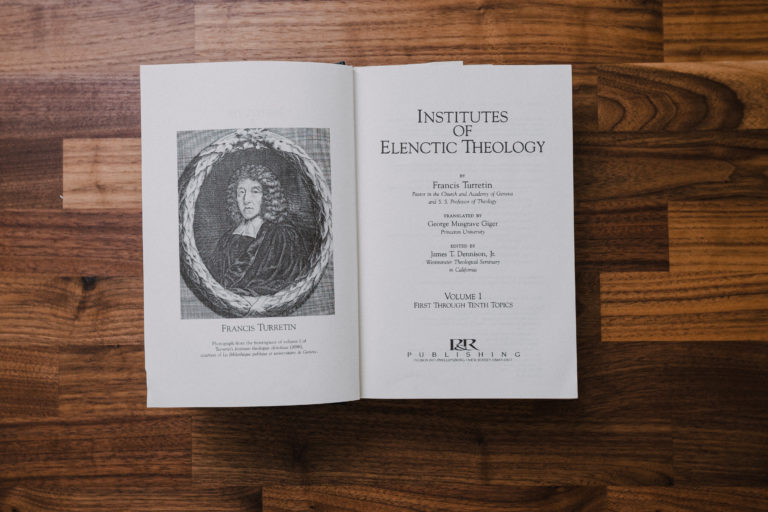
In Part 1 we discussed the state of the case surrounding the existence or non-existence of contradictions and errors in Scripture. We saw that the Christian response was multifarious but concluded that the common orthodox understanding was that no real contradictions occur in Scripture and all minor errors were/are presently solvable. Now in Part 2 we discuss Turretin’s argument as to why there are neither real contradictions nor minor errors in the Greek and Hebrew texts. First he begins with what our question here is not.
“The question is not as to the particular corruption of some manuscripts or as to the errors which have crept into the books through the negligence of copyists or printers. All acknowledge the existence of many such small corruptions.”
Francis Turretin, Institutes of Elenctic Theology Vol 1, Second Topic, Q. 5, Sec. 5.
Note that the Protestant orthodox were indeed very aware of the variant readings and “small corruptions” in the apographa [i.e., copies] of the originals. While we may have more NT documents in the twenty-first century than they had in the seventeenth, the objections to the purity of the present text remains the same. Turretin then goes on to state the question as,
“The question is whether there are universal corruptions and errors so diffused through all the copies (both manuscript and edited) as that they cannot be restored and corrected by any collation of various copies, or of Scripture itself and of parallel passages.”
Turretin, Institutes, Second Topic, Q. 5, Sec. 5.
There are two particular things worth pointing out in the above quote. First, there seems to be no indication that Turretin intends some distant future in which Scripture would be restored. In fact as we will see, Turretin’s emphasis seems to be on his present circumstance. Second, note that Turretin here advocates for the Scripture be an agent of restoration for the Scriptures. This of course goes back to the idea of the Scriptures being one of the principium [i.e., first principle] of Christianity. Scripture is self-attesting, self-authenticating, and self-interpreting. As such it is appropriate that it proves itself.
Turretin goes on to offer two reasons/arguments why the orthodox deny that the copies are so corrupted that they cannot be restored in his day. The first is exegetical and the second is logical invoking a cause and effect relation. Concerning the first, Turretin writes,
“The Scriptures are inspired by God (theopenustos, 2 Tim. 3:16). The word of God cannot lie (Ps. 19:8; Heb 6:18); cannot pass away and be destroyed (Mt. 5:18); shall endure forever (1 Pet. 1:25); and is truth itself (Jn. 17:17). For how could such things be predicated of it, if it contained dangerous contradictions, and if God suffered either the sacred writers to err and to slip in memory, or incurable blemishes to creep into it?”
Turretin, Institutes, Second Topic, Q. 5, Sec. 6.
Note that Turretin’s first line of argumentation is to invoke Scripture to support the character of Scripture in his day. He did not invoke manuscript evidence though he had it and could have. He begins with the Bible as a witness to the Bible. He believes what the Bible says about the Bible first, and then he interprets the contradiction or “slight errors” in front of him. Second, I would like to point out that he does indeed employ Matthew 5:18 [jot and tittle] as an evidence for literal preservation. In other words, he does not understand Jesus’ words here to be a natural or oriental hyperbole. Jesus in the text says jot and tittle and so we believe it means jot and tittle. Turretin drives this home in his second reason/argument.
Regarding the second reason/argument he writes,
“Unless unimpaired integrity characterize the Scriptures, they could not be regarded as the sole rule of faith and practice, and the door would be thrown wide open to atheists, liberties, enthusiasts and other profane persons like them for destroying its authenticity (authentian) and overthrowing the foundation of salvation.”
Turretin, Institutes, Second Topic, Q. 5, Sec. 7.
Most Christians, indeed, learned Christians would say that it is highly probable that the integrity of the Scriptures is impaired maybe by two or three percent and maybe more. For Turretin, if this is the case, then Scripture is not the sole rule of faith and Christian practice. There is the Scriptures and something alongside it. At present, in most Protestant circles, it seems the thing that has come alongside the Scriptures is academia or scholarship. We need the Bible and the text critical apparatus if we really want to know what the Bible is.
Turretin goes further to argue a line that flies quite in the face of the current Protestant parlance; that minor errors do not affect major doctrine. Turretin and we here at StandardSacredText.com disagree. He clearly states that impaired integrity simpliciter can overthrow the foundation of salvation. In other words, minor errors don’t just affect major doctrine; minor errors may upend the whole of the Christian faith. Seems pretty austere doesn’t it. He goes on to ask a series of rhetorical questions in expressing this austerity.
First question –
“For since nothing false can be an object of faith, how could the Scriptures be held as authentic and reckoned divine if liable to contradictions and corruptions?
Turretin, Institutes, Second Topic, Q. 5, Sec. 7.
Second question –
“Nor can it be said that these corruptions are only in smaller things which do not affect the foundation of faith. For if once the authenticity (authentia) of the Scriptures is taken away (which would result even from the incurable corruption of one passage), how could our faith rest on what remains?
Turretin, Institutes, Second Topic, Q. 5, Sec. 7.
Third question –
“And if corruption is admitted in those of lesser importance, why not in others of greater?
Turretin, Institutes, Second Topic, Q. 5, Sec. 7.
Fourth question –
“Who could assure me that no error or blemish had crept into fundamental passages?
Turretin, Institutes, Second Topic, Q. 5, Sec. 7.
Fifth question –
“Or what reply could be given to at subtle atheist or heretic who should perniciously assert that this or that passage less in his favor had been corrupted?
Turretin, Institutes, Second Topic, Q. 5, Sec. 7.
Sound familiar? Confessional text advocates…KJV advocates….how many times have you used similar words? Multiple version only advocates, how many times have you heard a Confessional or KJV advocate ask similar questions like these spoken centuries ago in the third wave of the Reformation? Yet time and time again the Confessional group, the KJV church are the schismatics because they cling to historical Reformed argumentation. Ironic.
Turretin does not answer these questions directly. He simply makes the following statement,
“It will not do to say that divine providence wished to keep it free from serious corruptions, but not from minor. For besides the fact that this is gratuitous, it cannot be held without injury, as if lacking in the necessary things which are required for full credibility (autopistian) of Scripture itself. Nor can we readily believe that God, who dictated and inspired each and every word to these inspired (theopenustois) men, would not take care of their entire preservation.”
Turretin, Institutes, Second Topic, Q. 5, Sec. 7.
Do Real Contradictions Occur In Scripture? We deny. (Part 1)
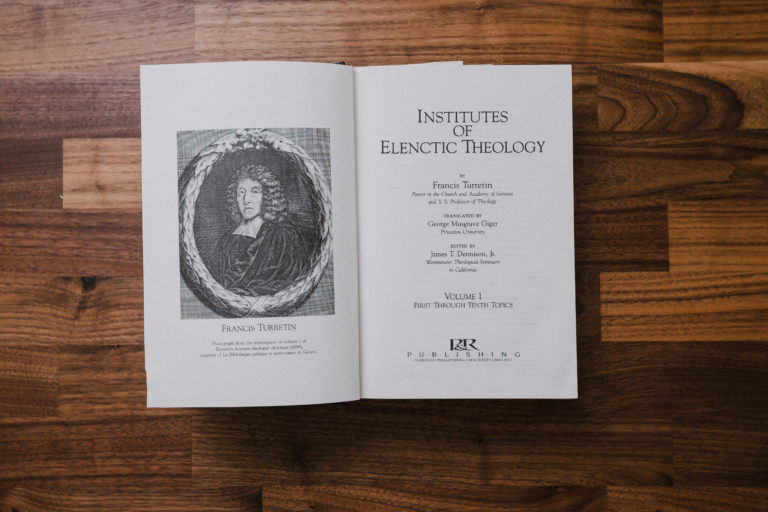
Continuing our Bibliology Primer we now come to the question of whether real contradictions appear in the Scriptures. This blog post will be divided into two section, maybe three. The first section will deal with the problems faced by the Reformers at there time which, interestingly enough, very closely resembles similar problems the Standard Sacred Text/Confessional Text/KJV community face today. The second section will address Turretin’s response to these problems. I may then write a third entry addressing the proposed “contradictions” which Turretin undertakes. For now, and beginning with our first section, Turretin writes,
“Although when the divinity of the Scriptures is proved (as in the preceding question), its infallibility necessarily follows, yet the enemies of true religion and of Scripture in every age flatter themselves that they have found not a few contradictions in it and boast of their discoveries in order to overthrow its authenticity.”
Turretin, Institutes of Elenctic Theology Vol. 1, Second Topic, Q. 5, Sec. 1. 70.
But Turretin does not limit his apologetic address to those outside the Church who care little for the word of God. No, he expands his response to those in the Church. It should not be surprising then that both people in the Church and outside the Church willingly or otherwise attempt to weaken the authority of Scripture in this or that part. Turretin observes,
“we have to deal here not only with declared atheists and Gentiles who do not receive the sacred Scriptures, but also with those who, seeming to receive them, indirectly oppose them.”
Turretin, Institutes, Second Topic, Q. 5, Sec. 2. 70.
While dealing specifically with supposed contradictions in Scripture, Turretin broadens the target a bit by including “Enthusiasts who allege the imperfection of the written word,” “papists… insisting on the corruption of the original,” “Libertines who, living in the bosom of the church, are constantly bringing forward these difficulties,” and all “in order to weaken the authority of the Scriptures” [ Second Topic, Q. 5, Sec. 2. 70]. Not much has changes since the 1600’s.
Turretin then gives a series of responses “the learned” have used over time to answer the accusations of the enthusiasts, papist, atheists, and libertines. Some say “the sacred writers could slip.” Others say the “Hebrew and Greek originals are corrupted.” But perhaps the most familiar, and the one used by most in the English-speaking Church to this very day is,
“Others again think that a few very slight errors have crept into the Scriptures and even now exist which cannot be corrected by any collation of manuscripts. These are not to be imputed however to the sacred writers themselves, but partly to the injuries of time, partly to the fault of copyists and librarians.”
Turretin, Institutes, Second Topic, Q. 5, Sec. 3. 70
Now pause for just a minute and try to guess what Turretin’s next line is going to be. I mean Turretin wrote nearly 400 years ago. What do you think the chances are that the next line is his text is a near direct quote from our present day? Turretin writes immediately after the quote above,
“Yet on this account, the authenticity (authentia) of the Scriptures cannot be weakened because they occur only in things less necessary and important.”
Turretin, Institutes, Second Topic, Q. 5, Sec. 3. 70
This is THE present day response of so many pastors, theologians, and laymen to the “slight errors” found in Scripture. Nearly every seminary, Reformed or otherwise, concludes with the above language. “Slight errors don’t matter because they don’t affect any major doctrine.” Sound familiar? Still, Turretin at the time of the Reformation states that this is not the majority position held by the orthodox or those of right thinking.
Turretin goes on to offer the orthodox prescription when he writes,
“Finally others defend the integrity of the Scriptures and say that these various contradictions are only apparent, not real and true; that certain passages are hard to be understood, but not altogether inexplicable. This is the more common opinion of the orthodox, which we follow as safer and truer.“
Turretin, Institutes, Second Topic, Q. 5, Sec. 3. 70 [Italics: Mine]
In short, Turretin lumps the Roman Catholics, Atheist, Charismatics, and the prevailing opinion of the present-day English-speaking Church into the same group in terms of “improperly defending the integrity of the Scriptures.” He then goes on to declare that all contradictions are apparent and infers that all “slight errors” are presently reconcilable rather than potentially reconcilable. It is this last part which we will deal with in greater deal in our second section.
For now, it is important to note that arguments against a standard sacred text are old. There is nothing new under the sun. It now falls to our generation to address these old failed arguments, and we need not go far. So much of the answer has already been laid out for us in examples like Francis Turretin. Study. Be gracious. Be compelling. Be bold.
Has the Bible Been Kept Pure?

Welcome to the Brickyard. This is a place to find quotes for use in your own research. The bricks are free but the building is up to you. The following quotes are from Garnet Howard Milne’s, Has the Bible Been Kept Pure? Confession of faith and the Providential Preservation of Scripture. Milne’s work quotes the Westminster Divine in order to give the reader an understanding of providential preservation during that time in Protestantism. Our brief focus will be on Daniel Featley who wrote in the mid-1600’s. He was both a Westminster Divine and also work on the translation of the King James Bible.
Concerning the language of jot and tittle in Matthew 5:18, Featley writes in a sermon entitled, The Lambe Turned Lion,
“If a skilfull Jeweler will not grind out a small spot, or cloud out of a rich stone, though it somewhat dimme the bright lustre thereof, because the substance is so precious; shall we lose, or sleightly passe by any Iota, or tittle of the Booke of God, which shall outlast the large volumes of the heavens? for heaven & earth shall passe away, but not one Iota, or tittle of the Word of God shall passe.”
Milne, Kept Pure, 137-138.
Featley does not take jot and tittle as a metaphor or hyperbole. He takes it to literally mean jot and tittle. Milne goes on to observe,
“For Featley the Scriptures are “‘the records of heaven, the deeds of Almighty God, and evidence of our salvation.'” He believed, therefore, that the Scriptures be possessed were ‘indited and penned’ by the Holy Spirit. They were of that degree of purity.”
Milne, Kept Pure, 139 [Italics: Mine]
Milne then goes on to quote Featley,
“Wherefore as in the interpretation of other inspired Scriptures, wee are humbly to intreat the assistance of the Inspirer, so more especially in the explication and application of this, which is not onely effective a spiritu, but also objective de spiritus, not only indited and penned (as all other) by the spirit, but also of the spirit.”
Milne, Kept Pure, 139
In sum, I offer you one of Milne’s many examples that it was the position of the Westminster Divines that the Scriptures held in their hand were indited [i.e., composed] and penned by the Holy Spirit Himself. And why are we to accept this interpretation of Scripture? Because the Holy Spirit inspired those same Scriptures and we call upon the Inspirer to interpret His own inspired words to us.
Weekly Question – Which Bible Version Do You Read and Why?
Which English version of the Bible do you read? Do you account multiple versions of the English Bible to be equal? Instead of reading one perhaps you read many and hold them each to be relatively equal in authority. Why? What rational basis do you have for these conclusions? What Scriptural basis do you have for these choices?
Special Revelation
A More Sure Word

“We have also a more sure word of prophecy; whereunto ye do well that ye take heed, as unto a light that shineth in a dark place, until the day dawn, and the day star arise in your hearts.”
II Peter 1:19
In the beginning of the apostle Peter’s second catholic epistle he declares that in his lifetime the bride of Christ has a more sure word of prophecy, of proclamation. Here we take this to be the Apostolic Message. The message given from Christ to the apostles as sent ones of Christ. The operative question is, “More sure than what?” Using the analogy of faith, the context gives us all we need to answer that question. Note that the immediately preceding material speaks of Peter’s experience on the Mount of Transfiguration.
“For we have not followed cunningly devised fables, when we made known unto you the power and coming of our Lord Jesus Christ, but were eyewitnesses of his majesty. For he received from God the Father honour and glory, when there came such a voice to him from the excellent glory, This is my beloved Son, in whom I am well pleased. And this voice which came from heaven we heard, when we were with him in the holy mount.”
II Peter 1:16-18
Peter here recounts two most excellent experiences: being eyewitness of the transfiguration of Christ and hearing the very voice of God from Heaven. It is these two experiences to which Peter compares this more sure word of prophecy. We should think that seeing the transfigured Christ is a sure “word” of Christ’s divinity and lordship. To compound that optical encounter, Peter also heard the very voice of God the Father from Heaven approving the person and therefore work of Christ on earth.
And yet after such a grand display of divine revelation Peter by immediate inspiration declares that we have a “more sure” word of prophecy. More sure than what? It seems quite clear that Peter is teaching that the Apostolic Message is more sure than being an eye and ear witness to the transfigured Christ. And what is the Scripture if not the Apostolic Message in written propositions? How sure can we be of Christ’s divinity and lordship if we were there with Him in the holy mount? Whatever your answer, the Scripture is more sure than that.
Autopistos

“autopistos: trustworthy in and of itself;
specifically, a term used by the Protestant scholastics to denote the self-authenticating character of scriptural authority.
Richard Muller, Dictionary of Latin and Greek Theological Terms: Drawn Principally from Protestant Scholasticism, autograph.
As we have noted other place regarding the self-attesting character of Scripture as the principium cognoscendi we see here as well that the Protestant scholastics argued for the self-authenticating nature of Scripture. That is, the Scripture itself proves who its author is and as such authenticates its own message and authority. Autopistos emphasizes the truth that the Scriptures are trustworthy in and of themselves apart from any external dependent authoritative source. Muller goes on to explain,
“If Scripture is trustworthy in and of itself (in se and per se), no external authority, whether church or tradition, need to be invoked in order to ratify Scripture as the norm of faith and practice.”
Muller, Dictionary, autopistos.
Where Muller notes “church or tradition,” one could also include academia, the sciences, and among those sciences, textual criticism. Because the Scriptures have God as their primary author, they are by virtue of this quality self-attesting, self-authenticating, and self-interpreting. No other authority, indeed derivative authority can ratify or make officially valid the Scriptures.
Muller concludes this entry with the following words,
“The use of autopistos as an attribute of Scripture figures importantly in the Protestant orthodox debate with Rome and with the Roman Catholic concept of the church’s magisterium.”
Muller, Dictionary, autopistos
So the self-authenticating character of Scripture “featured importantly” with the Protestant orthodox in their apologetic endeavors. What of its use today? What of its use among the Protestant text critics and their regular commenting on the theological veracity of the Scriptures [i.e., no major doctrine is changed by variants]? It seems we have come from “featured importantly” to something more like “ignored despisedly.”
 Standard Sacred Text.com