Merry Christmas Sunday

“And she shall bring forth a son, and thou shalt call his name Jesus: for he shall save his people from their sins.” Matthew 1:21

Christ became a man in order to fulfill all the OT law. Romans 8:3-4, “For what the law could not do, in that it was weak through the flesh, God sending his own Son in the likeness of sinful flesh, and for sin, condemned sin in the flesh: That the righteousness of the law might be fulfilled in us, who walk not after the flesh, but after the Spirit.”

Christ became a man so that he could be our compassionate High PriestHebrews 2:17, “Wherefore in all things it behoved him to be made like unto his brethren, that he might be a merciful and faithful high priest in things pertaining to God, to make reconciliation for the sins of the people.”

Christ became a man so he could be our substitute — die in our place on Calvary2 Cor. 5:21, “For he hath made him to be sin for us, who knew no sin; that we might be made the righteousness of God in him.” Hebrews 2:14, “Forasmuch then as the children are partakers of flesh and blood, he also himself likewise took part of the same; that through death he might destroy him that had the power of death, that is, the devil;”

Christ became a man so that a race of men could rise from the dead1 Cor. 15:23, “But every man in his own order: Christ the firstfruits; afterward they that are Christ’s at his coming.”

Church History: Irenaeus, Clement of Alexandria and Tertullian, 2nd century church fathers according to J. Gresham Machen concludes that these men considered the virgin birth “as one of the essential facts about Christ which had a firm place in even the briefest summaries of the Christian faith.”

Ignatius,110: Argued the virgin birth of Christ against one type of Gnosticism known as Docetism as designation derived from the Greek word meaning “to seem.” This heresy taught that Christ only seemed to be corporeal.

Apostle’s Creed, 2nd century: “born of the virgin Mary.”  Confessing that Jesus Christ was virgin born was part, with other essential doctrines, of the minimum of the Christian faith.

Apostle Luke: Luke has no doubt regarding the veracity of the account. See Luke 1:1-4, the certainty.

Weekly Question – What are the most potent objections to the TR/KJV position?

For an upcoming work by Dr.s Peter Van Kleeck, we would like to know what you think are the most potent theological and philosophical objections to the Confessional Text/Standard Sacred Text position on the Scriptures – the more complex and broad-reaching the better. Certainly, there are objections but what are those which wholly defeat our position or cripple it. This question is open to those who agree and those who disagree with our position.

Please be as thorough and as precise as possible. There are in the main two kinds of objections you could argue: 1.) there is some proposition asserted by us to which you have a defeater – undercutting or rebutting 2.) there is something we failed to address which is integral to the greater system touching the originals and version issue.

The reason for putting this question out to the public in this way is because we would like to address these objections considered to be the most potent without presenting them as a strawman. We would like to address these proposed objections as presented in their greatest force and precision.

Thank you for your assistance and input in these regards,

The StandardSacredText.com Team

The Perspicuity [i.e., Clarity] of the Scriptures

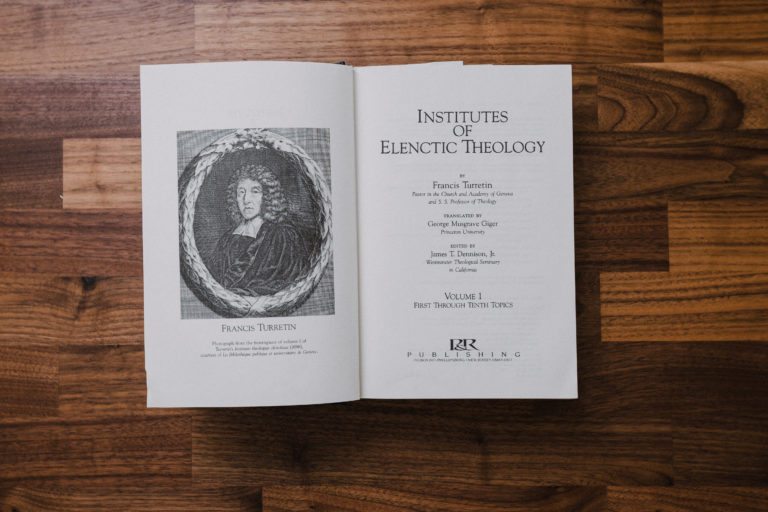
As we continue our Bibliology Primer drawn principally from Francis Turretin’s Institutes of Elenctic Theology we come now to the perspicuity or clarity of Scripture. The objection here raised by the Roman Catholics is that the Scriptures are not in themselves clear enough to profitably nourish and grow the Christian. As a result, it is necessary that Church teaching/tradition come alongside the Scriptures in order to assist the word of God in the shepherding of the Christian in grace. To this affect Turretin writes,

“The papists, not satisfied with their endeavors to prove the Scriptures insufficient in order to bring in the necessity of tradition, began to question their perspicuity…in order to have a pretext for keeping the people from their perusal. Having concealed the candle under a bushel, they reign in darkness more easily.”

Turretin, Institutes, vol. 1, Second Topic, Q. 17, Sec. I.

Turretin then goes on to clarify what exactly is at stake in this question. Again, he writes,

“The question then comes to this – whether the Scriptures are so plain in things essential to salvation…that without the external aid of tradition or the infallible judgment of the church, they may be read and understood profitably by believers. The papists deny this; we affirm.”

Turretin, Institutes, vol. 1, Second Topic, Q. 17, Sec. VII.

As was discussed in the prior post on the point of perspicuity, “things essential to salvation” include the certainty and authority of Scripture; that the Scripture is trustworthy in itself. And before someone out there tries to press the point that all the Reformed have in view here are those passages which speak directly to salvation [e.g., the “Romans Road”], Turretin notes this as a known Catholic argument to besmirch the clarity and therefore authority of Scripture.

After quoting Ps. 19:8 – “the commandment of the Lord is pure, enlightening the eyes,” Ps. 119:105 – “thy word is a lamp unto my feet,” 2 Peter 1:19 – “a light in a dark place,” and Prov. 6:23 – “the law is light,” Turretin observes the following

“Nor is Bellarmine’s [a prominent Roman Catholic apologist] first objection of any force, that only the precepts of the law are meant and not the whole of Scripture. For the word ‘law’ frequently means the whole word of God, and the effects (consolation and renewal) teach that it ought so to be understood.”

Turretin, Institutes, vol. 1, Second Topic, Q. 17, Sec. VIII.

Turretin goes on in the same vein to say,

“The Scriptures are said to be luminous not only because they illuminate the intellect, but because they are in themselves luminous and naturally adapted to illuminate those who look upon them with the eyes of faith.”

Turretin, Institutes, vol. 1, Second Topic, Q. 17, Sec. VIII.

Note here that Turretin separates the effects of Scripture from what the Scriptures are. Certainly, we say the Scriptures are illuminating because of what they do in the hearts of the saved and lost alike. What is more, the Scriptures are illuminating in themselves. That is, they are not illuminated by some other source as the lesser light is illuminated from the sun. No, the Scriptures are in and of themselves light and light giving. As such, it is not necessary that something be added to make them light.

For those who demur at my and Dr. Riddle’s claim that we must work to know the Scriptures even though they are perspicuous, consider the words of that ignorant KJV-only fundamentalist from the 4th century AD, Chrysostom, when he writes,

“The Scriptures are so proportioned that even the most ignorant can understand them if they only read them studiously.”

Turretin, Institutes, vol. 1, Second Topic, Q. 17, Sec. XII.

How dare he assert the person in the pew be studious!? Still, how is what Chrysostom said any different than Dr. Riddle’s response to Mark Ward’s “Which TR?” or my post when I said, “If you are to be a friend to Scripture and Scripture to you then you must spend time with Scripture, ask questions of Scripture, study Scripture, know what Scripture likes to drink with its steak“?

How about that uncaring 7th century AD Ruckmanite, Gregory the Great who wrote,

“The Scriptures have, in public, nourishment for children, as they serve in secret to strike the loftiest minds with wonder; indeed they are like a full and deep river in which the lamb may walk and the elephant swim.”

Turretin, Institutes, vol. 1, Second Topic, Q. 17, Sec. XII.

My point here is that though the Scriptures are perspicuous/clear the challenge to search the Scripture (John 5:39) and to search for wisdom as for hid treasure (Prov. 2:4) is a fundamental feature of Christianity. Are some words and concepts of Scripture difficult to understand? Indeed, Peter says this of Paul when he writes, “As also in all his epistles, speaking in them of these things; in which are some things hard to be understood, which they that are unlearned and unstable wrest, as they do also the other scriptures, unto their own destruction” (2 Peter 3:16). Note that the apostle Peter does not here compel Paul to democratize his language. No, instead Peter castigates the “unlearned and unstable” claiming that they twist the Scriptures to their own destruction. Turretin, following this Scriptural theme, writes,

“The ignorance and blindness of man are not to be compounded with obscurity of the Scriptures. The former is often pressed upon Scripture, but it is not so, nor can the latter be legitimately inferred from the former no more than the sun is obscure because it cannot be seen by a blind man.”

Turretin, Institutes, vol. 1, Second Topic, Q. 17, Sec. XIII.

To this day arguments are being made that because of a few instances of difficult/sneaky words like “halt” or “apt” in the KJV it’s time for a new translation of the Bible in English. Meanwhile, the Scriptures, Chrysostom, Gregory the Great, and Turretin all make these arguments for studious diligence among the ignorant without having the advantage of computers, the internet, or Logos Bible Software, but somehow in a world where we have these tools at the ready, “halt” and “apt” are just a bridge too far.
God’s Self-revelation: the Prerequisite of all Knowledge of God

“God is first of all the subject communicating knowledge to man, and can only become an object of study for man in so far as the latter appropriates and reflects on the knowledge conveyed to him by revelation. Without revelation man would never have been able to acquire any knowledge of God. And even after God has revealed Himself objectively, it is not human reason that discovers God, but it is God who discloses Himself through the eye of faith. However, by application of the sanctified human reason to the study of God’s Word man can, under the guidance of the Holy Spirit, gain an ever-increasing knowledge of God.

When we us the term revelation, we use the term in the strictest sense of the word. It is not something in which God is passive, a mere “becoming manifest,” but something in which He is actively making Himself known. It is not, as many moderns would have it, a deepened spiritual insight which leads to an ever-increasing discovery of God on the part of man: but a supernatural act of self-communication, a purposeful act on the part of the Living God. There is nothing surprising in the fact that God can be known only if, and in so far as, He reveals Himself….All our knowledge of God is derived from His self-revelation in nature and in Scripture. Consequently, our knowledge of God is on one hand ectypal and analogical, but on the other hand also true and accurate, since it is a copy of the archetypal knowledge which God has of Himself.”

Louis Berkhof, Systematic Theology (Grand Rapids: Eerdmans, 1941), 34-35.

So, what are we to make of Dr. Berkhof’s commentary? To be Scripture, it must be “a supernatural act of self-communication, a purposeful act on the part of the living God” who “disclosed Himself through the eye of faith.” This assessment is alien to the modern, empirically driven, textual critic. Empiricism, by definition, eliminates the idea of “supernatural,” and “the eye of faith” has been relegated to the trash heap of theological presuppositions and bias. Connecting the dots, to accept modern textual critical practices is to do away with historic, Christian orthodoxy. The two are wholly incompatible, and yet, the synthesis of two wholly incompatible perspectives, somehow, is held by many as a part of normal Christian living. The Scriptures have been transformed from a “supernatural act of self-communication” into a scientific, or computer driven analysis, a relative, ever-changing work on the part of a committee’s majority vote. If pre-critical historic, Christian orthodoxy is not the answer, post-critical scholarship certainly is not, which leaves us, in the words of Pastor and Defender of the Faith, Dr. David Otis Fuller, “let’s eat, drink, and be merry for tomorrow we die, and go to hell.”

No Word of God without God: No Self-Revealed God without the Word

Reading the Word of God - North American Lutheran Church

“The beginning of the system proper is, in other words, the exposition of the two principia. Scripture and God, as identified, but not fully defined or exposited, in the prolegomena. The question that arises immediately upon the identification of the two principia of foundations: should the system proceed from its ontic to its noetic foundation, or should it proceed from its noetic to its ontic principium? The noetic or cognitive foundation depends for its existence upon the existence and activity of the ontic, or essential foundation: there could be no Word of God without God. But the essential foundation could not be known if it were not for the cognitive foundation: there could be no knowledge of God without God’s self-revelation….[T]he Protestant orthodox almost invariably adopted the noetic or epistemological pattern and moved from Scripture, the principium cognoscendi, to God, the principium essendi.”

Richard A. Muller, “Holy Scripture: The Cognitive Foundation of Theology,” Post-Reformation Reformed Dogmatics, vol. 2 (Grand Rapids: Baker, 1993), 150.

Reasonable Faith and Scripture

Welcome to the Brickyard. This is a place to find quotes for use in your own research and writing. The bricks are free, but the building is up to you. The following quotes are from Herman Bavinck’s Our Reasonable Faith: A Survey of Christian Doctrine.

“All of these works of God in creation and providence can rightly be called a speaking or saying for the reason that God is a personal, conscious, thinking being, who brings all things into existence by the word of His power, and who thus puts thoughts into the mind of man which man, as His image and likeness, can read and understand.”

Bavinck, Reasonable Faith, 63.

“Just so, whoever understands the voice or speech of God in general revelation in the good, that is, in the Scriptural, sense loses the right to raise basic objections to the voice of God in special revelation. For God can reveal Himself in a special way because He does it in a general way. He can speak in a proper sense because He can speak in a metaphorical sense. He can be the Re-Creator because He is the Creator of all things.”

Bavinck, Reasonable Faith, 65.

“The great difference between this speaking on God’s part in general revelation and that in His special revelation is that in the first God leaves it to man to find out His thoughts in the works of His hands, and that in the second He Himself give direct expression to those thoughts and in this form offers them to the mind of man.”

Bavinck, Reasonable Faith, 65.

“The Word of God, unwritten first and written later, does not derive its authority from men, not even from the authority of believers, but from God, who watches over it and brings about the acknowledgment of it.”

Bavinck, Reasonable Faith, 114.

“The study of these translations, too, especially those of old time, is very important for a proper understanding of Holy Scripture. For every translation, after all, is really a kind of interpretation.”

Bavinck, Reasonable Faith, 114.

Knowing the Scripture Certainly

Andrew Willet’s Cambridge classmate William Perkins reiterated his high view of Scripture in his commentary on Galatians. This was Perkins’s last book, posthumously edited by Ralph Cudworth.[1] In The Epistle Dedicatorie Cudworth writes this of the word of God:

They being of such perfection that nothing may be added unto them, nor anything taken away from them: of such infallible certainty, that heaven and earth shall sooner pass away, than one tittle fall to the ground.[2]

William Whitaker (or Whitacre), 1547-1595, Regius Professor of Divinity and Master of St. John’s College in the University of Cambridge wrote a treatise entitled A Disputation of Holy Scripture Against the papists especially Bellarmine and Stapleton.[3] Arguing the question of authority, Whitaker writes,

For we gladly receive the testimony of the church, and admit it is authority; but we affirm that there is a far different, more certain, true, and august testimony than that of the church. The sum of our opinion is, that the scripture is autopistos, that is, hath all its authority and credit from itself; it is to be acknowledged, is to be received … because it comes from God; and that we certainly know that it comes from God, not by the church, but by the Holy Ghost.”[4]

Turretin argues,

The Scriptures do not possess metaphysical certainty, otherwise the assent which we give to them would bespeak knowledge, not faith. Neither do they possess simply a moral and probable certainty; otherwise our faith would not be more certain than any historical assent given to human writings. But they have a theological and infallible certainty, which cannot possibly deceive the true believer illuminated by the Spirit of God.[5]

The explanation for why a believer can know Scripture certainly is because the Holy Spirit is the illuminator of the Word. The argument for the subjective nature of the human mind understanding all things relatively would be an understandable foil if it were not for the truth telling work of the Holy Spirit, who impeccably teaches the believer the Word of God.

Muller summarizes, “The fundamental issue addressed by the Reformers and orthodox alike was the issue of authority and certainty.”[6]


[1]William Perkins, A Commentary on Galatians, ed. Gerald T. Sheppard (New York: Pilgrim Press, 1989).

[2]Perkins, Galatians, The Epistle Dedacatorie.

[3]William Whitaker, A Disputation of Holy Scripture Against the papists especially Bellarmine and Stapleton, 1588 (Cambridge: Cambridge University Press, 1849).

[4]Whitaker, Disputation, 279-280.

[5] Franics Turretin, Institutes of Elenctic Theology, vol 1 (Phillipsburg: Presbyterian and Reformed Publishing, 1992), 69.

[6] Richard A. Muller, “Holy Scripture: The Cognitive Foundation of Theology,” Post-Reformation Reformed Dogmatics, vol. 2 (Grand Rapids: Baker, 1993), 240.

Perspicuity – What the Scriptures Are vs. What They Say.

Turretin askes regarding the Perspicuity of the Scriptures,

“Are the Scriptures so perspicuous in things necessary to salvation that they can be understood by believers without the external help of oral (agraphou) tradition or ecclesiastical authority? We affirm against the papists.

Francis Turretin, Institutes of Elenctic Theology, vol. 1, Second Topic, Q. 17.

First the term perspicuity,

“perspicuitas: perspicuity, clarity of thought, lucidity;

one of the traditional attributes of Scripture. The attribution of perspicuitas to Scripture does not imply that all passages are clear; rather, the point is that all things necessary to salvation are clearly stated and the obscurities in the text are to be elicited through comparison to and collation with clear passages in accordance with the analogy of scripture (analogia Scripturae, q.v.) and the analogy of faith (analogia fidei, q.v.).”

Richard Muller, Dictionary of Latin and Greek Theological Terms: Drawn Principally from Protestant Scholastic Theology, Term: perspicuitas.

One thing necessary to salvation is that God be a truth-teller. For salvation to be salvation and redemption, redemption, God cannot be a liar. As such, a necessary thing of salvation is to believe that God’s words, the things God says, are true. Hence, we get the words of Scripture reminding us of this fact, “Abraham believed God, and it was counted unto him for righteousness” (Romans 4:3). Abraham believed God’s promise to him. Abraham believed God’s words. Furthermore, without faith it is impossible to please God and faith only comes by hearing the word of God. Is the word of God itself necessary for salvation? Yes. Is what the word of God says necessary for salvation? Yes, again.

So, before we get into Turretin on this question we must ask, “Can the Scriptures be understood apart from ecclesiastical, and for that matter, academic tradition?” We argue in the affirmative here at StandardSacredText.com. The Scripture’s testimony is so clear that not only can we understand what the Scriptures say, but we can also understand what the Scriptures are. And we can do all of this without the intervention of ecclesiastical or academic authority. Put another way, it is no more necessary for a believer to have a Ph.D. or the imprimatur of a Ph.D. before that believer can understand what the Bible says than it is for a believer to have a Ph.D. or the imprimatur of a Ph.D. before that believer can understand what the Bible is [i.e., what reading is Scripture and what is not]. And why is this?

Well as you recall from a prior post and a prior argument from Turretin, there is a twofold way we can know that our translation conforms with the original: grammatical and spiritual. The former is an academic enterprise while the latter takes place in the heart of the believer by faith when the Spirit of God speaks through the word of God. The point is, the Scriptures are clear about what they teach concerning salvation and seeing that Scripture is an integral part of salvation, both ontologically and epistemologically, the Scripture is also clear concerning itself as Scripture. Touching the version issue, this clarity is born out academically, but more importantly spiritually in that the Spirit of God speaks through the word of God to the people of God by faith. The end result being that the church believes they have a standard sacred text in their hand. For us, that standard sacred text is, in the original, the Masoretic Hebrew and the TR. For the English-speaking church, it is the King James Version. Perhaps you disagree with us on the point of the original text or the version, but do you at least have a standard sacred text?

Can The Intuitively Contradictory Life Be Saved?

Contradiction Quotes | Best Famous Quotations About ...

The answer is, short of divine intervention, no, they cannot be saved from their chosen life of chaos. Some perspectives so alter a person that a return to the pre-altered state is implausible. Once holding truth in unrighteousness becomes normative, the internal contradiction itself and the chaos that results from this contradiction makes a return to holding the truth in righteousness an absurdity and therefore impossible. The noetic contradictory paradigm repulses from the notion of “being saved” arguing, “being saved from what? There is no need to be saved from what is normal.” For the intuitively contradictory mind there is nothing to be saved from. Indeed, only contradictory paths are valid.

For instance, if someone were to assert that there is only one authoritative English version of Scripture, this claim, because it does not accept contradictions as valid, is ridiculed, demonized, and considered untenable. Indeed, beyond these pejoratives, such exclusivity is not normal. No categories exist in the intuitively contradictory noetic equipment to consider the evidence in this exclusionary manner. No grounds, therefore, exist for exploration of the exclusivity. The single authoritative version of the Bible and the intuitively contradictory mindset have absolutely no common ground from which to begin a dialogue.

Another reason for this communicative bifurcation is that the notion of “exclusivity,” “single,” or “exclusionary” smacks of some expression of control, an idea chaos rebels against. Chaos will not submit to speech about control, let alone control itself. Chaos will also not admit of correction that seeks alignment. So, before an actual issue is presented, the exclusive, aligning nature of the issue is rejected based on the trajectory of the issue’s description. “Exclusivity” is not contradictory, its aligning trajectory is not contradictory, and therefore, the issue is invalid and subsequently demonized.

In two wholly separated kinds of people and streams of thought, contradictory and non-contradictory, is resolution between the two possible? As stated earlier, the answer is a certain, no. Neither frame of thought will relinquish what they intuitively grasp as normal, nor can they. However, between the contradictory and non-contradictory believers are on a personal, theological pilgrimage to discover what kind of people they will be. While on this pilgrimage, much like Bunyan’s allegory, “Pilgrim’s Progress,” Christian’s road to the Celestial City is rife with ruinous deviations. Christian also meets companions and resources that aid him on his travels. Pilgrim travels a single road. Detours were never to be taken. Detours would not take Christian to his appointed destination. So, for the undecided pilgrim who is walking the road to the Celestial City, one question remains, “Will you remain on the single, exclusive, exclusionary path to the Celestial City as Christian did, or, will you choose rather to travel the road of intuitive contradiction, rejecting the exclusivity of the single path you first, and have so far, ventured upon?”