Whiston’s Objection 7, Page 99. In John 8:5, the Jews say that Mosses commanded the stone the adulteress, which assertion our Savior’s answer in John 8:7 confirms. This punishment, although in this age it is not extant in the Hebrew, nor Samaritan Pentateuch, nor in the Septuagint, nor Josephus, yet that in ancient times it was prescribed, and in the time of Christ was read in the law, besides the place quoted, is acknowledged also by the Apostolic Constitution.
Carpov’s Answer: Interpreters differ about the punishment of the adulteress, because Moses (Leviticus 20:10 and Deuteronomy 22:22) had indeed appointed a capital punishment indefinitely to both the adulterer and adulteress, but had not assigned them any particular kind of death.
The Jewish rabbis agree that it was strangling; but since severer punishments were to be afflicted upon growing crimes, Grotius thinks the adulteries becoming frequent at that time, used to be punished by stoning. Henry Hammond is of the opinion that stoning only took place, when the adulteress was taken in the very act, as in the fourth verse of this chapter. Selden understands is of a betrothed, not a married wife, whom Moses expressly appoints to be stoned to death. With him agrees Francios Burman, Wagenseilius that famous interpreter of the Jewish antiquities and laws, insinuates that stoning is declared by Moses in Deuteronomy 22:22 compared with the 24th verse. And this might be confirmed by Ezekiel 16:38-40 where stoning is said to be the judgment of the adulteress.
However this be, here we have the words of the scribes and Pharisees, quoting Moses to that sense in which they understood and explained the words. Hence it may be clearly perceived that at that time, the practice of the Jewish courts of justice was to stone adulteresses, Christ in his answer to them does not say that he read in his copy that the stoning was expressly appointed by Moses to adulteresses, but disputing with them ad hominem, upon their principles, and desirous to confound the prosecutors, he retorts the same sentence upon them which they had pronounced against the woman, leaving it in suspense, and not determining whether the punishment of stoning for the crime took its rise from the decision of Moses, or from the then present practice of their courts.
Upon this consideration, our Savior’s discourse argues no omission in the copy of the law; and much less can be the pretended Apostolic Constitutions, which in the place already cited follow Moses exactly, neither do they determine any kind of death. For thus they say; “ean tiV gukaika upandron mianh, apokteinate amfoterouV, anamian epoihsan, enocoi eisin, apoqanetwsan: If any man shall defile a married woman, put both of them to death; they have committed iniquity, they are guilty, let them die.” These words Mr. Whiston has slyly omitted, quoting those only which went before, about the sin of unnatural uncleanness being punished by stoning to death, and which have nothing to do with what we are now upon; by this example again showing us with what insincerity he produces his vouches. All I shall add is, transiently, to observe that since some deny this whole portion of Scripture any way to belong to St. John, thinking that it has been but lately intruded into his gospel, Selden already mentioned has recited their reasons, and Francios Gomarus has industriously vindicated it, as belonging to St. John, and solidly proved its authenticity. [italics added]
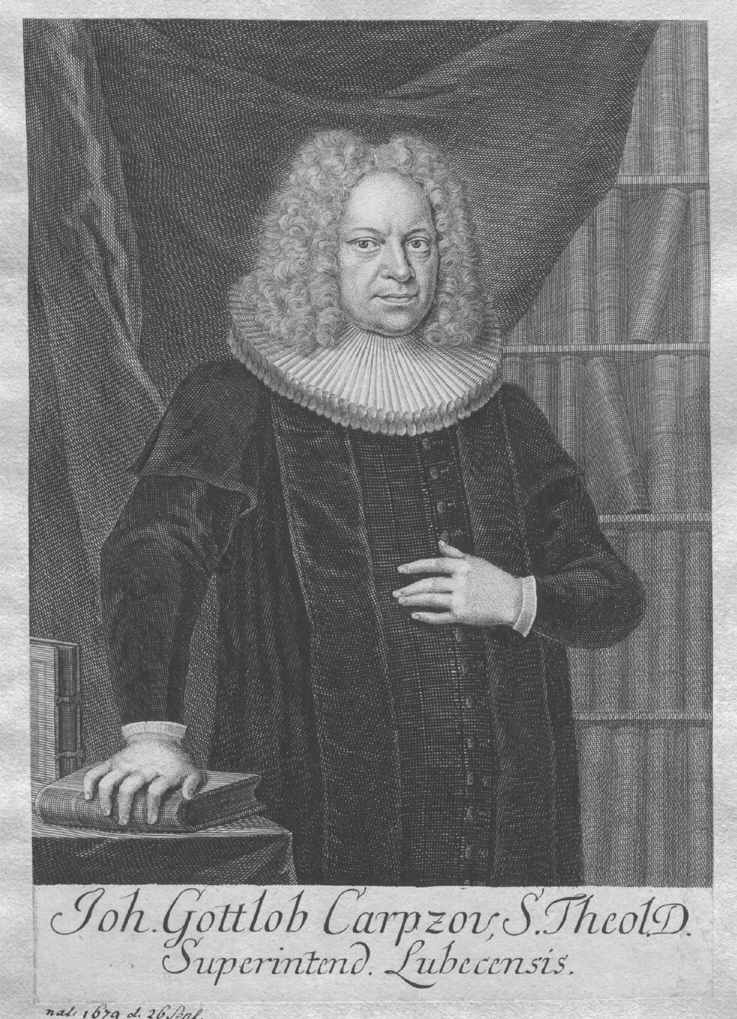
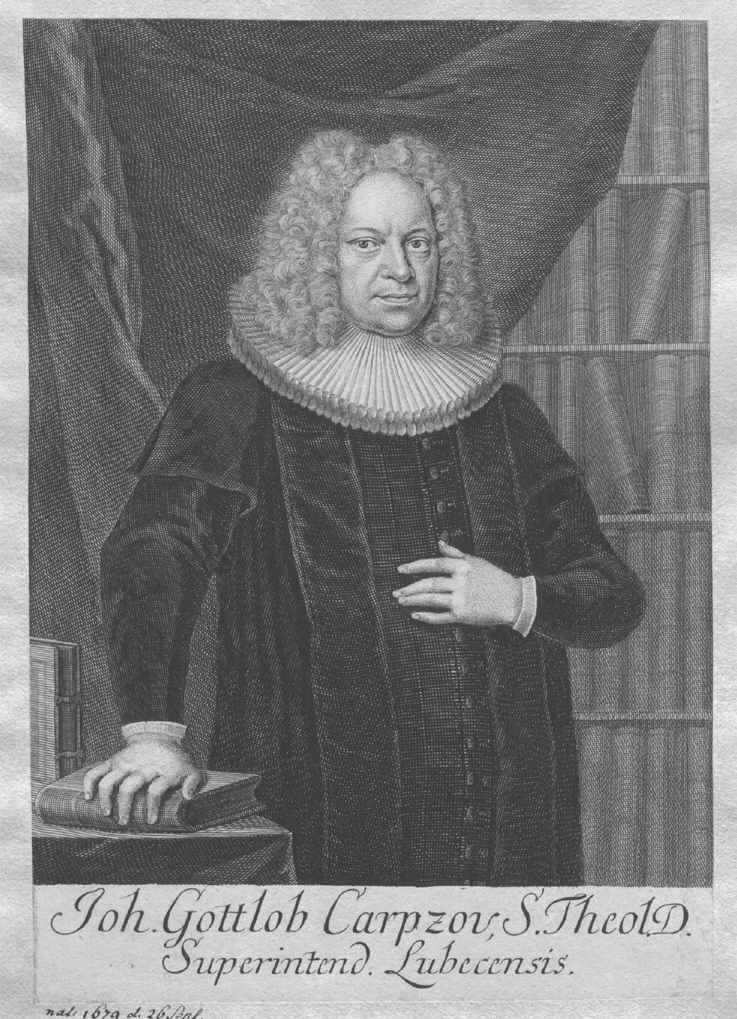
Johann Gottlob Carpzov, A Defense of the Hebrew Bible, in answer to the charge of corruption brought against it by Mr. Whiston, in his Essay towards restoring the true test of the Old Testament, trans. by Moses Marcus, 1729 (Kansas, OK: Berith Press, 2025), 161-164.
This quiz was composed by Henry G. Bosch, originator and 25-year editor of the devotional guide, “Our Daily Bread.” This quiz ran in the Grand Rapids Press in December of 1994 and has been edited for our use.
1. Jesus was born about how many months after John the Baptist? _6 months – Luke 2:36_
2. Jesus’ grandfather’s name was _Jacob – Matt. 1:16_
3. The Gospel of Mark does not speak of Jesus’ birth, but it does tell of his boyhood.
True ( ) or False (X ) — no information at all
4. The Bible tells us there were three wise men or magi who came to visit Jesus.
True ( ) or False (x ) – just plural
5. The star which the wise men had seen in the East reappeared long enough to direct them to the stable where Christ was born. True ( ) or False ( x ) – to the house,Matt. 2:11
6. The wise men did not have to guess which town Jesus was born in as Herod was able to send them directly to Bethlehem. True ( x ) or False ( ) –Matt. 2:8
7. When the wise men came, they saw Jesus and Mary, but the Bible does not mention Joseph being present. True (x ) or False ( ) –Matt. 2:11
8. How were the wise men warned of God not to return to Herod? Choose one:
a. ____ An angel told them
b. ____ They thought it over and reason and good sense told them it would be unwise.
c. __X__ They were warned in a dream not to do so – Matt. 2:12
9. How many dreams did Joseph have in connection with the birth and young childhood of Jesus? 4. 1. Matt. 1:24; 2. Matt. 2:13; 3. Matt. 2:19; 4. Matt. 2:22_____
10. The Bible says the magi rode on camels. True ( ) or False (x ) – no information
11. One of the Gospel records traces Jesus’ ancestry all the way back to Adam. Which one? ___Luke 3:23-38_
12. Mary took Jesus as a baby to Jerusalem. True ( x ) or False ( ) – Luke 2:21
13. When Mary went to visit the home of Zacharias before the birth of Jesus, she…Choose one;
a. ______ kissed her cousin
b. ______ received a message from Zacharias
c. ______ felt “the babe leap in her womb.”
d. __x____ saluted Elizabeth – Luke 1:40
14. And old man and an elderly woman saw Jesus when he was a tiny baby. What were their names? __Simeon – Luke 2:25____________ and ____Anna – Luke 2:36______
15. Where did these elderly saints see Jesus? _temple — Luke 2:27, 37______
16. Which one of these aged souls had definitely been married? __Anna – Luke 2:37_______
17. The woman was old, but less than ninety years of age. True ( ) or False ( x ) – 7 married +84 widow= 91 –Luke 2:36-37
18. Jesus had a distant relative who was struck dumb and probably deaf for a period of time. What was the relative’s name? _Zechariah – Luke 1:18ff (John the Baptist’s father)___
19. The wise men arrived at the manger after the shepherds. True ( ) or False ( X ) – house –Matt. 2:11
20. When the shepherds came, they found not only Jesus, but Mary and Joseph lying in a stable. True ( ) or False (x ). Luke 2:16 —
lying – κείμενον from keimai– Accusative, singular, masculine and Neuter Present Participle
This quiz was composed by Henry G. Bosch, originator and 25-year editor of the devotional guide, “Our Daily Bread.” This quiz ran in the Grand Rapids Press in December of 1994 and has been edited for our use. This material makes for an excellent Sunday School lesson on Christmas Sunday morning to enlighten visitors and remind the regulars of the details of the birth of Christ.
Jesus was born about how many months after John the Baptist? ___________
Jesus’ grandfather’s name was _________________________
The Gospel of Mark does not speak of Jesus’ birth, but it does tell of his boyhood. True ( ) or False ( )
4. The Bible tells us there were three wise men or magi who came to visit Jesus. True ( ) or False ( )
5. The star which the wise men had seen in the East reappeared long enough to direct them to the stable where Christ was born. True ( ) or False ( )
6. The wise men did not have to guess which town Jesus was born in as Herod was able to send them directly to Bethlehem. True ( ) or False ( )
7. When the wise men came, they saw Jesus and Mary, but the Bible does not mention Joseph being present. True ( ) or False ( )
8. How were the wise men warned of God not to return to Herod? Choose one:
____ An angel told them
____ They thought it over and reason and good sense told them it would be unwise.
____ They were warned in a dream not to do so.
9. How many dreams did Joseph have in connection with the birth and young childhood of Jesus? _____
10. The Bible says the magi rode on camels. True ( ) or False ( )
11. One of the Gospel records traces Jesus’ ancestry all the way back to Adam. Which one? ___________________
12. Mary took Jesus as a baby to Jerusalem. True ( ) or False ( )
13. When Mary went to visit the home of Zacharias before the birth of Jesus, she…Choose one;
______ kissed her cousin
______ received a message from Zacharias
______ felt “the babe leap in her womb.”
______ saluted Elizabeth
14. And old man and an elderly woman saw Jesus when he was a tiny baby. What were their names? __________________________ and _________________________
15. Where did these elderly saints see Jesus? ___________________________
16. Which one of these aged souls had definitely been married? _________________________
17. The woman was old, but less than ninety years of age. True ( ) or False ( )
18. Jesus had a distant relative who was struck dumb and probably deaf for a period of time. What was the relative’s name? __________________________
19. The wise men arrived at the manger after the shepherds. True ( ) or False ( )
20. When the shepherds came, they found not only Jesus, but Mary and Joseph lying in a stable. True ( ) or False ( ).
Check Standardsacredtext.com later this week for the answers.
“For since one and the same Spirit dictated to, inspired, and influenced holy men in compiling the Scripture, and since he is not a God of confusion, and inconstancy, or contrary to himself (1 Corinthians 14:33), but the Spirit of truth, leading us into all truth; hence it follows that none of the Scripture oracles can contradict or oppose one another. We ought therefore to seek out for a method of reconcilement, and to look up to the Father of Lights for it, that we may be enabled to compass those seeming contradictions according to the intention of the Holy Ghost.”
The hard word of Bible defense, according to Carpzov’s erudite assessment, yields two unavoidable conclusions. First, Holy Scripture is infallible, even when confronted with apparent difficulties that have not yet received fully satisfactory resolution. Such perceived unresolved questions do not undermine Scripture’s truthfulness but instead call for continued theocentric research. This conviction forms the substance and animating purpose of Carpzov’s scholarly investigation. Second, to yield the academic field to those whose deliberate aim is to fabricate so-called, or merely imagined, errors in Scripture is for the believer to make an unwarranted and imprudent concession. Such surrender grants legitimacy to adversaries of God’s infallible Word and abandons the proper posture of faith seeking scholarly, well-researched understanding.
Johann Gottlob Carpzov, A Defense of the Hebrew Bible, in answer to the charge of corruption brought against it by Mr. Whiston, in his Essay towards restoring the true test of the Old Testament, trans. by Moses Marcus, 1729 (Kansas, OK: Berith Press, 2025), 143
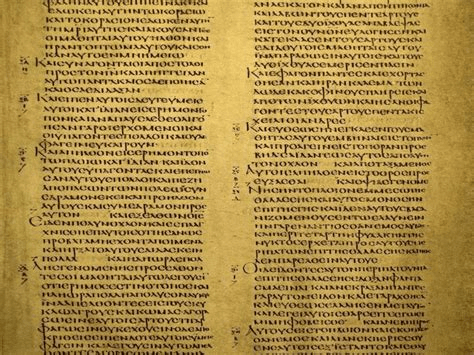
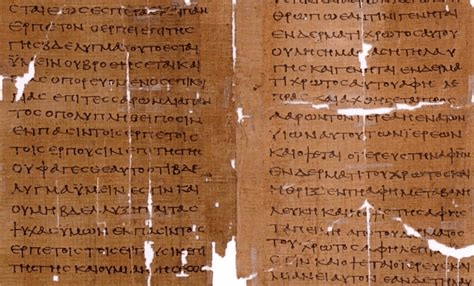
Let us admit that the Greek, which is called the Septuagint, differs very widely from the Hebrew copy, yet it differs too much from itself, that as many editions of it as are to be seen this day, so many various readings may be observed; and no man is so clear-sighted as to be able to declare or inform us which of them exactly agrees with the original Greek text, of which of them is interpolated; what changes, transpositions, additions, and mutilations, many of these editions have suffered, partly from the boldness of critics and ignorant pretenders, partly from the injuries of time; and how many things have been foisted into it which change and confound the ancient and genuine text of this translation, from the versions of Aquila and Theodotion, and other Greek translators, out of the Octapla of Origin.
Preeminence of the Hebrew Scripture
Such always has been the dignity and prerogative of authentic writings [the Hebrew text], that when they differ from a translation, the error should rather be attributed to it, than to them; neither must their readings be put out of possession, unless it be proven by the most weighty arguments, that it can no longer maintain its place. Therefore that conclusion is altogether absurd and rash, by which these false critics, from the disagreement of the Greek translations, attempt to bring the original text into suspicion or corruption, or to change it with errors.
Johann Gottlob Carpzov, A Defense of the Hebrew Bible, in answer to the charge of corruption brought against it by Mr. Whiston, in his Essay towards restoring the true test of the Old Testament, trans. by Moses Marcus, 1729 (Kansas, OK: Berith Press, 2025), 25, 27
The Greek translation of the Old Testament, now commonly and rather carelessly labeled the Septuagint, is one of the most misrepresented and mythologized documents in biblical studies. The very name “Septuagint” is a historical confusion masquerading as a canonized fact. According to the lore of the Letter of Aristeas, seventy-two translators produced a Greek Pentateuch in seventy-two days. That story applies only to the Pentateuch, and even that legend is a fiction. Yet the name Septuagint was later pasted wholesale onto an ever-expanding assortment of Greek translations of varying quality, produced over a century and a half, often by anonymous hands of dubious ability. In other words, the label “LXX” is not history; it is marketing. It hides the reality that the so-called Septuagint is not a unified translation at all, but a patchwork quilt of inconsistent, frequently sloppy Greek renderings.
The corruption of the Greek text is not the complaint of a partisan defender of the Hebrew. It is admitted, almost with embarrassment, by mainstream scholarship. The International Standard Bible Encyclopedia documents this with dispassionate clarity: “The task of reconstructing the oldest text is still unaccomplished.” A major section of Jeremiah and Baruch “was incompetent,” exhibiting “flagrant examples” of translators choosing Greek words simply because they sounded like Hebrew words they did not understand. Some sections contain “free paraphrases” and “legendary additions.” If any other translation in Church history bore this level of acknowledged corruption, scholars would dismiss it outright. Yet the LXX continues to be treated with a mystical reverence wholly out of proportion to its origins.
The irony cannot be overstated. The same scholars who recoil at the suggestion that God might providentially preserve His Word through the traditional Hebrew text, or through the King James Bible that shaped the English-speaking Church for four centuries, are often the first to promote the LXX as if its very existence were a theological event. Versions, we are told, cannot be authoritative, except, apparently, when we are speaking of an ancient Greek version known to be corrupt. In light of these acknowledged textual deficiencies, the widespread confidence placed in the LXX is surprising. Some treat the Greek Old Testament as if its existence were providentially assured or even divinely sanctioned. Yet to claim such a status for the LXX, while denying the same to the Hebrew Scriptures or even to the English translations that carefully follow them, is inconsistent. Both the LXX and the King James Version are versions, translations from a source text. Yet those who would never elevate an English translation above the Hebrew often exhibit little hesitation in elevating the Greek Old Testament above the Hebrew from which it was derived. Roman Catholic apologists have long argued the priority of ancient versions (Greek and Latin) over the Hebrew; some modern defenders of the LXX adopt a similar posture. But such a position is at odds with the Reformation principle that versions derive their authority from the original-language texts, not the other way around. The Roman Church has long argued for the superiority of versions (Greek and Latin) over the Hebrew; now certain modern defenders of the LXX, functioning as Old Testament Ruckmanites, repeat the same error. If one were to claim for the King James Version what some claim for the LXX, outrage would follow. Yet the Greek translation, with all its documented blunders, is somehow permitted to sit in judgment over the inspired Hebrew text.
The Letter of Aristeas presents the translators of the LXX-Pentateuch as if they were prophets, each producing identical translations without collaboration. Philo heightens the myth, describing the translators as speaking “as though some unseen prompter were at their ears,” producing a miraculously uniform Greek text. If Philo meant what he said, then the LXX as he imagined it is not a translation but an act of possession, hardly the kind of miracle Christians should defend. And yet almost no modern scholar accepts the authenticity of Aristeas, nor does the surviving Greek text remotely resemble a miraculously uniform production. The truth is simpler and far less flattering: the LXX is a very human document, marked by the fallibility, ignorance, and inconsistency of its translators.
The mythology surrounding the LXX collapses when one asks a straightforward question: Where is the authoritative Septuagint text? The answer is equally straightforward: no such text exists. There is no universally accepted standard LXX. Textual critics are still attempting, after two millennia, to reconstruct what the “original” Greek might have been. The reason they cannot is because the “original” was never a unified work to begin with. Anyone who champions the LXX over the Hebrew must therefore admit that they have placed their confidence not in a single, divinely preserved text, but in an amorphous, ever-shifting reconstruction of a collection of inconsistent Greek translations.
The Reformation understood the danger of elevating versions above the inspired originals. Francis Turretin summarized the classical doctrine succinctly: “For no version has anything important which the Hebrew or Greek source does not have more fully, since in the sources not only the matter and sentences, but even the very words were directly dictated by the Holy Spirit.” Elenctic Theology, 125. Turretin’s position is devastating to LXX-prioritism: no translation, Greek or English, can surpass the authority of the original-language Scriptures. And if translations must be judged by the quality of their work, the LXX fails spectacularly. The Hebrew stands, and the Greek translation, valuable as a historical witness, yes, but a witness riddled with errors, cannot be elevated to a standard it never possessed.
δικαιοσύνη, dikaiosuné — “integrity, virtue, purity of life, uprightness, correctness in thinking, feeling, and acting:” Here, dwelleth in that coming world as its essential feature, all pollutions having been removed.[1]
John Murray, in Redemption Accomplished and Applied, describes glorification as:
the final phase of the application of redemption. It is that which brings to completion the process which begins in effectual calling. Indeed it is the completion of the whole process of redemption. For glorification means the attainment of the goal to which the elect of God were predestined in the eternal purpose of the Father and it involves the consummation of the redemption secured and procured by the vicarious work of Christ.[2]
Murray cites 2 Peter 3:13 to highlight that the eternal state is characterized by righteousness, a cosmos devoid of sin and corruption: “Nevertheless we, according to his promise, look for a new heaven and earth, wherein dwelleth righteousness.” The righteousness, the result of the eradication of the curse from the cosmos, aligns itself with the righteous character inherent in Scripture.[3]
The case for the eschatological grounding of Scripture is derived from continuity between the state of being glorified and the nature of immediately inspired Scripture. The context for the saint’s glorification is the cosmic sphere “wherein dwelleth righteousness.” The Word of God, as an eschatological precursor to the eschaton self-attests to its righteousness. Christ, as “the Righteous One” (1 John 2:1), asserts His righteous authority in Scripture, anticipating its ultimate fulfillment in glorification. Furthermore, because Christ Himself is “the righteous,” with the inspiration of Scripture, Jesus Christ asserts His righteous Kingdom authority as King already in the world fully anticipating the consummation of that Kingdom authority in glorification and the end of the redemptive historical trajectory.
[2] John Murray, Redemption Accomplished and Applied (Grand Rapids: Eerdmans, 1955), 174.
[3] Psalm 19:9, “The fear of the LORD is clean, enduring for ever: the judgments of the LORD are true and righteous (צָדֵק) altogether.” Psalm 119:7, “I will praise thee with uprightness of heart, when I shall have learned thy righteous (צֶדֶק) judgments.” Psalm 119:62, “At midnight I will rise to give thanks unto thee because of thy righteous (צֶדֶק) judgments.” Psalm 119:106, “I have sworn, and I will perform it, that I will keep thy righteous (צֶדֶק) judgments.” Psalm 119:138, “Thy testimonies that thou hast commanded are righteous (צֶדֶק) and very faithful.” Psalm 119:144, “The righteousness (צֶדֶק) of thy testimonies is everlasting: give me understanding, and I shall live. Psalm 119:160, “Thy Word is true from the beginning: and every one of thy righteous (צֶדֶק) judgments endureth for ever.” Psalm 119:164, “Seven times a day do I praise thee because of thy righteous (צֶדֶק) judgments.” Isaiah 45:19 “I have not spoken in secret, in a dark place of the earth: I said not unto the seed of Jacob, Seek ye me in vain: I the Lord speak righteousness (צֶ֔דֶק) I declare things that are right.” Revelation 16:7, “And I heard another out of the altar say, Even so, Lord God Almighty, true and righteous (δίκαιαι) are thy judgments.” Revelation 19:2, “For true and righteous (δίκαιαι) are his judgments: for he hath judged the great whore, which did corrupt the earth with her fornication, and hath avenged the blood of his servants at her hand.”
Scripture describes itself as pure. The adjective pure is defined as “not mixed with, or not having in or upon it, anything that defiles, corrupts, or impairs.”[1] To describing Scripture as pure is to speak of Scripture’s divine integrity and authority as God-breathed, Holy Spirit originating, infallible words written by chosen penmen. Scripture attests to its own intrinsic purity. In the eternal state the curse will be removed and there will be no impurity, only holiness. Rev. 21:5, “And he that sat upon the throne said, Behold, I make all things new.” The purity of Scripture is therefore another characteristic that confirms it as a component part of the eternal state. The following section is comprised of an exegetical examination of four verses that speak to the purity of God’s word.
PSALM 12:6
SCRIPTURE’S INTENSIVE PURITY
“The words of the LORD are pure words: as silver tried in a furnace of earth, purified seven times.”
Richard Allestree (1673) considers the purity of God’s word “able to pass the strictest test right reason can put them to.” But despite Scripture’s veracity, we are more likely to believe some “trusted” man’s notion and use it against God. Allestree writes,
His Words are pure, even as the silver tried seven times in the fire, Psalm 12. 6, able to pass the strictest test that right reason (truly so called) can put them to. Yet it shews a great perverseness in our nature, that we who so easily resign our understanding to fallible men stand thus upon our guard against God; make him dispute for every inch he gains on us; nor will afford him that we daily grant to any credible man; to receive an affirmation upon trust of his veracity.”[2]
Allestree rightly identifies the perennial temptation to compromise theological precision out of deference to esteemed individuals, even at the cost of distorting the pure words of God. While theological and philosophical systems are meant to cohere logically and doctrinally, the undue elevation of human authority often results in the denial, or even reversal, of the plain teaching of Scripture. Proverbs 30:5 testifies to the extensive purity of Scripture across the canon, while Psalm 12:6 highlights the intensive purity of Scripture at the level of “every word.” Not only are all of God’s words described as pure, but their purity is emphasized by the simile of silver refined seven times, a figure denoting a degree of refinement beyond which no further purification is possible. This distributive purity, applying to each word individually, simultaneously affirms the holistic purity of the entire corpus of Scripture.
Although scholarly debate over Psalm 12:7 often centers on the antecedent of the pronoun “them,” verse 6 stands independently as a decisive witness to the nature of God’s Word. The words of the Lord are declared to be free from any corruption, defect, or error. Regardless of one’s position on the grammatical antecedent, the Holy Spirit’s unqualified assertion of Scriptural purity demands a corresponding integrity in the text itself. Nothing may be added, removed, or altered without compromising that purity. Any deviation from the substantia doctrinae—the substantive doctrinal content—of the original autographs would compromise both the distributive (word-by-word) and collective (whole-text) purity of Scripture.
While verse 7 explicitly affirms providential preservation, verse 6 theologically necessitates it: if the words are to remain pure, they must be preserved. Thus, both verses together support the doctrine of preservation, not merely as a historical corollary to inspiration, but as an essential consequence of the very nature of God’s Word.[3]
PSALM 19:8
SCRIPTURE’S ILLUMINATING PURITY
“The statutes of the LORD are right, rejoicing the heart: the commandment of the LORD is pure,
the commandment of the Lord is pure; not only the Scriptures in general may bear this name, because they deliver out the commands of God to men, as those of a moral and ceremonial kind to the Jews under the former dispensation; so the ordinances of Christ, which are his commands under the Gospel dispensation; yea, the Gospel itself may be so called, though, strictly speaking, it has no command in it; because, according to the commandment of the everlasting God, it is made known to all nations for the obedience of faith, Romans 16:25; besides, the commandment is no other than the Word or doctrine, see 1 John 2:7; and as every commandment of the Lord, of what kind soever it is, is pure and holy, so is every Word of God, Proverbs 30:5; being without any mixture of men’s inventions, or the dross of corrupt doctrine, sincere, unadulterated, clear of all chaff and impurity, consistent, uniform, and all of a piece, and which tends to promote purity of heart, life, and conversation;[4]
Lending further support to Gill’s assessment, Keil and Delitzsch comment on this passage making two instructive observations. The first is that the word “pure” refers to “a word that is like to pure gold” referencing Job 28:19, where the word is interpreted “pure gold” and corresponds with Psalm 12:6 “silver…purified seven times.” The metaphor of being free from mixture or dross is clear in these two passages and speaks directly to the absence of anything superfluous or corrupt in Scripture. The second observation is that this purity within the immediate context of Psalm 19:9 is tied with Scripture’s preservation: “therefore עוֹמֶ֪דֶת לָ֫עַ֥ד, enduring for ever in opposition to all false forms of reverencing God, which carry their own condemnation in themselves.”[5] Purity and enduring forever in these two verses contribute further to a clear exegetical case for the eschatological character of Scripture.
PSALM 119:140
SCRIPTURE’S SUPERLATIVE PURITY
“Thy word is very pure: therefore thy servant loveth it.”
Scripture is not only pure, it is very pure,[6] corresponding with the metaphor “as silver tried in a furnace of earth, purified seven times,” Psalm 12:6, and, because of Scripture’s purity the psalmist loves it. The purity of Scripture is described in terms of being, unquestionably pure, being pure to the uttermost, and abundantly pure, all descriptions completely in tune with the nature of the eternal state. Keil and Delitzsch comment,
God’s own utterances are indeed without spot, and therefore not to be carped at; it is pure, fire-proved, noblest metal (xviii.31, xii.7), and therefore he loves it.[7]
The purity of Scripture naturally evokes a visceral response of love in the psalmist—a love grounded in the recognition of its flawless integrity. Psalm 119 repeatedly affirms this connection: “Thy word is very pure: therefore thy servant loveth it” (v. 140). The psalmist’s affection is not arbitrary but arises from the inherent quality of the Word itself. One may argue that a genuine love for Scripture is not only normative for the saint but is a natural and fitting consequence of perceiving its purity—a purity which implies doctrinal integrity, moral clarity, and divine origin. To love the Word is to love what is wholly trustworthy and true.
Moreover, this love for Scripture is rooted in the prior love of Christ: as the Word of the Savior, we love His Word because He first loved us (cf. 1 John 4:19). The purity of Scripture, therefore, is not merely an abstract theological attribute; it speaks to the highest order of veracity and trustworthiness, bearing the self-authenticating witness of God Himself. Such purity compels not only admiration but obedience—obedience not driven by duty alone but impelled by love. To embrace the Word’s purity is to be drawn into deeper fidelity to Christ, whose voice is heard in every preserved and inspired word.
PROVERBS 30:5
SCRIPTURE’S COMPREHENSIVE PURITY
“Every word of God is pure: he is a shield unto them that put their trust in him.”
צְרוּפָ֑ה: (ṣə·rū·p̄āh); Verb, Qal Passive Participle – feminine singular: to smelt, refine, test, and therefore to be pure; to be free of impurity, defect, corruption, or error.
Keil and Delitzsch make a powerful observation in their commentary on this passage, observing,
In the dependent relation of Proverbs 30:5 to Psalm 18:31 (2 Samuel 22:31), and of Proverbs 30:6 to Deuteronomy 4:2, there is no doubt the self-testimony of God given to Israel, and recorded in the book of the Tôra, is here meant. כּל־אמרת is to be judged after πᾶσα γραφή, 2 Timothy 3:16.[8]
That “every word” here corresponds to “all Scripture” in 2 Timothy 3:16 speaks to the verbal, plenary purity of inspired Scripture and the absolute importance of every word. ‘Every” relates to the inspiration and the purity in a distributive sense in reference to the purity of individual words. “All” relates to the inspiration and purity in a collective sense in reference to the purity of the canon. The theological significance of canonical purity identified in this passage is noted by John Trapp in his 1650 comment on Proverbs 30:5 when he writes,
Albeit all the sacred sentences contained in this blessed book are pure, precious and profitable, yet as one star in heaven outshineth another, so doth one Proverb another, and this is among the rest, velut inter stellas luna minore, and eminent sentence often recorded in Scripture, and far better worthy than ever Pindarus his seventh Ode was, to be written in letters of gold. Every Word of God is pure, purer than gold tried in the fire, Rev. 3:17, purer than silver tried in a furnace of earth, and seven times purified, Psalm 12:6, 7.[9]
Keil and Delitzsch continue,
צרוּף signifies solid, pure, i.e., purified by separating: God’s word is, without exception, like pure, massive gold.[10]
Every word, all Scripture, is pure. Without exception the part, the words, and the whole, the canon is pure, separate from any falsehood, corruption, or error. Purity in this passage deals with comprehensive, extensive, canonical purity.
[1] Note that the Authorized Version is the only English text that translated the Hebrew צְרוּפָ֑ה “pure.” The idea of “refined” is less robust or definitive as the word “pure.” “Refined” standing alone can refer to degrees of refinement. For an even more distant interpretation see Duane A. Garrett, “Proverbs, Ecclesiastes, Song of Songs,” vol. 14 of The New American Commentary (Nashville: Broadman Press, 1993), 237. Garrett renders this “stood the test” rather than “flawless,” a functional rather than essential interpretation of צְרוּפָ֑ה. Psalm 12:6 says the words of the Lord are pure “refined seven times” speaking of complete refinement and purity. Here צְרוּפָ֑ה refers to the complete refinement and purity, no longer capable of further refinement. The word of God is absolutely pure.
[2] Richard Allestree, The Lively Oracles Given to us or The Christian’s Birth-right and Duty, in the custody and use of the Holy Scripture. By the Author of the Whole Duty of Man (At the Theater in Oxford, 1678), 9.
[3] James Franklin Lambert, Luther’s Hymns (Philadelphia: General Council Publication House, 1917), 52. Ach Gott bom Himmel sieh barein — “Look down, O Lord, from heaven behold” — Salvum me fac, Domine — “Lord, Save me!” Title: The Word of God, and the Church. “The Silver seven times tried is pure, From all adulteration; So, through God’s Word, shall men endure, Each trial and temptation: Its worth gleams brighter through the cross, And, purified from human dross, It shines through every nation. Thy truth thou wilt preserve, O Lord, From this vile generation, Make us to lean upon thy Word, With calm anticipation. The wicked walk on every side. When, ‘mid thy flock, the vile abide, In power and exaltation.”
[8] C. F. Keil, F. Delitzsch, “Proverbs, Ecclesiastes, Song of Solomon,” Commentary on the Old Testament in Ten Volumes, vol. VI, translated from the German by James Martin (Grand Rapids: William B. Eerdmans Publishing Co., 1976), 278-79.
[9] John Trapp, Solomonis PANAPETOS: or, A Commentarie Upon the Books of PROVERBS, ECCLESIASTES, and the Song of Songs (London: Printed by T.R. and E.M. John Bellamie, and are to be sold at his shop at the three golden Lyons in Corn-hil near the R. Exchange, 1650), 350. velut inter stellas luna minores, “as if among the stars the moon is smaller.”
[10] Keil, Delitzsch, “Proverbs, Ecclesiastes, Song of Solomon,” 279.