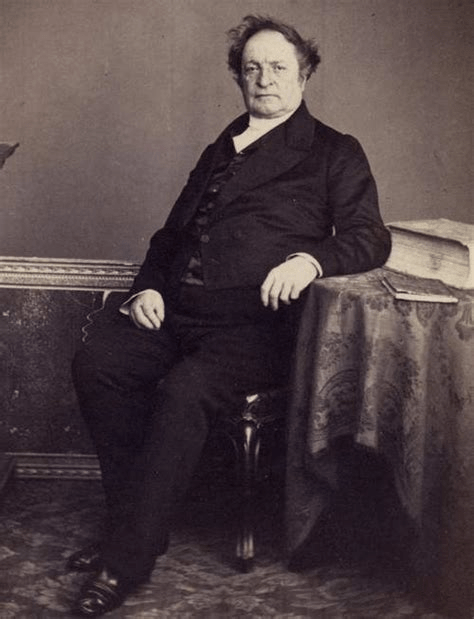
GENERAL CONCLUSIONS ON THE TOPIC OF CANONICITY

L. Gaussen, The Canon of the Holy Scriptures Examined in the Light of History, translated from the French and abridged by Edward N. Kirk (Boston: American Tract Society, 1862), 449-451.

Whoever ranks himself as a disciple of Christ must receive his testimony on the canon, as on every other subject. But we go farther than this. Not only must we, as Christians, receive the Old Testament just as it was when our Lord approved of it, but we should also see with admiration the hand of God in the preservation of the ancient canon.

“Whence came this marvelous concert of an entire race, otherwise so constantly in rebellion against God, this unanimous agreement of this people for three thousand years, in receiving and maintaining, with undeviating firmness, one only and the same canon of Scriptures? Certainly, it comes from God alone. But, at the same time, under this action from above, there must also have been a common thought, an established principle among this people in regard to the canon, a principle furnishing security to all, small and great, learned and unlearned, to the great Sanhedrin solemnly reporting to its king the oracle of Micah,[1] and the humble synagogue, to the poor Jews of the dispersion in Macedonia, daily searching with care the Scriptures of their canon (to kaq hmera anakrinonteV taV grafaV), to see if Paul’s doctrine was conformed to their teaching;[2] to the pious Jewish mother, married to a Greek of Asia Minor, who early trained her little son[3] in the knowledge of the true God, teaching him daily from the Holy Book.

Now, what was this common source of assurance to all the people of every grade of intelligence? It was not science, but faith in a doctrine, faith in God, faith in the “Word itself.” No one can doubt that the faith of the Jewish race in their religion was as rational as the faith men now have in modern science. But it was not founded in a knowledge of the history of the canon, such as we have concerning our New Testament canon. The canon of the Old Testament had no history. The Hebrews, in the time of Christ, possessing no literary monuments besides the Scriptures itself, could no demonstrate the authenticity of their sacred books by documents outside of the book itself, as we can that of the New Testament Their holy books came from too remote an antiquity to present a contemporary literature, or even a literature of ages subsequent, of any real weight. The writings of the old Greeks quoted by Josephus were too recent to have any importance as testimony; while those of the Egyptians, Assyrians, and Persians had no religious relations with the sacred literature of the Hebrews. They had, then, as a test of the Old Testament, only the Old Testament itself. Now, who could say, in the days of Josephus and of the apostles, any more than we can, by what human means Moses provided for the preservation of his books after they were placed in the holy ark (Deut. xxxi. 26)? By the priests? Josephus seems to think it was;[4] but who can affirm it? What prophet wrote the closing scenes of the Pentateuch, describing the death of Moses, his burial, the long mourning that followed it, and making this declaration: “And there arose not a prophet since in Israel like unto Moses?”[5] Joshua, do you say? That might be; but who knows? Who wrote Job? In a word, no one knows which of the prophets put the last hand to the twenty-two books of the Old Testament to give them to the church for all future time. There are many conjectures; but who knows?

And if you do not know the authors of all these Scriptures, it is entirely sufficient to be able to say, with Jesua Christ, that they were prophets.

All the elements of science for the canon of the Old Testament, then, are wanting. Yet the faith of the Jewish church was more solidly founded than on the basis of science. It was founded on the declarations of God, his character and his acts. They knew that he had given them these Scriptures, and had preserved them, because he is faithful. ‘And if you had lived in the days of Jesus Christ, a faithful Israelite, you would have believed with all the Jews, and with Christ, in the canon of the Scriptures. And if you had doubted the canon, Jesus would have said to you as to the – Sadducees: “Do ye not therefore err, because ye know not the Scriptures of God?” (Mark xii. 24.)

Our faith in the Old Testament, as we have seen, is founded on the testimony of him who is above Moses and all the prophets, and on the testimony of his inspired apostles, in addition to all that sustained the faith of the ancient Jews in these sacred oracles. Paul, an apostle of Jesus Christ, explains to us the mystery of the preservation of that canon. He tells that God gave it in trust to the Jews (episteuQhsan ta logia tou Qeou). And the whole of their miraculous history is but a suitable accompaniment of so sacred a charge, and was an indispensable means of securing to the world the preservation of these sacred documents.


[1] Matt. ii. 6.

[2] Acts xvii. 11.

[3] apo brefouV. 2 Tim. iii. 15.

[4] Against Apion, Lib. i. chap. 2.

[5] Deut. xxxiv. 10.

DEFINITION OF CANON: WHAT IS INSPIRED

L. Gaussen, The Canon of the Holy Scriptures Examined in the Light of History, translated from the French and abridged by Edward N. Kirk (Boston: American Tract Society, 1862), 17-18.

The term Canon, as employed in this sense, is traced back to a remote antiquity. In Hebrew, Greek, and Latin, the words קָנֶה (qaneh), kannh, kanna, kanwn, canna, having the same origin, signify literally a reed, a straight rod, a cane, a measure, a rule; and more especially, kanwn, in a metaphorical sense, signifies every straight and. perfect rule. In the proper sense of this word, the terms cane and cannon, in the Middle Ages, were applied to tubes intended to regulate, or render right or straight, the direction of projectiles thrown by the explosion of powder.[1] Paul thus says to the Galatians, (Gal. vi. 1 6,) “As many as walk according to this, rule, (kanwn) peace be on them.” And to the Philippians, (Phil. iii. 16,) “Let us walk by the same rule,” (kanwn.)

Even in the times of the apostles, the old grammarians of Alexandria made use of the same term to designate model authors, making rules in literature; so that the ecclesiastical writers early employed it to mean sometimes Christian doctrine, the rule of our life; sometimes, the divine book, the only rule of our faith; sometimes, in fine, the catalogue of the sacred books composing this rule. This became at length its almost exclusive religious meaning.[2]


[1] The application of this word to an instrument of war commenced in Italy. It was there called cannone, or grande canna.

[2] It should, however, be remarked, to avoid all mistake in examining the writings of the Fathers, that while they had a distinct and definite catalogue of books, which they regarded as inspired, and as distinguished from the apocryphal or uninspired, but which were allowed to be read in churches, yet they did not at first agree in their use of the term canon. From a varied application of it to lists of clergymen, and even of church furniture, it came in the fourth century to be applied, as now, to the catalogue of Scriptures. But then it will be found that some time elapsed before Jerome’s use of the term canonical, as being coextensive with inspired was generally adopted. — Tr.

THE TESTIMONY OF JESUS CHRIST TO THE CANON OF HOLY SCRIPTURE

L. Gaussen, The Canon of the Holy Scriptures Examined in the Light of History, translated from the French and abridged by Edward N. Kirk (Boston: American Tract Society, 1862), 445-447.

[It is important to note that in every instance Christ, by citing the extant copies of the Old Testament (apographa), Divinely authenticates the current 1st c Hebrew text. The same is also true of the New Testament penmen when referring to the Old Testament. There is no time in which either the Lord or the New Testament penman possessed the Old Testament autographs. The providential preservation of Scripture must be embraced as a necessary and component part of the ministry of Jesus Christ.]

“We here invoke the testimony of the “Amen, the faithful and true Witness.” “What did the Immanuel, “the God of the holy prophets ” (Rev. xxii. 6), think of the Old Testament, and how did he treat it?

Never did he put its integrity or legitimacy in doubt; never did he manifest the least hesitation in regard to the divine authenticity of any of the twenty-two books of which it is composed; he has quoted from all or almost all of them with his own lips. Who then can discern the spirit of the prophets, if not he whose eternal Spirit quickened them all? (1 Pet. i. 11.) Who shall better tell us if such or such a book is from God or from man? “Chief, shepherd of the sheep by the blood of the everlasting covenant,” he has come to dwell among men; but who shall discern more correctly than he the voice of his own messengers from that of strangers and robbers? (John x. 5, 8.)

Now, we have heard him preaching these Scriptures himself; we have seen him take from the hand of the Jews in their synagogues the sacred scroll or volume as they extended it to him, opening it, and exclaiming before them all, “In the volume of the Book it is written of me!” We have heard him exclaim at their festival: “Search the Scriptures, for in them ye think ye have eternal life.” (John v. 39.) We have, indeed, seen him go from one end to the other, explaining it: “beginning at Moses and all the prophets, expounding in all the Scriptures the things concerning himself;” (Luke xxiv. 27, 44.) Did he ever reproach the Jews or having altered the Scriptures? Never. He reproached them for constantly resisting the Scriptures, never for altering them. They were left to commit every crime but that. They rejected God, committed abominations with their infamous gods, and made their children pass through the fire; but never were they guilty of the crime so easily committed, of changing the Scriptures and introducing into them false books.’

All the course of Christ as Son of man attests thus that no human teacher ever thought more respectfully of the sacred volume than he. Whichever of its twenty-two books he quotes, it is always for him God who speaks. This book is the rule of his life; it is to this entire book that he conforms his holy humanity, and would have us conform ours, to be saved. The least word of this book possesses in his view an authority more permanent than the heavens and the earth. When he seeks to convince the Sadducees and Pharisees, now he proves the resurrection to them by one single word from Exodus;[1] now the true doctrine of marriage, by a single word from Genesis;[2] now his own divinity, by a single word from the Psalm cx., or another from the eighty-second; and again, before uttering it, he interrupts himself to exclaim: “And the Scriptures can not be broken!”[3] When he begins his ministry he already knows the Scriptures without having studied them.[4] When he contends with Satan, he three times strikes him with “the sword of the Spirit, which is the Word of God.” He says to Satan three times: “It is written.” Finishing his ministry on the cross, he again repeats the twenty-second Psalm; and when he resumes it after the resurrection, for some days, he still is engaged in explaining the Scriptures,[5] “beginning at Moses and all the prophets and the Psalms.” In a word, he quotes, as from God, Genesis,[6] Exodus,[7] Leviticus,[8] Numbers,[9] Deuteronomy,[10] Samuel,[11] Kings,[12] Jonah,[13] Daniel,[14] Isaiah,[15] Hosea,[16] Jeremiah,[17] Psalms viii., xxii., xxxv., xxxi., xli., lxix., lxxxiii, xci., cx., cxviii.,[18] and he quoted them, saying: “Have you not read the words of David, speaking by the Holy Spirit? Have you not read what God spake by the mouth of David?”

We see, then, how our Lord regarded the canon of the Old Testament. This was his science on this point, his sacred criticism: to receive all the Holy Scriptures of the Jews; to call them all in their detail, as in a body, the Law;[19] and to declare, “It is easier for heaven and earth to pass, than one tittle of the law to fail.”[20]


[1] Ex. iii. 6; 2. Matt. xxii.

[2] Matt. xix.4; Gen. i. 27.

[3] Matt. xxii. 43; John x. 27, 35.

[4] John vii. 15.

[5] Luke xxiv. 27.

[6] Matt. xix. 4.

[7] Matt.xxii.32, 37

[8] Matt, v. 22, 43.

[9] Matt. v. 33.

[10] Mark xii. 29; Luke x. 7, 27; John viii. 5, 7.

[11] Matt. xii. 3; Mark ii. 25; Luke vi. 24.

[12] Matt. xii. 42; Luke xi. 31.

[13] Matt. xii. 40.

[14] Matt. xxiv. 15; Mark xiii. 14.

[15] Matt. viii. 14; xv. 7, 8; xxi. 5.

[16] Matt. ix. 13.

[17] Matt. xxi. 13; Luke xix. 46.

[18] Matt. xxi. 16; John xix. 24; xv. 25; Luke xxiii. 46; John xiii. 18; John xv. 25; x. 34; Matt. iv. 6; Matt. xxii. 44; xxi. 42.

[19] John x. 34; xii. 34; Rom. ii. 14.

[20] Luke xvi. 17; Matt. v. 18.

L. Gaussen’s Preface to “The Canon of Holy Scripture” (1863)

PREFACE

In publishing this work, I am actuated by the threefold consideration— of the real importance of the subject, of its being accessible to every class of readers, and of the very luminous aspect it presents when closely studied. It is only obscure at a distance; and if to some persons it seems beset with difficulty and uncertainty, it is only owing to their imperfect knowledge, or bad method of studying it. I was not aware that it was so intelligible till I had examined it with great attention.

For this reason I thought it my duty, in consequence of the very numerous and severe attacks made on the certainty of the canon, to treat it at large for the use of our theological students; and since that I have felt it desirable to introduce it to the knowledge of our churches.

With this view I have endeavored to write a book that will be sufficiently intelligible to every serious reader; and it has been my desire, that all unlettered Christians who may have been disturbed by these attacks of modem infidelity, may feel themselves, on reading it, confirmed in their faith.

It is impossible to treat such a subject usefully, — at least from an historical point of view, — without adducing numerous testimonies from the fathers, with quotations from their writings, both Greek and Latin. But I have made it a rule always to translate those passages, and never to appeal to any of the ancient doctors, either of the West or East, without giving some brief notice of his character, his principal writings, and his place in history.

I publish these volumes as a complement of that which I brought out, almost twenty years ago, on the inspiration of the Scriptures. That work would have been incomplete unless accompanied by a treatise on the canon; for its readers, even those who were most thoroughly convinced, might always object, after having heard me prove by all Scripture that all Scripture was divinely inspired, that it still remained to be proved whether Daniel, or Esther, or Canticles, or any other book of the Old Testament, belonged to this inspired Scripture — whether the Epistle of Jude, or that of James, or the Second Epistle of Peter, or the Second and Third of John, or any other book commonly included in the New Testament, legitimately formed a part of it — or whether there was sufficient certainty that all the apocryphal books ought to be absolutely excluded.

As long as these questions are not clearly solved, our privilege of possessing an inspired Bible remains illusory, or is at least compromised; we have a feeling of insecurity in its use; we cannot clearly discern all its pages; a depressing cloud of uncertainty floats over our heads between heaven and earth; and though carrying in our hands a volume denominated the Scriptures, we proceed with tottering steps.

But, blessed be God! my Christian brethren, this is not your position; the God of the holy prophets has prepared better things for His believing people.

Your proofs are abundant, and, as we are about to shew, you have also divine guarantees. If your confidence in those Scriptures, which constitute the rule and joy of your faith, rests, on one side, on the most solid human reasons, on the other, it is invited to support itself by the strongest divine reasons. On the one hand, there are facts, documents, monuments, historical testimonies — testimonies clear, numerous, certain, and sufficient — such as no human composition under heaven ever possessed. On the other hand, you have something still more simple and absolute; your confidence has for its foundation the firmest principles of faith — an infallible guarantee, — the constant judgment of saints and prophets, the invariable procedure of God in all His revelations during fourteen centuries, and the example of Jesus Christ Himself — in a word, the wisdom of God — the harmony, the constancy, and the faithfulness of His ways.

I propose, then, to demonstrate, by arguments purely historical, in the First Part, to all unbelievers, the authenticity of all the scriptures of the New Testament, as might be done, if the question concerned only purely a human work.

Besides this, I propose, with the Lord’s assistance, to establish in the Second Part, and to believers only, the canonicity of all the scriptures of both Testaments, as may be done most satisfactorily for every man who is already convinced that inspired books exist, and that God, having revealed Himself from heaven by the prophets at sundry times, and in divers manners, for 1400 years, has in these last days spoken to us, in the person of His Son, by His apostles and evangelists.

These two classes of proof have each their distinct place and function ; and while I think that we are under great obligations to all those defenders of the canon who have treated the subject with a view to unbelievers, for the historic proofs they have collected in such abundance, I am still deeply convinced that, in confining themselves to this office, they have ignored their privileges, and proceeded in part on a wrong track, losing sight of the example of the Redeemer, forgetting the lessons taught by past ages, and thus neglecting the most important and interesting part of their vocation.

To give a clearer idea of the character and design of this work, I would beg leave to state the reason that induced me to publish it.

I had first of all written, in 1851 and 1852, for the use of our evangelical School of Theology, the second part of this work, and it was not till a later period, in 1853 and 1854, that I conceived the design of adding what is now the first. When we founded in Geneva, twenty-nine years ago, a School of Theology, for the purpose of elevating the long-depressed banner of the Savior’s divinity, and the great doctrines connected with it, in the Church of our fathers, I charged myself with the doctrinal instruction. But, in performing my task, I felt no need for many years of discussing to any extent either the canonicity or divine inspiration of the Scriptures.

We attended to what was most urgent, and those truths had not then been publicly called in question by any person in our immediate vicinity. As to myself, in my early years, and during my studies, though very anxious to settle my faith on a satisfactory basis, I never experienced any wavering on these two points. Since Jesus Christ, my Lord and my God, “created all things in heaven and earth, and by him all things subsist,” (Col. i. 16), I said to myself, how could I doubt that He has taken care of His own revelations, whether in giving them at first, or in their subsequent preservation and transmission? Our only business was to study them for the purpose of regulating each one’s faith, and conscience, and life. Besides, we invited to our school none but young men who had already owned the authority of the Scriptures, and who were esteemed truly pious, as having experienced in their souls something of “the good word of God and the powers of the world to come.”

We directed our attention in the first place, as I have said, to what was most urgent; we were eager to reach those vital truths, on the reception of which the stability of a church depends, and without which it falls.

Mere logical arrangement would have led us to give every question its exact place in a course of theology ; but it was evident that the greatest attention should be given to those doctrines which had been long disregarded, and too often assailed, which convince men of sin, lead to the feet of Jesus, and keep them there, — I mean, the divinity of the Son of man and His everlasting priesthood, the fall of humanity and its entire ruin, the election of believers from all eternity, their redemption by the expiation of the cross, their regeneration by the Spirit of God, their complete justification by faith alone, and, lastly, their resurrection from the dust to a life of glory and immortality.

But if these evangelical doctrines belong to all times alike, and their exposition is always in season, if the Church of God cannot dispense with them even for a day, the case is different with refutations and apologies.

These latter are not necessary, nor even beneficial, excepting at a time when the want of them is felt. Till that moment arrives, they may do our minds more harm than good, like remedies for bodily disorders administered before the malady exists. They suggest doubts that would never have been suspected they raise unknown difficulties and objections of foreign origin, which, but for them, would never have entered our thoughts. For a hunting party to beat about a district for wild boars would be of no use unless it was ravaged by them  it would be injurious if there were none in the country; and it would be foolish and criminal if, for the sake of the sport, the animals were imported from a foreign land. Who can estimate, for example, all the mischief that has been often done in our churches by the young translators of those German works which have exhibited systems of skepticism, negation, and heresy, to which previously we had been total strangers, and which we have often seen propagated here long after they had ceased to be spoken of in the country of their birth.

It has been justly remarked of apologetics, that it must be remodeled every thirty years, because its wants change from one generation to another; the apologetics of today is no longer that which our fathers required, nor is it that which will meet the wants of our children.

In reference to the canonicity and divine inspiration of the Scriptures, I have arrived at the conclusion that it is highly important to discuss these subjects henceforward with greater fulness. The number of our opponents, the perfectly novel tactics of their infidelity, and the spirit of their attacks on the written Word, make this a duty on our part, almost a necessity. In former times this need was not felt among us, as may be easily inferred from the very small space allotted to these questions by our best theological writers — Calvin, Francis Turretine, Pictet, and Stapfer, in their largest and most accredited treatises. But in the present day a great change has come over us, and we are condemned to see a totally novel warfare, no longer carried on from without against the Scriptures, but from within, and by men who profess to be, like ourselves, representatives of Christianity.

This kind of warfare is very pernicious; our fathers were not acquainted with it, or, at least, it never assailed them, excepting by short skirmishes, or by isolated attacks on one or other of our sacred books. In the present day, the enemy is drawn up in battle-array against the whole of the Scriptures. Since the first third of the nineteenth century, we have seen almost all the opponents of the living truth vie with each other in efforts, not only, as heretofore, against this or the other vital doctrine taught in the Holy Scriptures, but against the depository of them all. For a time they leave undisturbed the distinctive teachings of the written Word as beneath their notice, in order to attack the volume in which God has given them to us. It is no longer the contents that are put upon their trial; of these our opponents think they can easily get rid, if they succeed in accomplishing the task of discrediting and demolishing the Scriptures. Their aim is directed against the depository, the entire volume, of revelation. Nothing is neglected which may render it suspected, uncertain, contradictory, mean, and tainted with error; — in a word, contemptible as a whole and in all its parts. They will deny its authority, its inspiration, its integrity; they will deny the canonicity of each book; — in short, they will deny its authenticity, its veracity, its good sense, and even its morality!

But the most novel feature of this warfare, the most ill-omened, the most threatening in its immediate effect on our churches, and one which never appeared but in the second and third centuries.is that this crusade against the Scriptures is carried on in the name of a certain kind of Christianity.

During thirty-three centuries, was a man of God ever seen decrying the Scriptures of God, a pious Israelite decrying the Old Testament, or a Christian decrying the books of the men (the apostles and prophets) who wrote the New Testament? No, this was never seen!

“The righteous man,” in all ages, has always distinguished himself from the rest of mankind by his reverence for the Sacred Volume; and a true Christian, from the moment of his new birth, has always thirsted for it, as an infant for its mother’s milk, to sustain and strengthen him. It is an apostolic injunction, “As new-born babes, desire the sincere milk of the Word, that ye may grow thereby,” (1 Pet. ii. 2.)

“The righteous man,” David said twenty-nine centuries ago, ” takes his delight in this holy law, and he meditates in it day and night,” (Ps. i. 2.) By this sign he is recognized in the present day; by this sign he has been recognized in all ages of the world. “O how I love Thy law! it is my meditation all the day;” “it is sweeter than honey to my mouth.” “I love Thy commandments above gold;” “the entrance of Thy word giveth light; it maketh wise the simple.” “God has magnified his word above all his name.”[1]

But in the present day, by whom is this warfare against the Scriptures carried on? ” Behold, heaven and earth, and be astonished!”

In former ages, and for 1600 years, such attacks proceeded only from the most inveterate enemies of the Christian name. The present times remind us of the disastrous days of those ancient Gnostics who caused such grief to the faithful ministers of the second century. In our day, these attacks come from persons whom men of the world might suppose to belong to our own ranks, — persons who call themselves members of a Protestant church, and are in many instances ministers of the Word. They profess to speak in the name of science, and to attack our Scriptures only to defend the interests of a Christ whom they have made, and of divine truth shaped in accordance with their own conceptions.

And yet, what do we know in religion unless by means of the Bible, and what do they themselves know? Let one of our opponents point out a truth, — yes! only a single truth relating to God the Father, or to His only Son, to the eternal Spirit, to the resurrection of the dead, to the future world, to the last judgment, to heaven or hell or immortality, — yes I say a single truth which their philosophy has gained, or which has been discovered in their school independently of the oracles of God. But men of this stamp pervert all the principles of religion, as Calvin remarks, “by quitting the Scriptures to go in chase of their own fancies.”[2]

“God hath made foolish the wisdom of this world,” says St Paul; “for after that, in the wisdom of God, the world by wisdom knew not God, it pleased God by the foolishness of preaching to save them that believe,” (1 Cor. 1:21.)

It is this book of “the preaching “which alone has changed the face of the world. It alone causes a soul to pass from death into life. It alone, in these latter days, has brought more than one tribe of cannibals out of darkness into light. Let them shew us any other volume — from the times of Confucius, Plato, or Aristotle to those of Mohammed, (apart from his sword,) Voltaire, Bayle, Bonssean, Hegel or Cousan — which has ever, in any country, reclaimed, by its science, its morals, or its philosophy, a village, only a single village, from idolatry to the service of God.

Is it not written, ”Where is the wise? where is the scribe? where is the disputer of this world? (Pou sofoV; tou grannateuV;)” Where are they, and what have they done. This is the interrogation of the apostle.[3]

The warfare carried on in our days against the Scriptures is as strange as it is pernicious, and the friends of God ought to be roused to exert themselves to the utmost to counteract its pernicious effects.

Pernicious! Alas! it has already been too much so for those who have engaged in it. None can be arrested on this dangerous path, unless by the extraordinary grace of Grod; for the Holy Word, when thus despised, cannot transmit a ray of light to their souls; on the contrary, the contempt they entertain for it gives birth to fresh contempt, and the night preferred to the light becomes more intensely dark

“O Timothy,” says St Paul, “keep that which is committed to thy trust, avoiding profane and vain babblings, and oppositions of science falsely so called: which some professing, have erred concerning the faith,” (1 Tim. vi 20, 21.) “These profane and vain babblings,” says he again, “will increase unto more ungodliness,” (2 Tim. ii 16.) Here is the danger, the awful danger of this warfare for those who engage in it! “Their word will eat, as doth a canker.” “They wax worse and worse,” Paul adds, “(prokyousiv epi to ceiron),” “misleading and misled” — misleading souls out of the path of immortality, after having been first misled themselves; for such is the twofold woe that attends the fatal declivity of their course, ”misleading and misled, (“plavwnteV kai planwmenoi!)”

But if it is a just cause for sorrow to see misled men avow themselves unhesitatingly the detractors of that Bible on which alone the whole Church is founded, and by which alone Christianity subsists, there is in this warfare something still more distressing— namely, the mischief it effects among our people in general, and which may be effected in our churches, even among our most pious communities.

As to our people in general, numberless facts speak too loudly. We are reminded by them of Paul’s words respecting the Israelites in the wilderness, who ” could not enter into God’s rest because of their unbelief.” And whence this unbelief? Because, as he says, “the word preached to them did not profit.” And why did it not profit? Because “it was not mixed with faith in them that heard it.” But how, I ask — how can the word preached to our Protestant populations be mixed with faith in minds to whom it will appear suspicious and contemptible, in consequence of the disparaging terms applied to the oracles of God, and the flat contradictions given to their contents? What! (it will be said to them,) do you believe that this collection of scriptures which is offered you is indeed from God? Do you not know that the books of which it consists are of an uncertain number? — that some are apocryphal, some are doubtful, some are absolute forgeries? And again, of those which may be authentic, do you imagine that every part is inspired? Contradictions are palpable in them, errors abound, and the prejudices of the age may be detected page after page!

How, I ask, can the word be “mixed with faith “among the persons who are, unhappily, exposed to these suggestions of the tempter, and filled by him with prejudices and feelings of contempt against the Scriptures? No! these “profane and vain babblings, “as the apostle says, “overthrow the faith” of many; or, rather, they prevent its birth; they render it impossible!

Will it be said that the Scripture cannot be destitute of power? Is it not powerful, by its divine energy, “to cast down in the human heart every high thing that exalteth itself against the knowledge of God?” Is it not “a hammer breaking the rock in pieces?” Is it not “a two-edged sword, piercing to the dividing asunder the joints and marrow?” Yes, it is all this, but only for those who hear it, and who expect to gain something from it. And how can it be all this for those who despise it, and do not believe that it comes from God? Without reverence, there can be no attention; and without attention, no means of being touched; and without all this, there can be no faith, no communion possible with God, no efficacy in the blood of the cross, no salvation, no life.

And yet, as I have said, this is not all. The mischief will not be confined to those men of the world whom we have desired to conduct to Jesus Christ, but whose prejudices keep them at a distance from Him. It will be felt in our churches, and among the most pious of our members.

It may be thought, perhaps, that these attacks will entail little danger on believers, who, nourished by the Scriptures, know by experience what they are, and what they can do. But we must not hope that it will be always so. Even for such persons, this warfare is not without its perils. Oftentimes it will lower the standard of piety and faith, by lowering in their minds the majesty of the Scriptures; for it can never be without some deteriorating effect for even those who are most confirmed in the faith to hear repeated depreciating suggestions against one and another of our sacred books, if these suggestions are not combated as often as they are brought forward. However ill-founded they may be, if repeated without being put down, they exert an enervating influence on the mind, even when, without accepting them, and yet, without having learnt how to refute them, the unfortunate habit has been acquired of letting them pass without decided opposition. Hence persons are led to believe that, while rejecting them themselves, other Christians may admit them without damaging their Christianity. These charges and obscurities respecting the canon of the Scriptures often circulated in the neighborhood of our churches without being noticed by our sentinels, at last settle over them in the atmosphere like a pestilential miasma, which even the healthiest frames cannot pass through and inhale without some injury. Perhaps, at last, tired of resistance, and with defective information, they will come to regard these injurious reports as the distant and mysterious echoes of an unknown and superior science, which it would be rash to think of combating, or of attempting to refute.

And hence what baneful consequences! The weakening of faith ; diminished taste for the study of the Scriptures ; less thirst for their use ; less humble submission to regulate the life by them ; less labour to fathom them, and to explore their depths ; less jealousy for purity of doctrine; for, as Calvin has said, “We cannot have firm faith in a doctrine till we are persuaded, without any mixture of doubt, that God is its author.”

It was in the beginning of the year 1850 that a sudden opposition against the authority and authenticity of the Scriptures first broke out at Geneva, in our own theological school, among half a score of Belgian, French, and Canadian students.

The cause of it was for us as painful as it was unexpected, and the subsequent disturbance occasioned by it in the churches was also very serious. But the school had passed through such storms more than once; it had combated them by the divine Word; and experience not less than faith had taught us to confide during the tempest in the faithfulness of the Most High, who made it serve in the final issue for the confirmation of the truth. When the calm was restored, we were able to acknowledge with gratitude that the Lord had permitted these days of trouble only to purify an institution consecrated to His service, to lead us to study more closely the foundations of our faith, and to confirm on some essential points the students and the professors, the pastor.! and their flocks.

The declarations of these young men were of such a nature that we should have felt it our duty on any other occasion to have dismissed them immediately from our institution. We had admitted them only to prepare them for preaching the Word of life, and if henceforth they rejected that Word — its inspiration, its authenticity, its authority — what was there in common between them and ourselves?

But we took a different view. We believed that we owed them some reparation, because the evil done to themselves had taken place when under our care, and we conceived that, under these circumstances, we ought not to send any of them away till we had taken pains by fresh efforts to bring them back, if possible, to own the authority of the Scriptures.

We took our part in this important task, and from this moment, I mean, from the beginning of the year 1850, I made it my study to point out to them the true path of faith in relation to the canon, in a series of propositions.

These propositions established the doctrine of the canon by God’s method of proceeding during all the ages of the Old Testament, by the example of Jesus Christ, and by the Divine declarations; then they confirmed the meaning of these declarations by a twofold collection of numerous, indisputable facts, extending through many ages. This performance was, moreover, accompanied by a history of the canon, and more particularly of the controverted books. The second part of this work contains the series of these first propositions, expanded in some parts, and in others compressed.

After finishing my first course, and on the point of resuming the series of my propositions for the use of a fresh class of young theologians, particularly those that demonstrate the dogma of the canon a posteriori, I was struck with the evidence of the facts which constitute this proof — historical facts, exceptional, astonishing, and inexplicable, apart from a Divine intervention, — facts, moreover, very rarely appealed to or known. I believed their publication would be useful.

I have since learned, from the language of our opponents, that, before presenting to the world our arguments of faith, it would be indispensable, in order to render the reader attentive and docile, to make a succinct statement of the facts and testimonies relating to the history of the canon, to place before him the objections of opponents, in order to consider them more closely, and to place him in a position for consulting by himself the most important remains of patristic literature. I also conceived that it would be desirable to make it evident that, judging of the canon only by the ordinary rules which in the republic of letters decide the authenticity of a book, the unanimity of the Churches throughout the world has given to our Sacred Volume, as far as regards its twenty-two homologoumena, a certainty unparalleled in the field of ancient literature.

To gain the reader’s attention to our reasons of faith, I have thought it necessary that, in hearing them, it should never enter his thoughts that we proposed them, because we dared not to look in the face the facts of history and the objections of science. On the contrary, we have gathered from these facts new reasons for belief, — reasons clear, manifold, and invincible.

This work would probably have appeared much sooner, had not the hand of God laid me on a bed of suffering for two years in succession by two very serious accidents, which rendered me for a long time almost incapable of continuous application.

I commend to the blessing of God, through Jesus Christ, a task out of the usual course of my studies, but undertaken for the sole object of serving Him.

May 5, 1862

L. Gaussen, D.D., The Canon of Holy Scripture from the Double Point of View of Science and of Faith, 3rd ed. (London: James Nisbet and Co., 21 Berners Street, 1863), Preface, v-xviii.


[1] Psalms. cxix. 97, 103, 127, 130, cxxxviii. 2.

[2] Institution Chretieene, tom. L, p. 3, Paris, 1859.

[3] 1 Cor. 1:19, 20.
The Life and Times of William Tyndal: Angel of the Reformation

By L. Gaussen

See at the same time Tyndal, in England, fleeing from his native country never to return, concealing himself first in one city and then in another on the banks of the Rhine, from his persecutors, till at last he was enabled, according to his heart’s desire, to give to the English, in English, the Word of their God. See him till the day when, for having done this work, he will, by order of the king of England and the emperor of Germany, be hunted out, betrayed, thrown into prison, strangled, and burnt! See his two fellow-labourers, Bilney and Frith, seized for the same crime, and burnt alive in England! All three had been prepared by God for this task; they were learned in the sacred languages; with secular knowledge they had also faith; and all three took their life in their hands to offer it to their Redeemer. But at last, behold the angel of the Reformation, who only waited till they had ended their work, to commence his own, and who made his mighty voice resound through all Europe like the roaring of a lion. Very soon thousands of confessors and martyrs will shew themselves in France, in Germany, in England, in Italy, in Flanders, in Belgium, in Holland, in Spain, in Poland, in Transylvania, in Bohemia, in Hungary, in Denmark and Sweden, and the world will appear shaken to its foundations.

I confess that nothing has made me discern more vividly the Divine grandeur of this dispensation, and the profound interment from which the Scriptures then came forth, than to trace the labours and sufferings of these men of God in order to give His Holy Word to their generation. Trace Tyndal’s career, and from him judge of all the rest.

642. Having left the English universities, this young and learned scholar lived in peace, happy and respected, in the noble mansion of Sir John Walsh, where he discharged with credit the double office of chaplain and tutor. Sir John and Lady Walsh placed confidence in him, and took delight in hearing him speak of the gospel, with which he had been powerfully impressed by reading the Greek New Testament, which the learned Erasmus had just published at Bale in 1516, and brought it to England in 1519. No sooner was he converted than this heroic young man felt a resolution formed in his heart to renounce everything in order to translate and give to his countrymen the Scriptures of his God in English. “I will consecrate my life to it,” he said, “and if necessary, I will sacrifice it;” and when an English priest at Sir John Walsh’s pointed out to him the danger from the laws of the Pope and the artfulness of the priests, he had the holy imprudence to reply, “For this I will set at defiance the Pope and all his laws; for I vow, if God spare my life, that in England, before a few years are gone by, a ploughman shall know the Scriptures better than I do.”[1] He had preached the gospel fervently in the neighborhood where he resided; but seeing his labours too often rendered fruitless by the opposition of the priests, he said, “Assuredly it would be quite different if this poor people had the Scriptures. Without the Scriptures it is impossible to establish the laity in the truth.”

He was well aware that his life was in peril, and he was not willing that his noble friends should share those dangers which he was ready to brave alone. He resolved to leave. Only three years before, the same year in which he left Cambridge, the pious Thomas Mann had been burnt alive for having professed the doctrine of the Lollards, which had now become his own; so also a lady named Smith, the mother of several young children, for having been convicted of making use of a parchment on which were found written in English the Lord’s Prayer, the apostle’s creed, and the ten commandments. Moreover, everybody in England recollected that, one hundred and forty years before, the pious Wickliffe, for having attempted the same task of translating the Bible into English for the English, had been constantly persecuted; that the House of Lords, and the Convocation of the Clergy in St Paul’s, London, had strictly prohibited the use of that book ; and such was the horror they had of a Bible in the vulgar tongue, that they not only burnt it when they discovered it, but burnt also, with the Bible hanging from their neck, the men who had read it ; and better to express in what abhorrence this work was held, they had ordained, forty-four years after his death, that the corpse even of Wycliffe should not have a secure grave on the soil of England, — that his bones, disinterred, should be burnt, and their ashes thrown into the river Swift.[2] The venerable Lady Jane Boughton, eighty years old, was burnt for reading the Scriptures; her daughter, Lady Young, had to undergo the same punishment. John Bradley, shut up in a chest, was burnt alive in Smithfield before the valiant Henry, then Prince of Wales; and the noble Lord Cobham was burnt on a slow fire in St Giles’s.

Tyndal having quitted his protectors, betook himself to London, to seek there, in a more secret retreat, the means of pursuing his sacred work, but soon had reason to fear that punishment would interrupt his task. “Alas! I see it!” he exclaimed,”all England is closed against me!” And as there was then in the Thames a vessel about to sail for Hamburgh, he got on board, having only his New Testament, and for the means of living only £10 sterling. He quitted his native country, and was never to see it again. Nevertheless, he left it with a holy confidence. “Our priests,” he said, “have buried God’s Testament, and all their study is to prevent its being raised from the tomb; but God’s hour is come, and nothing henceforward shall prevent His written Word, as in former times nothing could prevent His incarnate Word, from bursting the bonds of the sepulcher, and rising from among the dead.”[3] Tyndal augured rightly; but it was the work of God alone.

We must follow this martyr of the Scriptures in his agitated and suffering life, pursued from city to city; first of all to Hamburgh in 1523, where he had to endure every species of privation, poverty, debt, cold, and hunger, with his young and learned friend John Frith, his son in the faith, who had accompanied him to labour in the same work. Yet he had already the satisfaction of sending secretly to his friends in England the Gospels of Matthew and Mark; but he was soon obliged to flee to Cologne to conceal himself again. We must follow him there, especially in his new troubles, where a priest, who had. pursued his track, unexpectedly discovered at a printer’s the first eighty pages of his book, and hastened to give information of it, both to the senate of Cologne and the King of England.” Two Englishmen who are concealed here, sire,” he wrote, “wish, contrary to the peace of your kingdom, to send the New Testament in English to your people. Give orders, sire, in all your ports, to prevent the arrival of this most pernicious kind of merchandise.”[4] With admirable promptitude, Tyndal, forewarned, anticipates the prosecution of the council of Cologne, runs to his printer, and throws himself, with the first ten sheets already printed, into a vessel that was going up the Rhine, and takes refuge in Worms! To disconcert the proceedings of his enemies, he changes the form and size of his book from a quarto to an octavo. In vain the Bishop of London had already assailed this work, which was so odious in his eyes, and denounced it in England. Tyndal, after so many exertions and prayers, had the happiness to finish the whole about the end of 1525, and entrusted its conveyance to England to some pious Hanseatic merchants, who could not bring it to London but at the peril of their lives. Let us listen to the man of God thus expressing his pious joy: ” ow, 0 my God,” he exclaims, “take from its scabbard, in which men have kept it so long unused, the sharp-edged sword of Thy Word; draw forth this powerful weapon, strike, wound, divide soul and spirit, so that the divided man shall be at war with himself, but at peace with Thee.” And we may see the same bishop secretly commissioning a merchant to purchase the whole edition, in order to give it to the flames, and Tyndal at a distance receiving the money, which will enable him to pay his debts, and prepare immediately another edition better printed and more correct. Lastly, we have to see this faithful man settled at Antwerp, always in danger, always concealed, always suffering innumerable privations, but already at work, commencing his translation of the Old Testament, with his pious friend, John Erith. Nevertheless, for each of them, their labours were soon to end, and their rest in God was to begin. The king of England sent secret emissaries to discover Tyndal’s retreat, and to secure his person. These persons, it is said, were not able to see him close at hand without being almost gained over to his sentiments. At last he was surprised and betrayed, and the officers at Brussels were prevailed upon to seize him and throw him into prison. There he remained two years, during which time he wrote those admirable letters which we still possess, addressed to his young fellow-labourer, Frith, who having returned to England, was destined very soon to be a martyr before him. On the sixth of October 1536, fastened to a stake in the public square of Augsburg, Tyndal gave up his life for the Holy Word. In his last moments, he was heard to raise his voice, and exclaim aloud, “Lord! open the King of England’s eyes!” It was on the application of Henry VIII., and by order of Charles V., that he was taken from Brussels to Augsburg, to undergo the punishment of death. He was strangled, and his body committed to the flames. His son in the faith, and fellow-labourer, the amiable Frith, had been burnt alive at Smithfield, in 1533, for having been engaged in the same work, as also had been, in 1528, the affectionate Thomas Bilney, the friend of his youth, with whom he had so devoutly commenced his labours.

643. In this manner the Holy Scriptures were brought back to England in 1525. They returned moistened with the blood of their translators and martyrs, at the same time when other faithful men of God, exposed to similar conflicts, and braving similar dangers, translated them into the language of their respective countries, and restored them equally to the Church of God.

Other affecting recitals of the same kind might be given, relating to those struggles out of which the Scriptures made their way as from the tomb, to render the first calls of the Reformation audible to God’s chosen ones. For, independently of the translations which were then made of the New Testament, the whole Bible was translated into Flemish in 1526,[5] into German, by Luther, in 1530; into French, by Olivetan, in 1535;[6] into English, by Tyndal and Coverdale, in 1535; into Bohemian, by the 590 United Brethren, ever since 1488; into Swedish, by Laurentius; into Danish, in 1550; into Polish, in 1551; into Italian, by Bruccioli, in 1532, and by Teotilo in 1550; into Spanish, by de Reyna, in 1569; into French-Basque, by order of the Queen of Navarre, in 1571; into Sclavonian, in 1581; into the language of Carniola, in 1581; into Icelandic, in 1581; into Welsh, by Morgan, in 1588; into Hungarian, by Caroli, in 1589; into Esthonian, by Fischer, in 1589. Thirty versions may be counted, it is said, for Europe alone.

This universal resurrection of the holy book, and of its sacred canon, in the face of such obstacles, presents us no doubt with an impressive proof of the protection which guards it from age to age; but we shall recognize this protection far better, if we come to consider the prodigious effects of this book, whence once laid open to the sight of the nations.

Those effects were immediate; they were holy; they were everywhere the same; they were similar to those witnessed in the most glorious days of the Church; they were of a power evidently Divine, by their moral grandeur in the spiritual world, and by their external grandeur in the political world, or on the general destinies of humanity.

644. Those effects were immediate. Scarcely had the Flemish Bible, Luther’s Bible, Tyndal’s Bible, Olivetan’s Bible, issued from, the tomb, but directly the angel of the Reformation made his powerful voice from God heard through all Europe. It came from heaven sudden, unexpected, by the most humble instruments, and at once the astonished world felt itself shaken to the foundations. Everything indicated an agency from on high. At the end of a few months, in Germany, in Switzerland, in France, in Flanders, in England, in Scotland, and soon afterwards in Italy, and even in Spain, the sheep of Jesus had heard His voice and followed Him, Great emotions had agitated them. Consciences were awakened by the Holy Word. A deep and powerful work had been effected in men’s souls; and very soon their idols were overthrown, and their traditions were cast away. They turned to the living and true God, and, like the Thessalonians, “received the Word in the midst of great tribulation, with joy of the Holy Ghost.” Their hearts were softened; righteousness, peace, and joy, had descended into them. The face of the world was changed, and, after 900 years of slavery, half of Europe appeared already delivered from Rome. Would it then be too daring, in describing this vast movement, so visibly originating from above, to speak of it as the excellent and learned Mr. Elliot[7] has done in his exposition of the Prophet of Patmos, and to say with him, that this was the “mighty angel” that John saw “come down from heaven clothed in a cloud.” “A rainbow was upon his head,” a symbol of the peace of God, “and his face was as it were the sun,” for he brought to the world the sublime illuminations of faith. His progress was irresistible, ” is feet were as pillars of fire.” But whence came the power of his progress, its promptitude, its unity, its Divine security? Hearken! He had in his hand a book, a little book, (bibliaridion) but an open book, open and not closed, open to all nations, — the everlasting gospel. Very soon he “placed his right foot on the sea, and his left foot on the earth,” for he had to carry beyond the ocean the good news of grace, to lead nations in both hemispheres to the most glorious destinies, and to make known God’s salvation to the utmost ends of the earth, — his action was powerful, and “he cried with a loud voice.”

We said that this great movement which restored the gospel to the earth came evidently from heaven; and we said that it could be judged at once by its effects, for they were immediate, rapid, holy, everywhere the same, and from a power evidently Divine.

L. Gaussen, D.D., The Canon of Holy Scripture from the Double Point of View of Science and of Faith, 3rd ed. (London: James Nisbet and Co., 21 Berners Street, 1863), 585-591.


[1] Our readers should follow Tyndal’s career as exhibited in the admirable work of Merle d’Aubignd, 1854. [The fullest account of Tyndal’s life and biblical labours is contained in Mr. Anderson’s Annals of the English Bible; 2 vol., 8vo. London, 1847. A second edition condensed in 1 vol., 1861. — Tr.]

[2] The Book and its Story, pp. 128-131

[3] The Book and its Story, p. 152.

[4] Merle daubing, History of the Reformation, v., 308, 309.

[5] Reuss, Geschichte der Schriften N. T., §§ 470-477. Le Fevre had finished his translation of the New Testament in 1523.

[6] The College of La Tour in the Valleys possesses a copy of it. At the end of the volume the acrostic verses indicate to whom the edition was owing. Joining the initial letters we shall read — ” Les Vaudois, peuple evangelique, Ont mis ce tresor en publique.”

[7] In his Horae Apocalypticae, vol. i., p. 39. London, 1851.

The “Infinite in the Finite”

Gaussen, Divine Inspiration, 1841, po. 364-365.

Guesssen concludes his volume extolling the eschatological wonder of Holy Scripture. He speaks of the Bible as a

“germ of God” that once for the saint once admitted “to the Jerusalem that is from above, under the bright effilgence of the Sun of Righteouness, he will see beaming in those words of wisdom, on their being brought to the light of which the Lamb is the everlasting source, splendors now latent, and still enclosed in their first development.”

And in the splendor of eternal glory the saint,

“will discover agreements, harmonies, and glories, which here below he but dimly saw or waited to see with holy reverence.”

This erudite observation

  1. Living under the curse of sin obstructs the comprehensive analysis of the nature of the Bible.
  2. The old nature prejudices the saint against the self-authenticating truth of Scripture’s Divine inspiration and infallibility, a prejudice eradicated when glorified.
  3. The old nature prejudices the saint to think more highly of his reasoning capacity than he should, also a prejudice eradicated when glorified.
  4. Every glorified saints attitude toward God’s Word will be to the praise and glory of God in glory.
  5. It is best to wait “to see with holy reverence” what we don’t understand than to reject the promises of God in His inspired, written Word.
  6. The eschaton will radically reshape our epistemology. Accept that the infinite in the finite sets the saint on a trajectory of infinite spiritual trajectory of searching out the infinite revelation of God in the finite Divinely inspired written revelation of God’s Word.

Gaussen closes,

“Prepared in God’s eternal counsels before the foundation of the world, and enclosed as germs in the Word of life, they will burst forth under the new heaven, and for the new earth wherein will dwell righteousness. The whole written Word, therefore, is inspired by God.”

“Open thou mine eyes, O Lord, that I may behold wondrous things out of thy law!”

Blessings!

The Believer’s Natural and Expected Response to Scripture

Gaussen, Divine Inspiration of the Bible, 1841, pp. 206-207.

This excerpt is Gaussen’s personal testimony describing the change that took place in his life and the life of the Apostle Paul when “Divine grace revealed to us that doctrine of the righteousness of faith.” It was then that “every word became light, harmony, and life.” The uniting of Spirit, Word, and believer is not only exegetically grounded, and theologically sound, but is the experience of every born again saint. Christians must be taught to doubt the words of Scripture. The new birth allows the believer to see the light of the Bible’s self-attestation and self-authentication as Gaussen so sweetly puts it, “chords vibrate within us, in unison with the Word of God, “Yes, my God, all the Scriptures are divinely inspired!”

The self-authentication of Scripture is not at the purview of the Academy or some Ecclesiastical governing body — it is the gracious possession of every believer — inimitable, so wonderful an epistemological experience there is nothing with which it can be compared.

This simple yet profound union of the Word and saint is that which the critic disdains but that which drives redemptive history to eschatological fulfillment.

May bad teaching from misguided teachers never be allowed to rob the saint of the “the joy of one who has made a discovery” that the Bible is indeed the Word of God.

Blessings!

A Mid-19th c. Defense of the Traditional Inclusion of 1 John 5:7

Gaussen, Divine Inspiration of the Bible, 1841, pp. 192-193.

Gaussen compares the traditional inclusion of 1 John 5:7 with the corruption by deletion of Griesdach’s text omitting “in heaven: the Father, the Word, and the Holy Ghost: and these three are one; and there are three that bear witness.”

In summary, Gaussen makes the following points for inclusion:

  1. The grammatical form “the principle of attraction.”
  2. Latin fathers 2nd-5th c.
  3. Latin Vulgate 4rth-5th c.
  4. 484 Confession of Faith
  5. The omission leaves “the one” without an antecedent as noted by Middleton (1828).
  6. Bengal argued that “the two verses of this passage remain united adamantina adherentia — unbreakable cohesion; cannot be separated.

This, of course, is not exhaustive but lends mid-19th c. support for the inclusion of the passage. Additionally, study of the question of the passage’s authority reveals scant evidence for its omission.

The “Wonderful” Insignificance of Modern Text Criticism

Gaussen, Divine Inspiration of the Bible, 1841, p. 168. Of 19th c. text critical work he notes that “this immense toil has ended in a result wonderful by its insignificance, and (shall I say?) imposing by its nullity.”

And this “wonderful” insignificance and “imposing” nothingness or absence of efficacy is perpetually raised by critics of the KJB as if such insignificant and worthless labor should be considered necessary to read and understand the Holy Scriptures, and even worse, to usurp the authority of the Bible.

Gaussen writes, 

“In truth,” says a learned man of our day, “ but for those precious negative conclusions that people have come to, the direct result obtained from the consumption of so many men’s lives and in these immense researches may seem to amount to nothing; and one may say that in order to come to it, time, talent, and learning have all been foolishly thrown away.” Wiseman’s Discourse on the Relations, etc., I. Disc. 10.

Such is the futility of those who have given their lives to reducing the Scripture to a common, corrupted book. Scholarly, gifted minds foolishly wasted in the pursuit of insignificance and nothingness. 

How is it possible that modern Evangelicalism places any credibility in this “wonderful” scholarly void.  

“As it teaches us all the rest”

Gaussen, Divine Inspiration of the Bible, 1841, p. 139

Gaussen hits head on what we call “theological schizophrenia” or believing the Bible regarding redemptive themes while disbelieving what the Bible says about itself. We should believe what the Bible says about itself “as it teaches us all the rest.” The modern Evangelical church has foolishly carved out a section of orthodox theology, exegetically based bibliology, and given herself permission to treat that locus with schepticism and doubt—to treat that element of the principium theologae as a secular subject. Gaussen unites the Deity of Jesus Christ, the Deity of the Holy Spirit, both essential truths to the Christian Faith, with the truth that the Holy Spirit “dictated the whole of Scripture.” The Deity of the Holy Spirit and the inspiration of Scripture by dictation are both grounding truths taught in the Bible.

Are you suffering from theological schizophrenia? Are you justified in yourself to believe without reservation in the Trinity but critical and skeptical of the truth claims the Bible makes for itself. Have you compartmentalized orthodox theology, which is to say, separated God from His Word? And in this separation become the personal arbitrator of inspiration and preservation?

James White is the poster child for this bifurcation. During the debate with Dr. Van Kleeck, Jr., Dr. Van Kleeck challenged White to read the verses about the Bible in the same manner he would the Creation account and because White would not, Dr. Van Kleeck properly described White’s crippled presentation as secular.

Gaussen, a pre-critical theologian writing in the post-critical era of the Enlightenment, illuminates the contemporary confusion of accepting unbelief as a component part of so-called “Bible-based” Christianity.