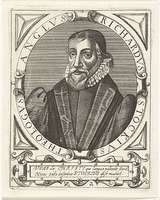
Richard Stock’s (1568/69-1626) Commentary on Malachi and “set prescribed words”

“Of the word of the Lord. The circumstance of the person sending, the efficient, and author, as of other prophecies, so of this; he comes not unsent, he spoke not of himself, he came not without the Lord, but from him. So he affirmeth, and truly, to get more reverence, credit, and authority with them. And that it was thus from the Lord, and so canonical, the testimonies of Christ and his apostles, alleging him divers times for confirmation of doctrine and reformation of manners, proveth it; but he addeth ‘the word of the Lord,’ not only to shew that he had but the word, — the rod and execution would come after, God making his word good,—but, as some think, to shew that he had not a free embassage, but that he was to deliver it in certain and set prescribed words. Sometime, when prophets were more frequent and perpetual in the church, and God spoke to them by dreams or by visions and apparitions, they had divers kinds of words, and had liberty for divers manners of speaking and delivery; but our prophet was such a messenger, that the commandment he had received and was credited with he must deliver in so many words, and the same he received them in ; and so he doth, for in the whole he never useth his own person, but the Lord only, as chap. i. 2, and ii. 1, and hi. 1, and iv. 1. Here we might observe that the writers of the Scriptures are not the authors, but God himself, of which Rev. ii. 7. But one particular may we herein observe, this following: This prophecy is the very word of the Lord. It is of divine, not human authority, which is not only here affirmed, but, lest it should be doubtful, it hath the testimony of the New Testament: the 3d chap. ver. 1, hath testimony, Mark i. 2; and chap. iv. 2 hath testimony, Luke i. 78; and chap. i. 2, 3, Rom. ix. 23.

Reason 1. Because this was written by a prophet, for, as all the Old Testament was written by the prophets, so whatsoever was written by them was and is canonical Scripture; therefore, 2 Peter i. 19, Luke xvi. 39, Heb. i. 1, Eph. ii. 20. Now all men hold Malachi for a prophet, the last among the Jews till the coming of John Baptist.

Reason 2. Because the church of the Jews, the only church of God, did receive this, and so acknowledged it as the word of God. That they did so appears Mat. xvii. 10, and the apostles and the evangelists alleging of it, for it is a far more impious and heinous thing to take away scripture than corruptly to interpret them, or to add scripture if it were not of it.

Use 1. I take instructions from hence, entering the opening and expounding of this prophecy, how I ought to labour with my own heart, and to seek from the Lord assistance and grace to handle this as his word, not carelessly, handling the word and work of God negligently, taking his name in vain, coming to speak out of it without due preparation and constant study and speaking; so talk as of the word of God, 1 Peter iv. 11; not handling it with vanity, and affectation ; not making merchandise and playing the huckster with it; delivering it with a sincere affection, dealing faithfully with it as a faithful dispenser, giving to everyone his portion where and to whom the Spirit of God hath set them down,—to priest and people, to old and to young, to married and unmarried, to the good and profane,—without fear and flattery, or any other sinister affections, remembering that this in the first is in the whole, and to every verse, it is the word of the Lord, fearing to corrupt as well as to add, lest as it is Prov. xxx. 5, ‘Add not to his words lest he reprove thee, and thou be found a liar;’ remembering that of Luke xii. 42, that I may be a faithful and wise steward;”

Richard Stock (1568/69-1626), “A Commentary upon the Prophecy of Malachi” (1651), Nichol’s Series of Commentaries, Thomas Smith, ed., (Edinburg: James Nichol, 1865), 11-12.

Series 2, Lecture 12: 1 Peter 1:23-25 and the Link Between Regeneration and the Scripture primarily in the writings of William Ames, 1641 (video)

The Author of regeneration according to John 3 is the Holy Spirit. John 3:6-7, “That which is born of the flesh is flesh: and that which is born of the Spirit is spirit. Marvel not that I say unto thee, Ye must be born again.” Demarest writes, “The Holy Ghost is the Author of regeneration: but the truth, word of God, or gospel, is the instrument he uses in imparting this spiritual life.”[1] Ames and Demarest recognize the continuity of the relationship between seed and word, “seed” a commonly used symbol for the natural generation of new life (Psalm 126:6; Luke 8:11; Mark 4:14-15; 2 Cor. 9:10; 1 John. 3:9) and the literal “word of God.”

Commenting on 1 Peter 1:23 Ames asserts that “The word is the incorruptible seed or principle”[2] for the regeneration the Apostle writes of. He does not separate the message of the Scripture with the words of the Scripture. God’s words are in the words of the text. He writes,

“Because it is the word of God, (as it is in the Text); which liveth and abideth for ever, whose nature it resembleth in this, that the operation is not momentary or temporary, but abideth for ever.”[3]

            The living word used by the Holy Spirit to regenerate a lost soul, to continue to be used to regenerate those who would be saved, must be an eternal word. To eternally save, the word must itself be eternal. Ames’ quote assigns the eternal life-giving power of God’s Word not simply to the substance of the truth but to the words that convey the doctrinal substance he identifies as the “Text.” The apographa (the original language copy – apo, from) as the Protestant Reformers’ exemplar of the autographa (Original) served as the basis of their translation work. Upon translation to a receptor language the authoritas verborum, “the external and accidental authority that belongs only to the text in the original languages,” was lost.[4] That is, the words of Ames text did not look like the Original’s words. They had changed their shape; the Greek and Hebrew being translated into English characters. However, what remained in translation was the authority of the substantia, or res, the “formal, inward authority that belongs both to the text of Scripture in the original languages and to the accurate translations of Scripture.”[5] The substantia doctrinae or the doctrinal substance of the receptor language is what Ames says is the means the Holy Spirit uses to regenerate a lost soul. The substantia doctrinae abideth forever.


[1] John T. Demarest, Translation & Exposition of the First Epistle of the Apostle Peter, 1851, 93. search.ebscohost.com.newlibrary.wts.edu/login.aspx?direct=true&db=h7h&AN=41239113&site=e

[2]Ames, Commentary, 30.

[3]Ames, Commentary, 31.

[4] Muller, Dictionary, 51-52.

[5] Muller, Dictionary, 51.

Series 2, Lecture 13: Jude 3 Considered Primarily in the Commentary of Andrew Willet (1564-1621)

Tonight, 4/25, at 7:30pm EST we will hold the thirteenth and last lecture on the exegetical foundation for the theology we call the Providential Preservation of Scripture. Lecture 13 considers Jude 3 in the writings of arguably England’s most accomplished Hebrew scholars, Andrew Willet (1564-1621).

The providential preservation of Scripture cannot be classified, categorized, or easily referenced. A revealed work, Scripture’s preservation reflects the complexity of God’s eternal decree in the flow of redemptive history. Providential preservation is evidence of an algorithm of Divine proportion, according to the eudokia, “good pleasure” of God and therefore is beyond the scope of human genius and ingenuity. If ever the words of Jeremiah 55:8-9, ring true, it is in the work of God’s providential preservation: “For my thoughts are not your thoughts, neither are your ways my ways, saith the Lord. For as the heavens are higher than the earth, so are my ways higher than your ways, and my thoughts than your thoughts.”

The modern textual critic, because the intricacies of providential preservation are beyond the grasp of their empirical models deny its existence, as if to say, “if we can’t figure it out, it must not exist.” Providential preservation can be detected only after the fact, when the “Father’s hand,” has in His wisdom invisibly moved among men to fulfill the promises of His word. We see the same in the work of regeneration in John 3:8. Only after the soul has been born again do we realize the Holy Spirit doing a regenerating work.

With an exegetical foundation, the Scripture has informed the saint of the upper and lower control limits for the formulation of a systematic doctrine. In this case, the text informs us that what is being providentially preserved are the words of God. We also learn that providential preservation plays a necessary eschatological, covenantal role in the unfolding plan of salvation. At issue is the question of how these truths point to and provide a standard sacred text for the saint. While separate disciplines may answer this question differently, from an exegetical basis, a standard sacred text is imperative because this is what the Scripture demands. It is the providential preservation of the letters (Matt. 5:18) and words (John 10:35) of the Original Standard Sacred Text with all the literary, grammatical, and syntactical limitations first imposed upon the Text by the God, the Author. The same is true, only in a providential, mediated way, of a translation.

Providential preservation’s sole purpose is to provide a standard sacred text beyond the autografa whether in the original language or in a translation. The only criteria for determining what is and is not Scripture are the preserved words of God themselves. To eliminate providential preservation from the paradigm is to submit Scripture to the fallen reason of the reasoners, a process which fails to meet the pure Holy standard the Bible holds for itself. Scripture is self-attesting, self-authenticating, and self-interpreting. The recognition of this criteria comes through the ministry of the Holy Spirit both with and through the Scripture to the covenant keeping believer. Calvin writes these lasting and profound words in his Institutes:

[But] I reply, that the testimony of the Spirit is superior to all reason.  For as God alone is sufficient witness to himself in his own word, so also the word will never gain credit in the hearts of men, till it be confirmed by the internal testimony of the Spirit. It is necessary, therefore, that the same Spirit, who spake by the mouths of the prophets, should penetrate into our hearts, to convince us that they faithfully delivered the oracles which were divinely entrusted to them…; because, till he illuminate their minds, they are perpetually fluctuating amidst a multitude of doubts.[1] 

If it is not God that authenticates, attests to, and interprets his Word, then it will be some scholar or religious tradition that will determine for you what is God’s Word, why it’s God’s Word and how you should interpret it. God witnesses to Himself in this written testimony – the Old and New Testaments. In Scripture God is telling you that He is the Author of Scripture and therefore Scripture carries His authority. In Scripture God gives a clear witness to the fact that it is indeed His Word. In Scripture we learn that God alone is a fit witness to Himself and that God, in the Holy Spirit interprets the Scripture.

Scripture does indeed teach its own providential preservation. This did not occur through some miraculous act of special providence, but through God’s providential “fatherly hand,” drawing ten thousands of ten thousand acts of the human will together to accomplish His great eschatological plan of redemption, the perfect act of God’s will at work in time.


[1] Calvin, Institutes, 1.7.4. Also see Richard B. Gaffin, Jr. “The New Testament: How Do we Know for Sure,” Christianity Today, (Feb. 5, 1988), 28-32.

Don’t miss this vital study of the ramification and significance of the Christocentricity of Scripture in Jude 3 tonight, 4/25, at 7:30 EST.


Series 2, Lecture 12: 1 Peter 1:23-25 and the Link Between Regeneration and the Scripture primarily in the writings of William Ames, 1641

Tonight at 7:30pm EST we hold the twelfth lecture on the Biblical basis for the theology we call the Providential Preservation of Scripture. Lecture 11 considers one of the key passages on the Doctrine of Inspiration found in 1 Peter 1:23-25.

The Author of regeneration according to John 3 is the Holy Spirit. John 3:6-7, “That which is born of the flesh is flesh: and that which is born of the Spirit is spirit. Marvel not that I say unto thee, Ye must be born again.” Demarest writes, “The Holy Ghost is the Author of regeneration: but the truth, word of God, or gospel, is the instrument he uses in imparting this spiritual life.”[1] Ames and Demarest recognize the continuity of the relationship between seed and word, “seed” a commonly used symbol for the natural generation of new life (Psalm 126:6; Luke 8:11; Mark 4:14-15; 2 Cor. 9:10; 1 John. 3:9) and the literal “word of God.”

Commenting on 1 Peter 1:23 Ames asserts that “The word is the incorruptible seed or principle”[2] for the regeneration the Apostle writes of. He does not separate the message of the Scripture with the words of the Scripture. God’s words are in the words of the text. He writes,

“Because it is the word of God, (as it is in the Text); which liveth and abideth for ever, whose nature it resembleth in this, that the operation is not momentary or temporary, but abideth for ever.”[3]

            The living word used by the Holy Spirit to regenerate a lost soul, to continue to be used to regenerate those who would be saved, must be an eternal word. To eternally save, the word must itself be eternal. Ames’ quote assigns the eternal life-giving power of God’s Word not simply to the substance of the truth but to the words that convey the doctrinal substance he identifies as the “Text.” The apographa (the original language copy – apo, from) as the Protestant Reformers’ exemplar of the autographa (Original) served as the basis of their translation work. Upon translation to a receptor language the authoritas verborum, “the external and accidental authority that belongs only to the text in the original languages,” was lost.[4] That is, the words of Ames text did not look like the Original’s words. They had changed their shape; the Greek and Hebrew being translated into English characters. However, what remained in translation was the authority of the substantia, or res, the “formal, inward authority that belongs both to the text of Scripture in the original languages and to the accurate translations of Scripture.”[5] The substantia doctrinae or the doctrinal substance of the receptor language is what Ames says is the means the Holy Spirit uses to regenerate a lost soul. The substantia doctrinae abideth forever.

Don’t miss this vital study of the ramification and significance of the eternal word within a salvific context in 1 Peter 1:23-25 tonight at 7:30 EST.


[1] John T. Demarest, Translation & Exposition of the First Epistle of the Apostle Peter, 1851, 93. search.ebscohost.com.newlibrary.wts.edu/login.aspx?direct=true&db=h7h&AN=41239113&site=e

[2]Ames, Commentary, 30.

[3]Ames, Commentary, 31.

[4] Muller, Dictionary, 51-52.

[5] Muller, Dictionary, 51.

Series 2, Lecture 11: 2 Peter 1:19-21 — the Holy Spirit as active agent and the penmen (video)

Succinctly drawing this material together in a message preached at Cambridge, Nathaniel Ingelo articulates the main-stream, orthodox rendering of this passage, writing,

“There is a place of Scripture which the Papists do impertinently allege for the obscurity, (i.e.) the dishonor of God’s word, which as it is nothing to their purpose, so it doth most excellently serve to prove what we have in hand. ὑμῶν τοῦτο πρῶτον γινώσκοντες ὅτι πᾶσα προφητεία γραφῆς ἰδίας ἐπιλύσεως οὐ γίνεται. Knowing this first, that no prophecy of Scripture is of any private interpretation. The design of the Apostle was the same with mine, to exhort Christians to give heed to Scriptures, as such Oracles which could not deceive them. He affirms the prophetic word surer than a private revelation, which he, James and John had in the Mount, and commends the diligent heed they gave to it, till the daystar should arise, peradventure till the truth of the prophecies of Christ shined forth in their accomplishment. But the stress of all this hope in the Scriptures, lies upon this, that none of them were ἰδίας ἐπιλύσεως, private impulse; meaning, as Saint Paul says in other words, πᾶσα γραφὴ θεόπνευστος. All Scripture is divinely inspired. And this appears by the verse that follows. For prophecy came not in old time by the will of man: but holy men of God spake as they were moved by the Holy Ghost. So that ἰδίας ἐπιλύσεως οὐ γίνεται signifies they are not of men’s private will, but from the divine spirit. The Prophets did not go on their own head, as we say, but on God’s errand. When God reproved those that went without his biding, he says thus, I sent them not, and yet they ran. (Jer. 23:21). So that the fence will be, those holy men who delivered the Scriptures, upon which you rely, wrote not what came into their minds as from themselves, but they set down God’s will.”[1]


7 Nathaniel Ingelo, The Perfection, Authority, and Credibility of the Holy Scriptures. Discoursed in a sermon before the University of Cambridge at the Commencement, July 4, 1658 (London: Printed by E.T. for Luke Fawn at the sign of the Parrot in Pauls Church-yard, 1659), 35-38.

Series 2, Lecture 11: 2 Peter 1:19-21 — the Holy Spirit as active agent and the penmen

Tonight at 7:30pm EST we hold the eleventh lecture on the Biblical basis for the theology we call the Providential Preservation of Scripture. Lecture 11 considers one of the key passages on the Doctrine of Inspiration found in 2 Peter 1:19-21.

Succinctly drawing this material together in a message preached at Cambridge, Nathaniel Ingelo articulates the main-stream, orthodox rendering of this passage, writing,

“There is a place of Scripture which the Papists do impertinently allege for the obscurity, (i.e.) the dishonor of God’s word, which as it is nothing to their purpose, so it doth most excellently serve to prove what we have in hand. ὑμῶν τοῦτο πρῶτον γινώσκοντες ὅτι πᾶσα προφητεία γραφῆς ἰδίας ἐπιλύσεως οὐ γίνεται. Knowing this first, that no prophecy of Scripture is of any private interpretation. The design of the Apostle was the same with mine, to exhort Christians to give heed to Scriptures, as such Oracles which could not deceive them. He affirms the prophetic word surer than a private revelation, which he, James and John had in the Mount, and commends the diligent heed they gave to it, till the daystar should arise, peradventure till the truth of the prophecies of Christ shined forth in their accomplishment. But the stress of all this hope in the Scriptures, lies upon this, that none of them were ἰδίας ἐπιλύσεως, private impulse; meaning, as Saint Paul says in other words, πᾶσα γραφὴ θεόπνευστος. All Scripture is divinely inspired. And this appears by the verse that follows. For prophecy came not in old time by the will of man: but holy men of God spake as they were moved by the Holy Ghost. So that ἰδίας ἐπιλύσεως οὐ γίνεται signifies they are not of men’s private will, but from the divine spirit. The Prophets did not go on their own head, as we say, but on God’s errand. When God reproved those that went without his biding, he says thus, I sent them not, and yet they ran. (Jer. 23:21). So that the fence will be, those holy men who delivered the Scriptures, upon which you rely, wrote not what came into their minds as from themselves, but they set down God’s will.”[1]


7 Nathaniel Ingelo, The Perfection, Authority, and Credibility of the Holy Scriptures. Discoursed in a sermon before the University of Cambridge at the Commencement, July 4, 1658 (London: Printed by E.T. for Luke Fawn at the sign of the Parrot in Pauls Church-yard, 1659), 35-38.

2 Timothy 3:15-17 and 2 Peter 1:19-21 are the primary passages on the locus of Scripture’s inspiration describing its Divine source. Focusing on God as the author of inspired Scripture, the 1647 Westminster Confession of Faith, Chapter 1, Section 8 speaks of inspiration being “immediately inspired”: “The Old Testament in Hebrews (which was the native language of the people of God of old), and the New Testament in Greek (which at the time of the writing of it was generally known to the nations), being immediately inspired by God, and, by his singular care and providence, kept pure in all ages, are therefore authentical.” That is, God is the primary author of Holy Scripture, the writers, the penmen of the immediately inspired text.

Don’t miss this vital study of the ramification and significance of the preserved word in 2 Peter 1:19-21 tonight at 7:30 EST.


Series 2, Lecture 10: 2 Timothy 3:16 — Inspiration and Preservation, part 2

Tomorrow night at 7:30pm EST we hold the tenth lecture on the Biblical basis for the theology we call the Providential Preservation of Scripture. Lecture 10 considers one of the key passages on the Doctrine of Inspiration found in 2 Timothy 3:16. Lecture 10 is a continuation of the previous session on 2 Timothy 3:16 including whether the adjective “inspiration” should be rendered in an active or passive sense.

2 Timothy 3:15-17 and 2 Peter 1:19-21 are the primary passages on the locus of Scripture’s inspiration describing its Divine source. Focusing on God as the author of inspired Scripture, the 1647 Westminster Confession of Faith, Chapter 1, Section 8 speaks of inspiration being “immediately inspired”: “The Old Testament in Hebrews (which was the native language of the people of God of old), and the New Testament in Greek (which at the time of the writing of it was generally known to the nations), being immediately inspired by God, and, by his singular care and providence, kept pure in all ages, are therefore authentical.” That is, God is the primary author of Holy Scripture, the writers, the penmen of the immediately inspired text.

Don’t miss this important study of the ramification and significance of the preserved word in 2 Timothy 3:16 tomorrow night at 7:30 EST.


Series 2, Lecture 9: 2 Timothy 3:16 — Inspiration and Preservation (Video)

2 Timothy 3:15-17 and 2 Peter 1:19-21 are the primary passages on the locus of Scripture’s inspiration describing its Divine source. Focusing on God as the author of inspired Scripture, the 1647 Westminster Confession of Faith, Chapter 1, Section 8 speaks of inspiration being “immediately inspired”: “The Old Testament in Hebrews (which was the native language of the people of God of old), and the New Testament in Greek (which at the time of the writing of it was generally known to the nations), being immediately inspired by God, and, by his singular care and providence, kept pure in all ages, are therefore authentical.” That is, God is the primary author of Holy Scripture, the writers, the penmen of the immediately inspired text.

Series 2, Lecture 9: 2 Timothy 3:16 — Inspiration and Preservation

Tonight at 7:30pm EST we hold the ninth lecture on the Biblical basis for the theology we call the Providential Preservation of Scripture. Lecture 9 considers one of the key passages on the Doctrine of Inspiration found in 2 Timothy 3:16.

2 Timothy 3:15-17 and 2 Peter 1:19-21 are the primary passages on the locus of Scripture’s inspiration describing its Divine source. Focusing on God as the author of inspired Scripture, the 1647 Westminster Confession of Faith, Chapter 1, Section 8 speaks of inspiration being “immediately inspired”: “The Old Testament in Hebrews (which was the native language of the people of God of old), and the New Testament in Greek (which at the time of the writing of it was generally known to the nations), being immediately inspired by God, and, by his singular care and providence, kept pure in all ages, are therefore authentical.” That is, God is the primary author of Holy Scripture, the writers, the penmen of the immediately inspired text.

Don’t miss this important study of the ramification and significance of the preserved word in 2 Timothy 3:16 tonight at 7:30 EST.


Series 2, Lecture 7: Matthew 24:35

Of Matthew 24:35 James Morrison, in his commentary on Matthew observes,

“What an immeasurable height here must have been within the self-consciousness of our Lord, when he thus contrasted the imperishableness of his own words with the perishableness of the heaven and earth! It is to his prediction in the preceding verse that he specially refers. Its fulfillment might be absolutely depended on. It would not fail. It was not liable to any casualty or transformation. And what was true of the words of this prediction, is equally true of all our Savior’s words,–of the sum total of his teachings. ‘The grass withereth, and the flower thereof fadeth away,’ the sun and moon and stars shall pass away, ‘but the word of the Lord endureth forever.'” (1 Pet. I, 25.)[1]


[1] James Morrison, Matthew’s Memoirs of Jesus Christ: or a Commentary on the Gospel according to Matthew (Hamilton, Adams and Co., 1873), 531. http://0-search.ebscohost.com.newlibrary.wts.edu/login.aspxdirect=true&db=h7h&AN=36332946&site=ehost-live.