Weekly Question – How great is the ecclesiastical upheaval when the church’s Bible is quasi-replaced?

If we take the church to be a sub-culture of any culture, and we take the Bible to be at the center of that sub-culture because Christ can only be known through the Bible, how seismic is an attempt to replace that Bible with another like it let alone one very different?

On the level of language, the Bible serves as our source of language. We read the same words, memorize the same words, preform weddings and funerals in the same words, and preach from the same words. What happens when we change those words? Assuming no meaning is changed by changing words, the very act of changing the words will change the language of the sub-culture ostensible making for two cultures at least. As such, new Bibles necessarily divide.

Is it not then, that when some have called for different a Bible, they are not merely making a scholastic assertion with ecclesiastical ramifications? They are also making an assertation with cultural ramifications both within and without the church. Based on what authority can the scholar know that he/she is about to make our ecclesiastical culture better by making these kinds of assertions?

Scripture as Supreme and Infallible Judge of Controversies and Interpreter of Itself (Part 1)

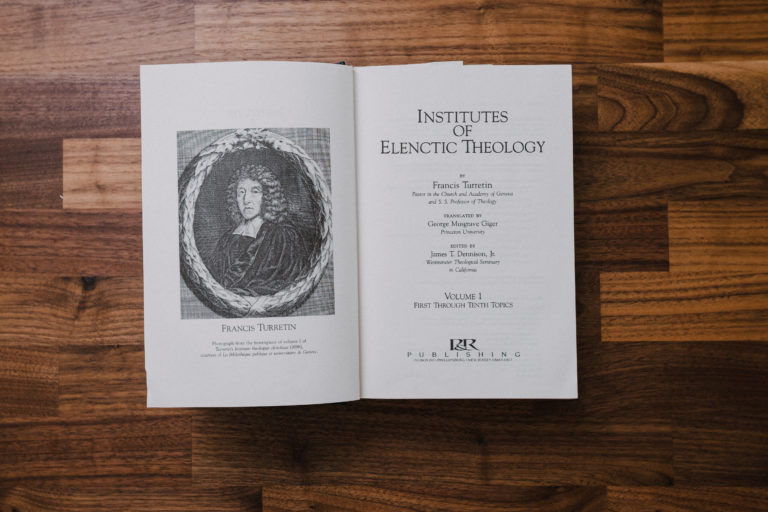
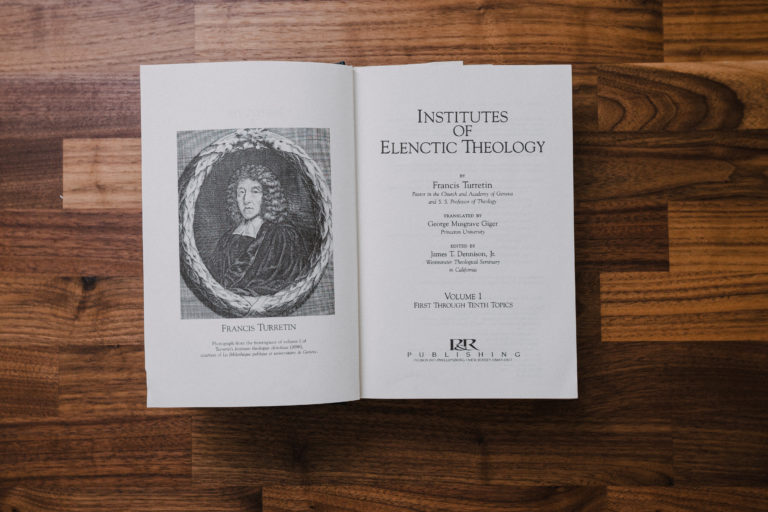
We have now arrived at the twentieth question offered in Turretin’s treatment of Bibliology. Here he asks about the Scripture as the final and infallible judge of controversies in the church as opposed to the Scripture + Church Tradition or the Scriptures + the Magisterium. As you can imagine Turretin’s treatment is extensive so it’s going to take a couple posts to present his thoughts on this point. That said, let us begin with Turretin’s framing of the question. He writes,

“…the question concerns only the supreme and infallible judgment by which everything must necessarily stand or fall – whether this belongs to the Scriptures themselves (as we hold) or to some man or assembly composed of men (as the papists maintain).”

Francis Turretin, Institutes of Elenctic Theology, vol. 1, Second Topic, Q. 20, Sec II.

Turretin goes on to admit that there are certain types of judges, judges with varying degrees of authority and autonomy. He divides these judges into three types.

“First is the supreme and autocratic (autokratorikos), which judges by legislative and absolute authority after the manner of the higher prince, which enacts laws and from which there is no appeal.”

Turretin, Institutes, Second Topic, Q. 20, Sec III.

“Second is the subordinate (hyperetikos) or ministerial, which interprets the laws after the manner of a public minister.”

Turretin, Institutes, Second Topic, Q. 20, Sec III.

“Third is an idiomatic (idiotikos) or private, which both from the laws and from their interpretation judges in the way of private discretion.”

Turretin, Institutes, Second Topic, Q. 20, Sec III.

Turretin is not here concerned with the latter two. His emphasis falls on the first. Are the Scriptures (or God speaking in them) the supreme autocratic judge “from which there is no appeal?” Now of course, Turretin is not here addressing those of our day and age. He is addressing the Roman Catholic apologists of his time and particularly their assault on the Scripture as supreme judge of controversies and interpreter of itself. That said the correlation between then and now does bear striking similarities.

Turretin writes,

“The question is not whether the Scriptures are the rule and standard of controversies. This the papists do not object to, at least they appear to be willing to hold it, although what they give with one hand they take away with the other, arguing their obscurity and imperfection.”

Turretin, Institutes, Second Topic, Q. 20, Sec IV.

How many times have you and I heard some evangelical textual scholars say out of one side of their mouth, “Oh, yes, the Scriptures are the rule and standard.” only to say ten minutes later, “Well the true text is either in the text or apparatus.”? Note also that for Turretin an assault on the perspicuity and perfection of Scripture is an assault on the canon – the rule, the standard. Turretin it not responding to intactness of the gospel message over the whole warp and woof of the Bible. The Roman Catholics weren’t making that argument.

Turretin is responding to the Roman Catholic argument that the Greek and Hebrew are incurably imperfect and obscure. This is the current argument of the evangelical textual critic. The Bible still has imperfections and the CBGM is going to save us or maybe we can’t be saved. Turretin would demur. And why? Because the Spirit of God speaking in the word of God is the supreme autocratic judge regarding the words of Scriptures and the controversies surrounding those words.

The admittance of I John 5:7 is a controversy in the church and has been in the past. How are we to settle the controversy? By yielding to the Holy Spirit speaking through His words. The admittance of the long ending of Mark is a controversy in the church and has been in the past. How are we to settle the controversy? By yielding to the Holy Spirit speaking through His words. The admittance of the women caught in adultery is a controversy in the church and has been in the past. How are we to settle the controversy? By yielding to the Holy Spirit speaking through His words.

These and many other textual disputes are indeed controversies within the scope and jurisdiction of the authority of the Holy Spirit speaking through His words. If the story of the woman caught in adultery is the Holy Spirit’s words, He will speak to us through them. In such a way the Holy Spirit reveals Himself to be the supreme autocratic judge having absolute authority to judge all controversies even biblical textual controversies. I mean, in the end, the words at the center of the controversy are either the Holy Spirit’s or they are not. If they are, only God can judge righteously by speaking through them to the saint, and no amount of “in my professional opinion based on the evidence” can subdue God’s righteous judgement concerning His words. Such impious attempts are both immoral and doomed to fail.

John Owen, 1658, on Self-authenticating Scripture

Sect. 5. That then which is to be the establishment of the Souls of Believers, I shall labor to prove and evince, is plainly this, namely, that the Scriptures of the Old and New Testament, do abundantly, and uncontrollably manifest themselves to be the Word of the living God; so that merely on the account of their own proposal of themselves unto us, in the Name and Majesty of God, as such, without the contribution of help or assistance from Tradition, Church, or anything else without themselves, we are obliged upon the penalty of eternal damnation (as are all by whom by any means they come, or are brought) to receive them, with that subjection due to the Word of God. The Authority of God shining in them, they afford unto us all the divine evidence of themselves, which God is willing to grant unto us, or can be granted us, or is any way needful for us. So then, the Authority of the written Word, in its self and unto us, is from its self, as the Word of God, and the eviction of that Authority unto us, is by its self.

Eviction: “conclusive evidence”

John Owen, Of the Divine Originall, Authority, self-evidencing Light, and Power of the Scriptures: With an Answer to that Enquiry, How we know the Scripture’s to be the Word of God. Also A Vindication of the Purity and Integrity of the Hebrew and Greek Texts of the Old and New Testaments; in some Considerations on the Prolegomena (Oxford: Printed by Henry Hall, Printer to the University for Tho: Robinson, 1658), 34-35.

The Internal Testimony of the Holy Spirit

Happy New Year one and all. After a brief hiatus in celebration of being married to my most splendid wife and co-laborer for 20 years, it is time to once again assume the blogging mantle. Thanks to Dr. Van Kleeck Sr. for doing all the heavy lifting while I was gone. We pick up again with Richard Muller on the point of the Holy Spirit’s witness. Muller writes,

“testimonium internum Spiritus Sancti: internal testimony of the Holy Spirit;

the inward work of the Spirit that testifies to faith concerning the truth of Scripture.”

Richard Muller, Dictionary of Latin and Greek Theological Terms: Drawn Principally from Protestant Scholastic Theology, Term: testimonium internum Spiritus Sancti.

It is important to note that the word of God is not ever alone in its work. Where the word is the Spirit is and where the Spirit is the word is. Indeed, it is the presence of the Spirit of God in and through the words of Scripture which makes those words quick (living) and powerful. Muller reminds us of the Protestant orthodox position when he writes,

“The Reformers and the Protestant scholastics were adamant in their belief both that the testimonium is necessary to the subjective receipt of the truth of Scripture and that the testimonium only ratifies the truth of the text and adds no new information.”

Muller, Dictionary, Term: testimonium internum Spiritus Sancti.

For our purposes and for use in the current textual discussion, the truth of the text and thereby its trustworthiness and authenticity/genuineness are ratified by the Holy Spirit. No doubt there are many gifted thinkers who have their say about what they think is or is not a part of that thing called the New Testament in Greek. But let’s be clear. The orthodox theological position has been that the Spirit of God ratifies His own words, and He does so by speaking through His words to His people. The Holy Spirit ratifies His words through His words and does not if the words are not His. This is how an average non-seminary educated saint can believe and know that what he/she reads is the word of God even if scholars argue that those words don’t belong in the New Testament (at least according to the evidence).

The Sacred Apographa

Francis Turretin (1623-1687) Codifier of theological orthodoxy.

“By the original texts, we do not mean the autographs written by the hand of Moses, or of the prophets and of the apostles, which certainly do not know exist. We mean their apographs which are so called because they set forth to us the word of God in the very words of those who wrote under the immediate inspiration of the Holy Spirit.” Francis Turretin, Institutes of Elenctic Theology, 106.

“the autographs and also the accurate and faithful copies may be the standard of all other copies of the same writing and of it translations. If anything is found in them different from the authentic writings, either autographs or apographs, it is unworthy of the name authentic and should be discarded as spurious and adulterated, the discordance itself being a sufficient reason for its rejection.” Turretin, Institutes, 113.

William Whitaker (1548-1595) Whitaker is the theological link to John Calvin and most quoted theologian by the Westminster Divines.

“We proceeded to break the force of this portion also of Bellarmine’s defense, and to show that the Greek original (apografh) in the New Testament is purer than the Latin edition.” William Whitaker, A Disputation of Holy Scripture Against the papists especially Bellarmine and Stapleton, 193.

Whitaker held that the Greek edition in his possession “is no other than the inspired archetypical [the original pattern] Scripture of the New Testament, commended by the apostles and evangelists to the Christian church.” Whitaker, Disputation, 142.

“The state of the controversy, therefore is this: Whether we should believe that these Scriptures which we now have are sacred and canonical merely on account of the church’s testimony or rather on account of the internal persuasion of the Holy Spirit, which, as it makes the Scripture canonical and authentic in itself, make is also to appear such to us, and without which the testimony of the church is dumb and inefficacious.” Whitaker, Disputation, 280.

Of the Hebrew text Whitaker wrote, “We must hold, therefore, that we have now those very ancient Scriptures which Moses, and the other prophets published, although we have not perhaps, precisely the same forms and shapes of the letters.” Whitaker, Disputation, 117.

Andrew Willet (1562-1621) Prolific Hebrew exegete

“so that it appeareth to be an unreasonable opinion to prefer a translation (Latin) full of corruptions before the pure Originals (apographa).” Andrew Willet, Hexapla in Leviticum, that is, a six-fold commentary upon the third book of Moses, called Leviticus, 1631, 101

John Owen, 1658, on the Foundation of the Christian Faith

Sect. 13. Thus far have we proceeded. The Scripture, the Written Word hath its infallible Truth in its self; John 17 from whence it hath is Verity, thence it hath its Authority; for its Authority is founded upon its Truth. Its Authority in its self, is its Authority in respect to us; nor hath it any whit more in its self, then de jure it hath towards and over them to whom it comes; That de facto some do not submit themselves unto it, is their sin and rebellion. This Truth and consequently this Authority, is evidenced and made known to us, by the public Testimony which is given unto it by the Holy Ghost speaking in it, with divine Light and Power, to the minds, souls and consciences of men: being therein by its self proposed unto us, We being enlightened by the Holy Ghost, (which in the condition wherein we are, is necessary for the Apprehension of any spiritual thing of truth in a spiritual manner)we receive it, and religiously subject our souls unto it, as the Word and Will, and judge of all: And if this be not at the bottom and foundation of faith, I here publicly Profess, that for ought I know, I have no faith at all.

John Owen, Of the Divine Original, Authority, self-evidencing Light, and Power of the Scriptures: With an Answer to that Enquiry, How we know the Scripture’s to be the Word of God. Also A Vindication of the Purity and Integrity of the Hebrew and Greek Texts of the Old and New Testaments; in some Considerations on the Prolegomena (Oxford: Printed by Henry Hall, Printer to the University for Tho: Robinson, 1658), 99-100.

Ursinus (1587) on the Testimony of the Holy Spirit and the Purity of Holy Scripture

But least any man think, that by arguments, which us reason by a natural light to be found, without the singular grace of the Spirit this may be wrought in the minds of the wicked, as either to obey the truth, or to leave off to reproach it, first he must remember that the arguments or testimonies are of two sorts which shew the certainty of the Christian religion, and maintain the authority of the Scripture. For there is but one only testimony, which is appropriated unto them alone who are regenerated by the Spirit of Christ, and unto them alone is known, the force of which the testimony is so great, that it doth not only abundantly testify and seal in our minds the truth of the doctrine of the Prophets and Apostles, but it also forcibly inclineth and moveth our hearts to the embracing and following of it. Other testimonies whatsoever may be brought, they are understood indeed both of the godly and the wicked, and do compel their consciences to confess, that this religion rather than others is pleasing to God, and that it came from him. But unless that one other come also, which is know of the godly alone, these testimonies will never bring to pass that man shall embrace the truth, although it be known to them. The arguments which shew the truth and certainty of the Scripture are these.

  1. Purity and perfections of doctrine. For we have the pure and perfect doctrines of the Gospel, so also the Law. Now other sects have not both the tables of the Law perfect. The first many have in part. The second but in some part also, and stained with many lies.
  2. The Gospel itself. Because it yieldeth sure consolation to men’s consciences, shewing the only way of escaping sin and death. The nature of man was not created to destruction. Wherefore that doctrine, which sheweth delivery, without violating the justice of God, is undoubtedly true and certain.
  3. The antiquity of this doctrine. Because it is found to be most ancient, party by conference. For we confer this with other doctrines, we shall find it to be pure and most true, as delivered by God, from which men afterwards fell away. Other sects have sprung up at other times, and again have perished. This hath continued, though it hath been mightily expunged by her enemies. (Continued)

Zacharias Ursinus, The Sum of the Christian Religion: Wherein are debated and resolved the Questions of whatsoever points of moment, which have been or are controversed in Divinity. Translated into English by Henry Parrie, out of the last and best Latin Editions (Oxford: Printed at Joseph Barnes and are to be sold in Pauls Churchyard at the sign of the Tigers head, 1587), 20-21.

Musculus, 1578, on the Theocentricity of Scripture’s Authority

Of the truth and accomplishment of the holy scriptures

The truth of the holy Scriptures dependeth upon the truth of God who is the author of them. He that doubteth the truth of them, either does not believe that they were uttered by the instance of the Holy Spirit, or else if he doubts not of that, he does not believe that God cannot lie. Or if he does believe that also, he takes him mutable as man, so that the same to which he would have to say tomorrow changing his mind, he would none of it. All which opinions be far from them that be of the number of true believers. For they do doubt nothing at all, but that the holy Scriptures be of God, and that God can never lie, neither be changed. They do say with the Apostle: “Let God rather be true, and every man a liar.” And with the Prophet: “The word of God is tried by fire, cleansed seven times.” They know the saying, “I am GOD, and am not changed. “And that also of Isa, “Like as the dew and the snow cometh from the heaven and returneth not thither again but moiseneth the earth, so is the word that goeth out of my mouth, it returneth not unto me void, but doeth whatsoever I will, and doth prosper in those matters whereunto I sent it. ” Wherefore they that be persuaded of the truth of God are persuaded also of the certainty and truth of the saying of God, which he set forth to us in holy scriptures.

Wolfgang Musculus, Common Places of the Christian Religion. Translated out of the Latin into English by John Man of Merton College (London: Imprinted at Henry Bynneman, 1578), 387-388.

That old tongue

Of the King James Version, editors Robert Alter and Frank Kermode in The Literary Guide to the Bible write, “Here is a miscellany of documents containing ancient stories, poems, laws, prophecies, which most of us cannot even read in the original languages, and which are a best, if we are English speakers, in an English that was already archaic when the King James (or “Authorized”) Version was published in 1611, and may now often seem distant and exotic: ‘that old tongue,’ as Edmund Wilson one vividly expressed it, ‘with its clang and flavor.’ Yet, as Wilson went on to say, ‘we have been living with it all our lives.’ In short, the language as well as the message it conveys symbolizes for us a past, strange and yet familiar, which we feel we somehow must understand if we are to understand ourselves.”

Later in the General Introduction we read, “We have as a rule used the King James Version in translation, and our reasons for doing so must be obvious: it is the version most English readers associate with the literary qualities of the Bible, and it is still arguably the version that best preserves the literary effects of the original languages.”

Robert Alter, Frank Kermode, eds., The Literary Guide to the Bible (Cambridge, MA: Harvard University Press, 1987), 1, 7.