This week we continue working our way through Then He Poked the Bear, a small book written by Van Kleeck Jr. in order to stir the scholastic pot. In this episode Dr. Van Kleeck, assuming a merely evidential method, will deal with the interrelation of Warrant Transfer and present-day belief in the Scriptures. Did the copyists of the past believe they were copying the Scriptures? Is so and we have their copies then that should lead us to believe we have the Scriptures. But if not, then we have less reason to believe we currently possess the words of God in our hands.
LIVE Lecture and Q&A w/ Dr. Van Kleeck Jr. – 01/03/2023

Tomorrow will be the fourth lecture of the Standard Sacred Text lecture series. We will begin at 7:30pm EST and will be held on the Zoom meeting platform. The lecture should run 50 or so minutes with LIVE interaction and Q&A both as the lecture is going on as well as afterward.
This week we continue working our way through Then He Poked the Bear, a small book written by Van Kleeck Jr. in order to stir the scholastic pot. In this episode Dr. Van Kleeck, assuming a merely evidential method, will deal with the interrelation of Warrant Transfer and present-day belief in the Scriptures. Did the copyists of the past believe they were copying the Scriptures? Is so and we have their copies then that should lead us to believe we have the Scriptures. But if not, then we have less reason to believe we currently possess the words of God in our hands.
Join us tomorrow at 7:30pm EST by clicking the button below. See you there.
Then He Poked The Bear: Episode III
In this episode Dr. Van Kleeck, assuming a merely evidential method, addresses certain deliverances of modern evangelical textual criticism, particularly the strange absence of exegetical arguments, the overt commercialism, and the subsequent ecclesiastical homelessness indicative of modern evangelical textual criticism.
HAPPY NEW YEAR!
LIVE Lecture and Q&A w/ Dr. Van Kleeck Jr. – 12/27/2022
Tonight will be the third lecture of the Standard Sacred Text lecture series. We will begin at 7:30pm EST and will be held on the Zoom meeting platform. The lecture should run 50 or so minutes with LIVE interaction and Q&A both as the lecture is going on as well as afterward.
This week we continue working our way through Then He Poked the Bear, a small book written by Van Kleeck Jr. in order to stir the scholastic pot. In this episode Dr. Van Kleeck, assuming a merely evidential method, addresses certain deliverances of modern evangelical textual criticism, particularly the strange absence of exegetical arguments, the overt commercialism, and the subsequent ecclesiastical homelessness indicative of modern evangelical textual criticism.
Join us tomorrow at 7:30pm EST by clicking the button below. See you there.
Gilbert Tennet, 1744, and The Effects of Scripture Surpassing the Force of Nature
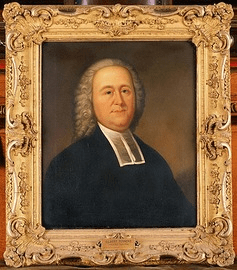
“Another Argument of the Divinity of the Scripture is their almost miraculous Preservation for so long a tract of Time, notwithstanding the rage of numerous, powerful and political Opposers, while many other esteemed composures, which never met with such opposition, have long since perished. Antiochus Epiphanes, in the days of the Maccabees, made diligent search for the Book of the Law, and where ever he found it, burnt it, and threatened those that concealed it with Death and Torture, And about the Year of Christ 300, the Emperor Diocletian being determined to root Christianity out of the World, used the fame Barbarities to destroy the Scriptures. But the gracious God has preserved them to this day, maugre [in spite of] the combined rage of Hell, and Earth! yea to preserve them whole and entire, so that those to whom they were committed, have not been suffered to corrupt them, although they fell into opinions inconsistent with them, they have therefore fled to unwritten traditions as the Patron of their erroneous Opinions. The Jews to their Talmud and Cabala, which, they say, Moses delivered by Word of Mouth. And the Papists to oral Traditions, which they say were delivered by St. Peter. But I proceed to observe,
That the early success of the Gospel notwithstanding of all the opposition and contempt which was made against it, and cast upon it, gives additional Force to what has been before offered. What less then Omnipotence could make such self-denying Doctrines, preached by illiterate Men, become victorious over the Pride and Prejudice of multitudes of divers Nations, and that without the Arts of Persuasion or Influence of civil Power? And indeed, that divine Energy that does frequently attend the Holy Scriptures, is a pregnant argument of their divine Authority. By these the minds of men are enlightened, their consciences alarmed, their hearts comforted and renewed, having their general bias turned towards God, and heavenly objects, and their lives reformed! These Effects which have appeared in millions of men, do surpass the Force of Nature, and must therefore be ascribed to an omnipotent Cause. And is it consistent with the Wisdom and Holiness of God to use a forgery to produce such noble Effects, and thereby to confirm an imposture? no surely! most certainly the Almighty uses Instruments adapted to the Effects produced.”
Gilbert Tennet, The Divine Authority of the Sacred Scriptures, the being and attributes of God, and the doctrine of the Trinity (Philadelphia: Printed by W. Bradford, 1744), 77-78.
Is Evangelical Textual Criticism Compatible with the Traditional American Christmas?
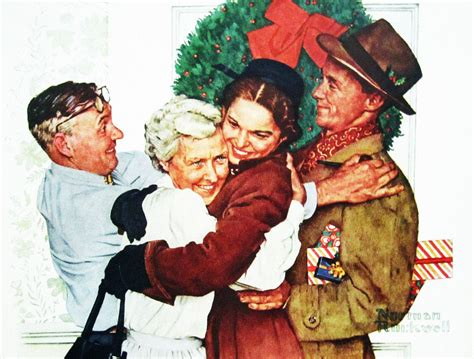
Is Evangelical Textual Criticism Compatible with the Traditional American Christmas? The answer must be no, and for the following three reasons:
While White pusillanimously failed to answer the question posed by both Dr. Van Kleeck and Dr. Riddle as to whether any portion of Scripture is open to question or change based on manuscript evidence, his obfuscation argued that even the Christmas event of Luke 2 given additional manuscript evidence would bring the account into question.
The inception of text criticism was a German idea, later adopted by the British and then the Americans. Carson, White, Ward, et al, have adopted a German concept and approach to the Scripture. At this data point, the unique and exceptional American church has been usurped by German philosophies, and for allowing this usurpation the American church is no longer unique or exceptional. Of the German scholar Johann Semler (1725-1791), popularly known as the “father of German rationalism,” Knittel writes, “He denied the divine inspiration of the Scriptures. He was, if not the originator, certainly the great promoter of that Infidel system so fashionable amongst the modern Neologians or Rationalists of Germany: I mean the Accommodation Theory.” Francis Antony Knittel, New Criticisms on the Celebrated Text, 1 John 5:7, translated by William Alleyn Evanson (London: C. and J. Rivington, St. Paul’s Church-yard, J Hatchard and Son, Piccadilly, 1829, 1785), Translators Preface, xvii-xxiii. Semler, “became notorious as the founder of the modern school of so-called historical critics of the Bible.” https://www.biblicalcyclopedia.com/S/semler-johann-salomo.html
And, modern evangelical textual criticism’s attack on the King James Version strikes at the religious traditions of American culture. Christopher Flannery, in an article ran in Hillsdale College’s Imprimis, writes the following:
“And from Dickens to Die Hard, running through and making possible all these charming and uplifting stories that have become part of American Christmas, is the original Christmas story, which most Americans from the earliest days would have read from the King James Version—even as Linus did in the 1965 animated classic A Charlie Brown Christmas:
And there were in the same country shepherds abiding in the field, keeping watch over their flock by night. And, lo, the angel of the Lord came upon them, and the glory of the Lord shone round about them: and they were sore afraid. And the angel said unto them, Fear not: for, behold, I bring you good tidings of great joy, which shall be to all people. For unto you is born this day in the city of David a Saviour, which is Christ the Lord. And this shall be a sign unto you; Ye shall find the babe wrapped in swaddling clothes, lying in a manger. And suddenly there was with the angel a multitude of the heavenly host praising God, and saying, Glory to God in the highest, and on earth peace, good will toward men.” Christopher Flannery, “American Christmas, American New Year,” Imprimis 51, no. 12 (Dec. 2022): 3.
Of the King James Version, editors Robert Alter and Frank Kermode in The Literary Guide to the Bible write, “Here is a miscellany of documents containing ancient stories, poems, laws, prophecies, which most of us cannot even read in the original languages, and which are a best, if we are English speakers, in an English that was already archaic when the King James (or “Authorized”) Version was published in 1611, and may now often seem distant and exotic: ‘that old tongue,’ as Edmund Wilson once vividly expressed it, ‘with its clang and flavor.’ Yet, as Wilson went on to say, ‘we have been living with it all our lives.’ In short, the language as well as the message it conveys symbolizes for us a past, strange, and yet familiar, which we feel we somehow must understand if we are to understand ourselves.”
Yes, we have been living with it our entire lives, but now, the Christmas story has been changed thanks to the Carsons and Whites of this world. Rather than the passage cited in the Charlie Brown Christmas I heard a pastor read, “Glory to God in the highest heaven, and on earth peace to those on whom his favor rests.” Even the words of the Christmas event are subject to the text critic. “Peace” in the KJV, through the sending of Christ would bring peace and good will to all men. That is, Christ is benevolently disposed to all men not simply to some. “The gift of the Saviour is an expression of good-will or love to people, and therefore God is to be praised.” https://biblehub.com/commentaries/pulpit/luke/2.htm.
So, is evangelical textual criticism compatible with the traditional American Christmas? The answer is no, and for three reasons. 1. The evangelical critic casts doubt on the validity of the Christmas event and record; 2. The evangelical critic has adopted a foreign method that has no altruistic reason for supporting the American church or culture. Indeed, historically, the two countries have twice been at war with one another; and 3. The traditional Christmas record has already been changed by the multi-version onlyists.
Maybe if White, Carson, and Ward see Marley’s ghost they will be less “Bah, Humbug” and more Merry Christmas!
Merry Christmas!
No Class Tonight

There is no class tonight because Dr. Van Kleeck Jr. has come down with a stomach virus as with most of his house. Lord willing we’ll see you next week.
Blessings and Merry Christmas.
“The word of God is the direction whereby we may square all our thoughts, words, and deeds”

Here at Standardsacredtext, we make the case that the Scripture has always been read by the Church in “autographic terms,” that the extant Scriptures were considered to be the quod res, doctrina substantia of the Original. In the short excerpt that follows Samuel Trickett in 1656 writes of his English translation in terms of the “word of God” illustrating again what receiving the believing the extant Scripture in “autographic terms” means. Affirming the authority of Scripture in this manner, for Trickett and the covenant keepers throughout Church history, is how to “delight yourselves in the law of the Lord.” While the saint delights in the law of the Lord, he is suited to happily “square all his thoughts, words, and deeds” preventing a poorly lived life and the “wandering up and down, as blind men in the dark.”
It was not a small matter that Dr. White ignored Dr. Van Kleeck’s appeal to the historic reading of Scripture is autographic terms. What would White say to Trickett? And is not the way Trickett writes familiar to the ear? Trickett writes, to obey the Scripture he cites is to hear and obey the voice of the Shepherd in the heart. It would be interesting to hear what Dr. White would do with such an assertion.
“The word of God is the direction whereby we may square all our thoughts, words, and deeds, as David affirms. Psal. 119:105, “Thy word is a lamp unto my feet, and a light unto my path.” It is a lamp, lanthorn, or a candle. Take this lamp not in your hand but in your heart, and it will light you heavenward, for without this we cannot live well, but shall wander up and down, as blind men in the dark….”
“The word of God is the bread of life. It is the effectual means and instrument which God uses to beget all saving graces within us. It is the heavenly manna whereby our faith is confirmed, and our souls comforted. It is a direction whereby we may square all our thought, words, and deeds. And it is the two-edged sword of God’s Spirit, whereby we may put to flight all the devil’s servants….”
“Let me humbly beseech you to labor – manifest your unfeigned love and liking of the word and law of God by your obedience thereunto, that you may desire to frame your live thereafter, and to obey the doctrine and word of God in the heart, and so be the ear-mark of his sheep. John 10: 4. 5. 27, “My sheep hear my voice, and I know them, and they follow me. “By this shall men know that ye are my disciples if ye have love one for another.”
- Consider God’s faithful servant David taking delight in his law, Psal. 119: 24, 25.
- Consider his commandments are amiable. Psal. 119:47, 48, “I will delight myself in thy commandments which I have loved.”
- Consider that this law confers peace. Psal. 119:50. “This is my comfort in my affliction, for thy word hath quickened me.”
- Consider it is a holy, just, and good law, and therefore to be delighted in, Rom. 11:12, 14, 16, 17.
O delight yourselves in the law of the Lord.”
Merry Christmas!
Samuel Trickett, Sermons Doctrinal and Practical (1656), edited by John Edward Blakeney (London: Printed by G. Norman, Maiden Lane, Covent Garden, 1863), 65, 67.
Then He Poked The Bear: Episode 2
This week we continue working our way through Then He Poked the Bear, a small book written by Van Kleeck Jr. in order to stir the scholastic pot. In this episode Dr. Van Kleeck, assuming a merely evidential method, will offer one historical argument, one example, and one modern phenomenon all with the aim of casting doubt on the quality of the NT originals.
Because if we doubt our Bible’s now, at least a little, it is reasonable to conclude that the first century church doubted or at least had robust reasons to doubt their Bible back then. But if the first century Church was certain that Paul’s letter to Galatia was indeed the word of God or that John’s Gospel was the word of God, then we too can be certain today of the Bible we hold in our hands.
Christmas, providential preservation, and certainty
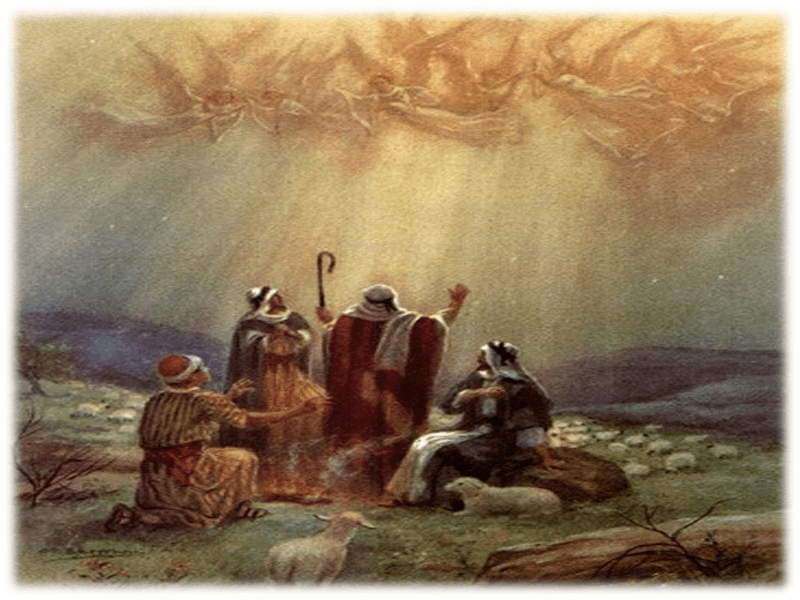
The interaction of the angel with the shepherds was so engrained in the hearts and minds of the early church that Luke wrote that his record was “most surely believed,” that he had “perfect understanding,” from which Theophilus and subsequent readers might know “the certainty of those things.” If it was not God Himself who preserved the infallible, inspired word, how could the Church ever know with certainty that the events of Acts 2 ever historically transpired, and if the events did not transpire, then the written record of these non-events are spurious. So, let’s say for the moment, we discount the historic orthodox manner these verses have been rendered and consider what might be an empirical defeater to this paradigm for manuscript transmission?
There is no empirical evidence of this event except for the witness of the shepherds. Manuscripts at this point are meaningless. Luke, or someone calling herself “Luke” may have just recorded a happy story that became a wide-spread myth. This event cannot be supported scientifically. Indeed, this announcement can be easily erased simply by arguing that the author’s fabricated account was a local fable that found its way into the real Luke’s gospel. The whole Gospel is not spurious only the conflation that includes Luke 2:1-20. After all, what makes these verses any different that John 7:53-8:11? It’s all just words on parchment. Luke was not in the field with the shepherds, nor was anyone else to corroborate the event. Even if it did happen, how reliable are shepherds to accurately report something of this magnitude. The story sounds like something out of a bottle not of divine significance, kind of like “snake handling” in Mark 16, or maybe like an Aesop fable of wonder and amazement but not an actual inbreaking of heaven to earth.
Before you can argue transmission, you must agree or believe the event being recorded happened. Luke recorded an event of the angel’s announcement to the shepherds. Was there a moment in time when the Apostle John wrote 1 John 5:7? Was there a historic event when Christ interacted with the woman caught in adultery? Did Mark write the long ending? How many times did Mark’s heart beat before he completed the Gospel? Because special revelation is grammatical/historical, word and event, if there is no written record, there is no way of knowing whether the historic event happened; if the event is in the text, because it is God’s word, it did happen. The present critical reconstruction of the text reconstructs the past when the unchanging past has already limited the veracity of the record. The past did not manifest itself in two simultaneous, contradictory events. Text critics are not so much students of ancient literature as they are manipulators of time. Call the manipulation what you want, just not truth or the New Testament. Did redemptive history unfold in the Biblical record or did it not? Orwell was correct, “Who controls the past controls the future. Who controls the present controls the past.” By critically reshaping the past, the future has been the splintering of the Church with multiple modern bible versions, and it is the present information dominance of the evangelical text critic that continues to reshape the past.
The witness of the shepherds is confirmed by Anna and Simeon, and then by the Wise Men, and then by the Father, Holy Spirit, and John the Baptist at Christ’s baptism, then the ministry of Christ, his death, resurrection, ascension, Pentecost, the Apostolic message, and the founding of the Church based upon inspired writings. All of this either confirms the witness of the shepherds or we are witnessing a complete 1st century ruse. Indeed, much of the Church is about to reinforce this transgenerational ruse on Christmas Sunday if it is not believed that all the past events of Holy Scripture are forever, unchangeably settled. And the only means of exercising that kind of faith this Christmas is to believe that the Gospel record has been providentially preserved by God and based on the introduction to Luke’s Gospel to have “certainty” of those things through the Word and Spirit.
Merry Christmas!
 Standard Sacred Text.com