Series 3, Lecture 3: A Theological Grounding for a Standard Sacred Text: The Connection Between Apostolic Preaching and the Written Word of God

Tonight 6/6 at 7:30 we will hold the third lecture of series three on “A Theological Grounding for a Standard Sacred Text: The Connection Between Apostolic Preaching and the Written Word of God.”

According to 1 Thess. 2:13, Paul’s preaching was received as God’s Word –“ye received it not as the word of men, but as it is in truth, the word of God.” The Author of the Apostolic tradition is Christ. In 1 Cor. 11:23 reads, “For I have received of the Lord that which also I delivered unto you” in that Paul’s gospel is revelation received directly from Christ – Gal. 1:12, “For I neither received it of man, neither was I taught it, but by revelation of Jesus Christ.” Apostolic preaching is a legally binding declaration of Christ that, to use contemporary terms, will stand up in court. Indeed, the declaration of the word of God is to be understood primarily as an Apostolic work –John 15:26-27, “But when the Comforter is come, whom I will send unto you from the Father, even the Spirit of truth, which proceedeth from the Father, he shall testify of me: And ye shall bear witness, because ye have been with me from the beginning.” The “Comforter” [paraclete], advocate, helper, comforter, representative, aid, is the Holy Spirit. The Holy Spirit is the Spirit of truth sent from the Father by the Father and Son who witnesses to the person, word, and work of Jesus Christ. The Apostolate [ye] would also through the Spirit bear witness to Christ because they had been with Christ from the beginning.

This Apostolic witness through the Holy Spirit of Jesus Christ provides the matrix for a New Testament canon. The central thought is that the authoritative preaching of the Apostolate brought about the emergence of a new authoritative body of material, the New Testament, to stand alongside the Old Testament.

In a series of articles on Canonicity, Dr. Richard B. Gaffin, Jr.’s article entitled “The New Testament: How Do we Know For Sure?” argued for a redemptive-historical formulation of canon,[1] contending

“We ought not, then, look for an Archimedean point outside the New Testament canon. Yet, in another respect, the Canon does point back beyond itself – to God, its origin and author. The collection of New Testament documents is not a historical phenomenon to be explained in terms of purely immanent factors—contingent factors, in turn, without an ultimate explanation. The New Testament is not a collection that “just happened.” Rather, it is that historical phenomenon by which God, the sovereign Architect and Lord of history, asserts and maintains himself as Canon.[2]


[1] Definition: κανόνι, kanoni – from the Hebrew qaneh meaning “reed,” or “measuring rod.”

[2] Richard B. Gaffin, Jr., “The New Testament: How Do We Know for Sure?” Christianity Today (Feb. 5, 1988), 29. Much of the following material is taken from lectures on Canonicity at Westminster Theological Seminary, Philadelphia, given by Dr. Richard B. Gaffin, Jr. and to whom I am deeply indebted.

Don’t miss the systematic study of Apostolicity and its role in canonicity tonight at 7:30.

Series 3 Lecture 2: Canonicity and Apostolicity (Video)

An orthodox Christian theological grounding for a Standard Sacred Text must of necessity begin with Jesus Christ and the Christ-complex – the death, burial, resurrection, ascension, and Pentecost – to be properly formulated (Luke 24: 27, 44). Beginning with the life and ministry of Jesus Christ, “God manifest in the flesh” (1 Tim. 3:16), Christo-centricity is at “center of the center” of orthodox theology (2 Cor. 1:20). The links between Christ’s ministry and the inspired written word are as follows: Christ, through the Apostolate, as authoritative representatives of Christ (Matt. 16:19; John 20:23) declared the Apostolic message that carried the Authority of Christ (Gal. 1:8-9; 1 Thess. 2:13). The spoken Apostolic message, as the Apostolate served as plenipotentiaries of Christ was the content for the inspired autograph, (2 Peter 1:21).

Series 3 Lecture 1: Scripture as First Principle (Video)

This first lecture concerns the issue of first principles and particularly the role of Scripture as the principium cognoscendi or first principle of theological knowledge. Have you ever wondered if it is viciously circular to appeal to the Bible in order to defend the Bible? Have you ever thought the Bible to depend on some prior or more foundational authority? Maybe you thought that God undergirds the Bible as some more primary source of authority? These and other such questions are answered in the above video. Blessings.

Series 3, Lecture 2, A Theological Grounding for a Standard Sacred Text: Canonicity and Apostolicity

Tonight at 7:30 we will hold the second lecture of series three on “A Theological Grounding for a Standard Sacred Text.” An orthodox Christian theological grounding for a Standard Sacred Text must of necessity begin with Jesus Christ and the Christ-complex – the death, burial, resurrection, ascension, and Pentecost – to be properly formulated (Luke 24: 27, 44). Beginning with the life and ministry of Jesus Christ, “God manifest in the flesh” (1 Tim. 3:16), Christo-centricity is at “center of the center” of orthodox theology (2 Cor. 1:20). The links between Christ’s ministry and the inspired written word are as follows: Christ, through the Apostolate, as authoritative representatives of Christ (Matt. 16:19; John 20:23) declared the Apostolic message that carried the Authority of Christ (Gal. 1:8-9; 1 Thess. 2:13). The spoken Apostolic message, as the Apostolate served as plenipotentiaries of Christ was the content for the inspired autograph, (2 Peter 1:21).

Don’t miss the systematic study of Apostolicity and its role in canonicity tonight at 7:30.

Series 3: A Theological Grounding for a Standard Sacred Text – Lecture 1: Scripture as First Principle

Tonight at 7:30pm EST we will begin lecturing through A Theological Grounding for a Standard Sacred Text. The first lecture concerns the issue of first principles and particularly the role of Scripture as the principium cognoscendi or first principle of theological knowledge. Have you ever wondered if it is viciously circular to appeal to the Bible in order to defend the Bible? Have you ever thought the Bible to depend on some prior or more foundational authority? Maybe you thought that God undergirds the Bible as some more primary source of authority? These and other questions will make their way to the fore tonight at 7:30pm. See you there!


Kiss the Royal Seal of “…Or The Apparatus”

Welcome to those defenders of the providentially preserved infallible and available Scriptures as well as to those who have yet see the light of pre-Enlightenment Bibliology.

First off, starting next Tuesday (May 23) we will begin lecturing through A Theological Grounding for a Standard Sacred Text. The first lecture concerns the issue of first principles and particularly the role of Scripture as the principium cognoscendi or first principle of theological knowledge. Have you ever wondered if it is viciously circular to appeal to the Bible in order to defend the Bible? Have you ever thought the Bible to depend on some prior or more foundational authority? Maybe you thought that God undergirds the Bible as some more primary source of authority? These and other questions will make their way to the fore this coming Tuesday at 7:30pm. See you there!

Second, it occurred to me that in one respect we and our Multiple Version Only brothers agree on a very important premise. See, here at Standard Sacred Text.com one of our main points of argumentation is that the New Testament exists between two covers, in a single book we are currently able to hold in our hand and read from. This NT is called the Textus Receptus and particularly that publication of the Trinitarian Bible Society.

If you were to ask us, “What is the probability that the entire Greek New Testament exists between two covers?” We would reply, “Very high and the book which stands as the entire Greek NT between two covers is none other than the TBS Textus Receptus.” In fact, would would say that the probability is so high it is more like a certainty.

What do you think would happen if we asked the same of our evidentialist brothers on the other side of aisle? We know their answer. We’ve heard it over and over, “The original is either in the text or the apparatus of the current Greek NT (e.g., the Nestle-Aland 28th edition).” So what they are saying that it is highly probable even nearing (but never reaching) certainty that the entire word-for-word Greek New Testament is in NA 28 or some similar confession.

So then we both agree that at this current time in Church History that it is highly probable that the people of God have every word of the New Testament in their possession and between two covers.

So why the textual kerfuffle?

It seems to me that all the name calling, red faces, division, pretensions (i.e., the kerfuffle) revolves around one very simple fact. Our side is ready to pull the trigger about readings that the other side is not thus eliminating the need for belief in the “or the apparatus” clause like that of Wallace, Gurry et al.

And what is so unbiblical about not including said clause in our belief?

When boiled down our side is being castigated and ostracized because we exclude the “or the apparatus” clause from confession of belief that we possess the whole of the New Testament between two covers.

Certainly the Bible does not tell us to include “or the apparatus” as part of our confessed belief in Scripture so the reason for why our position is rejected and defamed is not because of some exegetical or theological grounding. Why then? Because we are not academic enough? That also seems preposterous.

In my debate with James White I offered philosophical arguments from properly basic Christian belief anchored in Reformed Epistemology as well as a new way of looking at probabilities as degrees of belief (i.e., Bayes’ Rule) rather than issues of frequency (i.e., Frequentist). Then Thomas Ross’ debate with James White was stuffed full of material – exegetical, historical, and logical. So much so that people’s one complaint about Ross was that he had too much material none of which was meaningfully refuted in the debate or after. In both debates we offered ample reasons to show why we do not and should not include “or that apparatus” in our confession of belief in Scripture. What is more, very little of this material – exegetical, theological, philosophical – is original to us. Which is to say, such academically rigorous material has been available, in some cases, for centuries, but roundly ignored. And of course, ignoring something does not make that thing any less true, rigorous, or academic.

So what’s the deal? Comment below. Tell us what you think.

See you all Tuesday for the beginning of our lectures through A Theological Grounding for a Standard Sacred Text.

Artificial Intelligence and a Standard Sacred Text (Part 2)

Here is the second installment and conclusion I had with ChatGPT. As we continued the discussion it turned to the role of textual criticism in arriving at the correct reading. I used 1 John 5:7 as a test case because it is thought to have a probability of 0 as to originality. As a result, it was a bit of a softball for the AI but still I think the AI was ready to admit something that our intellectual opponents would not. As before, my questions are in bold and ChatGPT in bold. You can find the first half of our conversation here.

________________________________

But if Christians are to believe that every word of the Bible is God’s word and assuming 1 John 5:7 is God’s authoritative and inspired word, isn’t it fair to conclude that the Bible that excludes 1 John 5:7 is not a Bible that is consistent with what the Bible teaches about itself?

The belief that every word of the Bible is God’s word is a foundational belief held by many Christians. However, it is also important to recognize that there are different interpretations and understandings of this belief within Christianity, and not all Christians hold to a strict literalism that sees every word of the Bible as directly from God.

Regarding 1 John 5:7 specifically, it is true that this passage is included in some versions of the Bible but not in others. This is because there is scholarly debate about whether the passage was part of the original text or was added later by scribes. While some Christians believe that the passage is part of the original text and is therefore God’s authoritative and inspired word, others believe that it was added later and should not be considered part of the inspired text.

In either case, it is important to recognize that the inclusion or exclusion of 1 John 5:7 in different versions of the Bible does not necessarily mean that one version is more or less consistent with what the Bible teaches about itself. The interpretation and understanding of what the Bible teaches about itself is complex and involves a variety of factors, including the composition, historical context, and theological themes of the text.

Ultimately, the core message and teachings of the Bible, including the belief in the Trinity, the deity of Jesus Christ, salvation through faith, and the importance of love and forgiveness, remain consistent across all versions, even if there are differences in the inclusion or exclusion of certain passages.

Assuming that every word of the Bible is God’s word and assuming 1 John 5:7 is God’s authoritative and inspired word, isn’t it fair to conclude that the Bible that excludes 1 John 5:7 is not a Bible that is consistent with what the Bible teaches about itself?

It is true that some Christians hold to the belief that every word of the Bible is directly from God and therefore authoritative and inspired. However, not all Christians hold to this belief, and there are varying interpretations and understandings of the Bible’s inspiration and authority within Christianity.

Regarding 1 John 5:7 specifically, it is true that this passage is included in some versions of the Bible but not in others. There is scholarly debate about whether the passage was part of the original text or was added later by scribes, and this debate has led to differences in the inclusion or exclusion of the passage in various translations and versions of the Bible.

However, it is important to recognize that the inspiration and authority of the Bible does not depend solely on the inclusion or exclusion of any one passage, such as 1 John 5:7. The inspiration and authority of the Bible is based on a much broader understanding of its composition, historical context, and role in the Christian faith.

Moreover, while the inclusion or exclusion of certain passages may affect the interpretation or emphasis of certain teachings, the core message and teachings of the Bible remain consistent across all versions. Christian scholars and theologians have worked to ensure that the translations and versions of the Bible accurately reflect the original meaning and intent of the text, and they use a variety of methods and criteria to determine which passages should be included.

In summary, while there may be differences in the inclusion or exclusion of certain passages, the essential message and teachings of the Bible remain intact across all versions, and the inspiration and authority of the Bible is based on a broader understanding of its composition, historical context, and role in the Christian faith.

In this situation, let’s assume every word of the Bible is directly from God and 1 John 5:7 is God’s inspired and authoritative Scripture, is it fair to conclude that Bibles that would exclude 1 John 5:7 also reject what the Bible teaches about itself?

If we assume that every word of the Bible is directly from God and that 1 John 5:7 is God’s inspired and authoritative Scripture, then it could be argued that Bibles that exclude 1 John 5:7 are not consistent with the Bible’s teaching about itself, at least in regards to that specific passage.

However, it is important to note that the inclusion or exclusion of 1 John 5:7 is a matter of textual criticism and historical analysis, not a theological or doctrinal issue. There are valid reasons to believe that this passage was not part of the original text, and it is possible to maintain the Bible’s authority and inspiration while also acknowledging that certain passages may have been added or omitted over time.

Moreover, the authority and inspiration of the Bible does not rest solely on the inclusion or exclusion of any one verse or passage. The Bible’s authority and inspiration are based on a larger body of evidence, including its historical and cultural context, the testimony of the Church throughout history, and the transformative power of its teachings in the lives of believers.

In summary, while the exclusion of 1 John 5:7 may be seen as a deviation from the Bible’s teaching about itself in regards to that specific passage, it does not necessarily negate the Bible’s overall authority and inspiration. The Bible’s authority and inspiration are based on a broader body of evidence and cannot be reduced to the inclusion or exclusion of any one verse or passage.

Why is the inclusion or exclusion of 1 John 5:7 not a theological or doctrinal issue when you already admitted that for Christians the Bible is God’s word – a distinctly theological object and topic?

The inclusion or exclusion of 1 John 5:7 is a theological and doctrinal issue in the sense that it pertains to the question of the Bible’s authority and inspiration. However, it is not a primary or central theological or doctrinal issue, meaning that it is not directly related to the essential teachings of the Christian faith, such as the nature of God, the person and work of Jesus Christ, salvation, and the Holy Spirit.

Theology and doctrine are concerned with the fundamental truths and beliefs of the Christian faith, and the Bible is the primary source of these truths and beliefs. However, not every issue related to the Bible is of equal importance or centrality to the Christian faith. The inclusion or exclusion of 1 John 5:7 is a matter of textual criticism and historical analysis, which is important for understanding the origins and transmission of the biblical text, but it is not essential for understanding the core teachings of the Christian faith.

It is possible to affirm the Bible’s authority and inspiration without necessarily taking a definitive stance on the inclusion or exclusion of 1 John 5:7, as there are valid arguments on both sides of the debate. Ultimately, the theological significance of this issue depends on how it relates to the broader body of evidence and beliefs concerning the nature and authority of the Bible.

Why do you exclude the Bible’s authority and inspiration as a primary or central doctrine when it is the Bible’s authority and inspiration which is the foundation and source of all Christian doctrine?

I apologize if my previous response was unclear. Let me clarify that the authority and inspiration of the Bible are indeed central doctrines of the Christian faith, as they form the foundation and source of all Christian doctrine. Without the belief in the authority and inspiration of the Bible, it would be impossible to derive the essential teachings of the Christian faith.

What I was trying to convey in my previous response is that the issue of the inclusion or exclusion of 1 John 5:7 is a secondary or peripheral theological issue, in the sense that it does not directly affect the core doctrines of the Christian faith, such as the nature of God, the person and work of Jesus Christ, salvation, and the Holy Spirit.

While the inclusion or exclusion of 1 John 5:7 is certainly an important matter of textual criticism and historical analysis, it is not a primary or central issue in the sense that it does not impact the essential teachings of the Christian faith. Christians can hold different views on this matter while still affirming the central doctrines of the faith based on the overall witness of the biblical text.

Assuming all of the Bible is God’s inspired and authoritative word and assuming 1 John 5:7 is contained in the Bible and assuming the authority and inspiration of the Bible is a central doctrine would it be fair to say that if a Bible were to exclude 1 John 5:7 then that Bible would do injury to the central doctrines of Biblical inspiration and authority?

If we assume that every word of the Bible is God’s inspired and authoritative word, and if we assume that 1 John 5:7 is contained in the Bible, and if we assume that the authority and inspiration of the Bible are central doctrines of the Christian faith, then it would be fair to say that the exclusion of 1 John 5:7 from a Bible translation could potentially raise questions about the integrity and faithfulness of that translation to the central doctrines of Biblical inspiration and authority.

However, it is important to note that the issue of textual variants and manuscript traditions is a complex and nuanced one, and not every instance of variation necessarily involves an intentional omission or alteration. The process of textual criticism involves careful examination of manuscript evidence and a weighing of various factors, such as the age, reliability, and coherence of the witnesses, in order to determine the most likely original reading.

Therefore, it is possible for a Bible translation to exclude 1 John 5:7 without necessarily undermining the central doctrines of Biblical inspiration and authority, if the decision to exclude that passage is based on sound textual and historical reasons. Nonetheless, any such decision should be made with utmost care and transparency, and with a commitment to maintaining the highest standards of textual fidelity and theological faithfulness.

So would you say that the process of textual criticism is really what determines what belongs in the Bible and what does not?

The process of textual criticism is one of the methods used by scholars to determine the most likely original text of the Bible, particularly in cases where there are discrepancies or variations in the surviving manuscript evidence. However, it is important to note that textual criticism is not the sole determinant of what belongs in the Bible.

The canonization of the Bible, or the process by which certain books were recognized as authoritative and inspired by God and thus included in the Bible, involved a complex historical and theological process that was guided by various factors, such as apostolic authorship, conformity to orthodox teaching, and liturgical usage.

Furthermore, the authority and inspiration of the Bible are not ultimately grounded in human processes or scholarly methods, but in the sovereign work of God himself. Christians believe that the Bible is God’s self-revelation to humanity, and that it carries divine authority and truth by virtue of its divine inspiration. As such, the Bible is not subject to human judgment or revision, but rather stands as the definitive and unchanging Word of God.

When what the Bible teaches about itself conflicts with the conclusions of textual criticism who should win out?

When there is a conflict between what the Bible teaches about itself and the conclusions of textual criticism, it is important to recognize that both are seeking to understand the Bible and its message in different ways. The Bible’s own teaching about itself is a central part of the Christian faith and cannot be ignored or dismissed lightly.

At the same time, textual criticism is a valuable tool for helping us to better understand the historical context and transmission of the biblical text, and can help us to discern the most likely original wording of the text. However, it is important to recognize that textual criticism is not infallible, and different scholars may arrive at different conclusions based on the available evidence.

In cases where there is a conflict between the Bible’s self-teaching and the conclusions of textual criticism, it is important to approach the issue with humility and a willingness to continue studying and wrestling with the text. Ultimately, Christians trust in the Holy Spirit to guide them into a deeper understanding of the truth of God’s Word.

So the Holy Spirit is the ultimate arbiter in a conflict between what the Bible says about itself and textual criticism?

For Christians, the Holy Spirit is seen as the ultimate guide and interpreter of the Bible. The Holy Spirit is understood to work within the hearts and minds of believers, helping them to understand and apply the teachings of Scripture to their lives.

When there is a conflict between what the Bible says about itself and the conclusions of textual criticism, it is possible that the Holy Spirit may lead believers to a deeper understanding of the truth of Scripture that is not immediately apparent from either the text or the scholarly research. However, it is important to approach such questions with humility and a willingness to learn from others, recognizing that the Holy Spirit can work through a variety of means, including scholarship, tradition, and personal experience.

Where does the Bible say that the Holy Spirit can work through a variety of means including scholarship, tradition, and personal experience?

The Bible does not explicitly say that the Holy Spirit can work through a variety of means, including scholarship, tradition, and personal experience. However, there are passages in the Bible that suggest that the Holy Spirit is active in a variety of ways, including through the gifts of wisdom and knowledge, through the guidance of the Church, and through the experiences of believers.

For example, in 1 Corinthians 12:8, the Apostle Paul speaks of the gift of wisdom and the gift of knowledge, which are understood by many Christians to be supernatural gifts of the Holy Spirit that can aid in the interpretation of Scripture. In addition, many Christians believe that the Holy Spirit works through the guidance of the Church, which has preserved and interpreted the teachings of Scripture over the centuries.

Finally, some Christians believe that the Holy Spirit can work through personal experience, guiding individuals as they read and apply the teachings of Scripture to their own lives. While it is important to approach personal experiences with humility and discernment, many Christians believe that the Holy Spirit can use these experiences to deepen our understanding of God and His Word.

Where then does the Bible implicitly say the Holy Spirit can work through scholarship and tradition?

The Bible does not explicitly mention scholarship or tradition as means through which the Holy Spirit works, but it does speak to the importance of knowledge, wisdom, and teaching. In Proverbs 1:7, it says, “The fear of the Lord is the beginning of knowledge; fools despise wisdom and instruction.” Similarly, in James 1:5, it says, “If any of you lacks wisdom, let him ask God, who gives generously to all without reproach, and it will be given him.” These verses imply that seeking knowledge and wisdom is important and that God can provide it.

As for tradition, the Bible does speak about the importance of passing down teachings and practices from one generation to the next. In 2 Thessalonians 2:15, it says, “So then, brothers, stand firm and hold to the traditions that you were taught by us, either by our spoken word or by our letter.” In 1 Corinthians 11:2, it says, “Now I commend you because you remember me in everything and maintain the traditions even as I delivered them to you.” These verses suggest that tradition has a role in preserving and passing down important teachings.

While the Bible does not explicitly mention scholarship or tradition as means through which the Holy Spirit works, it does suggest that knowledge, wisdom, and teaching are important and that tradition has a role in preserving and passing down teachings.

____________________________________

Again, I found ChatGPT’s answers to be very interesting on multiple fronts. Lord willing we will talk about these things later this week.


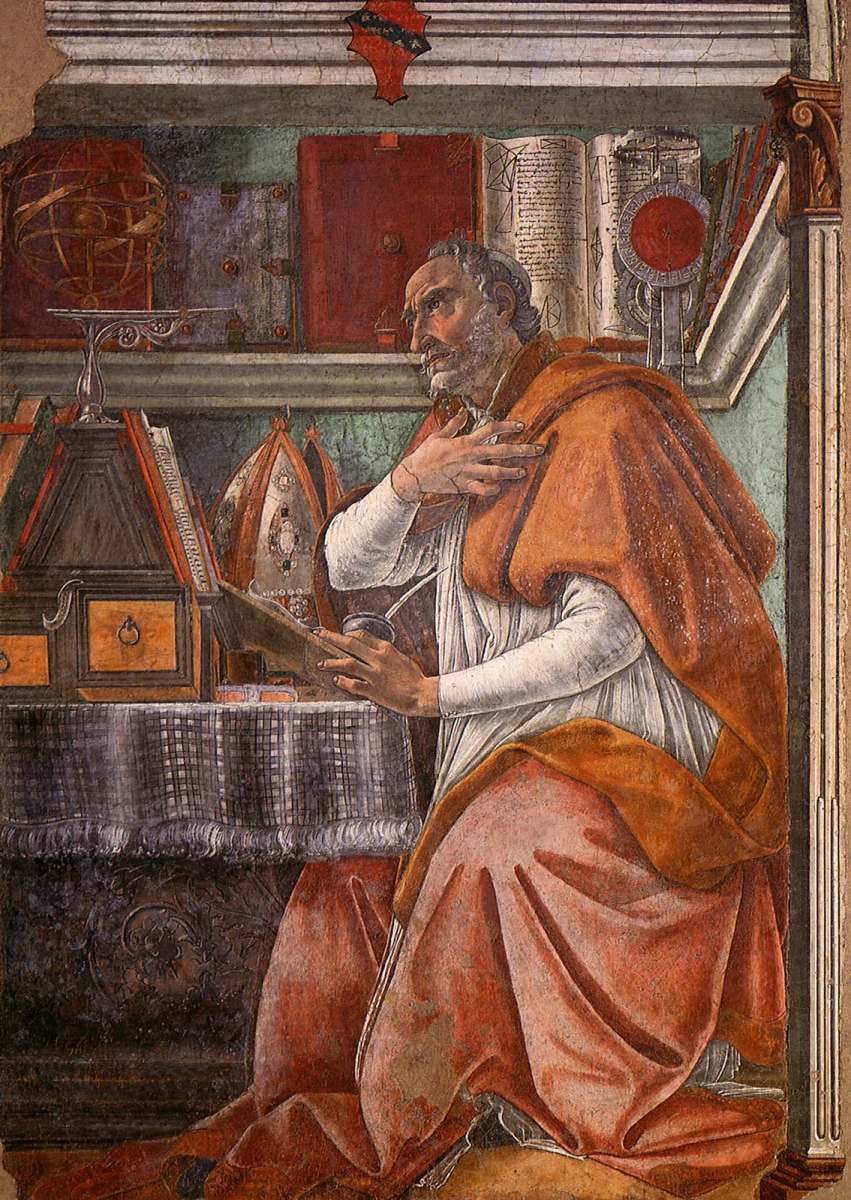
Augustine, in his 121th Epistle, otherwise Third, to Volusianus, Proconsul of Africa, Uncle to Melania the Younger, Numb. 3

Such is the depth of the Christian Scripture, that therein I could reap new advantage every day, if I had given myself over to the study of it alone, from my very first childhood even to decrepit old age, with the greatest leisure earnestest study, and a more happy genius; not that it is so difficult to attain to the knowledge of those things that are necessary to salvation; but after every man holds his faith there, without which he cannot live godly and righteously ; there are so many things wrapt up in such multiplicity of veils, that are to be understood by proficients, and there is such depth of wisdom couched, not only in the words whereby these things are expressed, but also in the things that are to be understood, that it fares with the most aged, the most acute, and those who are most desirous of learning, as the same Scripture has in a certain place, ” When a man has done, then he beginneth.”

Restraining or Stopping (“to check”) the Wisdom of God to the Church by treating some of inspired and preserved Scripture “needless.”

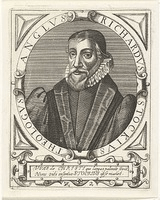
“There are some who think many things needless to be known and heard, many things not fit to be taught, as before, ver. 6. Besides that was then said, I say, let them see if this be not to check the wisdom of God, who hath both written and preserved the whole to the church; and if pride did not transport them beyond themselves, it could not be they should be so affected. As wisdom would teach them that many things are necessary, though not the present profit of them appear. For as in instruments only the strings sound, yet there are other things in the whole body, as that whereunto they are tied, the bridge, the pins, which help the music. So in the prophets, though all be not prophecies, yet they are things to which these are tied and illustrated (Aug. de Civ. Dei, lib. xvi. 2). And sometimes for those things which signify something, are those things which signify nothing added. As the ground is only ploughed and rent up by the ploughshare, yet that this may be, other parts of the plough are necessary. And humility, if they had any, would teach to suspect their own wisdom in not seeing the use and end, the profit and fitness of things, rather than questioning and reasoning against God. Others can be content to hear all pleasant things, as the promises and mercies of God; but judgments and reproofs, threats and checks, that they cannot brook; like unto those who, in medicines affect only the smell, or trimness, or gayness of them, as pills rolled in gold, but cannot away with the force of purging and preserving. And see not that a great company more go to hell by presuming in their lives than by despairing at their deaths. Some can willingly hear that which concerns other men and their sins, their lives and manners, but nothing touching themselves at all and their own sins: as men can willingly abide to hear of other men’s deaths, but cannot abide to hear of their own. Oftentimes they will make the minister to believe as they did, Jer. lxii. 5, 6, ‘Then they said to Jeremiah, The Lord be a witness of truth and faith between us, if we do not even according to all things for the which the Lord thy God shall send thee to us. Whether it be good or evil, we will obey the voice of the Lord God, to whom we send thee; that it may be well with us, when we obey the voice of the Lord our God.’ But when he shall declare unto them the will of God that crosseth their affections, they will entertain him, and answer, as chap, xliii. 2, ‘Thou speakest falsely, the Lord hath not sent thee to say thus.’ These, and such like, are here reproved and convinced of the breach of this duty, that the receive not, nor desire the law of God.”

Richard Stock (1568/69-1626), “A Commentary upon the Prophecy of Malachi” (1651), Nichol’s Series of Commentaries, Thomas Smith, ed., (Edinburg: James Nichol, 1865), 146.

Artificial Intelligence and a Standard Sacred Text (Part 1)

Today I began a conversation with the artificial intelligence ChatGPT. This is the first part of our conversation. I found it interesting in a host of ways and Lord willing we will talk about it on our YouTube channel next week. For now, take a look at the interaction and leave your thoughts and comments below. My question is in the bold and ChatGPT’s response is in the regular font.

________________________________

Should Christians believe in a standard sacred text?

Yes, Christians believe in a standard sacred text, which is the Bible. The Bible is considered the holy scripture of Christianity and contains the beliefs, teachings, and history of the Christian faith.

The Bible is composed of two main sections: the Old Testament and the New Testament. The Old Testament contains the books that were written before the birth of Jesus Christ and covers the history of the Jewish people and their relationship with God. The New Testament contains the books that were written after the birth of Jesus Christ and focuses on the life and teachings of Jesus, as well as the early history of Christianity.

Christians believe that the Bible is the inspired and authoritative word of God, and it is the ultimate source of guidance and direction for their lives. The Bible is considered to be infallible and without error, and it is believed to contain all the knowledge and wisdom necessary for salvation and a meaningful life.

While there are many different interpretations of the Bible, Christians generally agree that the Bible is the primary source of spiritual truth and guidance. Therefore, Christians should believe in a standard sacred text, which is the Bible, and use it as a guide for their beliefs, morals, and values.

How can the Bible be a standard sacred text if Christians believe in multiple versions of the Bible?

While it is true that there are multiple versions of the Bible, the core message and teachings of the Bible remain the same across all versions. The Bible is a collection of ancient texts that have been translated and compiled over many centuries, and different translations may vary in terms of language, style, and interpretation.

However, the essential teachings and doctrines of the Bible remain consistent across all versions. The central message of the Bible is the salvation of humanity through faith in Jesus Christ, and this message is preserved across all translations.

Christians believe that the Bible is the inspired and authoritative word of God, and that it contains all the knowledge and wisdom necessary for salvation and a meaningful life. While different versions of the Bible may vary in certain details or interpretations, the overall message and teachings of the Bible are consistent and remain the same.

Therefore, Christians can believe in a standard sacred text in the form of the Bible, even though there are multiple translations and versions of it. The essential teachings and message of the Bible remain the same, and Christians can use it as a guide for their beliefs, morals, and values, regardless of the specific translation or version they use.

Why isn’t what you just said merely a standard sacred belief rather than a standard sacred text?

What I said earlier about the Bible being a standard sacred text is based on the understanding that the Bible is a collection of texts that are considered sacred and authoritative by Christians. It is a standard sacred text because it is a tangible and physical book that contains the sacred teachings and doctrines of the Christian faith.

While it is true that what I said earlier about the essential teachings and message of the Bible being consistent across all translations is a standard sacred belief, the Bible itself is still considered a standard sacred text. This is because the Bible is not just a collection of beliefs, but it is a tangible and physical object that contains those beliefs in a written form. The Bible is a sacred text because it is the primary source of Christian doctrine and the basis for Christian beliefs and practices.

The Bible is not merely a collection of abstract beliefs, but it is a physical book that Christians can hold, read, and study. Therefore, the Bible is a standard sacred text that Christians use as a guide for their beliefs, morals, and values.

But according to you it is not the text that is believed but the core of teaching. That sounds like a standard sacred core and not a standard sacred text.

You raise a valid point. It is true that the core message and teachings of the Bible are the most important aspect of Christian belief, and that it is the essence of the teachings that is believed by Christians, rather than the physical text itself. In this sense, it could be argued that what is truly sacred is the core of the teaching rather than the physical text.

However, it is also true that the physical text of the Bible is considered sacred by Christians. The Bible is a tangible and physical representation of the teachings and beliefs of the Christian faith, and it is regarded as the primary source of guidance and direction for Christians.

The Bible is a collection of texts that have been compiled over many centuries, and it is considered the authoritative and inspired word of God. While different translations and versions of the Bible may exist, the core message and teachings of the Bible remain consistent across all versions.

Therefore, it could be argued that the Bible is both a standard sacred text and a standard sacred core, as the physical text is considered sacred by Christians, but it is the core message and teachings that are most important and form the foundation of Christian belief.

You said the Bible is the authoritative and inspired word of God. Is the standard sacred core also the inspired word of God?

Yes, the standard sacred core of Christian belief is also considered to be the inspired word of God. Christians believe that the Bible, both the Old and New Testaments, was inspired by God and written by human authors under His guidance. The core message and teachings of the Bible, which include the belief in the Trinity, the deity of Jesus Christ, salvation through faith, and the importance of love and forgiveness, are also believed to be inspired by God.

The core message of the Bible is essential to Christian belief and is considered the foundation of the faith. The core teachings of Christianity are based on the belief that God is loving, just, and merciful, and that He sent His Son, Jesus Christ, to redeem humanity from sin and reconcile them with God. These teachings are believed to be revealed by God through the Bible and are considered the authoritative and inspired word of God.

Therefore, while the physical text of the Bible is considered sacred by Christians, it is the core message and teachings of the Bible that are most important and are believed to be the inspired word of God.

Would you agree then that the Bible is the means through which the standard sacred core is revealed to Christians?

Yes, I would agree that the Bible is the primary means through which the standard sacred core of Christian belief is revealed to Christians. The Bible is the foundational text of the Christian faith, and it contains the core message and teachings of Christianity. The Bible is the primary source of guidance and direction for Christians, and it is through the Bible that Christians come to understand the nature of God, the purpose of human life, and the path to salvation.

Christians believe that the Bible is the inspired and authoritative word of God, and that it is the primary means through which God reveals Himself to humanity. The Bible is considered to be a unique and special book, different from all other books, as it is believed to contain the very words of God. It is through the Bible that Christians come to understand the core beliefs and teachings of their faith, and it serves as the ultimate authority for all matters of Christian belief and practice.

Therefore, the Bible is the means through which the standard sacred core of Christian belief is revealed to Christians, and it is the primary source of guidance and direction for the Christian faith.

Given your immediately previous answer, would you also agree that the standard sacred core is dependent upon the Bible and not the other way around?

Yes, I would agree that the standard sacred core of Christian belief is dependent upon the Bible, and not the other way around. The Bible is the foundational text of the Christian faith, and it is through the Bible that Christians come to understand the core message and teachings of their faith.

The standard sacred core of Christian belief, which includes the belief in the Trinity, the deity of Jesus Christ, salvation through faith, and the importance of love and forgiveness, is derived from the teachings and principles found in the Bible. These beliefs are not independent of the Bible, but are based on the revelation of God as recorded in the Bible.

Therefore, the standard sacred core of Christian belief is dependent upon the Bible, as it is through the Bible that Christians come to understand the nature of God, the purpose of human life, and the path to salvation. The Bible serves as the primary source of guidance and direction for Christians, and it is the ultimate authority for all matters of Christian belief and practice.

If these beliefs are indeed dependent upon the Bible and not the other way around is it fair to conclude that different versions of the Bible would yield at a minimum a slightly different standard sacred core?

It is possible that different versions of the Bible could yield slightly different interpretations of the standard sacred core of Christian belief, but it is important to note that the core message and teachings of the Bible remain consistent across all versions.

Different translations and versions of the Bible may vary in their choice of words, phrasing, and expressions, as well as in their arrangement of books and chapters. However, the core message and teachings of the Bible, which include the belief in the Trinity, the deity of Jesus Christ, salvation through faith, and the importance of love and forgiveness, remain consistent across all versions.

Moreover, Christian scholars and theologians have worked to ensure that the translations and versions of the Bible accurately reflect the original meaning and intent of the text. While there may be minor variations in interpretation or emphasis, the core teachings of the Bible remain the same.

Therefore, while different versions of the Bible may yield slightly different interpretations or emphasis, the core message and teachings of the Bible remain consistent and form the foundation of the standard sacred core of Christian belief.

If different versions of the Bible include and/or exclude different passages do these Bibles by their very existence teach the core teachings of what the Bible says about itself?

Different versions of the Bible may include or exclude different passages, and this can result in variations in the content of the text. However, it is important to note that the core teachings of the Bible remain intact across all versions, even if there are differences in the specific wording or inclusion of certain passages.

Regarding what the Bible teaches about itself, different versions of the Bible may approach this topic differently, with some translations placing more emphasis on the inspiration and authority of the text than others. However, the core teachings of the Bible about itself, including its divine inspiration, authority, and the importance of its teachings for Christian belief and practice, are present in all versions of the Bible.

While different versions of the Bible may present the teachings of the Bible in different ways, the core message and teachings of the Bible, which include the belief in the Trinity, the deity of Jesus Christ, salvation through faith, and the importance of love and forgiveness, remain consistent across all versions. Therefore, while there may be variations in wording or inclusion of certain passages, the essential message and teachings of the Bible remain intact and continue to guide Christian belief and practice.

But one Bible by including 1 John 5:7 claims that said passage is inspired and authoritative while another Bible excludes 1 John 5:7 thus claiming that said passage is neither inspired nor authoritative. It seems one of these Bibles is wrong about what the Bible says about itself.

You are correct that there are differences between various versions of the Bible in terms of which passages they include or exclude. The passage you mentioned, 1 John 5:7, is a good example of a passage that is included in some versions of the Bible but not in others.

However, it is important to note that the inspiration and authority of the Bible does not depend solely on the inclusion or exclusion of any one passage, such as 1 John 5:7. The inspiration and authority of the Bible is based on a much broader understanding of its composition, historical context, and role in the Christian faith.

Moreover, while the inclusion or exclusion of certain passages may affect the interpretation or emphasis of certain teachings, the core message and teachings of the Bible remain consistent across all versions. Christian scholars and theologians have worked to ensure that the translations and versions of the Bible accurately reflect the original meaning and intent of the text, and they use a variety of methods and criteria to determine which passages should be included.

In summary, while there may be differences in the inclusion or exclusion of certain passages, the essential message and teachings of the Bible remain intact across all versions, and the inspiration and authority of the Bible is based on a broader understanding of its composition, historical context, and role in the Christian faith.

_____________________________________

As I said, I found the whole interaction very interesting. Part 2 coming soon. Blessings.