After Two Years Where is Dr. Mark Ward on Psalm 12:6-7?

On February 18, 2022, I posted an article entitled “Dr. Mark Ward, Psalm 12:6-7, and the Historic Exegetical Argument for the Providential Preservation of God’s word.” Now approaching the two-year anniversary of this response to Dr. Ward’s opposition to Psalm 12:6-7 teaching the providential preservation of Scripture, I thought I would follow up on Dr. Ward’s response to the posting. As far as I can tell, Dr. Ward’s method is to throw rhetorical rocks through the exegetical windows of Psalm 12:6-7 and then run away hoping that everyone will forget he has offered no rebuttal to the providential preservation historically taught in the passage. After two years more than sufficient time has passed for a Ph.D. to mount a thorough refutation, which leads to the conspicuous conclusion that Dr. Ward no answer for the historic, exegetically based grounding for Scripture’s providential preservation of Psalm 12:6-7. For Dr. Ward and others who deny that any verse of Scripture teaches providential preservation, for a leader in the evangelical critical camp to allow this passage to stand without refutation is significantly problematic. Indeed, allowing the passage to stand unchallenged compromises an essential part of the critical position by moving Scripture’s preservation from a solely phenomenal issue to an exegetically, theologically grounded matter. Additionally, accepting one passage as grounds for providential preservation, shifts the critical paradigm away from an empirical premise to a position driven by prior Christian precommitments and the probability of other supporting passages. Dr. Ward’s inability to refute Psalm 12:6-7 is an insurmountable, paradigm shifting problem for the evangelical textual critic that he has chosen to ignore hoping everyone will forget.
Of course, if this post prompts a continued debate, we at StandardSacredText welcome the exchange. But after two years it is clear that Dr. Ward’s best defense for rejecting Psalm 12:6-7 referring to providential preservation is hoping everyone will forget that his dogmatic, drive by position is without historic grounding.
Andrew Willet (1562-1621) and the Use of the Septuagint (LXX) in His Hexaplas.

Andrew Willet (1562-1621) was arguably the most accomplished of the Church of England’s Hebrew exegetes, specifically of the Pentateuch, and a prolific and outspoken writer against the papacy. Except, however, for a few references to Willet as a Hebrew scholar and orthodox theologian, modern examination of Willet’s writings has been limited to his poetry, and specifically to his work as England’s first religious emblem writer.
Willet was born two years before the death of John Calvin (1509-1564) and died two years before the birth of Francis Turretin (1623-1687). He was a contemporary of William Ames (1576-1633) and a colleague of William Perkins (1558-1602), with whom he studied at Cambridge.
Both from his extensive citation of sources and from his methodology, called hexapla, or a “sixfold commentary,” the studied depth of Willet’s voluminous work is immediately evident. The six divisions are as follows: The text with its diverse readings, Argument and Method, The Questions Discussed, Doctrines Noted, Controversies Handled, and Moral Uses Observed. One exception Willet takes to his six-fold approach is in his exegesis of the short epistle of Jude. In the commentary on Jude, Willet followed a verse-by-verse format. The briefer hexapla on I Samuel and the commentary on Jude are written in a more pastoral tone. He draws upon every element of the exegetical tradition available to him and argues not merely within his contemporary exegetical era but for or against the entire scope of the exegetical tradition. To be noted specifically is Willet’s extensive use of the exegesis of the Church Fathers, especially Origen, Augustine, and Jerome; the exegetical approval and scope of the Septuagint for dogmatics; the many references to the medieval schoolmen; and a high and consistent view of the exegetical tradition of the Reformation. In his 877-page Exodus commentary, which he calls “a widow’s mite,” Willet states, “I have made use in this commentary, both of Protestant and Popish writers, old and new upon this book (as I have set them down in the margin) not rejecting the judgment of any witness for the truth.” His textual apparatus for critical references is as follows. First letters represent the various resources, and abbreviations represent grammatical or syntactical observations: S for Septuagint; H for the Latin thought to be Jerome’s; C for the Chaldee; P for Pagnius; A for Arius Montanus; B for the Great English Bible; G for the Geneva Bible; T for Tremellius, he for the Hebrew text and cat. For cateri, the rest.
Some comments on Willet’s labors are in order. Willet’s massive work, Synopsis Papismi is 1,352 folio pages exposing the error of Roman Catholicism and went through five editions, the fifth being published by special commendation of King James I.[1] Willet characterizes his work as “A general view of the Papistrie: Wherein the whole mystery of iniquity, and sum of anti-Christian doctrine is set down which is maintained this day by the synagogue of Rome against the Church of Christ. He then describes the first section of the work, “The first book or controversy: Wherein are handled the chief and principal controversies of the Scriptures, the church, general councils, the Pope, the clergy, monks and the civil magistrate.”[2] In short, this book is a survey and an analysis of all the doctrinal controversies of the era.
Willet’s renown reached far beyond his life’s calling as a country pastor. His popularity in England was complemented by his readership on the continent. The auction catalog of the library of Gomarus lists the Synopsis Papismi, Hexapla in Genesin and Contra Bellarminum as parts of his collection.[3] It is said of Willet that “Justly is he numbered by Bishop Hall (sometime his colleague in the service of Prince Henry) among the Worthies of the Church of England, to whom he gives this Elegy, Stupor mundi clerus Britannicus.”[4]
Willet’s Use of the Septuagint
The Septuagint was a persistent referent of Willet’s writings. For example, consider Willet’s comment on Exodus 34:35 and the controversy between the Latin reading that Moses’ face was horny and did not shine. Willet concludes,
Wherefore, the meaning of this place is, that Moses’ face shined, as the Chaldee paraphrase, “the brightness of his face was multiplied.” The Septuagint interprets didoxasai, “his face was glorious,” as S. Paul also called it, “the glory of Moses’ countenance,” 2 Cor. 3:7. So also read by the best interpreters, Vatabulus, Montanus, Paginus, Oleaster, Junius.[5]
Throughout his commentaries he is relentless in his attack upon the general validity of canonical authority of both the LXX and the Latin translations of the Bible. In his commentary on the book of Daniel, of the LXX he writes,
But Jerome sheweth that the translation of the Septuagint, whatsoever was the cause thereof, whether they did not express the Chaldee phrase, or some one ignorant of the Chalde tongue did set it forth under their name, multum discordat a veritate, doth differ much from the truth and recto judicio repudiatus est, etc. and therefore was upon right judgment rejected by the church.[6]
Roman polemicists argued that the New Testament penmens’ use of the LXX established the precedent for the authenticity of the vulgar Latin translation and its superiority to either the Hebrew Old Testament or the Greek New Testament.[7] To debunk these claims of canonical authority, the Reformation exegetes described the manner in which the LXX was utilized by the penmen of Scripture and from their exegesis qualified the extent of the LXX’s hermeneutical significance in both Testaments.
Willet was comfortable quoting church fathers usually considered supportive of the papacy, and Jerome was one such exegete. Of Jerome, Willet writes that he held the notion that the LXX was written in seventy-two separate cells and miraculously arriving at the same translation to be a fable.[8] Jerome succinctly captured the distinction between the reception of Scripture and its interpretation with the words, “It is one thing to be a prophet, another to be an interpreter.”[9] The evaluation of Willet with Jerome was that the “ancient and true translation of the Septuagint, is corrupted and violated, which, as Jerome saith, was agreeable to the Hebrew; but so is not the Greek copy now extant, which is full of corruptions, and seemeth to be a mixed and confused translation of many.”[10]
Willet takes exception with the translation of the LXX of 1 Samuel 9:5, “of the land of Zuph.”[11] He corrects the LXX rendering “the land of Ziph” for two reasons.[12] First, the LXX failed in pronouncing the letter tsaddi, which expresses the sound tz, and pronounced it with the letter samech, which gives the sound of a single “s.” Also, there was a mispronunciation of the vowel shuree, not chirec, which corresponds to our “u.”[13]
In this regard, Willet made exclusive recourse in his commentaries to pointed Hebrew texts, although he maintained that the points were later added to the sacred text.[14] This is consistent with Ainsworth’s view that the LXX translators worked only from consonantal texts.[15] Willet argues for the traditional pointing against the LXX phonetically, by showing the conjectural error of the Greek translators to properly translate the sound of the vowel from the consonantal text they had as their exemplar.[16]
Along the same line of argumentation within the consonantal text in 1 Samuel 12:11, Willet surveys the identification of Bedan. He points to the LXX entry, which reads Barak, “being deceived by the similitude of the letters for between daleth and resh, there is no great difference in the Hebrew characters.”[17]
This evaluation and many others like it throughout his commentaries do not displace Willet’s endorsement of either the LXX or Latin in many individual instances. For Willet to advance the superiority of the apographa, it was necessary for him to argue for the particulars of the issue. To accomplish this required a clear exegetical delineation of the hermeneutical limits of the LXX. For instance, when commenting on the translation “Israel worshipped toward the beddes head” (Gen. 47:31), Willet includes a marginal heading entitled, “How and when the Apostles do follow the Septuagint.”[18] To this issue Willet writes,
The apostles indeed do sometime follow the Septuagint, because it was a common translation, and of great authority, but they therein approve their errors, nor yet make it if equal authority to the original, citing only such testimonies, wherein the Greek translation keepeth the sense, though not the words. As in this place, whether, we say “Jacob leaning upon his staff” or, “turning to the bed’s head and, worshipped.” The principal sense is kept, that Jacob worshipped God, especially seeing the same word, with very little alteration in the points, signifieth both a bed, and a rod, or a staff.[19]
Willet has a special appreciation for Jerome, citing him often and likewise reinforcing the renderings of the Latin church fathers. Jerome observes that where the apostles and evangelists cite testimony out of the Old Testament “they follow not the words but the sense.”[20] Similarly Ainsworth at this place writes that, the
Greek interpreters, having a copy without vowels (mtth) did read mitteh which signifieth “staff” and so translated it: whom the Apostle followeth, saying “on the top of his staff,” Heb. 11.21 which might also well be, that he helped himself, by leaning on his staff, and resting on the bolster of his bed. Howbeit the two Chaldean paraphrases, and other Greek versions (save that of the LXXij) translate to the voweled Hebrew, “bed.”[21]
Where the Septuagint differs from the Hebrew, the penmen of expressed the Hebrew sense. Willet concludes by saying, “This then is no good argument the apostles follow the Septuagint, where they keep the Hebrew sense, though not the words, ergo, the Latin text must be received, where it differeth both in sense and words from the original.”[22]
The Septuagint and Two Daniels
In Willet’s commentary on Daniel, under “The Questions and Doubts Discussed,” Willet asks, “of the kindred of Daniel?” Willet writes,
Jerome in his preface writeth, that the Septuagint in the beginning of the history of Susanna, which they make the 14th chapter of this book, do affirm that Daniel was of the tribe of Levi, whereupon Bellarmine thinketh that there were two Daniels, one of the tribe of Judah who wrote this prophecy, and another of the tribe of Levi. But herein Perecius, of his own sect and society, contradicteth him, showing that neither the Synagogue of the Jews then, nor the Church of Christ now, ever acknowledged any more, than one Daniel to be the writer of Scripture.[23]
As an apocryphal account, Susanna refuses to be blackmailed and is arrested and about to be put to death for adultery when the young Daniel interrupts the proceedings, shouting that the elders should be interrogated to prevent the death of an innocent. An apocryphal young Daniel plays a prominent role in the story of Susanna.
Willet’s Use of the Septuagint for the arguing that the Gospel of Matthew was initially written in Greek and not Hebrew.
As his only New Testament commentary written in hexapla, the introduction to Romans served as a platform for Willet to exposit his position on the authority of the New Testament text. “Of the language and tongue wherein the New Testament was originally written” Willet writes that the New Testament was “set forth by the Apostles and Evangelists in the Greek tongue, which was then general, and used of the most famous nations, because it concerned the Church of God, which was dispersed in all countries.”[24]
Having made this assertion, Willet presents the contentions of others that either Hebrew, Syriac or Latin languages were the primary languages in parts or for the whole of the New Testament. Iraneaus, for instance, held that the Gospel of Matthew had been initially written in Hebrew and subsequently translated into Syriac.[25] Athanasius also thought that Matthew was again translated into Greek by either St. James or St. John. Willet also says that others (whom he does not name) thought the Epistle to the Hebrew had been first written in Hebrew and adds, “but neither of these is certaine.”[26]
In response to these ideas, Willet looks to the Septuagint for support. Rather than following the Hebrew, which one would expect to be the case if Matthew were translated from the same, “in many places,” Willet says, the New Testament follows the Septuagint in translation. He cites the quotation of Isaiah 40:3 in Matthew 3:3, Psalm 22:18 in Matthew 27:35 and others to be found elsewhere as evidence for Matthew not having been written initially in Hebrew. He also notes that the interpretation of Matthew 27:46, “Eli, Eli, Lama sabacthani,” would have been superfluous if the text had been written originally in the Syriac or Hebrew. Another example was the necessity to render Melchisedek in Greek, the king of righteousness, an unnatural addition if the text was first written in Hebrew. From these observations and others that he chose not to enlist, Willet concluded that the New Testament was not originally written in Hebrew but in Greek.
Conclusion
Willet can isolate the two issues involved by quoting the LXX: rejecting the LXX canonically because of its blatant inadequacies while arguing for exegetical and interpretive continuity between the Old Testament Hebrew and the New Testament penmen who utilized the LXX. Finding no common ground for the LXX and the original language texts canonically, Willet argued that when the LXX is cited in the New Testament interpretive continuity exists between the sense of the LXX, the Greek in the New Testament, and the Hebrew original in the Old Testament.
This paper briefly considered Willet’s sense for the authority of Scripture. For Willet this was far more than a theological loci. It struck at the very foundations of the Reformation. Hermeneutical method was an essential element for maintaining the good of the English commonwealth so close to Willet’s heart. It also determined ecclesiastical control. An allegorical approach to the text diminished the emphasis upon the perspicuity of Scripture and heightened the significance of an external authoritative source of interpretation. Willet’s apologetic for the inspiration and authority of Scripture held that the extant copies of Scripture available to him possessed the qualities of the “pure Originals.” Fully cognizant of the textual questions raised in both the Hebrew and Greek texts, Willet held that the words of the original manuscripts were preserved for him in the apographa and were the source of his exegesis. This commonly held belief and critically proven fundamental element of Reformation exegesis was the basis for all discussion relating to the authority to make the exegetical and subsequent doctrinal claims of Protestantism. Scripture was the practical thing, necessary for the spiritual life of the church and the authoritative bulwark against attempts for continued, nonexegetically-based inclusiveness.
[1]Smith, Ten Excellent Men, 60. Willet’s commentaries are full of dedications to officers of state and principally King James I. For example, Willet’s first tome of his Genesis commentary, the first tome of his Exodus commentary, his commentary on Psalm 122, Ecclesia Triumphans, upon the king coming to the throne, and his Romans commentary are all dedicated to King James I.
[2]SP, 1-2.
[3]The Auction Catalogue of the Library of F. Gomarus, a facsimilie edition with an introduction by E. Dekker, J. Knoop, C. M. L. Verdegaal (Utretcht: Hes Publishers, 1996), 16, 49.
[4]Smith, Ten Excellent Men, 60-61. “The astonishment of the British clergy.”
[5] HE, 840.
[6]HD, 2.
[7]HG, 443. On Genesis 47:31 Willet writes, “Further, whereas the Apostle seemeth to follow the translation of the Septuagint, rather than the Hebrew text. The Rhemists do infer thereupon, that after the same manner the vulgar Latin text may be received as authentical, though it does vary from the Hebrew.”
[8]SP, 130.
[9]Ibid.
[10]Ibid.
[11]H1S, 27-28.
[12]Ibid., 27. See the variety of consonantal and vowel changes in the LXX as cited in James Orr, ed., International Standard Bible Encyclopedia (Grand Rapids: Wm. B. Eerdmans Publishing Co., 1978), p. 3158-3159. Biblica Hebraica Stuttgartensia, 2nd ed. Amended (Stuttgart: Deutsche Bibelgesellschaft, 1984), 1470, 1 Chr. 6:20 reads, “Many manuscripts and versions have ziph has the Qere. Compare with v. 11 (zophai), Ketib, zeph.” At v. 11 the BHS entry reads, “the LXX reads zuphi at 1 Samuel 1, 1a.”
[13]Ibid.. 27-28.
[14]SP, 132. Citing Bellarmine favorably, Willet writes, “the alteration is in the pricks or points, which as Bellarmine himself saith…were added outwardly; that is, by other writers and interpreters of Scripture, and do not change the text, which consisteth of the letters, not of the points.” Also see Richard A. Muller, “The Debate over the Vowel Points and the Crisis in Orthodox Hermeneutics,” Journal of Medieval and Renaissance Studies 10/1 (1980), 53-72.
[15]See Ainsworth, Annotations, 56, fn. 141.
[16]H1S, 28. Appealing to Josephus and the rendering of the Chaldee paraphrase Willet understands “Zuph” to be interpreted “the land where was a prophet.” He concludes that Zuph was the country where Ramah, Samuel’s city, was located, and therefore was called “Ramah of the Zophims” (1:1); Poole, Commentary, 533. “The land of Zuph; in which was Ramah, called also Ramah, or Ramathaim-zophim, the place of Samuel’s birth and habitation, 1 Sam. I.1; vii. 17.”
[17]Ibid., 41. Willet thinks that Junius’s opinion is more probable. He thinks Bedan was Jair the Menashite of Judges 10:3 because it is consistent with the order of time. Jair was before Jepthah, and there is one Bedan of Machir of Manesseh mentioned in 1 Chr. 7:17. Jair might be called Bedan beside his ordinary name by way of distinction, because there was an elder Jair, Num. 32:41 of Manesseh of whom certain towns were called havoth Jair; Biblica Hebraica Stuttgartensia, 463: Septuagint, Jerubaal (–boam), Barak, Jefta (Septuagint, codex versionis Graecea, + Simson), Samuel; Syriac, Debora, Barak, Gideon, Jefta, Simson; Targum, Gideon, Simpsin (codex Reuchlinianus, Bedan), Jefta, Samuel. The Heb. Reads bedan.
[18]HG, 443.
[19]Ibid.
[20]Ibid.
[21]Ainsworth, Annotations, 161. Poole, Commentary, vol. 1, 105. “Israel bowed himself…to God…Others read bed for staff.” vol. 3, 864, Commentary on Heb. 11:21, “For having sent for Joseph, he raised himself on the pillow at the bed’s head, and for his support, used his staff, leaning on the head of it.”
[22]HG, 443.
[23] HD, 3
[24]HR, 1-2. Notice the similarity of Willet’s wording to that of the Westminster Confession. This discussion over the “authentical and most approved edition of the scriptures” is also taken up in SP, 129ff.
[25]HR, 2. Irenaeus: “Matthew also issued a written Gospel among the Hebrews in their own dialect, while Peter and Paul were preaching at Rome, and laying the foundations of the Church.”
[26]HR, 2.
Introducing The Reformation Bible Society
__________________________
1.) The Reformation Bible Society just launched its website.
2.) They have put out a call for academic papers here.
3.) Lord willing we will be in attendance on August 3, 2024.
4.) Peter Van Kleeck Jr. will be presenting a paper on Reformed Epistemology and the Old Testament.
See you all there.

Theological Grounding Episode 12: The Issue of Inspired Dictation (Video)
“…in the Ecclesiastical History that the heretics who denied the Divinity of our Lord, had the confidence to falsify the Scripture, to accommodate the Text to their opinions. Upon which the author of the primitive ages says, that it was not likely that the heretics were ignorant how criminal an enterprise of the nature was: For, says he, either they believed not that the Sacred Scriptures were dictated by the Holy Ghost; and so were infidels; or they imagine themselves to be wiser than the Holy Ghost, and then what are they other than demoniacs.” – C.G. Lamothe, The Inspiration of the New Testament Asserted and Explained in Answer to some Modern Writers (London, Printed for Thomas Bennet, at the Half-Moon in ST. Paul’s Church-yard, 1694), 32.
2023 Kept Pure In All Ages Conference -Jeffrey Riddle: The Accuracy of the Scripture
2023 Kept Pure In All Ages Conference -Jeffrey Riddle: The Authenticity of the Scriptures
The Eschaton: Sending the Spirit and Giving the Word
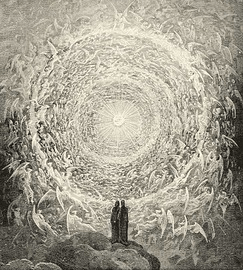
Not only is the sending of the Holy Spirit a “last days” event; the giving of the inspired Word is likewise an intricate part of the God’s design for the “last days.” By God’s design, the Holy Spirit would not guide (odhghsei, hodagasei) the Church into all truth unilaterally, John 16:13, but would direct the Church through the written Word. No substantive distinction should be made between the guidance of the Holy Spirit, the word inspired by the Spirit, and the glorification of the Son by the Spirit, “And he shall glorify me: for he shall receive of mine, and shall shew it unto you,” John 16:14.
Both the Word and Spirit comprise the “already” epoch of the “last days” and as such are precursors to the final consummation of the “last days” which are “not yet.” Because the “last days” cannot be bifurcated or splintered into separate epochs of time based on the sole, final and fullest revelation of the Father in the Son, the Word and Spirit already serve to glorify the Son in these monolithic last days and will continue to so until eschatological consummation in the yet coming eternal state.
Following the “already…not yet” paradigm, inspired Scripture “already” represents a glimmer of the glory of the eternal state throughout history in the Church. There is no future “glorification” of the Word of God, in that the Scriptures evidence the marks of divinity, and are the words of God. After Christ ascended into heaven, the Holy Spirit was imparted to the Church at Pentecost, but the Spirit was not left to regenerate and sanctify the Church alone. The Holy Spirit was the active agent and initiator of the Apostolic message in the dictating of the holy scripture, 2 Peter 1:20-21. Both the Word, the image of the Spirit, and the Spirit, the Teacher of the Word in concert would continue the redemptive work began by Jesus Christ in the Church. What Christ did alone as the Living Word teaching and preaching the spoken word, the Spirit and written Word would accomplish in his absence. The inauguration of Christ’s Kingdom authority continues today through the Word and Spirit working in the lives of the redeemed. The future trajectory of the Word and Spirit is to magnify the Son, bringing redemptive history to eschatological consummation, Isa. 59:21.
Since the late 19th c. the modern Church’s evaluation of Scripture has been that of an ancient document disconnected from its given eschatological purpose. Scripture has been perceived and treated not as an “last days” image of the Holy Spirit but as a document restrained by the entropy of passing time. According to current thinking, not only can the Scripture not be eschatologically oriented, but it is also not capable of escaping the ravages of the first century. Scholars speak of the initial text rather than the original text resigning themselves to the impossibility of reconstructing the autograph. The comparison between an eschatologically oriented text and the notion of an initial text illustrates how defunct modern scholarship has become. Its century-long feckless endeavors have resulted in the need to move the goal posts to achieve some semblance of credibility. But how credible is a disciple that by its own acknowledgment is incapable of accomplishing anything other than a fluid, scholarly anomaly. The futility of modern textual labors resides in the academy’s unwillingness to see the Scripture for what it truly is – God’s Word – and, until that paradigmatic transition occurs, all that can be expected is a misappropriation of erudite minds in the phenomenal search for the unattainable.
Scripture as the “already” precursor to the eternal state stands as the historic expression of Christ’s consummative authority as King of Kings and Lord of Lords. Scripture cannot be made capable of entering the last days of the eternal state by means of some external impetus simply because it was given to be the “last days” image of the Spirit. Scripture was, from the moment of its immediate inspiration, ontologically one with the nature of the eternal state and remain so to the consummation of redemptive history because it is the word of the sovereign, eternal, King, Jesus Christ. To tamper with Scripture is therefore to attempt the usurpation of Christ’s final authority in the eternal state where he reigns supreme. Every attempt by man to add, subtract, or modify the word of God is to corrupt, and therefore disqualify the text of Scripture as an exemplar of the eternal state by asserting some notion of anthropological autonomy over the Lordship of Jesus Christ. This usurpation, then, is not a mere scholarly venture but is a trespass against the King, carrying with it the everlasting penalties described within its pages. And while the attempt to replace Christ’s Kingship with surrogates has always been in vogue among prideful men, the word of God has from its inspiration remained the immutable, pure word of the King, historically reflecting and pointing to the eternal state where Christ will reign as King of Kings and Lord of Lords. The keeping of this immutable, pure Word, while seen through various historic venues, can only be secured by the inscrutable oversight of God.
2023 Kept Pure In All Ages Conference -Christian McShaffrey: The Authority of the Scriptures
Simple Truths of Scripture Now Doubted or Rejected by the Church

Samuel Trickett (1632-1712) , Sermons Doctrinal and Practical (1656), edited by John Edward Blakeney (London: Printed by G. Norman, Maiden Lane, Covent Garden, 1863), 1.
“Now the Scriptures do instruct us what to do, and what to believe. That they teach us perfectly, unto salvation, will appear.
God being the author of these book, they must needs be perfect, as he himself is, who being for his wisdom able, and for his love of the Church willing to set down such a rule as may guide them to eternal life, hath not failed therein. 2 Tim. 3:15, ‘And that from a child thou hast known the Holy Scriptures, which are able to make thee wise unto salvation, through faith, which is in Christ Jesus.'”
- God is the Author of Scripture
When Trickett writes he is not speaking of the autographs but the Hebrews, Greek and English texts he is about to expound. This assessment is reinforced when he quotes 2 Tim. 3:15 and Timothy’s knowledge of the Holy Scripture since his youth. Timothy only had copies of copies of the Hebrew text, and yet the Holy Spirit, calls these copies Holy Scripture. For God to be the Author the Holy Spirit was not just the instrumental Agent superintending the writing of God’s Word by the penmen, but he was also the creative agent giving the penmen the words to write. Both the creative element and the oversight of the writing of Scripture by the Holy Spirit assured that the written text was infallible and pure, the written word of God. Furthermore, Trickett states what every believer held in his epoch of time – that God is the Author of Scripture, and because God gave the written text the text reflects the perfection of its Author. Could God do any less?
2. Because God is the Author the Scriptures are perfect, as he is.
Because God is the Author the “Every word,” Prov. 30:5 in a distributive sense, and “All Scripture, 2 Tim. 3:16, in a collective canonical sense is perfect, or without corruption. And this perfection is not a perfection spoken of as if applied to the text by some external authority, designating the text to be such. Rather, the Scripture is perfect because God is its Author. If the Church is to say, “The Scripture is God’s Word,” then the Church must not engage in the rigamarole of quibbling over the issues of providential preservation and infallibility. And yet then Church and Academy have created ecclesiastical and institutional industries trying to say “The Scripture is God’s Word,” but it is far from perfect, building an ideological idol of scholarship based on the theological schizophrenia inculcated in its worshippers.
3. The Scriptures are a rule (canon) of unfailing authority.
Trickett calls the Scripture “a rule (canon) as may guide them to eternal life, hath not failed therein. Herein, lies one of the unsolved curiosities of contemporary Evangelical and Reformed Christianity. Through some intellectual contortions, the Church argues that the supernatural work of regeneration and the impartation of eternal life continues to press on unbated through amalgamated texts of Scripture and “hath not failed therein,” but indeed everything else about the Scripture has failed miserably. Expansion of the notion of inerrancy demonstrates the point sufficiently. Inerrancy is a blank slate to be colored on my scholars. Some we might say, “stay between the lines”; for others, it looks more like scribbling. So, the transcendent power of God to generate saving faith belongs to the text, but the mundane aspects of Scripture are beyond repair? This quandary has over time became party orthodoxy for the critical text camp and the Church generally speaking is an avid subscriber. Which begs the question, has not the Church degenerated into an existential milieu where experience is the final arbitrator of what is and is not God’s Word. Or maybe even a little Barthianism. One might say, “I ascribe authority to the Bible because I have a sense of peace with God after praying the sinners’ prayer. Therefore, all modern versions can become Scripture to me.” And not the old-fashioned way, “because the Bible is the infallible word of God, I can trust its promises to save my soul.” Scripture is intrinsically the unfailing rule apart from any soteriological contingencies. Salvation simply demonstrates Scriptures’ authority, is a proof of Scripture’s authority but is not the existential arbitrator of Scriptural authority.
Maybe the modern Church is having some kind of existential spiritual encounter, and in the midst of this encounter, they realize that all modern versions of the bible are holy Scripture.
 Standard Sacred Text.com