“The word catholic was used early on in Christian history to denote that which is believed everywhere: the whole deal. The heart of the word is Greek holos, meaning whole, entire, integral. It is not related to the English whole or heal. The linking idea is that you don’t want only a part, or you don’t want only to be associated with a part. You want the whole thing. And there is only one place to get it.”
ANTHONY ESOLEN, ANGELS BARBARIANS AND NINCOMPOOPS…AND A LOT OF OTHER WORDS YOU THOUGHT YOU KNEW, 8-9.
Esolen, being a devout Roman Catholic, most certainly means that “one place” to be the Roman Catholic Church. On this point he has erred in a drinking-out-of-the-wrong-Holy-Grail kind of erred.
Still, he does touch on a central desire all true Christians have – to want the whole of Christian community in unity. The apostle Paul declares as much when he writes that we ought to endeavor “to keep the unity of Spirit in the bond of peace” [Eph. 4:3]. But the Spirit is never alone. He always accompanies the word of God and the word, the Spirit. As such the writer of Hebrews declares that the word of God is quick [i.e., alive]. Indeed, for many this is the greatest “proof” that Scripture is the word of God.
“Thus, the highest proof of Scripture derives in general from the fact that God in person speaks in it.”
John Calvin, Institutes of the Christian Religion, I, vii, 4.
The “whole of Christian community in unity” is an issue of unity in the Spirit and unity in the Spirit entails unity around the word of God. StandardSacredText.com aims to foster this unity around the word of God by offering resources and making arguments for the validity and benefits of having a standard sacred text for the English speaking believing community.
Certainly there will be some disagreement and where there is disagreement about strongly held convictions there can be friction between brothers in Christ. Indeed, that very well may happen. Still, we hope that while we may disagree about the mode of baptism or church governance we can agree that belief in a standard sacred text by the English speaking believing community would be a boon for the Church. Undoubtedly such a journey or process will be a messy one but as you and I consider the goal and benefits of such a conclusion perhaps you too will join in the effort.
All I shall add is, transiently, to observe that since some deny this whole portion of Scripture any way to belong to St. John, thinking that it has been but lately intruded into his gospel, Selden already mentioned has recited their reasons, and Francios Gomarus has industriously vindicated it, as belonging to St. John, and solidly proved its authenticity.[2]
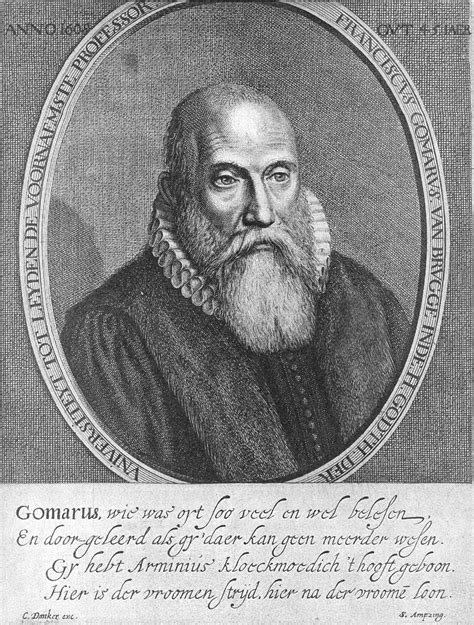
Franciscus Gomarus (1563-1641)
Franciscus Gomarus (born January 30, 1563, Bruges, Flanders [now in Belgium]—died January 11, 1641, Groningen, Netherlands) was a Calvinist theologian and university professor whose disputes with his more liberal colleague Jacobus Arminius over the doctrine of predestination led the entire Dutch Reformed Church into controversy. Gomarus debated Arminius before the assembly of the estates (regional governmental bodies) of Holland in 1608, and he and four followers debated five Arminians (also known as the Remonstrants) in the assembly in 1609. Later a professor at Saumur (France) and at Groningen (Netherlands), Gomarus took a leading part in the Synod of Dort (Dordrecht, Netherlands) in 1618–19 as an opponent of Arminianism, which was condemned at the synod. [3]
Commentary
A Disputation Concerning the Authority and Sense of Chapter 8, Verses 1–12
After the Evangelist, in the preceding seventh chapter, described Christ’s journey to Jerusalem for the Feast of Tabernacles and the deeds performed during that feast, he then, in this eighth chapter, subjoins a narrative of those things which occurred on the following day of the feast. This consists of two principal parts: namely, the history of the adulterous woman, up to verse 12, and the discourse and dialogue of Christ with the Jews throughout the remainder of the chapter.
With respect to the history itself, two matters must first be considered: first, its authority; then, its meaning. For concerning the former there is a question of great importance, namely, whether this narrative of the adulterous woman brought to Christ was written by the Evangelist John, and thus possesses divine authority and is a genuine part of that Gospel, or not. For certain theologians of great name, both among the ancients and the moderns, both among our own and among the Romanists, entertain doubts concerning the credibility of this entire narrative.
They advance various arguments in support of their doubt, which were first set forth by Erasmus and afterward more fully by others who followed him without sufficient consideration. Although these have been adequately and rightly discussed by Dr. Piscator, if one considers most of them, we nevertheless judge it not inappropriate to examine them here more carefully, and to strengthen the truth of the history with certain observations worthy of notice.
First, two kinds of testimony from the ancients are adduced against it: partly from those who openly rejected it, and partly from others who passed it over in silence. To prove the former, they bring forward the testimony of Eusebius (Ecclesiastical History, book 3, final chapter), as though he expressly stated that this account of the adulterous woman was written by a certain Papias and was contained in the Gospel according to the Hebrews. This is asserted as though certain by Erasmus in his Annotations on this passage of John and is likewise affirmed, on the authority of Eusebius, by very learned Roman Catholic interpreters as well as by our own. But if we examine the matter carefully, we shall rightly deny that this was written by Eusebius. For his Greek words concerning Papias, a most ancient author but one of limited judgment, are as follows: “He also related another story about a woman who had been accused of many sins before the Lord, which the Gospel according to the Hebrews contains.” This is the sense of the passage. The earlier translator Rufinus, however, both misunderstood these words and translated, and indeed distorted, them badly (as he indisputably did many other things), rendering them in this manner: “He also subjoins a story of the adulterous woman, who was accused by the Jews before the Lord.”
That this is entirely foreign to the meaning of Eusebius’s Greek is shown by the contrast between the two women. For in Eusebius, speaking in Greek, there is no mention of adultery; moreover, the woman of whom he speaks was accused of many sins, whereas the woman discussed in John 8 was accused of adultery, and indeed of that alone, not of many sins. Therefore, Eusebius was speaking of an entirely different woman, not of this one about whom the controversy concerns. For this reason, it is astonishing that Erasmus, a most learned man, should here have allowed himself to be misled by the faulty interpretation of Rufinus, so as not to consult the Greek exemplar—unless perhaps it had not yet come into his hands. And relying upon Erasmus’s otherwise outstanding diligence, both Roman Catholic theologians and our own, men of the highest reputation, through a certain credulity and neglect of examination, have stumbled upon the same stone.
We are compelled to warn our hearers of this sincerely and for their own benefit: that especially in controverted matters, we should consult the Greek authors themselves, lest we trust rashly to a translation, which is not always produced with equal diligence. Therefore, we judge that this argument, by which it is claimed that the ancient Fathers rejected this history, is of no force at all, but is altogether irrelevant, as we consider sufficiently demonstrated.
The second objection is that this passage was passed over by many, and that in this way they somehow indicated that it did not belong to the Gospel. Among these are first cited the Fathers, especially Origen and Chrysostom. But it does not follow that because they passed over this history in their exposition of John chapter 8, therefore they judged it not to have been written by John. We reply that Origen omitted many things in his exposition of John. For after explaining chapter four, omitting the fifth, sixth, and seventh chapters, he passes directly to chapter 8, verse 19. Nor did Chrysostom expound everything in his homilies on John delivered to the people, whether for the sake of simplicity, or selectivity, or brevity, or even due to the negligence of copyists. Moreover, as Erasmus rightly acknowledges, Chrysostom does mention this passage in his Homily 60 on John, where, among the examples by which the Pharisees maliciously and deceitfully questioned Christ in order to accuse Him, he recounts that they asked whether it was lawful to give tribute to Caesar, whether the adulterous woman ought to be stoned, and questioned Him concerning the woman who was found to have had seven husbands, just as the Latin interpreter renders it and as Erasmus and others cite it. For although the Greek words are different, namely, “and they spoke concerning the dismissal of the woman,” nevertheless the sense returns to the same point, namely, whether that adulterous woman was to be dismissed unpunished or not; since no other woman in the Gospel can be fitted to whom Christ was questioned by the Pharisees in this manner. As for Nonnus, Theophylact, and others of that sort, who are not so ancient, it is credible that they likewise, having misunderstood the sense of Eusebius (as we have already shown concerning Rufinus), went astray and therefore passed over this history, or followed a mutilated exemplar.
But beyond the omission of these Fathers, they also object ancient manuscripts in which this history was absent, and in which it is absent in some copies even now. Yet it is very probable that this too proceeded from the same previously mentioned error; and it seems that the Syriac translator was led astray by such a codex, so that this history [318] he omitted the history; yet he acknowledges that it existed in many manuscripts. Jerome, Tome 2, Dialogue 2 against the Pelagians, says: “In the Gospel according to John, in many Greek and Latin manuscripts, there is found the history of the adulterous woman who was accused before the Lord.” And on this basis he also argues against the Pelagians, treating it as drawn from truly divine Scripture.
Moreover, Athanasius also read this passage. For in the Synopsis of Holy Scripture, having first set forth a summary of the first seven chapters, he says of the eighth chapter: briefly, concerning the woman accused of adultery. Further (a point noted less carefully by others, yet deserving to be added), Cyril of Alexandria presents this history distinctly as truly Johannine, without any indication of doubt, and explains it at length. Thus, it becomes evident that the otherwise very learned Benedict Aretius here suffered a lapse of memory, when he conceded that this history was omitted by Cyril. To these may also be added (as others have rightly observed) Ambrose, Tome 3, Letters, Book 7, Letter 58, and Book 10, Letter 76; and Augustine on John chapter 8, and elsewhere as well.
As for what Erasmus says, that it is not found in most Greek manuscripts, we acknowledge this with Jerome to be true of some, namely those derived by copyists from mutilated exemplars; but we cannot admit it concerning most. First, because in all sixteen ancient Greek manuscript exemplars of Robert Stephanus, without a single exception, it is found. Secondly, in seventeen ancient manuscripts of Beza, with only one exception, as he himself testifies in the fourth edition of his Major Annotations (1588). Likewise, I myself formerly found the same history present in an ancient Greek–Latin manuscript codex of the Gospels at Leiden, brought from Constantinople by the most noble Lord Georg Douza and shown to me.
To these are added the consistent Greek New Testament editions, drawn from diverse sources. From these alone the matter is evident: first, the Hagenau edition of Gerbel, 1521; then the Basel Greek Testament printed by Bebelius, 1533; next the Paris edition of Colines, 1534; and another Basel edition, superior to the former, that of Brylinger, 1558, most carefully polished from not a few manuscripts of venerable authority, as indicated on its title page. Finally, there is also added that accurate Greek Testament published at Leipzig in 1564 from various manuscripts of distinguished authority, together with variant readings. Therefore, the omission of this history in certain ancient New Testament manuscripts, whether through negligence or through the error of copyists, does not undermine its authority. Accordingly, we proceed from testimonies to confuting other objections drawn and raised from the matter itself.
The first of these is that in this narrative of the adulteress it is said that Jesus was left alone, and that the woman was standing in the midst (v. 9), which does not appear plausible, given the prominence of the temple, the faithfulness of the disciples, and the curiosity of the people concerning a new matter, while Christ remained in the temple. But the inference is denied, because the antecedent rests upon a false hypothesis,as though in verse 9 Christ were said to have been left alone absolutely. For this is stated only relatively, not with respect to the people, nor much less to the faithful disciples, but only with respect to the Pharisees who were accusing the woman. This is sufficiently clear from the preceding words, where it is said that they, their consciences having been touched by Christ’s words, went out one by one, and that Christ was left alone—that is, by them. But again it is objected from verse 10, where it is said that Jesus lifted Himself up and saw no one except the woman; therefore this must be taken absolutely. But this inference is again denied, because Christ’s own words sufficiently show that this too is spoken relatively, when He immediately adds: Where are your accusers? Thus He understood that none of the accusers were present.
A second objection is that verses 9 and 10 do not agree with verse 12. For in the former it is reported that Christ was alone without the Pharisees and saw none of them; yet in verse 12 He is said to have spoken to them, saying, I am the light of the world, and the Pharisees are said to have heard and answered Him in verse 13. Therefore the same persons are said, at the same time, both to have been absent and present which is a contradiction. But this inference too is denied, because it does not follow: they went out; therefore they could not return afterward. For what prevents them from having first departed in astonishment at Christ’s unexpected answer, which pricked their conscience, and then shortly afterward, having recovered their resolve according to their malice (in order to lie in wait for Christ by another method), returning? Nor is it said that Christ spoke the words I am the light of the world at the very moment of their departure and absence. Rather, it is said, Again Jesus spoke to them, which indicates not a continuation of the discourse begun concerning the woman, but that after this had been concluded, and after they had returned, He then spoke to them.
A third objection against the divine authority of this history is taken from verse 8, where Christ is said to have written on the ground, which does not appear credible, since it is nowhere else recorded that Christ did such a thing. But the inference is denied, since not all of Christ’s actions are repeated—as though no act could have occurred only once. The contrary is established by several very clear examples: first, among others, Christ’s glorious transfiguration and His conversation with Moses and Elijah (Matt. 17:2); then John 9:6–7, where He made clay from spittle and earth, anointed the eyes of the blind man, commanded him to wash in the pool of Siloam, and restored his sight; finally Mark 7:33–34, where He put His fingers into the ears of the deaf man, touched his tongue with spittle, restored his hearing, and loosed the bond of his tongue. Yet each of these actions is read as having been done only once, no less than this writing on the ground was done once here. And this act was not without sound reason, as will later be shown. Therefore this objection also is vain.
The fourth and final objection is the great variety of readings, which seems incompatible with a divine history written by the Evangelist John. But the inference is denied. For in former times, when printing presses did not exist and only scribes copied books, it could easily happen that some variety arose through their negligence, whether memory failed by chance, or something was omitted, or a synonym occurring to the copyist was substituted for the word expressed in the text, or finally a marginal gloss was added to the text under the mistaken belief that its omission signaled a defect. That such things happened frequently in Latin and Greek authors has been demonstrated by very learned men in many places. Nor is it surprising that something similar occurred in the transmission of this history in certain manuscripts, since Beza himself carefully collected the variant readings of manuscripts for this passage: seven pertaining to omission, five to addition, and ten to alteration of some sort—yet in such a way that the sense of the history nonetheless remains intact in all those variant manuscripts. As for the Basel edition cited by Beza at verse 9, that must be understood of the edition of 1535, and its variation is of very slight importance. The later edition of 1558, however, most accurately prepared from manuscripts of venerable authority, presents the received reading faithfully.
Moreover, in order that the weakness of this objection may be evident, namely, that they attempt to undermine the credibility of this history on the basis of variation in certain words of some manuscripts, we have judged it necessary here to demonstrate by clear examples that a similar, or even greater, variety of readings occurs in other portions of Scripture whose authority is certain and unquestioned. And we do so from the great and highly esteemed larger Greek New Testament of Robert Stephanus. First, in John chapter 6, in the six verses from 55 to 60, there occur six variant readings, and of greater significance than those in the present passage. Likewise, in Acts 6:8–10, five major variant readings appear; and in chapter 16, in only four verses (35–39), there is a far greater variety than in the entire twelve-verse history of the adulteress. And to pass over chapters 25 and 26, in John 4, in the six verses from 11 to 17, there are eight variant readings—certainly differing from the text more than those alleged in this history. And in 1 Peter 2, in only three verses (19–21), there are seven variant readings; and in chapter 3, in fifteen verses from 5 to 21, there are seventeen; and in 2 Peter 1:1–12, there are twelve variant readings (and of greater weight than those in John 8); and in chapter 2, verses 1–22, if one calculates correctly, there are twenty-three variant readings.
Yet who would on the basis of such variant readings or omissions in certain manuscripts call into doubt the authority of these portions of Scripture? Therefore the argument drawn from variation in the readings of certain manuscripts (especially such as do not in any way harm the sense) is refuted by these very clear examples. And thus much concerning the first position, namely, that of those who doubt the credibility of this history.[319] On the contrary, the second and opposing position, namely, that which is received in the Churches, maintains that this history is genuinely that of the Evangelist John. The proof is drawn from the matter, the style, and the testimony of the most eminent Fathers and the most ancient manuscripts.
The matter itself commends this judgment, because it accords most fittingly both with other insidious temptations of the Pharisees, with Christ’s customary wisdom in perceiving and prudently overcoming them, and with His gentleness toward sinners and exhortation to repentance. Moreover, the style also agrees excellently with the Gospel of John, as learned men have rightly observed. Finally, there is added the consensus of the ancients of the most eminent Fathers and of ancient manuscripts, not only of Athanasius, Chrysostom, Cyril of Alexandria, Ambrose, Jerome, and Augustine, as shown above, but also of a Father far more ancient than all these: Ammonius of Alexandria, a Christian philosopher and most learned theologian, the teacher of Origen. This is attested by Eusebius (Ecclesiastical History, book 6, chapter 19, Greek edition of Robert Stephanus; in the Latin version revised with the notes of Grynaeus, chapter 18; and in the ancient Latin version of Eusebius’s works, chapter 15), who reports that Ammonius composed a harmony of the four Evangelists, from which Eusebius himself, as he confesses, derived the Gospel canons by a new method—and thus approved Ammonius’s fidelity and diligence. These canons were also prefixed to the Greek Testament printed by Robert Stephanus in larger format.
In this harmony of Ammonius (which is found in the Micropresbyterium, in the Monuments of the Orthodox Fathers, and likewise in the Bibliotheca Sanctorum Patrum, tome 2), in that portion which recounts the deeds of Christ in the third year of His ministry, he writes as follows:
But when the Lord entered the temple, the scribes and Pharisees brought forward a woman caught in a wicked act of adultery, craftily asking what ought to be done. Jesus so tempered His reply that, by neither absolving her, He would not abolish the Law of Moses, nor by condemning her would He seem to seek vengeance from this one poor woman alone amid so great a multitude of sinners.”
Furthermore, we add that Tatian of Alexandria, much earlier than Ammonius, the disciple of Justin Martyr (as Eusebius testifies, Ecclesiastical History, book 4, chapter 27), in his harmony of the Gospels, which is extant in the Monuments of the Orthodox Fathers printed at Basel, chapter 120, sets forth the entire history of the adulterous woman in the very words of the Evangelist.
If anyone should object that Tatian later became a heretic and leader of the Encratites, and that he composed this harmony at that time; and that Theodoret removed more than two hundred copies of it found in the churches and replaced them with the four Gospels, so that from his testimony it cannot be proved that this history of the adulteress was attributed to John in the Church, the inference is denied. For Theodoret indeed reports this (Haereticarum Fabularum, book 1, chapter on Tatian), but in that harmony he censures nothing whatsoever except this alone: that, as he says, Tatian removed the genealogies and whatever else showed that the Lord was born of David according to the flesh. He does not accuse him of having added anything foreign to the Gospel. Thus Theodoret sufficiently and clearly demonstrates that he acknowledged the history of the adulteress placed in Tatian’s harmony to belong truly to the Gospel. Otherwise, just as he explicitly rebukes any subtraction from the Gospel, so he would likewise have reproved any addition, since John condemns both equally with the gravest threat (Rev. 22:18–19).
Therefore, since no solid reason is produced against the authority of this history (John 8:1–12), and since trustworthy arguments in its favor have been brought forward by us, we rightly conclude that it ought not to be doubted. Moreover, since even in Jerome’s time there existed certain copies of the Gospel of John in which this history was lacking, it may rightly be asked what the cause of this fact was. Concerning this matter, Erasmus proposes three different conjectures.
The first is that it might have happened that what had perished from the Gospel of John survived in an apocryphal writing. The second is that John added this portion to the Gospel after it had already been published, and thus it came to pass that it was found in some manuscripts and not in others. The third is that many true things are reported in apocryphal writings, and therefore this history, being true, was added from them—so that it has authority not because it was written in apocrypha, but because Papias heard it from his own teacher, and because the consensus of the Church approved it as worthy of the Gospel.
But the first conjecture is opposed by the diligence of the Fathers and other faithful men; nor is it credible that this history should have perished from all manuscripts without anyone noticing or preventing it. The second conjecture, though ingenious, is refuted by John 20:30–31, where he gives the reason why he omitted many things and asserts the completeness of his Gospel. Moreover, this supposed interpolation following the composition of the Gospel may suit the frailty of human memory and judgment (as the saying goes), but it is utterly unworthy of God, the author and inspirer of the Gospels.
Finally, the third conjecture is less probable: partly because it would have been utterly rash for anyone to insert into the perfected divine work of this Gospel something which the divine author of the Gospel—indeed God Himself—had deliberately willed to omit; partly because it would have been sacrilege to usurp such authority over God’s Gospel and, without divine revelation and God’s command, to add something to Holy Scripture at one’s own discretion (Rev. 22:18–19).
Moreover, this conjecture rests upon a false interpretation of Eusebius speaking about Papias; nor does Papias himself deserve any confidence, given the great defect of judgment of which Eusebius accuses him.
There is, however, another opinion of Augustine on this matter (Tome 7, On Adulterous Marriages, book 2, chapter 7), where he says:
But this appears offensive to the minds of the faithless, so that certain persons of little faith, or rather enemies of the true faith, I believe, fearing that impunity for sin might be granted to the wicked, removed from their manuscripts that which the Lord did in showing indulgence toward the adulteress, as though He had granted permission to sin who said: “From now on, sin no more.”
But to conclude the matter: the cause of the omission of this history of the adulteress appears altogether to be, as we indicated earlier, that the words of the most renowned and learned Eusebius (Ecclesiastical History, book 3, final chapter), and the story of a woman accused before the Lord (which Papias had expounded and which existed in the Gospel according to the Hebrews), were wrongly understood as referring to this adulterous woman, as we have shown from Rufinus’s version. Therefore, judging it to be apocryphal and rashly added by Papias to John’s Gospel, they omitted it in copying the Gospel of John—just as this reasoning especially led Erasmus and certain other learned men to doubt this matter.
This is all the more credible because we find no evidence that before Eusebius, nor even in Eusebius himself, any mention is made of copies of John in which this history was lacking. On the contrary, we have shown above that in the Gospel harmonies of Tatian, the disciple of Justin Martyr, and of Ammonius of Alexandria, the teacher of Origen, this history is contained without any doubt or reproach whatsoever. And it would undoubtedly have been present in Origen’s own Commentary on John, had not the exposition of chapters five, six, and seven been entirely omitted, and the first eighteen verses of chapter eight passed over, beginning instead at verse 19.
To all these considerations (a point we do not recall having been noted by others) must be added that Eusebius himself, in his Gospel canons, compiled in imitation of Ammonius of Alexandria, whose industry he expressly commends, places this history of the adulteress in Canon 10 (where, in the final three columns, passages written by John alone are indicated). In column 2, number 3, chapter 86, this history is also designated, as is evident from the Greek Testament of Stephanus mentioned above, where those ancient chapters into which the Gospels were once divided by Eusebius are printed. The same is also confirmed from Jerome, who translated those ten canons of Eusebius and expressed them in Latin numerals, as he indicates in the preface to the four Gospels addressed to Damasus. In his works (tome 9), together with the tables of those ten canons translated from Eusebius, this history is designated in Canon 10, chapter 86. And in the Gospel of John as revised by Jerome (also found in tome 9), chapter 86 extends from John 7:45 to 8:19; at verse 19 Jerome notes: chapter 87.
From all these things it can clearly appear that Eusebius, following Ammonius, determined without any doubt that this history was not added by Papias, but published by John himself and genuinely Johannine.[320] He shows the history to be genuine (since Eusebius, in his canons of the chapters of John, distinctly acknowledges it); yet he does not diminish the authority of this history. Therefore, with this matter now settled, as we hope, against the objections, we shall subjoin a concise explanation of it.
And first, the scope of the Evangelist must be carefully observed. The former purpose is to demonstrate the obstinate wickedness of the Jews in persecuting Christ: namely, that they not only attempted openly and violently to remove Him from their midst, as is declared in chapter 7, but also—though hindered by divine providence—did not desist, but sought by malicious deceit an opportunity to destroy Him.
The second purpose is that the wisdom, justice, and power of Christ might be made known, by which He caused the perverse and deceitful attempts of His adversaries to recoil to their own disgrace, and, on the contrary, turned them to His own glory and to the salvation of sinners.
Moreover, the parts of this narrative are three: namely, first, the circumstances of the matter conducted between the Pharisees and Christ; then the manner; and finally the outcome. The circumstances are four. The first is the time, namely, the day after the Feast of Tabernacles. The second is the place, namely, the temple. The third is the witnesses, namely, the whole people, that is, by synecdoche, a great multitude of the people. The fourth, finally, is the occasion of the matter, namely, Christ’s action in teaching the people, which is treated in verses 1 and 2. That Christ is said to have taught the people while sitting was done freely by Him, and perhaps because, wearied by vigils, He followed the customary practice of the scribes. Thus elsewhere, in Matthew 5:1, He is said to have sat when He taught; but elsewhere He stood, as in John 7:37.
To these circumstances there is next joined, in the second place, the manner of the affair conducted between the Pharisees and Christ, which shows, as it were in two steps, how the Pharisees conducted themselves toward Christ, and how Christ in turn conducted Himself toward the Pharisees. And in the former step, first the deeds and words of the Pharisees by which they assailed Christ are described. Their deeds were that they brought to Christ a woman caught in adultery and set her before Him (v. 3). Their words contain both a narration and a question.
The narration, first (v. 4), contains the accusation of a certain woman’s manifest adultery; then the declaration of the penalty of stoning deserved according to the law of Moses (namely, Leviticus 20:10). The question is then proposed, by which they seek Christ’s judgment concerning that penalty (v. 5). After this, the Evangelist explains in verse 6 the double purpose of those who asked.
The first purpose was that they might tempt Him. Now since temptation is the probing of a hidden disposition of someone’s mind, and since one kind of temptation is good—arising from a good principle, proceeding by a good means or manner, and tending toward a good end—while another is evil, which is not such (either wholly or in part), here, by synecdoche, the latter is intended. For the principle of this temptation was not love of God and of knowing justice and truth, but hatred of Christ. The means was not sincerity of speech, but a deceitful simulation of a desire to know love, justice, and truth from Christ as a true teacher. The end, finally, was to ensnare Christ and entice Him into a reply harmful to Himself. Such also was the Pharisees’ perverse temptation in three similar vices, recorded in Matthew 22:15–16 and 18.
And thus much concerning the first end of the Pharisees’ question, namely, the temptation of Christ. The second end, however—and the principal one, since the temptation served it—was that they might accuse Christ, namely, either before the magistrate or at least before the people. Before the magistrate indeed, so that if He should answer that the adulterous woman ought not to be stoned, they might accuse Him as a wicked adversary of Moses and of God, and as deserving of death. Before the people, however, so that if He should answer that she ought to be stoned, they might convict Him as not gentle toward sinners (though He nevertheless proclaimed Himself such, Matthew 11:29, and was commonly regarded as such), but severe, and in this way render Him hateful to the people.
Augustine briefly and pointedly sets forth this wicked counsel and dilemma in this place: “If,” he says, “He shall command her to be stoned, He will not have gentleness; if He shall judge her to be dismissed, He will not have justice. But lest He lose gentleness (by which He had already become dear to the people), He will doubtless say that she must be dismissed. From this we shall find an occasion of accusing Him and shall make Him guilty, as a violator of the law.” Thus far Augustine.
And this suffices concerning the Pharisees’ first actions toward Christ, namely, their deeds and words. There now follows the second matter, namely, how Christ in turn conducted Himself toward those proposing this treacherous question. This is expressed at the end of verse 6 as follows: “But Jesus, stooping down, wrote with His finger on the ground.” What Christ intended by this stooping and writing is commonly inquired into. Some suspect it as something unusual and cannot conjecture by what reasoning it may be suitably explained. Others set forth certain causes, but not with equal success. These we shall gather briefly, that the matter may be more fully understood and that what appears most consonant with the truth may more easily be discerned.
First, Augustine seems to refer this writing on the ground entirely to the distinction between Law and Gospel—namely, that the Law was formerly inscribed on stone because of hardness, but the Gospel on human hearts as fruitful earth, from which Christ produces fruit. Others conjecture the same end, but assign a different ground of similarity—namely, that men are earth and ashes. Yet although these interpretations display a certain subtlety, they nevertheless appear alien to the matter at hand and rather forced.
Jerome, however, arguing somewhat more plausibly and coming nearer to the matter itself, says (Against Pelagius) that Christ wrote on the earth the sins of those who were accusing and of all mortal men, according to what is written in Jeremiah 17:13: “Those who depart from You shall be written in the earth.” Yet this explanation seems to be opposed by the fact that the Pharisees were moved not by Christ’s writing but by His saying; they recognized their sins and departed in shame. Moreover, that statement of Jeremiah is less suitable here. For the writing of which he speaks is not proper, but metaphorical. For just as being written in heaven (Luke 10:20) denotes being chosen among the heirs of the heavenly kingdom, so being written in the earth designates those alienated from God and devoted to the world and reprobate, as may be gathered from the circumstances of the passage; and it agrees with that similar saying, Psalm 69:29, “Let them be blotted out of the book of the living, and not be written with the righteous.”
Therefore Jerome’s conjecture would have been more probable if he had said that by this writing on the ground Christ intended to indicate that the righteousness and glory of the Pharisees were not true and not inscribed in heaven, but only in the earth, that is, resting merely on outward appearance and human opinion, not on God’s approval (Luke 16:15); and thus that the Pharisees were earthly and minded earthly things only, just as in this same chapter (8:22, 25) He reproves them under this designation. As for what some say that Christ wrote on the ground with His finger to show that He was the same One who wrote the Law with His finger on the tablets and delivered it to Moses, and therefore was not bound by Moses’ authority appears wholly alien to the matter at hand and directly contradicts Christ’s explicit profession in Matthew 5:17. By the same reasoning it is rash to assert, as some do, that Christ wrote on the ground “Earthly man, judged from the earth.” Likewise, that others suppose Him to have written what He later answered, although this agrees somewhat better with the matter, is still mere conjecture.
Concerning the stooping to the ground, many causes are also alleged. First, some say that Christ wished thereby to signify His humiliation—that He not only descended from heaven to earth, but also humbled Himself to our infirmities; but this explanation is more remote from the scope of this passage. Second, others suggest that Christ thus taught that arrogance must be laid aside and one’s own infirmity contemplated; but this likewise fits the matter less well. Third, some add that He did this to show that judgment ought not to be hurried. Fourth, they propose that He did it to show that He had not come to judge but to save sinners. Fifth, they assert that, by appearing to be engaged in something else and as if doubtful and ensnared by an intricate question, He evaded the question so as, by their repeated questioning, to render them more importunate and thereby to their own disgrace. Finally, they say that by turning His face away He judged His adversaries unworthy of an answer and most deserving of abhorrence.
These things having been set forth concerning the various explanations of Christ’s stooping and writing, we shall briefly state what seems to us most consonant with the truth. And first, this appears certain: that Christ, by His stooping and silence, indicated a certain contempt for the treacherous temptation of His adversaries [321] he indicated contempt for them; and by writing on the ground he likewise appears to have wished to signify that they were unworthy of a reply, and, by doing something else, to indicate the neglect of their question (as commonly happens in similar cases).
Whether that inscription was made by figures or by letters (for scribo and pingo can both be denoted by the same word) is uncertain. The former seems more probable and more suited to indicating contempt for the Pharisees. But as to what Christ wrote—since Scripture is altogether silent on this matter—conjectures are not to be indulged. For although some, by novelty and a certain cleverness that tickles the itching ears of the unlearned, commonly find favor, yet it is neither sound nor reverent, after the manner of Origen and his imitators, to depart from the sincere simplicity of the divine Word and to profane it with human inventions. And this suffices concerning the first stage of the matters conducted between the Pharisees and Christ. To this John subjoins a second stage, consisting of three parts.
The first is the perseverance of the Pharisees, who, by repeating the same question proposed by themselves and neglected by Christ, persist in it at the beginning of verse 7. The second declares what Christ did, both by word and by deed, in three members. First, that at last, moved by the persistence of the Pharisees in questioning, He raised Himself up. Next, what He said—namely, “He who is without sin among you, let him be the first to cast a stone at her”—at the end of verse 7. By this response, with admirable wisdom and justice, He indicates both the subject to whom the execution of the penalty belongs and, by way of attribute, the order and manner of punishing the adulterous woman. For in this way, rendering the counsels of the Pharisees ineffective, He tempers justice with equity, lest He appear either a violator of the Mosaic Law or forgetful of the gentleness He had professed and promised. The subject of the response is noted when He says, “He who among you is without sin” (ὁ ἀναμάρτητος ὑμῶν). By this periphrasis He strikes at the hypocrisy of the Pharisees, who were sharp-sighted in discerning the sins of others but blind in regard to their own.
As to what is meant here by the term sin, interpreters differ. Some, with a plausible explanation, think the word is to be taken absolutely and generally, to denote every sin, that is, any transgression of the Law, so that Christ, proceeding in this way, wished to expose and refute the hypocritical righteousness of the Pharisees, by which they paraded and gloried as if free from sin and observers of the whole Law (Matthew 19:16; 23:28; Luke 16:15; 18:11).
Others, however, interpret sin specifically, and indeed in two ways. Some understand it of adultery itself (since this is the subject matter under discussion), but in different senses: for some refer it to the external act, others to the inward lust of the heart, as in Matthew 5:28—as though Christ were saying, “The woman sinned in deed; you in the lust of the heart.” Yet neither interpretation seems sufficiently appropriate. Not the former, because it is not credible that all or most of the Pharisees (whom conscience accused) were adulterers; nor the latter, because impurity and lust of the heart they regarded as nothing, or at least as very little, as appears from the contrast in Matthew 5:27–28. Therefore their conscience, on that understanding, would not have been struck. Hence there is another specific explanation: that sin is taken κατ’ ἐξοχήν for a crime. In this sense, not infrequently in Holy Scripture a “sinner” (ἁμαρτωλός) is used for a criminal, or one devoted to graver offenses, as in Psalm 1:1; Luke 7:39; John 9:24, 31. And thus “one without sin” denotes one free from crime. This explanation appears more suitable than the others.
And this suffices concerning the subject of Christ’s response, namely, to whom the punishment of the adulterous woman belongs. The attribute, however, indicates the order and the manner. The order is indicated when He says, “the first,” because by the Law of Moses the witnesses in capital crimes were required to begin the stoning (Deuteronomy 13:9; 17:7).
But someone might object that, whatever interpretation is finally adopted, it seems necessarily to follow that public judgments ought not to be exercised by those who are conscious to themselves of some sin or crime, and that by this reasoning either all judges, or at least some portion of them, would be barred from executing judgment. But this does not follow in the least. For Christ in this place does not propose a general rule, but accommodates Himself to wicked and treacherous adversaries, so that while they strive to accuse Christ of sin, they themselves are in turn convicted by the judgment and testimony of their own conscience. For He addresses and instructs them alone as to what He judges ought to be observed, in this singular case of the judgment of the adulterous woman, by those who were questioning Him deceitfully.
Moreover, even if the same reasoning applied entirely to other judges and the same were prescribed to them, no inconvenience would follow. For Christ here is not treating of judgment itself, but of the order of its execution, and indicates that the beginning ought to be made by one who is innocent. For He does not say by these words that only those without sin should punish sinners, but that the innocent should begin. He in no way excludes the rest, but rather includes them, since having mentioned the beginning He says, “let him be the first to cast a stone,” and thus establishes the order. Therefore judges who punish criminals act justly, because God has commanded it of them and the welfare of the commonwealth requires it; but in this they act unjustly and sin grievously, if they themselves do not abstain from the same or similar crimes which they punish in others. And this concerning the order of the punishment to be inflicted upon the adulterous woman, that is, the first member of the attribute. The second is the declaration of the punishment, when at the end of verse 7 He says, “let him cast a stone at her.” By these words He shows His full agreement with Moses and at the same time evades the snares of the Pharisees. And in this way the first two members of the matters conducted by Christ with the Pharisees in the second stage, namely, Christ’s actions (both the stooping and the writing on the ground) and then His response have been set forth. To these is joined a third and final member, namely, the repetition of that action, as stated in verse 8: “And again He stooped down and wrote on the ground.”
Three reasons are assigned for this action. The first is more clever than probable—namely, that by writing twice Christ wished to signify that He had given both the Law and the Gospel, since He first uttered the words of the Law and then of the Gospel, when first He announced the deserved punishment (v. 7), and afterward the undeserved grace (v. 11). The other two reasons adduced are more probable: namely, that by again stooping down and doing something else He wished to impress these things more deeply upon their minds; and also that He did this so that they might have freer opportunity to depart though to their own disgrace.
Thus far the narrative of the matter conducted between the Pharisees and Christ in a twofold stage of confrontation, which constitutes the second part of this whole history. To this is subjoined the third part, consisting of a twofold outcome. The first concerns the Pharisees; the second, Christ. In the Pharisees, indeed, the effect of Christ’s saying is twofold: first, the sting and bite of conscience concerning their own sins; second, proceeding from this, the departure of each of those Pharisees, from the elders down to the last, away from Christ, and at the same time away from the woman whom they had brought and accused (v. 9). The other outcome, namely, that which is noted in Christ, is the raising of His body, the observation of the Pharisees’ departure and of the woman who had been left behind, and then the ensuing conversation with the adulterous woman. This conversation has three parts: Christ’s question, the woman’s response, and Christ’s conclusion.
Christ’s question is twofold. The first concerns where her accusers were. This was not done to give testimony of ignorance, but rather to expose to the hearers the hypocrisy and malice of those men—that is, that they had brought the woman and sought Christ’s judgment not from love of justice or of the Mosaic Law, but from a desire to tempt and ensnare Christ’s life, and that by leaving the woman they sufficiently declared this.
The second question concerns the condemnation of the woman: “Has no one condemned you?” (v. 10). The woman’s response, pertaining to Christ’s second question, is that she said, “No one, Lord.” Finally, Christ’s conclusion, proceeding from this response, is two-fold. The first member pertains to the woman’s consolation; the second to her correction. It pertains to her consolation that He first says, “Neither do I condemn you.” By this Christ neither takes away from the civil judge the office of condemning, nor arrogates it to Himself contrary to the nature of His prophetic office (Luke 12:14). Nor does it conflict with what He had previously said to the Pharisees, “He who among you is without sin, let him be the first to cast a stone at her,” since by that response He did not condemn the woman by political judicial authority (which He lacked, Luke 12:14), but by a prophetic sentence only. [322] Then, when questioned by the Pharisees as to what the divine law required, He simply explained it. Thereafter, when those whose office it was to exercise judgment and to punish the woman failed to do so, Christ rightly, since He was not a civil magistrate, left her unpunished, insofar as it pertained to Him. From this it is also evident that the Anabaptists ignorantly and unjustly abuse this saying of Christ, when from it they contend that the use of the sword in punishing criminals is forbidden and unlawful for the magistrate.
These things concern the first member of Christ’s conclusion, namely, the consolation of the woman. The second member, pertaining to her correction, is the exhortation by which, according to His prophetic office (Mark 2:17) and His customary practice (John 5:14), He urges her to depart from sin and to flee it—that is, to repentance—when He says in verse 11, “Go, and sin no more.” And thus far concerning the authority and genuineness of this history.[323]
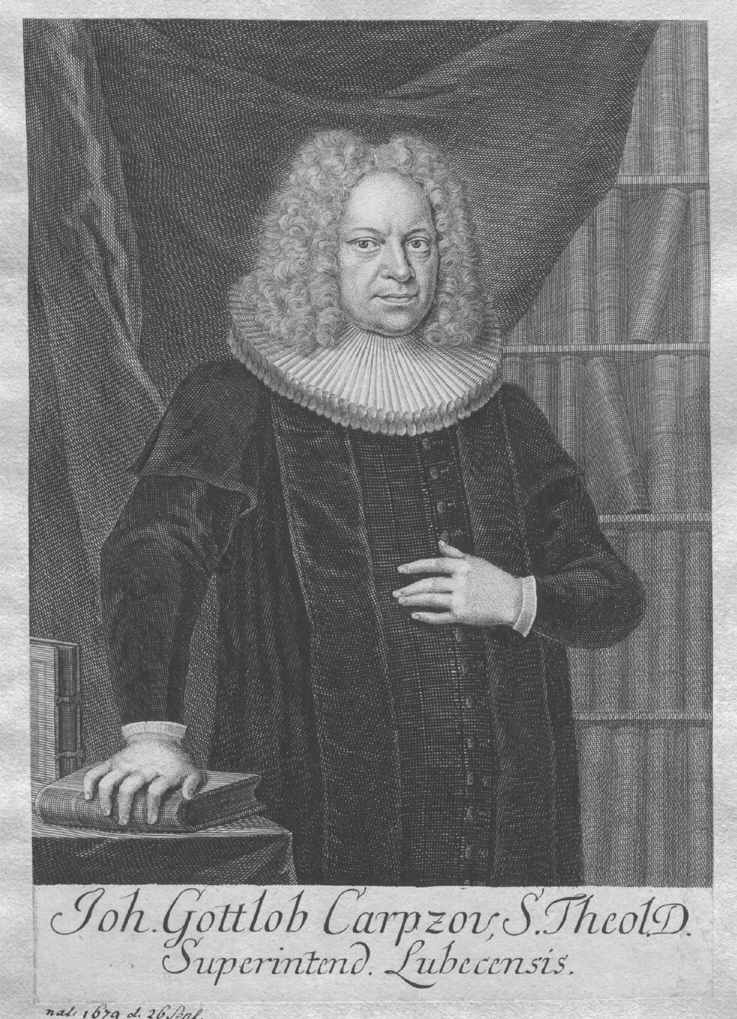
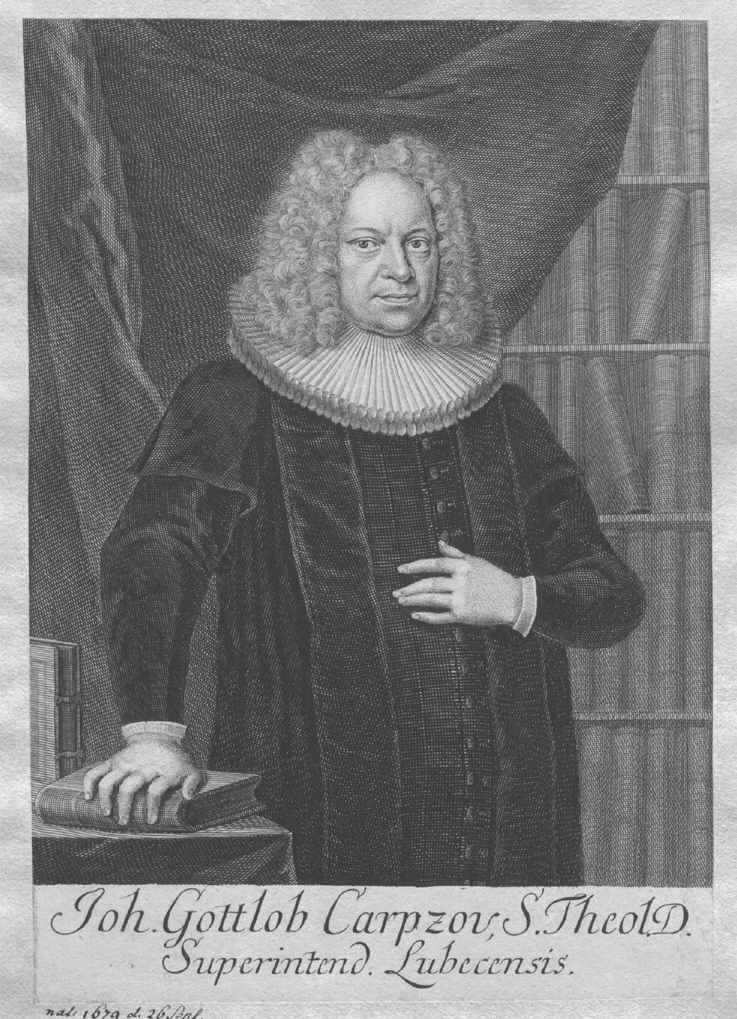
[2] Johann Gottlob Carpzov, A Defense of the Hebrew Bible, in answer to the charge of corruption brought against it by Mr. Whiston, in his Essay towards restoring the true test of the Old Testament, trans. by Moses Marcus, 1729 (Kansas, OK: Berith Press, 2025), 164.
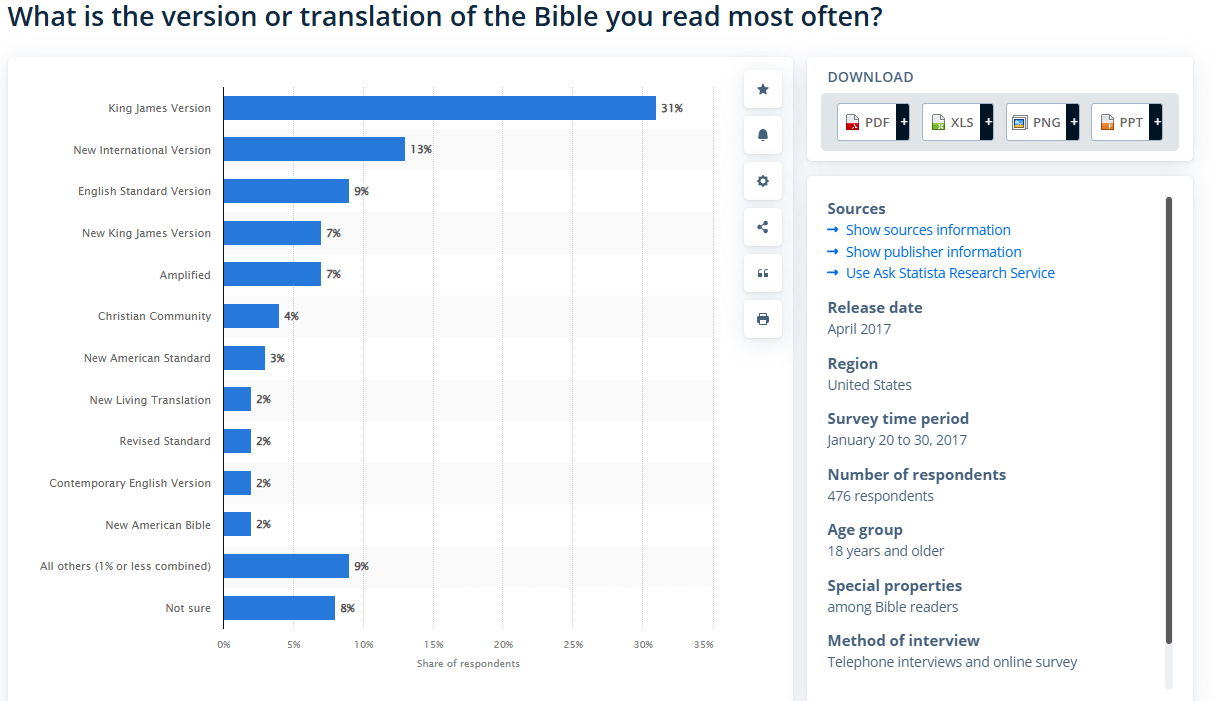
Years ago I made a post showing which version of the Bible was the most searched for in the the USA and in the world. The terms I used were acronyms like KJV, ESV, CSB etc. Well, as I said it has been a couple of years so I thought it good to revisit this topic and see how things have changed…as you will see, they haven’t.
Over the last five years, the KJV remains by far and away the most searched for version of the Bible in the USA compared to the following competitors – NKJV, ESV, NIV, CSB, and LSB (see the blue line).
But wait, there’s more! The KJV remains by far and away the most searched for version of the Bible in the World when compared to the same competitors (see the blue line).
What I find interesting is how similar the rest of the versions behave. They are practically next door neighbors in the world of relative search frequency.
Now some might opine, “Well there are more searches for the KJV because it is harder to understand.” The data do not indicate as much but let’s assume it is true, wouldn’t the natural thing in seeking understanding be to abandon the “harder to read/understand” text than to continually search somewhere in the range of 400% more times than you would for other versions?
What seems more likely is that people who read their Bible tend to be KJV people and as such seek to study what it says. See below.
So after over a century of scholars and neophytes bashing the KJV, it seems that for some odd reason, perhaps an odd singular care and providence kind of reason, this 400 year old version of the Bible with all of its “thee’s” and “thou’s” still remains at the top. You know, something like a standard sacred text for the English-speaking church.
Whiston’s Objection 7, Page 99. In John 8:5, the Jews say that Mosses commanded the stone the adulteress, which assertion our Savior’s answer in John 8:7 confirms. This punishment, although in this age it is not extant in the Hebrew, nor Samaritan Pentateuch, nor in the Septuagint, nor Josephus, yet that in ancient times it was prescribed, and in the time of Christ was read in the law, besides the place quoted, is acknowledged also by the Apostolic Constitution.
Carpov’s Answer: Interpreters differ about the punishment of the adulteress, because Moses (Leviticus 20:10 and Deuteronomy 22:22) had indeed appointed a capital punishment indefinitely to both the adulterer and adulteress, but had not assigned them any particular kind of death.
The Jewish rabbis agree that it was strangling; but since severer punishments were to be afflicted upon growing crimes, Grotius thinks the adulteries becoming frequent at that time, used to be punished by stoning. Henry Hammond is of the opinion that stoning only took place, when the adulteress was taken in the very act, as in the fourth verse of this chapter. Selden understands is of a betrothed, not a married wife, whom Moses expressly appoints to be stoned to death. With him agrees Francios Burman, Wagenseilius that famous interpreter of the Jewish antiquities and laws, insinuates that stoning is declared by Moses in Deuteronomy 22:22 compared with the 24th verse. And this might be confirmed by Ezekiel 16:38-40 where stoning is said to be the judgment of the adulteress.
However this be, here we have the words of the scribes and Pharisees, quoting Moses to that sense in which they understood and explained the words. Hence it may be clearly perceived that at that time, the practice of the Jewish courts of justice was to stone adulteresses, Christ in his answer to them does not say that he read in his copy that the stoning was expressly appointed by Moses to adulteresses, but disputing with them ad hominem, upon their principles, and desirous to confound the prosecutors, he retorts the same sentence upon them which they had pronounced against the woman, leaving it in suspense, and not determining whether the punishment of stoning for the crime took its rise from the decision of Moses, or from the then present practice of their courts.
Upon this consideration, our Savior’s discourse argues no omission in the copy of the law; and much less can be the pretended Apostolic Constitutions, which in the place already cited follow Moses exactly, neither do they determine any kind of death. For thus they say; “ean tiV gukaika upandron mianh, apokteinate amfoterouV, anamian epoihsan, enocoi eisin, apoqanetwsan: If any man shall defile a married woman, put both of them to death; they have committed iniquity, they are guilty, let them die.” These words Mr. Whiston has slyly omitted, quoting those only which went before, about the sin of unnatural uncleanness being punished by stoning to death, and which have nothing to do with what we are now upon; by this example again showing us with what insincerity he produces his vouches. All I shall add is, transiently, to observe that since some deny this whole portion of Scripture any way to belong to St. John, thinking that it has been but lately intruded into his gospel, Selden already mentioned has recited their reasons, and Francios Gomarus has industriously vindicated it, as belonging to St. John, and solidly proved its authenticity. [italics added]
Johann Gottlob Carpzov, A Defense of the Hebrew Bible, in answer to the charge of corruption brought against it by Mr. Whiston, in his Essay towards restoring the true test of the Old Testament, trans. by Moses Marcus, 1729 (Kansas, OK: Berith Press, 2025), 161-164.
This quiz was composed by Henry G. Bosch, originator and 25-year editor of the devotional guide, “Our Daily Bread.” This quiz ran in the Grand Rapids Press in December of 1994 and has been edited for our use.
1. Jesus was born about how many months after John the Baptist? _6 months – Luke 2:36_
2. Jesus’ grandfather’s name was _Jacob – Matt. 1:16_
3. The Gospel of Mark does not speak of Jesus’ birth, but it does tell of his boyhood.
True ( ) or False (X ) — no information at all
4. The Bible tells us there were three wise men or magi who came to visit Jesus.
True ( ) or False (x ) – just plural
5. The star which the wise men had seen in the East reappeared long enough to direct them to the stable where Christ was born. True ( ) or False ( x ) – to the house,Matt. 2:11
6. The wise men did not have to guess which town Jesus was born in as Herod was able to send them directly to Bethlehem. True ( x ) or False ( ) –Matt. 2:8
7. When the wise men came, they saw Jesus and Mary, but the Bible does not mention Joseph being present. True (x ) or False ( ) –Matt. 2:11
8. How were the wise men warned of God not to return to Herod? Choose one:
a. ____ An angel told them
b. ____ They thought it over and reason and good sense told them it would be unwise.
c. __X__ They were warned in a dream not to do so – Matt. 2:12
9. How many dreams did Joseph have in connection with the birth and young childhood of Jesus? 4. 1. Matt. 1:24; 2. Matt. 2:13; 3. Matt. 2:19; 4. Matt. 2:22_____
10. The Bible says the magi rode on camels. True ( ) or False (x ) – no information
11. One of the Gospel records traces Jesus’ ancestry all the way back to Adam. Which one? ___Luke 3:23-38_
12. Mary took Jesus as a baby to Jerusalem. True ( x ) or False ( ) – Luke 2:21
13. When Mary went to visit the home of Zacharias before the birth of Jesus, she…Choose one;
a. ______ kissed her cousin
b. ______ received a message from Zacharias
c. ______ felt “the babe leap in her womb.”
d. __x____ saluted Elizabeth – Luke 1:40
14. And old man and an elderly woman saw Jesus when he was a tiny baby. What were their names? __Simeon – Luke 2:25____________ and ____Anna – Luke 2:36______
15. Where did these elderly saints see Jesus? _temple — Luke 2:27, 37______
16. Which one of these aged souls had definitely been married? __Anna – Luke 2:37_______
17. The woman was old, but less than ninety years of age. True ( ) or False ( x ) – 7 married +84 widow= 91 –Luke 2:36-37
18. Jesus had a distant relative who was struck dumb and probably deaf for a period of time. What was the relative’s name? _Zechariah – Luke 1:18ff (John the Baptist’s father)___
19. The wise men arrived at the manger after the shepherds. True ( ) or False ( X ) – house –Matt. 2:11
20. When the shepherds came, they found not only Jesus, but Mary and Joseph lying in a stable. True ( ) or False (x ). Luke 2:16 —
lying – κείμενον from keimai– Accusative, singular, masculine and Neuter Present Participle
This quiz was composed by Henry G. Bosch, originator and 25-year editor of the devotional guide, “Our Daily Bread.” This quiz ran in the Grand Rapids Press in December of 1994 and has been edited for our use. This material makes for an excellent Sunday School lesson on Christmas Sunday morning to enlighten visitors and remind the regulars of the details of the birth of Christ.
Jesus was born about how many months after John the Baptist? ___________
Jesus’ grandfather’s name was _________________________
The Gospel of Mark does not speak of Jesus’ birth, but it does tell of his boyhood. True ( ) or False ( )
4. The Bible tells us there were three wise men or magi who came to visit Jesus. True ( ) or False ( )
5. The star which the wise men had seen in the East reappeared long enough to direct them to the stable where Christ was born. True ( ) or False ( )
6. The wise men did not have to guess which town Jesus was born in as Herod was able to send them directly to Bethlehem. True ( ) or False ( )
7. When the wise men came, they saw Jesus and Mary, but the Bible does not mention Joseph being present. True ( ) or False ( )
8. How were the wise men warned of God not to return to Herod? Choose one:
____ An angel told them
____ They thought it over and reason and good sense told them it would be unwise.
____ They were warned in a dream not to do so.
9. How many dreams did Joseph have in connection with the birth and young childhood of Jesus? _____
10. The Bible says the magi rode on camels. True ( ) or False ( )
11. One of the Gospel records traces Jesus’ ancestry all the way back to Adam. Which one? ___________________
12. Mary took Jesus as a baby to Jerusalem. True ( ) or False ( )
13. When Mary went to visit the home of Zacharias before the birth of Jesus, she…Choose one;
______ kissed her cousin
______ received a message from Zacharias
______ felt “the babe leap in her womb.”
______ saluted Elizabeth
14. And old man and an elderly woman saw Jesus when he was a tiny baby. What were their names? __________________________ and _________________________
15. Where did these elderly saints see Jesus? ___________________________
16. Which one of these aged souls had definitely been married? _________________________
17. The woman was old, but less than ninety years of age. True ( ) or False ( )
18. Jesus had a distant relative who was struck dumb and probably deaf for a period of time. What was the relative’s name? __________________________
19. The wise men arrived at the manger after the shepherds. True ( ) or False ( )
20. When the shepherds came, they found not only Jesus, but Mary and Joseph lying in a stable. True ( ) or False ( ).
Check Standardsacredtext.com later this week for the answers.
“For since one and the same Spirit dictated to, inspired, and influenced holy men in compiling the Scripture, and since he is not a God of confusion, and inconstancy, or contrary to himself (1 Corinthians 14:33), but the Spirit of truth, leading us into all truth; hence it follows that none of the Scripture oracles can contradict or oppose one another. We ought therefore to seek out for a method of reconcilement, and to look up to the Father of Lights for it, that we may be enabled to compass those seeming contradictions according to the intention of the Holy Ghost.”
The hard word of Bible defense, according to Carpzov’s erudite assessment, yields two unavoidable conclusions. First, Holy Scripture is infallible, even when confronted with apparent difficulties that have not yet received fully satisfactory resolution. Such perceived unresolved questions do not undermine Scripture’s truthfulness but instead call for continued theocentric research. This conviction forms the substance and animating purpose of Carpzov’s scholarly investigation. Second, to yield the academic field to those whose deliberate aim is to fabricate so-called, or merely imagined, errors in Scripture is for the believer to make an unwarranted and imprudent concession. Such surrender grants legitimacy to adversaries of God’s infallible Word and abandons the proper posture of faith seeking scholarly, well-researched understanding.
Johann Gottlob Carpzov, A Defense of the Hebrew Bible, in answer to the charge of corruption brought against it by Mr. Whiston, in his Essay towards restoring the true test of the Old Testament, trans. by Moses Marcus, 1729 (Kansas, OK: Berith Press, 2025), 143
Let us admit that the Greek, which is called the Septuagint, differs very widely from the Hebrew copy, yet it differs too much from itself, that as many editions of it as are to be seen this day, so many various readings may be observed; and no man is so clear-sighted as to be able to declare or inform us which of them exactly agrees with the original Greek text, of which of them is interpolated; what changes, transpositions, additions, and mutilations, many of these editions have suffered, partly from the boldness of critics and ignorant pretenders, partly from the injuries of time; and how many things have been foisted into it which change and confound the ancient and genuine text of this translation, from the versions of Aquila and Theodotion, and other Greek translators, out of the Octapla of Origin.
Preeminence of the Hebrew Scripture
Such always has been the dignity and prerogative of authentic writings [the Hebrew text], that when they differ from a translation, the error should rather be attributed to it, than to them; neither must their readings be put out of possession, unless it be proven by the most weighty arguments, that it can no longer maintain its place. Therefore that conclusion is altogether absurd and rash, by which these false critics, from the disagreement of the Greek translations, attempt to bring the original text into suspicion or corruption, or to change it with errors.
Johann Gottlob Carpzov, A Defense of the Hebrew Bible, in answer to the charge of corruption brought against it by Mr. Whiston, in his Essay towards restoring the true test of the Old Testament, trans. by Moses Marcus, 1729 (Kansas, OK: Berith Press, 2025), 25, 27





 Standard Sacred Text.com