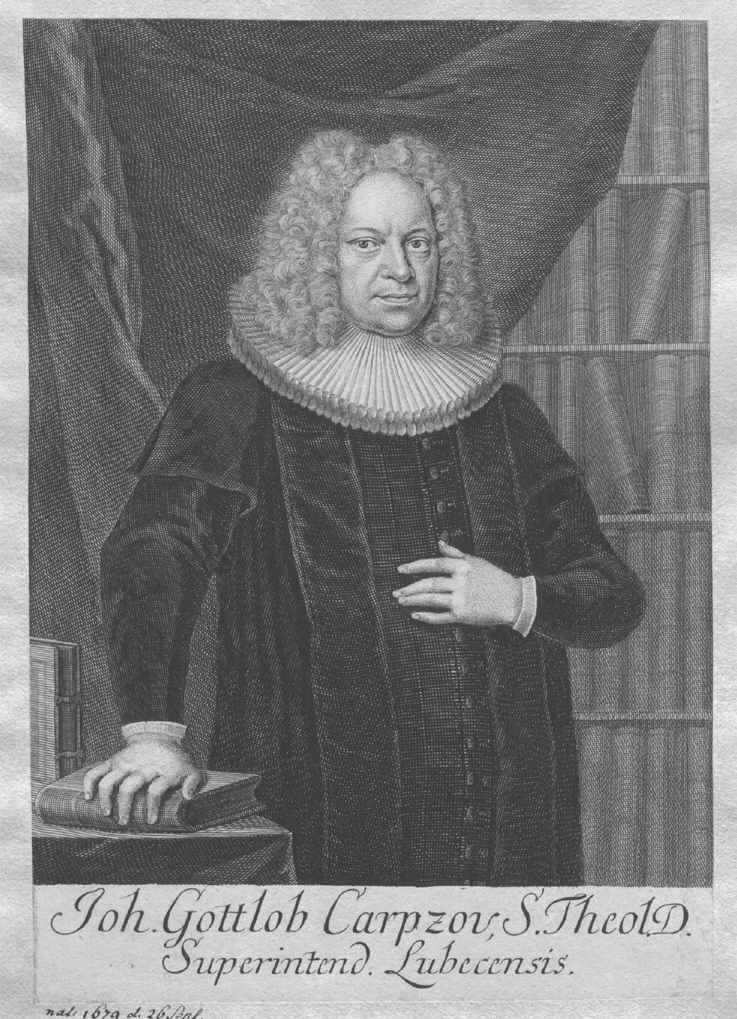
“For since one and the same Spirit dictated to, inspired, and influenced holy men in compiling the Scripture, and since he is not a God of confusion, and inconstancy, or contrary to himself (1 Corinthians 14:33), but the Spirit of truth, leading us into all truth; hence it follows that none of the Scripture oracles can contradict or oppose one another. We ought therefore to seek out for a method of reconcilement, and to look up to the Father of Lights for it, that we may be enabled to compass those seeming contradictions according to the intention of the Holy Ghost.”
The hard word of Bible defense, according to Carpzov’s erudite assessment, yields two unavoidable conclusions. First, Holy Scripture is infallible, even when confronted with apparent difficulties that have not yet received fully satisfactory resolution. Such perceived unresolved questions do not undermine Scripture’s truthfulness but instead call for continued theocentric research. This conviction forms the substance and animating purpose of Carpzov’s scholarly investigation. Second, to yield the academic field to those whose deliberate aim is to fabricate so-called, or merely imagined, errors in Scripture is for the believer to make an unwarranted and imprudent concession. Such surrender grants legitimacy to adversaries of God’s infallible Word and abandons the proper posture of faith seeking scholarly, well-researched understanding.
Johann Gottlob Carpzov, A Defense of the Hebrew Bible, in answer to the charge of corruption brought against it by Mr. Whiston, in his Essay towards restoring the true test of the Old Testament, trans. by Moses Marcus, 1729 (Kansas, OK: Berith Press, 2025), 143
 Standard Sacred Text.com