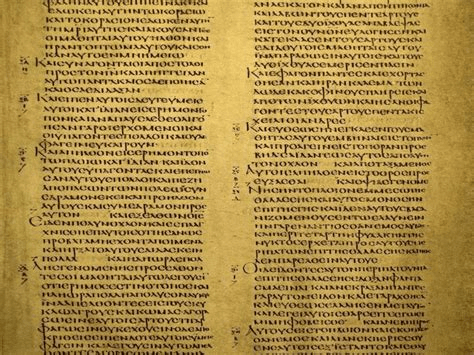
Corruption of the so-called Septuagint
Let us admit that the Greek, which is called the Septuagint, differs very widely from the Hebrew copy, yet it differs too much from itself, that as many editions of it as are to be seen this day, so many various readings may be observed; and no man is so clear-sighted as to be able to declare or inform us which of them exactly agrees with the original Greek text, of which of them is interpolated; what changes, transpositions, additions, and mutilations, many of these editions have suffered, partly from the boldness of critics and ignorant pretenders, partly from the injuries of time; and how many things have been foisted into it which change and confound the ancient and genuine text of this translation, from the versions of Aquila and Theodotion, and other Greek translators, out of the Octapla of Origin.
Preeminence of the Hebrew Scripture
Such always has been the dignity and prerogative of authentic writings [the Hebrew text], that when they differ from a translation, the error should rather be attributed to it, than to them; neither must their readings be put out of possession, unless it be proven by the most weighty arguments, that it can no longer maintain its place. Therefore that conclusion is altogether absurd and rash, by which these false critics, from the disagreement of the Greek translations, attempt to bring the original text into suspicion or corruption, or to change it with errors.
Johann Gottlob Carpzov, A Defense of the Hebrew Bible, in answer to the charge of corruption brought against it by Mr. Whiston, in his Essay towards restoring the true test of the Old Testament, trans. by Moses Marcus, 1729 (Kansas, OK: Berith Press, 2025), 25, 27
 Standard Sacred Text.com