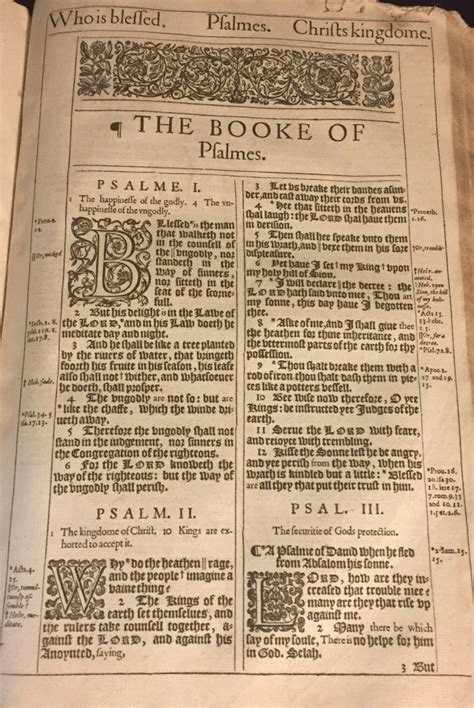
L. Gaussen, The Canon of the Holy Scriptures Examined in the Light of History, translated from the French and abridged by Edward N. Kirk (Boston: American Tract Society, 1862), 160-162.
[Note: The canon is one book. The New Testament is the succession of the Old Testament “of the same origin and equal authority.” The canonical books are inspired and to reject this truth is to “abandon the Christian church.” There was no sensed need for apologetics or polemics because of the united confession of the Church regarding the inspiration of the canon. Scripture was complete and the final authority for the Church — self-authenticating. Scripture is self-interpreting.]
1.These fathers do not confine themselves simply to quotations of the twenty books[1] of our first canon; they speak very frequently of the collection itself of these books as forming one entire book, a New Testament, which the church of their day has fully accepted, which she has united to the sacred oracles of the old covenant, and which she calls the Scripture, or the Scriptures, the New Instrument, The New Testament, the Lord’s Scriptures, (tas kuriakaV grafaiV,
Dominicas Scripturas,) the Divine Scriptures, (taV qeoV grafaV,) the Gospel, and the Apostle. For these fathers hold equally all the epistles as forming one single book, which they call the Apostle; and the four evangelists also as forming one single tetramorphous Gospel, (a gospel in four forms,) to which they join the Acts of the Apostles.
2. Another feature of their testimony is that they habitually associate the Old and the New Testaments as a succession of books of the same origin and of equal authority.
3. They invariably declare their faith in the divine and complete inspiration of all these Scriptures; they rank them with those of the other prophets; they distinguish them from every uninspired book, and from all pretended tradition which is not conformed to them; they call them “the oracles of God,” “the pillar and ground of the faith,” “the rule of truth,” “the theopneustic Scriptures,” “the perfect Scriptures,” “the Scriptures pronounced by the word of God and by his Spirit; ” and they declare of the sacred writers, that “they were all pneumataphores, (bearers of the Holy Spirit,) and all speak by one and the same Spirit of God.”
4. Moreover, they profess this perfect faith in the divine inspiration of all these books, in connection with the entire church; they present it as the faith common to every Christian in the world; they declare that to raise one’s self against this ecumenical rule of the truth is, in the view of each of them, no longer to belong to the Christian church; it is to abandon it, (exeuntes,) because there can be found in no cotemporary church the least dissent from it.
5. So calm and sure is their persuasion in this matter, so universally peaceful is this conviction among the Christians of their time, that you will never find them occupied with defending it. Why should they? The point is everywhere firmly settled; it is in every conscience that professes the truth; it is nowhere contested in the church of the second century; and you can nowhere hear against one of the twenty books of the canon a single one of those objections which are started by the biblical critics of our day. They hold them as the universal and uncontested code; when they adduce a passage to establish some disputed truth, it is always as when one puts a lamp in a dark place to reveal something that had been hidden. One may dispute with you about the object, but no one thinks of questioning the light; that is the same for everyone. The Scriptures, — they are the light. This confidence, common to everyone in the second century, is always taken for granted; they never demonstrate it. If I am speaking of the Rhone in Geneva, do I stop to prove that it runs through this city, and that you will find water there? Why, then, should these three doctors demonstrate to the men of their day that the river of Scripture runs through the city of God, and that you may there find abundance of the living waters of grace? They never do it. In all their folios, they discuss the biblical meaning of such and such a word, never its divinity; they profess to be the interpreters of the New Testament, never its defenders. Why should they defend it? No one in the church had attacked it; and if you will meet despisers of the Word, you must go out and search for them in the Roman schools of Cerdo, Marcion, or Valentinus.[2]
6. Still, a sixth feature is, that in religious matters everything is decided for them, and should be for the whole church as soon as it is known that the Scripture has spoken on it. “The Scriptures,” they say, “are a perfect revelation of Christian truth;” “their instruction is abundant,” (scripturarum tractatio plenissima,) “admitting neither of addition nor retrenchment.” “I adore,” they say, “the fullness of the Scriptures.” “Let no one,” they add, “teach anything, unless he can say of it, “It is written.” Let no one allege any tradition; for them there is none which can stand against the declarations of the written Word.[3]
7. Finally, they say, “It is to the Scriptures that every appeal must be made for explaining the Scriptures, (ap autwn peri autwn,) if we would arrive at the truth in a convincing manner (apodeiktikwV).”
[1] Gaussen, Canon, 26, 29. “It was, then, during the sixteen or seventeen years between the production of these first two books (a. d. 48,) and the death of Paul, (a. d. 64 or 65,) that almost all the other writings of the New Testament were produced; at least the twenty books which compose what we shall presently denominate the first canon, that is, the four gospels, the Acts of the Apostles, the first thirteen epistles of Paul, the first of Peter, and the first of John.”…”We shall call the first canon (or first rule) the collection of the twenty books above enumerated; because, the first distributed during the lifetime of the apostles and by their own direction, they were immediately received by all Christendom, eastern and western, without having, from the beginning, and for eighteen centuries, their divine authority ever called in question by the Christian churches. This first canon of the undisputed books forms by itself eight ninths of the New Testament, if we count by verses, having 7059 out of 7959.”
[2] Leaders of three heretical sects, bearing their respective names, taught in Rome during the second half of the second century.
[3] These various expressions we shall meet again and indicate their places.
 Standard Sacred Text.com