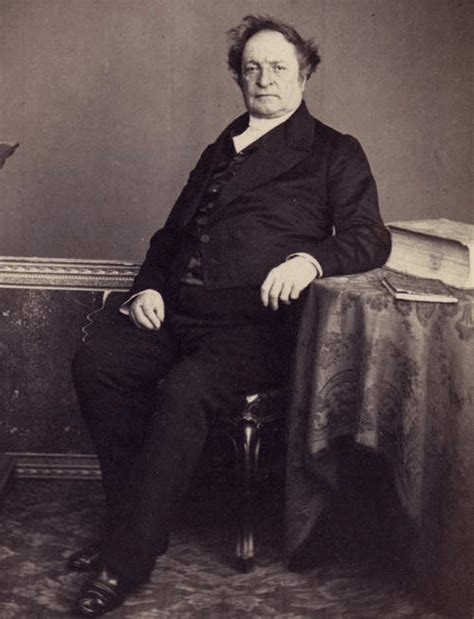
L. Gaussen, The Canon of the Holy Scriptures Examined in the Light of History, translated from the French and abridged by Edward N. Kirk (Boston: American Tract Society, 1862), 460-463.
{Note: Gaussen’s work concludes with the following short testimony of his findings attributing the canonicity of Scripture to inspiration and providential or miraculous preservation. This assessment so eloquently described by Gaussen is that truth besmirched by the Church and Academy alike. May that truth which has since the penning of the immediately inspired Scripture anchored the faith and practice of the saints once again find good ground in the hearts of God’s people producing a renewed faith and trust in the Word of God.]
We have, then, shown that the canon of the Old and New Testaments as we now have them constitutes the Word of God, the revelation from heaven, the supreme rule of faith and practice.
It has also appeared manifest that the very preservation of them can be explained, not by natural causes, but alone by the secret and continual intervention of the divine power. This preservation we have shown to be truly a miracle; divine power working against the natural tendencies of the human heart; a fact as miraculous as the preservation of the Jewish race itself for so many centuries, having no country, no national or even ecclesiastical bonds of union. We regard, then, the inviolability of the canon, like inspiration, to be a doctrine of our faith.
What striking facts, what powerful proofs have now passed before our eyes, all strongly demonstrating this silent and sovereign employment of the churches by God for the sure maintaining of his two Testaments!
And surely, if the gates of hell cannot prevail against the church, they cannot prevail against that Word on which the church is founded. What, in fact, should we be, and what would the church be, if God had not guaranteed his sacred volume against all alteration.
Moreover, all the more modern history of the canon agrees exactly with the first ways of God in regard to his written Word it is a harmonious and uninterrupted continuation of the miracle of thirty-three centuries in the preservation of the Old Testament. Has he who entrusted the ancient oracles to one people for a hundred generations, for eighteen centuries committed the new oracles, much more important, and given for the whole human race, to the care of no one? By no means. And we may say that the miracle of the churches, guardians of the new canon, is so completely a continuation of the miracle of the Jewish guardianship of the Old Testament, that the prodigy even presents a growing progression of harmony and beauty. In seeing it accomplished by the constant fidelity of the Jews, a fidelity which began before the Trojan war, and which has not ceased to this day, we might well conclude that, if it pleased God to give long afterward another series of sacred oracles to the Gentiles, he would choose from the midst of them other depositaries evidently charged with preserving this treasure even to the great day of Jesus Christ. And how much should our faith be strengthened by the fact that this second prodigy is accomplished with even more magnificence than the first!
Press the Bible, then, to your hearts. Christians of every rank and every age, your whole Bible. You have it from God.
Receive all it contains with the same affection, the same submission; the twenty-seven books which the Christian church gives you, as the twenty-two which you get from the Jews.[1] You hold the former from the Christian churches, you hold the latter from the Jews; but you get them from God, by their inspiration, and by their preservation. Say this often to yourself; there is a blessing in it. They cannot be read with profit unless they are read with reverence; they cannot be read with reverence if they are not read with a full conviction of their authenticity and their inspiration. It is by this Word, thus heard as descended from above, that you will obtain from God repentance, peace, adoption, joy, holiness, life eternal.
But to that end, Christian brethren, you must know your privilege; you must not only make a bold profession of it, but also avail yourselves of it with God and before all men; you must, supported on the doctrine of the canon, employ your sacred books with the same confidence that Christ and his apostles exercised toward the Old Testament; you must say with Christ, ” It is written.”
The same canon is clearly demonstrated to you; the seals of the living God are attached to it. Never forget it.
It is, unquestionably, within the heart that God attests the Scriptures for his elect with the incomparable seals of his Spirit; but you have seen, likewise, very clearly that God even seals them externally with his own seal, by means of the marvelous testimony of all the generations of the Jewish people and of all the generations of Christians in the earth.
Remember, therefore, Christian brethren, the miracle of the Scriptures, and of their divine preservation; hold your eyes open to these signs of God and ever keep yourselves from that guilty want of understanding and that fatal inattention with which Jesus reproached his disciples when they had forgotten the miracle of the bread. “Do ye not yet understand, neither remember? Have ye the heart yet hardened? Having eyes, see ye not? “
And why did they forget this miracle of the loaves? Alas! for the same reason that makes us too often forget the miracle of the Scriptures, and which should, on the contrary, render it more striking. Because the sign, really so full of grandeur, was, like that of the Scriptures now for thirty-four centuries, noiseless, without display, and calm, by natural means, the people being seated on the grass, and the apostles carrying the baskets from group to group. But surely it was not accidental that those five barley-loaves and those two fishes nourished five thousand men! And surely, too, it is not an accident that the sacred volume has been kept for thirty-four centuries, and that all the depositaries have universally and constantly been rendering the same testimony in order to enlighten, with the same light, all the elect of God! Certainly, the same cause accounts for both!
Christians, forget not the miracle of the bread! Never forget that of the Scriptures! Ministers of our churches, pastors of our learned congregations, and you humble evangelists, you, too, missionaries in Africa and Asia, go boldly to the most learned as to the most humble of your hearers ; go with this book of God, fearing not that they will ask you for the history of its canon, and without being troubled that the Old Testament has none. You know as much of it as Daniel, the prophet, as much as Paul, the apostle of the Gentiles. You know even more, since you possess the experience of many centuries, during which God has not ceased to keep his oracles entirely pure by the hands of the Jews. Go, then, boldly, as the prophet went to the synagogues of Babylon, or the apostle to those of Lycaonia; for you have the same evidence to show to establish the inviolableness of the sacred volume; and all that they could say, you can still say. “Behold the oracles of God committed to his people, — oracles so preserved as that one fragment of a letter has never perished; the Jews never swerved from their fidelity; they never betrayed this sacred trust ; not a book has ever perished from the sacred volume; their testimony never varies, notwithstanding their misfortunes and their crimes; never have they been reproached for altering the Scriptures.”
‘” Now to him that is of power to establish you according to the revelation of the mystery, which was kept secret since the world began, but now is made manifest, and by the Scriptures of the prophets, according to the commandment of the everlasting God, made known to all nations for the obedience of faith: to God only wise, be glory through Jesus Christ for ever. Amen.”
[1] Divided, we repeat, by us into thirty-nine books.
 Standard Sacred Text.com