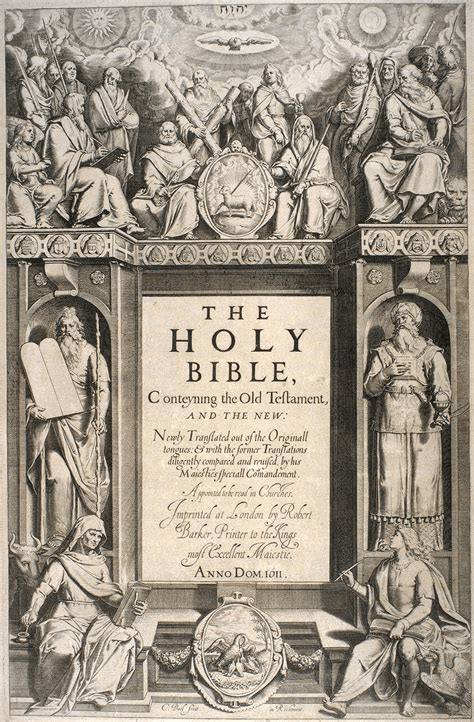
L. Gaussen, The Canon of the Holy Scriptures Examined in the Light of History, translated from the French and abridged by Edward N. Kirk (Boston: American Tract Society, 1862), 17-18.
The term Canon, as employed in this sense, is traced back to a remote antiquity. In Hebrew, Greek, and Latin, the words קָנֶה (qaneh), kannh, kanna, kanwn, canna, having the same origin, signify literally a reed, a straight rod, a cane, a measure, a rule; and more especially, kanwn, in a metaphorical sense, signifies every straight and. perfect rule. In the proper sense of this word, the terms cane and cannon, in the Middle Ages, were applied to tubes intended to regulate, or render right or straight, the direction of projectiles thrown by the explosion of powder.[1] Paul thus says to the Galatians, (Gal. vi. 1 6,) “As many as walk according to this, rule, (kanwn) peace be on them.” And to the Philippians, (Phil. iii. 16,) “Let us walk by the same rule,” (kanwn.)
Even in the times of the apostles, the old grammarians of Alexandria made use of the same term to designate model authors, making rules in literature; so that the ecclesiastical writers early employed it to mean sometimes Christian doctrine, the rule of our life; sometimes, the divine book, the only rule of our faith; sometimes, in fine, the catalogue of the sacred books composing this rule. This became at length its almost exclusive religious meaning.[2]
[1] The application of this word to an instrument of war commenced in Italy. It was there called cannone, or grande canna.
[2] It should, however, be remarked, to avoid all mistake in examining the writings of the Fathers, that while they had a distinct and definite catalogue of books, which they regarded as inspired, and as distinguished from the apocryphal or uninspired, but which were allowed to be read in churches, yet they did not at first agree in their use of the term canon. From a varied application of it to lists of clergymen, and even of church furniture, it came in the fourth century to be applied, as now, to the catalogue of Scriptures. But then it will be found that some time elapsed before Jerome’s use of the term canonical, as being coextensive with inspired was generally adopted. — Tr.
 Standard Sacred Text.com